Illustrative patient and clinician discussing tooth spacing with a dental study model
Cosmetic Dentistry

Treatment for Gapped Teeth in Brampton

Sometimes the space is not really about the gap at all, but about a tooth that is smaller than its partner or one that never came in. Treatment for gapped teeth for Brampton adults looks at tooth size, missing teeth, the bite, and how space could be shared more evenly.

Looking past the space itself

The tooth beside the gap may be the real story.

Spaces often form around teeth that are unusually narrow, slightly out of position, or absent. A small lateral tooth beside the front pair, for instance, can leave room on either side that no amount of pushing teeth together will tidy up on its own. In that case the question becomes how to balance tooth sizes, not just how to remove a gap.

A gap, or diastema, can also be entirely harmless, and some people would never change theirs. Where change is wanted, the plan may involve moving teeth, building up a small tooth, replacing a missing one, or a combination. Each choice affects proportions, contacts, cleaning, and the bite differently, so the cause guides the order.

Arriving from Brampton, bring anything you know about teeth that never developed, were removed, or were treated before. We will explain the findings, how space might be distributed, and which options fit. Keeping a healthy, stable gap is always on the list.


Talk about spacing and tooth size
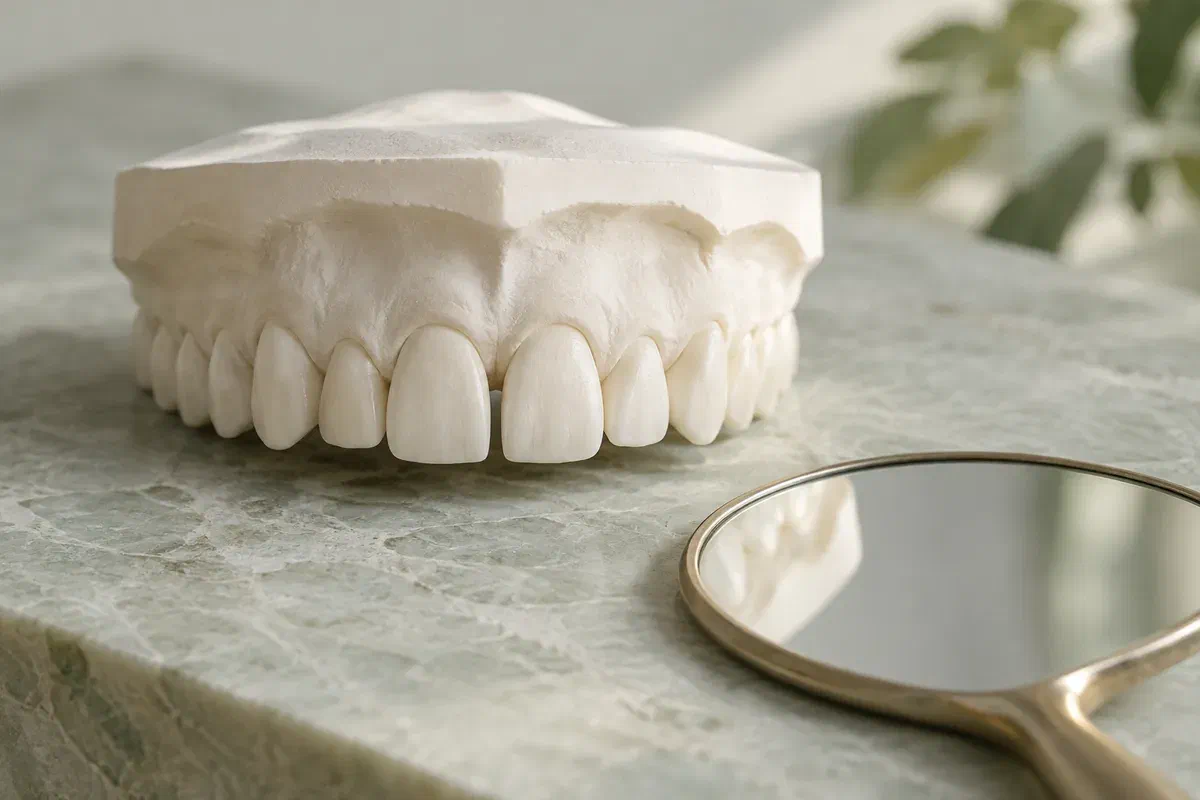
Illustrative upper dental cast with a small space between the central incisors beside a mirror
Patterns we look for

Size, position, and history all count.

Let us know which spaces concern you, whether they have changed, and whether anything is uncomfortable. The same-looking gap can come from tooth size, movement, or a missing tooth.

A lifelong space you would like to soften

Consider whether you want the space closed, made smaller, or spread across several teeth. Ask how each version would alter tooth width, particularly if one tooth is already narrow. A balanced look sometimes involves a little remaining space.

A gap that has appeared or widened

Report bleeding, a tooth that feels loose, soreness, or shifting elsewhere. Those signs mean the teeth and supporting tissues need checking before cosmetic work is chosen. A changing gap needs a reason, not just a cover.

Room around a narrow or missing tooth

What you see may come down to the size, shape, or absence of one tooth. Planning may combine restoring a small tooth, replacing a missing one, and moving others. Clarify how space would be shared so the neighbouring teeth stay in proportion.

Many children have spaces while teeth are still coming in, and some have teeth that never form. Ask whether a child's spacing should simply be monitored and when an assessment would be useful.

What you gain from a full plan

Proportions that make sense across the whole smile

When a tooth is small or missing, closing one gap in isolation can leave the smile looking uneven. A fuller plan considers how much room each tooth needs, whether some space should be kept for a replacement, and whether material or movement would give the most natural widths. Ask to see how those pieces fit together.

Looking at the whole arch also helps with timing. Replacement decisions, orthodontic movement, and restorations often depend on each other. Knowing the order in advance avoids changing the available space in a way that limits a later step.

Clarity about what the teeth are telling you

Ask whether the spacing is a stable feature, connected to tooth size, or linked to a condition that needs attention. Learn which findings are firm and which need further records. That separates health priorities from cosmetic preferences.

Space placed where it is most useful

Sometimes the best first step is to move space, for example to create room for a replacement tooth or to balance widths before bonding. Ask how that would affect the final look and what each stage is meant to achieve.

A realistic idea of long-term care

Moved teeth need retention, and restorations or replacements need reviews and eventual upkeep. Ask what that involves, how often you would be seen, and which fees are covered. Maintenance belongs in the decision from day one.

How planning comes together

Map the space, then decide how to share it.

Your appointments depend on the findings and the route you choose. Ask whether the first visit is assessment only and whether further records or another clinician's opinion may be helpful.

  1. Tell us the background

    Point out the spaces and describe how long they have been there. Mention teeth that never came in, extractions, earlier braces or bonding, and retainers. Share what you like about your smile so the plan builds on it.

  2. Examine sizes, positions, and the bite

    The clinician checks the health of each tooth and the gums, how wide the teeth are, where they sit, and how they meet. Photographs, models, or X-rays may be suggested. Ask whether another issue should be handled first.

  3. Compare combined and single approaches

    Review each suitable route with its preparation, risks, maintenance, fees, and limits. Ask how widths and positions of the front teeth would change. If several clinicians are involved, confirm who plans the final arrangement and the order of stages.

  4. Review the result and care plan

    As treatment progresses and afterwards, discuss appearance, cleaning, comfort, and contacts. Confirm retention after movement and reviews for any restorations or replacements. If spacing returns, ask for reassessment before another intervention.

Caring for the new arrangement

Cleaning, retention, and regular reviews

Aftercare depends on whether teeth were moved, built up, replaced, or simply observed. Ask for instructions that fit the treatment you actually had.

Clean around restored and replaced teeth

Built-up teeth and replacements can change how floss and brushes reach between teeth. Ask which tools suit the new contacts. Let us know about food trapping, shredding floss, or anything that feels rough to your tongue.

Keep moved teeth in place

Follow your retainer instructions and ask about cleaning, checks, and replacement. If it is lost, damaged, or stops fitting, contact the provider promptly. Never use bands or other home methods to hold a gap shut.

Watch for wear and new spaces

Bonded material may chip, wear, or stain over time, so ask which changes should prompt a review. Mention a space that opens or widens. The reason should be checked rather than assuming more material or movement is the fix.

Patient information: British Orthodontic Society — maintaining positions with retainers

Ways forward

Move, build up, replace, or keep.

Ask what each route would change about tooth position, size, and later care. A visible gap does not by itself mean that veneers or orthodontics are needed.

When shifting teeth balances the space

Orthodontic repositioning

Movement may close gaps or gather space where a replacement or restoration will go. Discuss the bite, the appliance, and the retention plan. The overall pattern of spacing matters, so one gap is not fixed in a way that unsettles another area.

When adding width suits a small tooth

Building up a narrow tooth

Bonding or another restoration can sometimes give a small tooth more natural proportions. Look at how wide the tooth would become, whether it can be cleaned easily, and what preparation and upkeep it needs. If veneers are suggested, ask why fuller coverage is preferred over a smaller addition.

When a missing tooth, gum health, or preference leads

Replacement, health care, or no change

Replacing a missing tooth, gum care, or another assessment may come before closing spaces. You might also choose to keep healthy spacing. Ask what monitoring suits you and what would be a reason to come back.

Brampton gap and tooth-size questions

Questions about small teeth, missing teeth, and spacing

Conversations about spacing can include preferences, tooth proportions, replacements, oral health, and long-term upkeep. No decision is needed before the assessment.

(905) 876-4488
Why does my front gap look worse next to one small tooth?
A narrow tooth nearby can make spacing more noticeable and harder to balance. Ask whether building up that tooth, moving teeth, or both would give more even proportions.
Can a small lateral tooth be made to match its neighbours?
Tooth-coloured material may be able to add width or improve shape in some cases. Ask how much change is realistic, what preparation is involved, and how the tooth would be maintained.
If a tooth never developed, should the space be closed or kept for a replacement?
Both may be possible depending on the bite and surrounding teeth. Ask how each option would affect the smile and function, and coordinate replacement and movement decisions before the space changes.
Will closing one space create gaps elsewhere?
It can, if room simply shifts to another area. That is why the whole arch is considered. Ask where the space would end up and how the final arrangement would be held.
Can a family member with similar spacing be seen too?
Yes. Spacing patterns sometimes run in families, though each person needs their own assessment. Mention it when booking so appointments can be arranged together if that helps your household.
Does bonding a narrow tooth mean it will need work again later?
Probably at some point, since composite can need repair or replacement over the years. Ask what typical upkeep involves, what changes to look out for, and how often it should be reviewed.
Spacing care for Brampton

Bring your questions about the teeth around the gap.

Our Bronte Street practice can look at spacing, tooth size, missing teeth, and the change you would value in a single assessment. We will explain the findings and help you compare movement, restorative, replacement, or monitoring options.

Suitability, timing, and fees depend on your own examination, as does the cause of any spacing. Deciding not to close a healthy gap is a perfectly reasonable outcome.

Visit Milton Dental Clinic
Unit 1, 342 Bronte St. S, Milton, ON L9T 5B7
Get directions Clinic hours
Monday–Thursday
11am–7pm
Friday–Sunday
By appointment only

Areas we serve

  • Milton
  • Oakville
  • Mississauga
  • Georgetown
  • Halton Hills
  • Acton
  • Campbellville
  • Brampton
  • Burlington
  • Puslinch
  • Rockwood
  • Erin
  • Caledon
  • Etobicoke
  • Old Milton
  • Bronte Meadows
  • Timberlea
  • Dorset Park
  • Dempsey
  • Clarke
  • Beaty
  • Coates
  • Harrison
  • Scott
  • Willmott
  • Ford
  • Bowes
  • Cobden
  • Walker
  • Mountain View
  • Milton Heights
  • Hawthorne Village
  • Valley View
  • Fallingbrook
  • Nassagaweya
  • Trafalgar
  • Esquesing
  • Nelson
  • Brookville
  • Moffat
  • Glen Williams
  • Norval
  • Limehouse
  • Stewarttown
  • Ashgrove
  • Hornby
  • Silver Creek
  • Speyside
  • Scotch Block
  • North Oakville
  • River Oaks
  • Glen Abbey
  • West Oak Trails
  • Palermo
  • Bronte Creek
  • College Park
  • Joshua Creek
  • Uptown Core
  • Preserve
  • Iroquois Ridge
  • Lisgar
  • Meadowvale
  • Meadowvale Village
  • Churchill Meadows
  • Erin Mills
  • Central Erin Mills
  • Streetsville
  • East Credit
  • Creditview
  • Heartland
  • Sheridan
  • Mount Pleasant
  • Credit Valley
  • Huttonville
  • Churchville
  • Springbrook
  • Northwest Brampton
  • Bram West
  • Fletcher's Meadow
  • Fletcher's Creek South
  • Alton Village
  • Orchard
  • Millcroft
  • Headon Forest
  • Tansley
  • Brant Hills
  • Tyandaga
  • Kilbride
  • Lowville
  • Aberfoyle
  • Morriston
  • Arkell
  • Hillsburgh
  • Freelton
  • Carlisle
  • Waterdown
  • Flamborough
  • Mountsberg

How can we help?

Milton Dental Clinic

Have a question about your smile? Choose the option that works best for you.

For urgent dental concerns, please call.
Messages are reviewed during clinic hours.