

Illustrative patient and clinician discussing tooth spacing with a dental study model
Cosmetic Dentistry

Treatment for Gapped Teeth in Erin

You like your gap. You just want to be sure it is healthy, and to know what to watch for. Treatment for gapped teeth for Erin adults can be as simple as an assessment and a monitoring plan, with closure options explained in case you ever change your mind.

Keeping your gap, from Erin

Sometimes the plan is to change nothing.

A gap between the front teeth can be a signature feature. Plenty of people would not dream of closing theirs, and there is no clinical rule that says a healthy, stable space must go. What is worth having is confidence that it is healthy, and a clear sense of what kind of change would be a reason to come back.

A diastema can sometimes reflect something else going on, such as gum changes, a shift in the bite, or a missing tooth. An examination helps rule those in or out. If the space is simply part of how your teeth are arranged, monitoring may be all that is needed, alongside good cleaning around it.

Living in Erin village, Hillsburgh, or the countryside nearby, you may prefer to fold this into a routine checkup. Ask us to look at the gap and explain what we see. If you ever decide on a change, we can talk through moving teeth, adding material, or a combination, but there is no pressure to choose one.

Have your gap checked
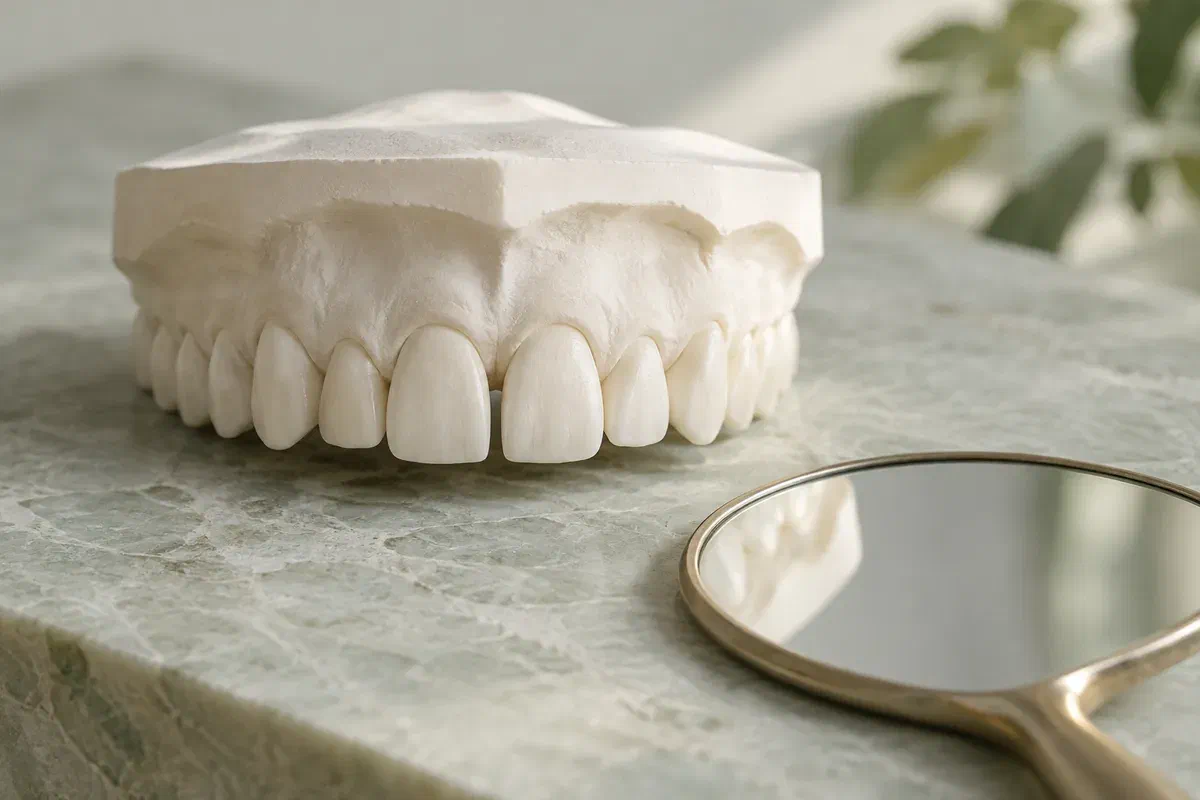
Illustrative upper dental cast with a small space between the central incisors beside a mirror
What to keep an eye on

Stable is fine. Changing is worth a call.

Let us know whether your gap has looked the same for years and whether you have noticed anything new. A monitoring plan is built on knowing what normal looks like for you.

A gap you are happy to keep

When the space has stayed the same and you like it, the main questions are about health and cleaning. Ask what signs would suggest a change worth checking, and how to tell normal variation from real movement. If you ever consider altering it, ask whether a smaller adjustment might keep its character.

A gap that starts to change

Widening, a tooth that feels loose, bleeding gums, or soreness are reasons to book rather than wait. The teeth and supporting tissues should be assessed. A change in a long-familiar gap deserves an explanation.

Spacing linked to a small or missing tooth

If the gap sits beside a narrow tooth or a space where a tooth is missing, ask whether monitoring is still the best plan. Sometimes replacement or restoration is worth discussing for reasons other than appearance.

Children's gaps often close or shift as adult teeth come in. Ask whether a young person's spacing simply needs watching at their usual checkups.

Why a check is still useful

Peace of mind, and options on file

Even if you have no plans to change your gap, a careful look offers reassurance. The clinician can explain whether the space appears stable and healthy, how to clean around it, and what to watch for. That turns a vague worry into a clear plan, and gives you a record to compare against in future.

It also leaves the door open. Should you ever want to narrow or close the space, you will already understand the options: movement changes position, added material changes width, and some plans combine both. Knowing how each would affect the rest of the arch helps any future decision.

A clear reading of the gap's health

Ask whether the spacing looks stable or connected to anything that needs care. Find out which findings are definite and which would need further records. That tells you whether monitoring is the right plan.

An outline of future options, if wanted

Ask how closing, narrowing, or redistributing space would work for your teeth, and how it would relate to any planned restoration. There is no need to decide, but it helps to know what is possible.

A simple monitoring routine

Ask how often the gap should be reviewed, whether that fits with your regular checkups, and which changes should prompt an earlier visit. A good monitoring plan is easy to follow.

What a check involves

Look, explain, and agree on what to watch.

A monitoring visit is often simple, while planning treatment may take longer. Ask what the appointment will cover and whether photographs or other records would be useful for future comparison.

  1. Tell us about your gap

    Describe how long you have had the space and whether it has changed. Mention any earlier braces, bonding, lost teeth, or retainers. Say that you would like to keep it, so the focus stays on health and monitoring.

  2. Examine the teeth and gums

    The clinician checks the gums, tooth stability, positions, and contacts. A photograph or other record may be taken to compare against later. Ask whether anything needs attention now and what normal looks like for your teeth.

  3. Hear the options, if you want them

    For anyone curious, the clinician can explain suitable routes with their preparation, risks, upkeep, fees, and limits. Ask how each would change the width and position of the visible teeth. Otherwise, the conversation can stay on monitoring.

  4. Agree on reviews

    Settle how often the gap should be checked and what changes mean an earlier visit. If you ever do have treatment, confirm retention or restoration reviews. If the space alters, ask for reassessment before any new intervention.

At home

Clean the gap well and notice changes.

If you are monitoring a gap, your home routine is the main care. If you have had treatment, ask for instructions specific to what was done.

Clean around and through the space

A gap can collect food along the gum line, especially where the teeth curve toward each other. Ask whether floss, tape, or a small brush suits it best, and how to angle it. Keep an eye on bleeding or tenderness, since healthy gums help keep the teeth stable.

If teeth are ever moved, use retention

Should you choose orthodontic treatment in the future, retainers would be needed to hold the result. Ask about wear, cleaning, and replacement. Never try bands or home methods to close a gap.

Notice changes in width or comfort

Take an occasional look in the mirror or compare photos. Mention a gap that widens, a new space elsewhere, or any change after bonding. The reason should be reviewed rather than assuming treatment is needed.

Patient information: British Orthodontic Society — maintaining positions with retainers

If you ever decide on a change

Keeping the gap is one option among three.

Ask what each route would change about tooth position, shape, and ongoing care. A visible gap does not mean veneers or orthodontics are necessary.

If closing or reshaping spacing appeals

Orthodontic movement, later on

Moving teeth could close or redistribute spaces, or prepare room for a restoration. Discuss the bite, the appliance, and retention. The full spacing pattern would be considered, so closing one gap does not create uncertainty elsewhere.

If narrowing the gap slightly appeals

A small bonded addition

A little material might narrow some gaps while keeping their character. Ask how wide the teeth would become, how they would clean, and what upkeep follows. If veneers are mentioned, ask why fuller coverage would be needed.

When the gap is healthy and you like it

Monitoring and keeping the space

With healthy teeth and gums, keeping the gap is a sound choice. Gum care, or a plan for a missing tooth, may still be recommended for its own sake. Ask what monitoring suits you, how often it should happen, and what changes should bring you back.

Erin questions about keeping a gap

Living happily with a space

These questions often come from people who like their gap and want to keep it healthy. No decision about treatment is needed.

(905) 876-4488
Is there any health reason to close a gap I like?
Often there is none. When the space is stable and the teeth and gums are healthy, keeping it is a reasonable choice. The assessment can confirm whether that applies to you, and the clinician can point out anything, such as gum changes or a missing tooth, that would alter the advice.
How often should a gap I am keeping be checked?
This can usually fit with your regular checkups. Ask what interval is advised and which changes would mean booking sooner. A photograph taken at one visit makes it easier to compare the width at the next.
Can a gap get bigger with age?
Teeth can shift over time, and changes in the gums or bite can affect spacing. Noticing that it has widened is a reason to mention it, so the cause can be looked at before you decide whether anything needs to be done.
What is the best way to keep the gums healthy around a gap?
Ask for a demonstration of cleaning with floss, tape, or a small brush. Regular cleaning along the gum line helps, and bleeding or tenderness is worth reporting.
If I change my mind later, will closing the gap be harder?
Not necessarily. Options depend on your teeth and gums at the time. Keeping records now, such as a photograph, can help future planning.
Can my gap be checked at the same visit as a routine cleaning?
Often, yes. Mention it when booking from Erin so the time can be planned, which may save a separate trip.
Gap checks for Erin

A healthy gap deserves a simple plan.

Visit our Bronte Street practice for a look at your gap, your gums, and how to care for both. We will explain what we see and set out a monitoring routine, with movement or bonding options described only if you want to hear them.

The health of a gap, any underlying cause, suitability for treatment, timing, and fees need individual assessment. Keeping a healthy gap is always valid.

Visit Milton Dental Clinic
Unit 1, 342 Bronte St. S, Milton, ON L9T 5B7
Get directions Clinic hours
Monday–Thursday
11am–7pm
Friday–Sunday
By appointment only

Areas we serve

  • Milton
  • Oakville
  • Mississauga
  • Georgetown
  • Halton Hills
  • Acton
  • Campbellville
  • Brampton
  • Burlington
  • Puslinch
  • Rockwood
  • Erin
  • Caledon
  • Etobicoke
  • Old Milton
  • Bronte Meadows
  • Timberlea
  • Dorset Park
  • Dempsey
  • Clarke
  • Beaty
  • Coates
  • Harrison
  • Scott
  • Willmott
  • Ford
  • Bowes
  • Cobden
  • Walker
  • Mountain View
  • Milton Heights
  • Hawthorne Village
  • Valley View
  • Fallingbrook
  • Nassagaweya
  • Trafalgar
  • Esquesing
  • Nelson
  • Brookville
  • Moffat
  • Glen Williams
  • Norval
  • Limehouse
  • Stewarttown
  • Ashgrove
  • Hornby
  • Silver Creek
  • Speyside
  • Scotch Block
  • North Oakville
  • River Oaks
  • Glen Abbey
  • West Oak Trails
  • Palermo
  • Bronte Creek
  • College Park
  • Joshua Creek
  • Uptown Core
  • Preserve
  • Iroquois Ridge
  • Lisgar
  • Meadowvale
  • Meadowvale Village
  • Churchill Meadows
  • Erin Mills
  • Central Erin Mills
  • Streetsville
  • East Credit
  • Creditview
  • Heartland
  • Sheridan
  • Mount Pleasant
  • Credit Valley
  • Huttonville
  • Churchville
  • Springbrook
  • Northwest Brampton
  • Bram West
  • Fletcher's Meadow
  • Fletcher's Creek South
  • Alton Village
  • Orchard
  • Millcroft
  • Headon Forest
  • Tansley
  • Brant Hills
  • Tyandaga
  • Kilbride
  • Lowville
  • Aberfoyle
  • Morriston
  • Arkell
  • Hillsburgh
  • Freelton
  • Carlisle
  • Waterdown
  • Flamborough
  • Mountsberg

How can we help?

Milton Dental Clinic

Have a question about your smile? Choose the option that works best for you.

For urgent dental concerns, please call.
Messages are reviewed during clinic hours.