

Illustrative patient and clinician discussing tooth spacing with a dental study model
Cosmetic Dentistry

Treatment for Gapped Teeth in Halton Hills

A wedding next summer, a graduation, a milestone birthday: a date on the calendar is often what prompts the question about a tooth gap. Treatment for gapped teeth in Halton Hills starts by checking the cause, then looks honestly at what different timelines allow.

Halton Hills, with a date in mind

Is there enough time, and is it the right change?

Deadlines are a very human reason to think about your smile. They also tend to push people toward whatever sounds fastest. It helps to step back and ask two questions in order: why the space is there, and which approach would suit it. Only then does the calendar become a useful part of the decision rather than the whole of it.

A gap between teeth, or diastema, is often just a natural feature. Some people would rather keep theirs for the big day. Where change is wanted, moving teeth usually takes longer and needs a retainer; adding material can be quicker but makes the teeth wider. Each affects proportions, contacts, cleaning, and the bite in its own way.

Households across Georgetown, Acton, Glen Williams, and the surrounding hamlets can begin with a consultation that sets out what is realistic. Tell us about the date and the result you are imagining. We will explain the findings and options frankly, including the choice to leave a healthy space exactly as it is.

Talk about timing and your gap
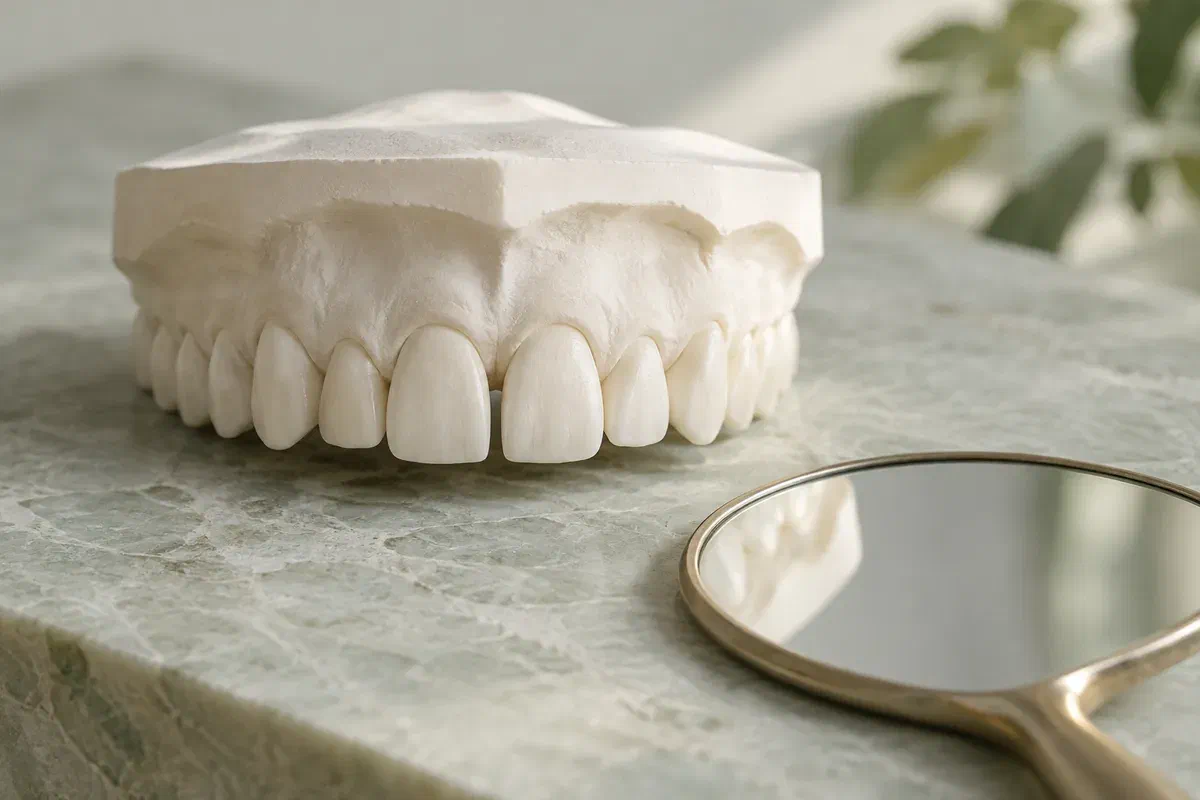
Illustrative upper dental cast with a small space between the central incisors beside a mirror
Before you count the weeks

A few things can change the timeline.

Explain whether one gap or several are on your mind, how long they have been there, and whether there are any symptoms. Health findings can affect what is sensible before an event.

A long-held gap you would like gone for the occasion

Decide whether full closure, a slimmer gap, or a more even spread would feel right in photographs. Ask how each would change the look of the teeth on either side. Sometimes a smaller adjustment fits the timeline and the proportions better.

A space that has only recently appeared

Bleeding, a loose tooth, tenderness, or shifting elsewhere should be mentioned straight away. The teeth and supporting tissues need assessment first, and that may take priority over the event date. Covering a new gap without knowing its cause is not advisable.

Spacing tied to a small or missing tooth

When a tooth is narrow or absent, the best result might involve restoring or replacing it as well as moving others. Ask which parts of that plan could realistically happen before your date and which might follow later.

Children in the wedding party or family photos may have spaces simply because their teeth are still developing. Ask whether a young person's gap should be watched rather than treated.

Why plan early

More time usually means more choice.

Starting the conversation well ahead of an event keeps all the options open. A gap that might suit orthodontic closure can still be addressed that way if there is time for movement and retention. If time is short, a material-based option might be discussed, but it will widen the teeth, and that trade-off should be clear before you agree to it.

Early planning also gives room to deal with anything else the examination finds. Gum care, a bite concern, or a missing tooth can all affect what is appropriate. Sorting those out first avoids rushing a cosmetic change that would have to be redone later.

An honest reading of the findings

Ask whether the gap seems to be a stable variation or connected to something that needs care. Clarify what is certain and what needs more records. That helps you see whether health care must come before the date.

Options lined up against your calendar

Ask how long closing, narrowing, or redistributing space would take with each method. Sometimes an interim step before the event and a final step afterwards makes sense. You should know what each stage is meant to achieve.

A clear sense of what comes after

Retainers usually follow movement, and bonded material may need repair or replacement in time. Ask about review visits and which fees are included. The event is one day; the upkeep continues long after it.

Working back from the date

Assess first, then build the timeline.

The pace of treatment depends on what is found and which option you prefer. Tell us your date when booking, and ask what the first appointment will include and whether more records may be needed.

  1. Share the occasion and your goals

    Point out the gap and explain what you would like it to look like on the day. Mention any earlier braces, bonding, extractions, or retainers. If there is a feature of your smile you want to keep, say so now.

  2. Check health before planning cosmetics

    The clinician looks at the teeth, gums, positions, and contacts. Photographs or models may help show how a change would look. Ask whether anything needs treatment first and how that affects what can be done before your date.

  3. Weigh the options against the time available

    Each suitable route is discussed with its preparation, risks, upkeep, fees, and limits, as well as how long it usually takes. Ask how the front teeth would change in width and position. If more than one clinician is involved, confirm who leads.

  4. Review after the event, too

    Discuss comfort, appearance, cleaning, and contacts during and after treatment. Confirm retention if teeth moved and reviews for any bonding. If the space reopens later, come back for reassessment before adding further treatment.

Keeping it looking right

Simple habits protect the change.

Your instructions will depend on the care you received, whether that was movement, bonding, or watchful waiting. Ask for guidance that fits your own treatment.

Clean between teeth that now meet

New contacts can change how floss slides through. Ask whether a different tool or technique would help. Let us know if food gets trapped, floss shreds, or a contact feels awkward, because comfort day to day matters as much as photographs.

Keep wearing the retainer after the event

Retention is easy to forget once the big day has passed. Keep to the wear schedule you were given, clean it as shown, and find out when it should be checked. A lost, cracked, or ill-fitting retainer is a reason to call the provider soon. Never improvise with bands at home.

Watch for chips, stains, or new spacing

Bonded material can wear or pick up colour over time. Ask which changes should prompt a review. If another gap appears or the original one widens, the reason should be explored before assuming more material or movement is needed.

Patient information: British Orthodontic Society — maintaining positions with retainers

Choices and their pace

Each route moves at its own speed.

Ask what each approach changes about tooth position, shape, and upkeep, and how long it usually takes. A noticeable gap does not by itself mean veneers or orthodontics are necessary.

When there is time to reposition teeth

Orthodontic movement

Moving teeth can close or rebalance spaces, or set aside room that a later restoration will use. It tends to need months rather than weeks, so raise the bite, the type of appliance, the likely duration, and the retainer plan early. The whole pattern of spacing deserves attention, not just the front gap.

When adding width suits the teeth

Composite added at the gap

Bonding may suit some gaps and tooth shapes and can sometimes be done sooner. Think about the final width, how the area would be cleaned, and the upkeep involved. If veneers are mentioned, ask why fuller coverage would be needed.

When oral health or preference takes priority

Health first, or keep the space for now

Gum care or assessment of a missing tooth may need to come before closure. You might also decide to keep your gap for the event and revisit the idea later. Ask what monitoring is sensible in the meantime.

Halton Hills timing questions

How soon, how long, and what happens next

These questions often come up when a date is set. You do not need to choose a treatment before your visit.

(905) 876-4488
How far ahead of an event should I ask about closing a gap?
The earlier the better, since some options take longer than others. Book a consultation once you know the date so the cause and suitable routes can be discussed while there is still a full range of choices.
If time is short, is bonding my only option?
Not necessarily, and it may not suit every gap. Ask how bonding would change your tooth proportions and whether a partial change, an interim step, or keeping the gap for now could be better.
Could I start orthodontics now and still look natural in photos?
Ask the clinician what appliance would be involved and how it would look during treatment. Timing the start or pause of certain stages around an event can sometimes be discussed.
Can a gap be made smaller rather than closed before the day?
A partial change is a valid goal. Explain this at the start so planning reflects it, and ask how the result would be maintained afterwards.
What if a health issue is found during the assessment?
It will usually need attention before cosmetic work. The clinician can explain what is involved and how it may affect timing. Your long-term oral health comes before any deadline.
Will a recently appeared gap need investigating even if I only want it hidden?
Yes. A new space can reflect a change in the teeth or supporting tissues. Mention bleeding, looseness, or discomfort so the cause can be understood first.
Gap care for Halton Hills

Start the conversation while every option is still open.

Come to our Bronte Street practice for a consultation about the gap, your proportions, and the timeline you are working to. We will explain what we find and compare movement, bonding, or monitoring options with you, without pressure to rush.

The cause of spacing, oral health, which treatments suit you, how long they take, and fees all need individual assessment. Keeping a healthy gap remains a valid choice.

Visit Milton Dental Clinic
Unit 1, 342 Bronte St. S, Milton, ON L9T 5B7
Get directions Clinic hours
Monday–Thursday
11am–7pm
Friday–Sunday
By appointment only

Areas we serve

  • Milton
  • Oakville
  • Mississauga
  • Georgetown
  • Halton Hills
  • Acton
  • Campbellville
  • Brampton
  • Burlington
  • Puslinch
  • Rockwood
  • Erin
  • Caledon
  • Etobicoke
  • Old Milton
  • Bronte Meadows
  • Timberlea
  • Dorset Park
  • Dempsey
  • Clarke
  • Beaty
  • Coates
  • Harrison
  • Scott
  • Willmott
  • Ford
  • Bowes
  • Cobden
  • Walker
  • Mountain View
  • Milton Heights
  • Hawthorne Village
  • Valley View
  • Fallingbrook
  • Nassagaweya
  • Trafalgar
  • Esquesing
  • Nelson
  • Brookville
  • Moffat
  • Glen Williams
  • Norval
  • Limehouse
  • Stewarttown
  • Ashgrove
  • Hornby
  • Silver Creek
  • Speyside
  • Scotch Block
  • North Oakville
  • River Oaks
  • Glen Abbey
  • West Oak Trails
  • Palermo
  • Bronte Creek
  • College Park
  • Joshua Creek
  • Uptown Core
  • Preserve
  • Iroquois Ridge
  • Lisgar
  • Meadowvale
  • Meadowvale Village
  • Churchill Meadows
  • Erin Mills
  • Central Erin Mills
  • Streetsville
  • East Credit
  • Creditview
  • Heartland
  • Sheridan
  • Mount Pleasant
  • Credit Valley
  • Huttonville
  • Churchville
  • Springbrook
  • Northwest Brampton
  • Bram West
  • Fletcher's Meadow
  • Fletcher's Creek South
  • Alton Village
  • Orchard
  • Millcroft
  • Headon Forest
  • Tansley
  • Brant Hills
  • Tyandaga
  • Kilbride
  • Lowville
  • Aberfoyle
  • Morriston
  • Arkell
  • Hillsburgh
  • Freelton
  • Carlisle
  • Waterdown
  • Flamborough
  • Mountsberg

How can we help?

Milton Dental Clinic

Have a question about your smile? Choose the option that works best for you.

For urgent dental concerns, please call.
Messages are reviewed during clinic hours.