

Illustrative patient and clinician discussing tooth spacing with a dental study model
Cosmetic Dentistry

Treatment for Gapped Teeth in Rockwood

Veneers were suggested for a gap, and you are wondering whether something smaller would do. Treatment for gapped teeth for Rockwood adults compares the scale of each option, from monitoring to modest bonding to movement, against the cause and the result you actually want.

Rockwood, weighing the scale of treatment

How much treatment does one gap need?

Treatments for spacing range from very little to quite a lot. At one end is simply keeping a healthy gap. In the middle sit small additions of bonding or limited tooth movement. Further along are veneers, which cover the front of the teeth and usually involve some preparation. Knowing where a recommendation falls on that scale, and why, is the starting point for a confident decision.

Before scale comes cause. A diastema may be a harmless trait, or it may reflect gum changes, a shifted bite, or a missing tooth. The appropriate response follows from that. Then each option can be compared for its effect on tooth proportions, contacts, cleaning, how much natural tooth is involved, and future upkeep.

Coming in from Rockwood, bring any treatment plan you have already been given. We will explain our findings and talk through the range of approaches that suit them, from the most conservative upward, so you can see what each would and would not change. Keeping the gap is one of those choices.

Compare the range of gap options
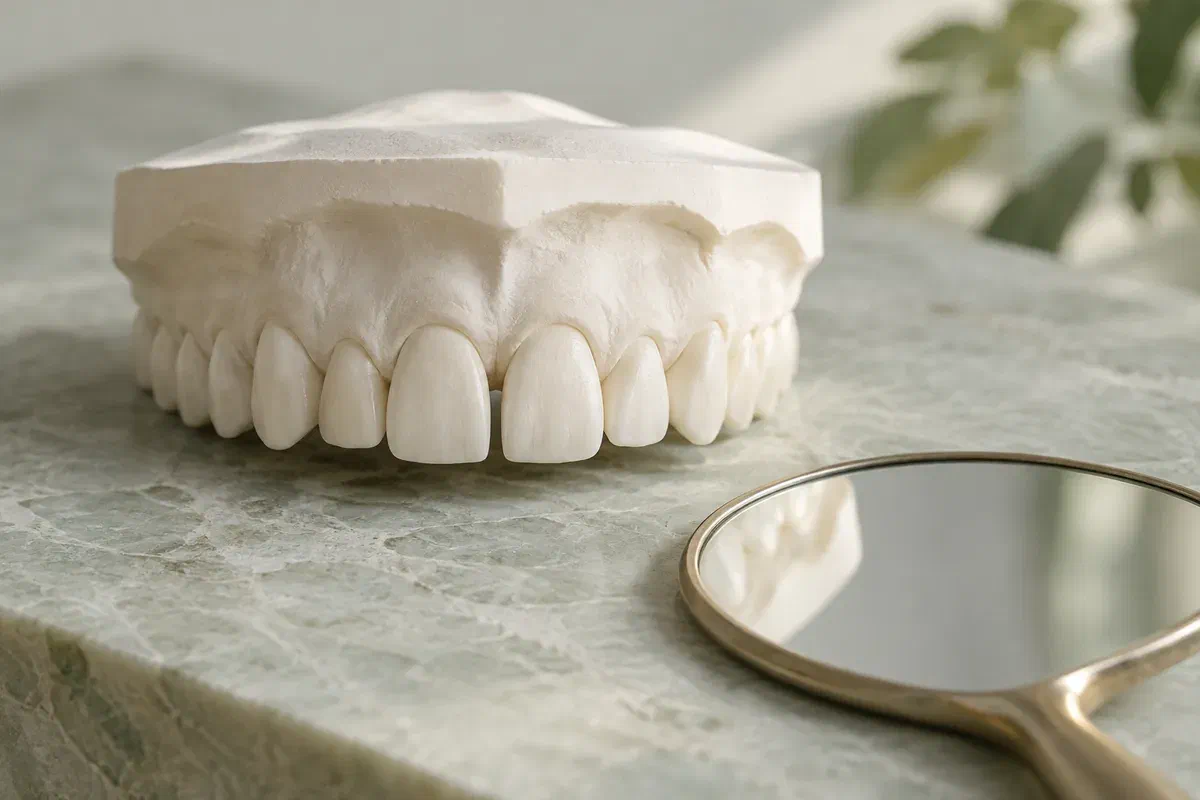
Illustrative upper dental cast with a small space between the central incisors beside a mirror
Questions to settle first

Is the space cosmetic, structural, or a sign of change?

Tell us about each gap, how it has behaved over time, and whether anything else bothers you about the teeth. The answer shapes how much treatment is reasonable.

A gap that is the only thing you would change

If the teeth are otherwise healthy and you like their colour and shape, ask whether a smaller intervention could address the space. Think about whether you want it closed, narrowed, or evened out, and how each would affect tooth width.

Spacing that has appeared or grown

New or widening spacing needs a reason before any covering is considered. Mention bleeding, a tooth that shifts, soreness, or bite changes. The gums and supporting structures should be assessed before choosing a cosmetic approach.

Spacing around a small, worn, or missing tooth

When a tooth is undersized or absent, the plan might include restoring or replacing it as well as moving others. In that situation, fuller coverage may sometimes be discussed for reasons beyond the gap. Ask how the space would be divided.

Gaps in children's teeth are common while adult teeth erupt. Ask whether a young person's spacing needs only monitoring, rather than any cosmetic treatment.

What a comparison shows you

The smallest change that achieves what you want

When treatments differ in scale, it helps to see them side by side. Bonding adds a small amount of material to the edges of teeth; veneers cover more of the surface; orthodontics moves teeth without changing their shape. Ask what each would achieve on your teeth, how much natural tooth each would involve, and whether a lighter option might reach a similar result.

There can be good reasons for a larger plan, such as colour or shape concerns on several teeth, worn edges, or a missing tooth. A clear explanation of those reasons, and of the whole arch and bite, lets you decide whether the extra scope is worth it to you.

An explanation of the underlying cause

Ask whether the spacing looks stable or connected to a condition needing care. Find out which conclusions are firm and which need further records. Health priorities should be settled before choosing the size of a cosmetic plan.

Options listed from conservative to extensive

Ask to hear the choices in order of how much they change the teeth. Sometimes moving space first allows a smaller restoration later. Each stage should have a clear goal you understand.

Maintenance for each level of treatment

Retainers follow movement; bonding and veneers can each need repair or replacement over time. Ask what reviews involve and which fees are included. Upkeep often grows with the scope of treatment.

Getting a balanced view

See the full range before you choose.

The appointments you need depend on what is found and the approach you prefer. Ask what the first visit covers and whether more records or an orthodontic opinion would add useful information.

  1. Bring the plan you were given

    Share any earlier recommendations and describe the gap's history. Mention past braces, bonding, lost teeth, or retainers. Tell us what you like about your teeth, such as their colour or shape, so the plan does not change more than necessary.

  2. Examine teeth, gums, and the bite

    The clinician looks at tooth health, gums, positions, contacts, and how the jaws meet. Photos or study models might help compare options visually. Ask whether anything should be treated first and how that affects timing.

  3. Compare options by scale

    Each suitable approach is laid out with how much tooth it involves, what preparation it needs, its risks, upkeep, fees, and what it cannot achieve. Ask how the visible teeth would change. If another clinician would be involved, confirm who coordinates.

  4. Review and maintain the result

    During and after treatment, discuss comfort, appearance, cleaning access, and contacts. Agree on retention if teeth moved and a review routine for any restorations. If a space returns, ask for reassessment before stepping up to a larger treatment.

Looking after your choice

Upkeep follows the treatment you picked.

Moving teeth, bonding, veneers, and simple observation each bring different instructions. Ask for advice that suits the treatment you actually had.

Clean the edges and contacts

Restored edges and new contacts can change how floss and brushes work. Ask which tools suit your teeth now. Mention food trapping, floss catching, or a rough margin, since these small issues are easier to fix early.

Keep moved teeth stable

If teeth were repositioned, follow the retainer schedule and ask how it should be cleaned and checked. A retainer that is lost, cracked, or tight is a reason to get in touch soon. Avoid any improvised way of holding a gap shut.

Report chips, staining, or new spaces

Bonding and veneers can chip or show wear at the edges. Ask which signs should prompt a review. If a space opens elsewhere or the original gap returns, the cause should be revisited before a bigger treatment is assumed.

Patient information: British Orthodontic Society — maintaining positions with retainers

From smallest to largest

A spectrum of choices for a gap

Ask how each approach changes tooth position, shape, and future care. A visible gap does not automatically mean veneers or orthodontics are required.

When changing position is enough

Movement without reshaping

Orthodontics can bring teeth together or set aside room for a later restoration, leaving their shape unchanged. Talk about the bite, the appliance, and retention. Plan the whole spacing pattern so closing one gap does not unsettle the rest.

When adjusting tooth size suits the gap

Modest additions, or fuller coverage

Small amounts of bonding may suit some gaps; veneers cover more of the tooth and usually involve preparation. Ask why the larger option would be needed, what a smaller addition could achieve, and how each would clean and be maintained.

When oral health or your preference decides

Health first, or no treatment

Gum care or assessment of a missing tooth may need to come first. You may also decide the gap is fine as it is. Ask what monitoring suits you and which changes would be worth a visit.

Rockwood questions about treatment scale

Bonding, veneers, and the options in between

Comparing the size of different treatments is a sensible part of planning. You do not need to have chosen anything before your assessment.

(905) 876-4488
Why might veneers be suggested for a gap instead of bonding?
Sometimes veneers are discussed when colour, shape, or wear on several teeth is also a concern. Ask what the reasons are in your case and whether bonding or movement could address the gap alone.
Do veneers require removing some tooth surface?
Preparation is usually involved, though the amount varies. Ask how much natural tooth would be affected, what that means long term, and how it compares with bonding or orthodontics.
Is bonding easier to change later than veneers?
Bonding is often more readily adjusted or repaired, but each case differs. Ask how either option could be modified or replaced in the future and what upkeep each involves.
Could moving my teeth avoid the need for any restoration?
In some cases, yes, depending on tooth size and the bite. Ask whether orthodontic closure alone would give balanced proportions or whether a small addition would still help.
Is it reasonable to ask for a second explanation of a treatment plan?
Yes. Understanding why a treatment is proposed is part of informed consent. Bring the plan and ask for the reasoning, alternatives, and maintenance to be explained.
What if I only want the gap slightly smaller?
Say so from the outset. A partial change may be possible with smaller additions or limited movement, and the plan can be designed around that target.
Spacing care for Rockwood

Start with the least you would need, then decide.

Book time at our Bronte Street practice to discuss the gap, any treatment plan you have received, and the result you have in mind. We will explain what we see and compare monitoring, movement, bonding, and fuller options in plain terms.

Causes, oral health, suitability for each treatment, timing, and fees need individual assessment. Keeping a healthy gap is a valid option.

Visit Milton Dental Clinic
Unit 1, 342 Bronte St. S, Milton, ON L9T 5B7
Get directions Clinic hours
Monday–Thursday
11am–7pm
Friday–Sunday
By appointment only

Areas we serve

  • Milton
  • Oakville
  • Mississauga
  • Georgetown
  • Halton Hills
  • Acton
  • Campbellville
  • Brampton
  • Burlington
  • Puslinch
  • Rockwood
  • Erin
  • Caledon
  • Etobicoke
  • Old Milton
  • Bronte Meadows
  • Timberlea
  • Dorset Park
  • Dempsey
  • Clarke
  • Beaty
  • Coates
  • Harrison
  • Scott
  • Willmott
  • Ford
  • Bowes
  • Cobden
  • Walker
  • Mountain View
  • Milton Heights
  • Hawthorne Village
  • Valley View
  • Fallingbrook
  • Nassagaweya
  • Trafalgar
  • Esquesing
  • Nelson
  • Brookville
  • Moffat
  • Glen Williams
  • Norval
  • Limehouse
  • Stewarttown
  • Ashgrove
  • Hornby
  • Silver Creek
  • Speyside
  • Scotch Block
  • North Oakville
  • River Oaks
  • Glen Abbey
  • West Oak Trails
  • Palermo
  • Bronte Creek
  • College Park
  • Joshua Creek
  • Uptown Core
  • Preserve
  • Iroquois Ridge
  • Lisgar
  • Meadowvale
  • Meadowvale Village
  • Churchill Meadows
  • Erin Mills
  • Central Erin Mills
  • Streetsville
  • East Credit
  • Creditview
  • Heartland
  • Sheridan
  • Mount Pleasant
  • Credit Valley
  • Huttonville
  • Churchville
  • Springbrook
  • Northwest Brampton
  • Bram West
  • Fletcher's Meadow
  • Fletcher's Creek South
  • Alton Village
  • Orchard
  • Millcroft
  • Headon Forest
  • Tansley
  • Brant Hills
  • Tyandaga
  • Kilbride
  • Lowville
  • Aberfoyle
  • Morriston
  • Arkell
  • Hillsburgh
  • Freelton
  • Carlisle
  • Waterdown
  • Flamborough
  • Mountsberg

How can we help?

Milton Dental Clinic

Have a question about your smile? Choose the option that works best for you.

For urgent dental concerns, please call.
Messages are reviewed during clinic hours.