

Illustrative patient and clinician discussing front-tooth overlap with a dental model
Cosmetic Dentistry

Treatment for Overbite in Acton

Had braces years ago, stopped wearing the retainer, and now the front teeth seem to overlap more? You are far from alone. From Acton, book an assessment that compares today’s bite with what you remember and sets out whether monitoring or renewed orthodontic care fits.

Acton · a second look after braces

The bite you finished with may not be the bite you have now.

Teeth are not fixed in place for life. After orthodontic treatment, especially once a retainer has been set aside, they can drift. For some adults that shows up as front teeth that cover more of the lower ones than they did on the day the braces came off. Others simply notice that their smile looks different in recent photos.

A shift is not automatically a problem. Some vertical overlap between upper and lower front teeth belongs in a healthy bite. It becomes worth treating when it is excessive or tied to findings such as teeth contacting gum, heavy wear, or complications for cosmetic work. Upper teeth that have moved forward toward the lip are a separate change, overjet, and are judged on their own.

Bring whatever you have from your earlier treatment, even if it is only a memory of what was done. Coming in from Acton, you can expect a plain explanation of how your bite compares now, which findings matter, and whether an orthodontist’s view is worthwhile. Any reason to intervene should make sense to you before retreatment options come up.

Recheck your bite
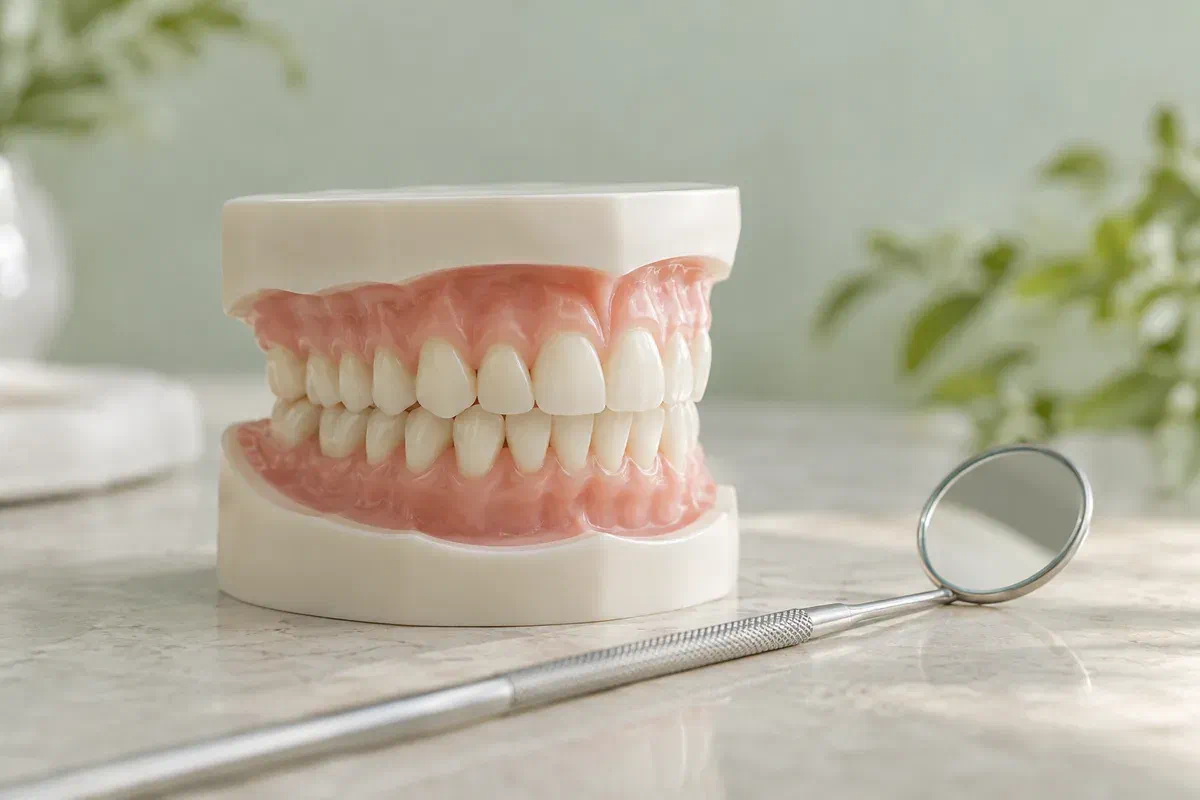
Illustrative paired dental teaching model viewed from the side to show front-tooth overlap
Changes since treatment

Tell us what is different from before.

How the teeth look today is one data point. What has shifted, when you noticed it, and any discomfort or wear help the clinician understand the change.

More of the lower teeth hidden than before

Describe how the overlap has changed and roughly when. Old photos can be surprisingly helpful as a comparison. Ask how depth will be assessed today, keeping in mind that a picture raises the question while the examination of your full bite answers it.

New pressure on gum or palate

Contact with soft tissue that was not there before is worth mentioning straight away. Point out where it happens and whether it is sore. Ask whether the shifted overlap is responsible and what should come first.

Edges or bonding showing new wear

If front edges have chipped or older bonding is breaking down, mention it, along with any thoughts about veneers. Ask whether changed contacts could be involved. New cosmetic work should be designed with today’s bite in mind, not the one from years ago.

Jaw aches, clicking, or headaches should be checked separately. They may not stem from any change in overlap, and addressing the bite does not guarantee they will ease.

What a recheck can tell you

Is it a meaningful change, or just a different-looking smile?

After past orthodontics, the key question is whether the change matters. A good review explains how your teeth meet now and whether the clinician would simply monitor or suggest treatment. If retreatment is raised, ask what it would aim to restore and what it would leave alone. Words like relapse or deep bite do not settle that on their own.

It also helps to be honest about motive. Wanting your smile to look the way it once did is a valid goal, but it is not identical to changing the vertical overlap. Some plans pursue one, some the other. Clarity about which you want makes it easier to compare options and accept their limits.

A clear picture of the new contacts

Ask which teeth or tissues are now being contacted and whether that is new. Check whether any wear or damage needs separate attention. The recommendation should tie back to specific findings, not just a sense that things have moved.

Options shaped by your history

Previous orthodontic work, the health of your gums, and adult jaw relationships all influence what is realistic. Ask which of these factors matter for you. If a teenager in the family is wearing a retainer now, ask how to help them avoid a similar drift.

The right order for cosmetic repairs

If you want to replace worn bonding or add veneers, ask whether the bite should be settled first. Find out which steps depend on that decision. Sequencing well helps avoid building new restorations into a bite that is about to change.

How a post-orthodontic review works

Then and now, side by side

The outcome could be monitoring, new records, or an orthodontic referral. Ask what this first visit includes and how the recommendation will be explained.

  1. Describe your earlier treatment

    Share when you had braces or aligners, how long you wore a retainer, and what you have noticed since. Mention sore areas, chewing changes, injuries, wear, and restorations, along with your goals and any treatment already planned.

  2. Assess today’s overlap and contacts

    The clinician examines how upper and lower teeth meet and checks oral health. Records may be suggested to document the current position. Ask which findings concern vertical overlap, which concern overjet, and whether other changes have occurred.

  3. Consider retreatment, retention, or monitoring

    Talk through any proposed movements, appliance options, risks, your responsibilities, and alternatives, including a new retainer or simply watching. Ask whether a specialist should be involved and confirm stages and fees, with any timeline treated as an estimate.

  4. Finish with a retention plan you will keep

    If treatment goes ahead, progress is reviewed by the treating clinician, who responds to problems. Report discomfort or broken parts. Before finishing, discuss the final bite and a realistic retainer routine, since that step matters a great deal the second time around.

Holding on to the result

Retention is where the long-term outcome is won or lost

What you need to do depends on the appliance and the stage. Ask for a demonstration and written instructions, especially for retainer care you will handle on your own for years.

Wear appliances and retainers faithfully

Follow the hours and changes prescribed, including any elastics. Confirm where each component belongs and what it is for. Avoid improvising to speed up results. If you miss wear, ask what to do rather than guessing, since lapses tend to add up.

Clean thoroughly and keep checkups

Brushing around brackets takes practice, and a retainer needs its own gentle cleaning, so ask for both to be demonstrated. Routine dental visits remain important. Mention soreness, bleeding, or cleaning struggles early so they can be addressed rather than tolerated.

Treat the retainer as part of the plan

Agree on how long and how often retainers should be worn and how they will be reviewed. Tell the team promptly if a retainer cracks, feels tight, or no longer fits, or if your bite seems to be shifting again.

Patient information: British Orthodontic Society — retention after active treatment

Where you might go from here

Retreat, retain, or simply watch

Ask what each route would change, what it would leave untouched, and why it suits your findings. A second round of care is not a repeat of the first.

When teeth can be guided back

Orthodontic retreatment

Braces or suitable aligners may be discussed for the movements now needed. Ask how this course would differ from your earlier one and what extra parts or stages might be involved. Preferences are welcome, but the assessment decides what is suitable.

When jaw relationships influence the change

Wider orthodontic assessment

Sometimes the overlap reflects more than tooth position, and an orthodontist or other specialists may be involved. Find out whether the proposal would move teeth alone or address jaw position as well. Surgery is not suggested simply because a bite has shifted; any such idea needs a specific diagnosis.

When active correction is not wanted

Monitoring and a new retainer

If the change is modest, observation, perhaps with a fresh retainer or care for another issue, may be suggested. Ask what will be tracked and when to come back. Good oral-health care remains worthwhile even without retreatment.

Patient information: British Orthodontic Society — comparing limited and comprehensive treatment aims

Acton overbite questions

When teeth move after orthodontics

Relapse, deep bite, and overjet can sound alike. If a term is unclear, ask for the finding to be pointed out and its significance explained.

(905) 876-4488
Why did my overlap change after I finished braces?
Teeth can shift over time for many reasons, and reduced retainer wear is a common factor. The clinician can examine your current bite and discuss what may have contributed.
Can I simply start wearing my old retainer again?
Not without checking first. If teeth have moved, an old retainer may not fit properly and could cause problems. Bring it with you and ask whether it is still suitable.
Is it normal for adults to need orthodontic treatment a second time?
Some adults do seek further treatment after earlier orthodontics. Whether you need it depends on the findings and your goals. Ask what a second course would aim to achieve.
Do I need my old orthodontic records?
They are helpful but not essential. If you can obtain them, they may show how your bite looked when treatment ended. Otherwise, the current examination provides the starting point.
Has my overjet changed too, or only the overlap?
Both can change, separately or together. Vertical overlap and forward projection are measured differently. Ask which has shifted and which one any proposed plan addresses.
How long will I need a retainer after retreatment?
Retention recommendations vary, and many plans involve long-term wear. Ask what is advised for you, how the retainer will be reviewed, and what to do if it is lost or damaged.
Overbite rechecks for Acton

See where your bite stands today.

Arrange an assessment at our Bronte Street practice to compare your current front-tooth overlap with what you remember, check tooth and gum contacts, and talk through options. We will explain whether monitoring, a new retainer, or an orthodontic referral makes the most sense.

Only an exam can show whether retreatment is worthwhile, which appliance would suit, and what timing, referrals, and costs to expect. No particular result is guaranteed.

Visit Milton Dental Clinic
Unit 1, 342 Bronte St. S, Milton, ON L9T 5B7
Get directions Clinic hours
Monday–Thursday
11am–7pm
Friday–Sunday
By appointment only

Areas we serve

  • Milton
  • Oakville
  • Mississauga
  • Georgetown
  • Halton Hills
  • Acton
  • Campbellville
  • Brampton
  • Burlington
  • Puslinch
  • Rockwood
  • Erin
  • Caledon
  • Etobicoke
  • Old Milton
  • Bronte Meadows
  • Timberlea
  • Dorset Park
  • Dempsey
  • Clarke
  • Beaty
  • Coates
  • Harrison
  • Scott
  • Willmott
  • Ford
  • Bowes
  • Cobden
  • Walker
  • Mountain View
  • Milton Heights
  • Hawthorne Village
  • Valley View
  • Fallingbrook
  • Nassagaweya
  • Trafalgar
  • Esquesing
  • Nelson
  • Brookville
  • Moffat
  • Glen Williams
  • Norval
  • Limehouse
  • Stewarttown
  • Ashgrove
  • Hornby
  • Silver Creek
  • Speyside
  • Scotch Block
  • North Oakville
  • River Oaks
  • Glen Abbey
  • West Oak Trails
  • Palermo
  • Bronte Creek
  • College Park
  • Joshua Creek
  • Uptown Core
  • Preserve
  • Iroquois Ridge
  • Lisgar
  • Meadowvale
  • Meadowvale Village
  • Churchill Meadows
  • Erin Mills
  • Central Erin Mills
  • Streetsville
  • East Credit
  • Creditview
  • Heartland
  • Sheridan
  • Mount Pleasant
  • Credit Valley
  • Huttonville
  • Churchville
  • Springbrook
  • Northwest Brampton
  • Bram West
  • Fletcher's Meadow
  • Fletcher's Creek South
  • Alton Village
  • Orchard
  • Millcroft
  • Headon Forest
  • Tansley
  • Brant Hills
  • Tyandaga
  • Kilbride
  • Lowville
  • Aberfoyle
  • Morriston
  • Arkell
  • Hillsburgh
  • Freelton
  • Carlisle
  • Waterdown
  • Flamborough
  • Mountsberg

How can we help?

Milton Dental Clinic

Have a question about your smile? Choose the option that works best for you.

For urgent dental concerns, please call.
Messages are reviewed during clinic hours.