

Illustrative patient and clinician discussing front-tooth overlap with a dental model
Cosmetic Dentistry

Treatment for Overbite in Brampton

Your child’s top teeth seem to cover the bottom ones completely. Is it a phase, or something to act on? For Brampton parents and older teens, an overbite assessment explains the overlap, the role of growth, and whether to watch, treat, or seek an orthodontic opinion.

Brampton · growing smiles

A deep bite in a growing mouth raises a timing question.

Parents often spot it at the dinner table or in a school photo: the lower front teeth are hardly visible behind the upper ones. In children and teenagers, jaws are still developing and adult teeth are still arriving, so the picture can keep changing. That makes the question less about whether overlap exists, since some is normal, and more about whether it is significant now and when to act.

It helps to be precise. Overbite is the vertical overlap of the front teeth. Upper teeth that flare forward toward the lip are measured as overjet. A young person may have one, the other, or both, and the advice can differ for each. Naming the right relationship keeps everyone focused on the same concern.

Bring your child, their questions, and anything you have noticed, such as a sore spot behind the upper teeth or trouble biting into food. Families coming from Brampton can expect a clear explanation of what the exam involves, which findings matter at this age, and whether an orthodontic referral would help. Reasons come first; appliances and timelines come later.

Book a check for your child or teen
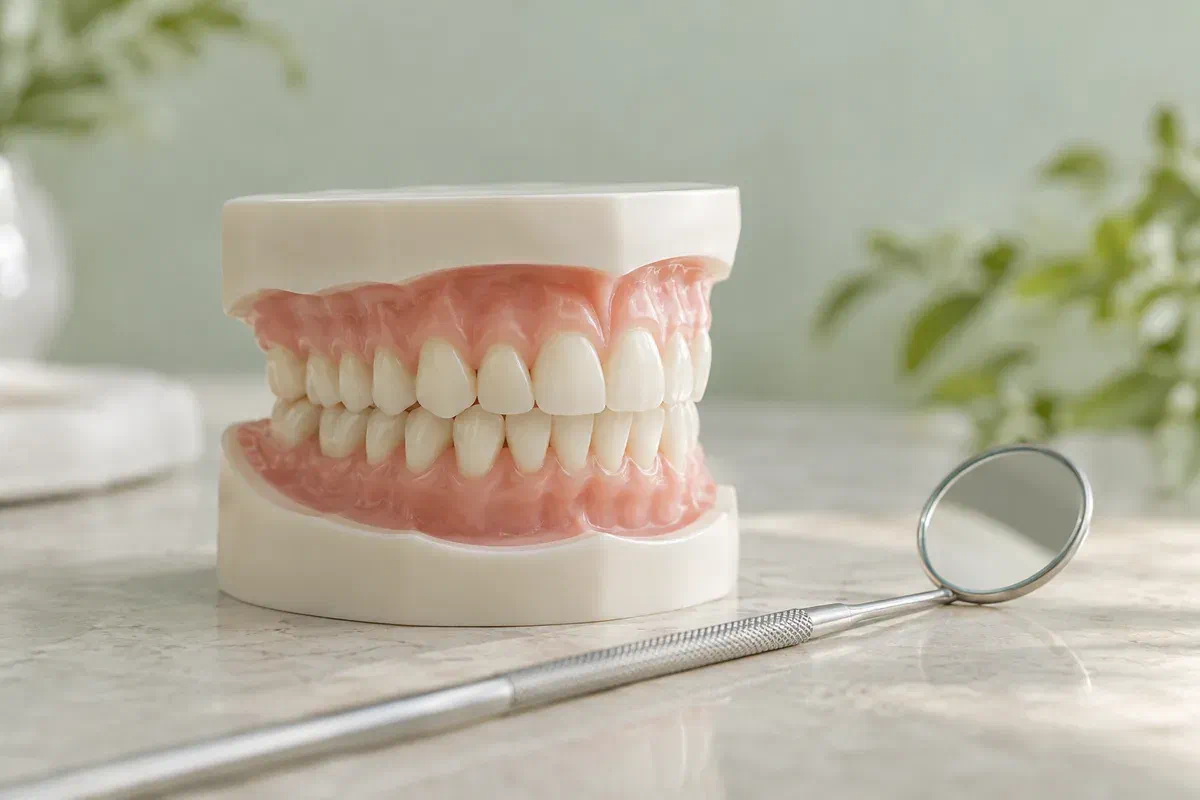
Illustrative paired dental teaching model viewed from the side to show front-tooth overlap
What parents can watch for

Small observations at home help the exam.

Appearance is one clue. Discomfort, wear, and changes as new teeth come in all help the clinician judge whether the overlap matters.

Lower teeth hidden when your child smiles

Describe what you see and when you first noticed it. Ask how depth will be checked at this stage of development. Photos can help explain your concern, but the exam and the overall bite decide whether anything needs to happen.

Complaints of a sore gum or palate

If your child mentions a tender area behind the upper teeth, or you notice redness there, mention it. Ask whether the overlap is touching soft tissue and what should come first. A tissue problem should be checked even when teeth look neat.

Chips, wear, or early dental work

Point out chipped front teeth, flattened edges, or fillings and bonding already placed. Ask how the bite might affect them, now and as growth continues. Repairs and the contacts they face are best considered together.

Jaw pain, clicking, or frequent headaches should be assessed on their own terms. An overbite may not be the cause, and changing the overlap is no promise of relief.

Why an early opinion helps

Knowing when to wait and when to begin

For a family, the most useful result is a straightforward explanation of how the teeth meet now and how growth might affect that. Ask whether the clinician recommends watching for a while or starting treatment, and what any treatment would try to achieve. A diagnosis name gives you little to plan with on its own.

An assessment also separates looks from function. A young person may want straighter-looking front teeth, while the bite may call for something different, or nothing at all yet. Knowing which goal a plan targets helps parents and teens agree on what success means.

Clear reasons tied to findings

Ask which contacts between teeth or soft tissue matter and how the advice addresses them. Check whether existing chips or wear need separate care. Each recommendation should connect to something the clinician observed, not just a measurement.

Timing guided by growth and eruption

Developing jaws and arriving teeth can make certain moments more or less suitable for treatment. Ask how your child’s stage of development affects the options. Adults in the family can be assessed too, though their considerations are different.

Restorative steps in the right order

If bonding or other repairs are needed or planned, ask whether the bite should be reviewed first. Find out which steps depend on it. Good sequencing helps avoid placing work that may need revising once the bite is understood.

How a young person’s bite is assessed

History, examination, options, and follow-up

Care might mean monitoring through growth, orthodontic records, or a specialist referral. Ask what the first visit covers and how you will hear the recommendation.

  1. Hear from parent and child

    Describe the overlap, any sore areas, and difficulties with biting or chewing. Mention habits such as thumb-sucking, past injuries, and earlier dental work. Share what you and your child hope for, and whether other treatment is already planned.

  2. Examine teeth, gums, and development

    The clinician checks how the upper and lower teeth meet, along with oral health and which teeth have erupted. Records may be advised. Ask which findings concern overbite, which concern overjet, and whether other bite features need attention.

  3. Decide between treatment and monitoring

    Talk through any proposed movements, appliance options, risks, the commitment expected from your child, and alternatives. Ask whether an orthodontist should assess the bite. Confirm stages and fees, knowing that timelines can shift with growth.

  4. Follow progress and plan to hold the result

    The treating clinician reviews progress and responds to problems. Report broken appliances or new discomfort. As active care ends, discuss the final bite and the retainer routine meant to help keep teeth in position.

Supporting a young patient

Routines that work for busy households

Responsibilities depend on the appliance and the stage. Ask for a demonstration both parent and child can watch, plus written instructions to keep at home.

Help with wear and add-ons

Younger patients may need reminders to wear appliances or elastics as prescribed. Make sure everyone knows where each part goes and why. Discourage any tinkering to speed things up, and ask what to do after a missed day or a lost piece.

Brushing around appliances and regular checkups

Ask how to clean around brackets or trays and which spots are often missed. Routine dental visits continue during orthodontic care. Report gum soreness, bleeding, or cleaning struggles early so they can be addressed.

Retainers and the long view

Find out how retainers will be worn and checked, and whether any repairs are still to come. Let the team know if the bite seems to change or a retainer stops fitting. Ending treatment should come with a routine the whole family understands.

Patient information: British Orthodontic Society — retention after active treatment

Options at different ages

Care that fits the stage of growth

Ask what each route changes, what it leaves alone, and why it suits the findings. There is no single appliance or treatment length for every child or teen.

When repositioning teeth can meet the goal

Orthodontic tooth movement

Braces or suitable aligners may be discussed, depending on the movements needed and the patient’s age. Ask what extra components or phases might be involved. A teen’s preference matters, but suitability follows the assessment.

When jaw development influences care

Specialist planning for growth-related patterns

An orthodontic assessment may be recommended, with other specialists involved if needed. It is fair to ask if your child’s jaws, and not just the teeth, are being treated, and where growth comes into it. An overbite does not mean surgery; that would need a specific diagnosis.

When starting now is not advised

Monitoring through development

Watching the bite as teeth erupt, or treating another issue first, may be suggested. Ask what will be checked and when to return. Keeping teeth and gums healthy remains important whether or not alignment care begins.

Patient information: British Orthodontic Society — comparing limited and comprehensive treatment aims

Questions parents ask

Children, teens, and deep overlap

Terms like deep bite and overjet are easy to confuse. Ask the clinician to show you the findings and explain what any change would achieve.

(905) 876-4488
Is a deep overlap normal while baby teeth are still present?
Bites change as children grow and adult teeth arrive, and some overlap is normal at every stage. The clinician can tell you whether your child’s overlap looks significant now or is worth watching. Ask what changes to look for.
Could my child’s thumb or soother habit affect the bite?
Some habits are associated with changes in how the front teeth meet, though other factors also play a part. Mention any habits, current or past, so the clinician can consider whether they seem relevant.
Should we wait until all the adult teeth are in?
Not always. Some situations benefit from an earlier opinion, while others are best monitored. Ask what timing the clinician would suggest for your child and why.
My teen’s teeth look straight. Can the bite still be deep?
Yes. Teeth can look well lined up from the front while the vertical overlap is significant. Ask the clinician to show how the upper and lower teeth meet and whether it needs attention.
How involved will my teen need to be in treatment?
Quite involved. Many appliances depend on consistent wear, careful cleaning, and attendance at reviews. Ask what will be expected and how parents can help without taking over.
How can a Brampton family keep visits manageable during treatment?
Ask for an outline of stages and how often reviews may be needed, then try to book appointments well in advance around school and work. Regular hours are Monday to Thursday, with Friday through Sunday by appointment. Call first if something urgent comes up.
Overbite checks for Brampton

Get a clear answer on timing.

Book a visit at our Bronte Street practice for your child or teen. We will look at vertical overlap, tooth and gum contacts, and stage of development, then explain whether monitoring, an orthodontic referral, or coordinated dental care makes sense.

The need for care, appliance choice, timing, referral, and costs are decided after examination. Specific methods and outcomes cannot be guaranteed.

Visit Milton Dental Clinic
Unit 1, 342 Bronte St. S, Milton, ON L9T 5B7
Get directions Clinic hours
Monday–Thursday
11am–7pm
Friday–Sunday
By appointment only

Areas we serve

  • Milton
  • Oakville
  • Mississauga
  • Georgetown
  • Halton Hills
  • Acton
  • Campbellville
  • Brampton
  • Burlington
  • Puslinch
  • Rockwood
  • Erin
  • Caledon
  • Etobicoke
  • Old Milton
  • Bronte Meadows
  • Timberlea
  • Dorset Park
  • Dempsey
  • Clarke
  • Beaty
  • Coates
  • Harrison
  • Scott
  • Willmott
  • Ford
  • Bowes
  • Cobden
  • Walker
  • Mountain View
  • Milton Heights
  • Hawthorne Village
  • Valley View
  • Fallingbrook
  • Nassagaweya
  • Trafalgar
  • Esquesing
  • Nelson
  • Brookville
  • Moffat
  • Glen Williams
  • Norval
  • Limehouse
  • Stewarttown
  • Ashgrove
  • Hornby
  • Silver Creek
  • Speyside
  • Scotch Block
  • North Oakville
  • River Oaks
  • Glen Abbey
  • West Oak Trails
  • Palermo
  • Bronte Creek
  • College Park
  • Joshua Creek
  • Uptown Core
  • Preserve
  • Iroquois Ridge
  • Lisgar
  • Meadowvale
  • Meadowvale Village
  • Churchill Meadows
  • Erin Mills
  • Central Erin Mills
  • Streetsville
  • East Credit
  • Creditview
  • Heartland
  • Sheridan
  • Mount Pleasant
  • Credit Valley
  • Huttonville
  • Churchville
  • Springbrook
  • Northwest Brampton
  • Bram West
  • Fletcher's Meadow
  • Fletcher's Creek South
  • Alton Village
  • Orchard
  • Millcroft
  • Headon Forest
  • Tansley
  • Brant Hills
  • Tyandaga
  • Kilbride
  • Lowville
  • Aberfoyle
  • Morriston
  • Arkell
  • Hillsburgh
  • Freelton
  • Carlisle
  • Waterdown
  • Flamborough
  • Mountsberg

How can we help?

Milton Dental Clinic

Have a question about your smile? Choose the option that works best for you.

For urgent dental concerns, please call.
Messages are reviewed during clinic hours.