

Illustrative patient and clinician discussing front-tooth overlap with a dental model
Cosmetic Dentistry

Treatment for Overbite in Burlington

Is the overlap of your front teeth a matter of looks, of function, or of both? That question shapes every choice that follows. Coming from Burlington, you can have the vertical relationship, the contacts, and your goals reviewed before deciding on monitoring or orthodontic care.

Overbite questions from Burlington

Appearance, function, or both

You might simply dislike how much the upper teeth cover the lower ones when you smile. Or you might have noticed that your bottom teeth press into the gum behind your top teeth. Those are different reasons to ask about an overbite, and they lead to different conversations. Sorting your motive out early makes the rest of the planning far easier.

Clinically, overbite is the vertical overlap between upper and lower front teeth, and some of it is perfectly normal. Front teeth that project forward are a different measurement, called overjet, though the two often travel together. The exam establishes which is present, how pronounced it is, and whether it is causing any harm.

Bring your Burlington dentist's notes or old orthodontic records if you have them, along with your own observations. We will explain what we look at, what our findings suggest, and whether an orthodontist's opinion would help. Any change we propose should come with a reason you understand, before comparing appliances or treatment lengths.

Start with a bite assessment
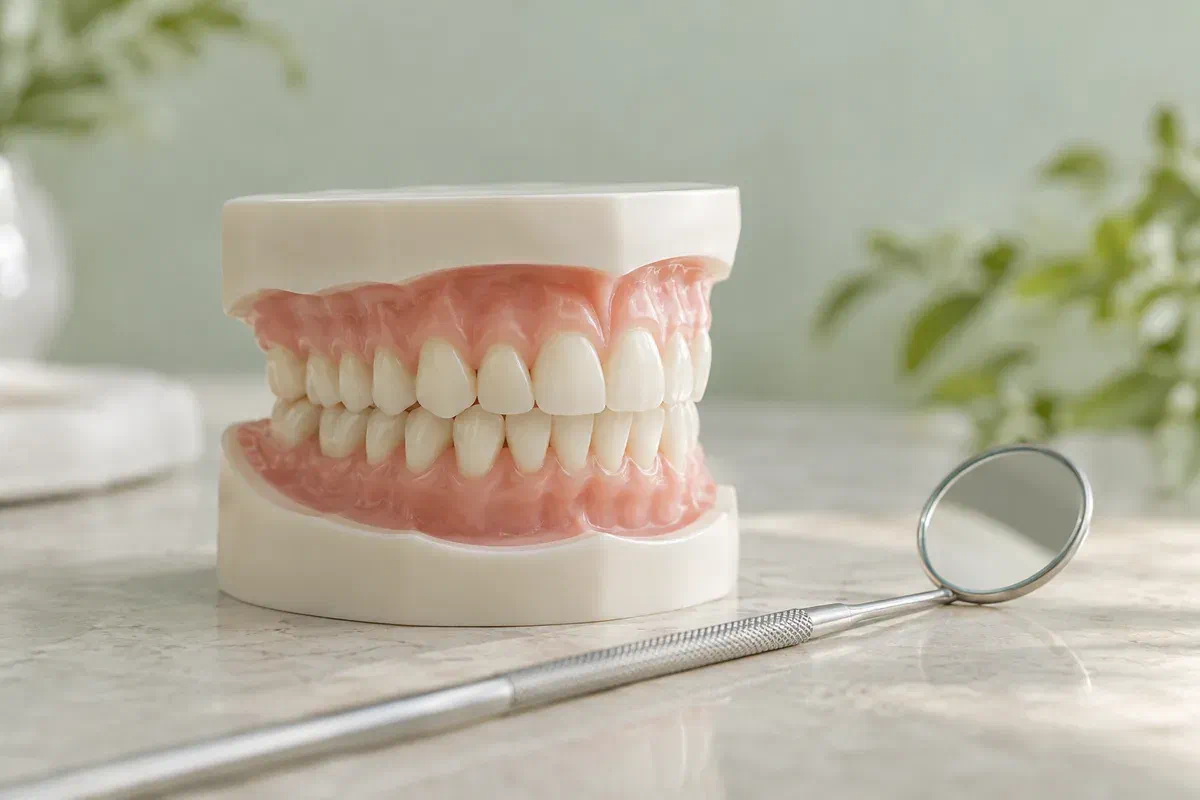
Illustrative paired dental teaching model viewed from the side to show front-tooth overlap
Signs worth raising

Tell us how it feels, not only how it looks.

The smile in the mirror is one clue. Soreness, worn spots, and changes you have noticed help reveal whether the overlap has functional significance.

A smile that shows mostly upper teeth

If this is mainly an aesthetic concern, say so openly. Ask how the depth of overlap will be judged and whether it carries any health implication. A photograph explains what you want to change, while the exam determines whether change is warranted.

Pressure on the gum or palate

Describe any spot that feels bruised, inflamed, or touched with every bite. Ask whether the overlap is contributing and what deserves priority. Soft tissue contact is a functional finding and should be assessed even if the teeth look straight.

Edges that are wearing or chipping

Mention shortened front edges, small chips, or past repairs, and any interest in bonding or veneers. Ask how your bite affects these decisions. Cosmetic work placed into a heavy contact needs planning that accounts for those forces.

Jaw pain, clicking, and headaches deserve their own investigation. An overbite is not automatically the explanation, and reducing it cannot promise those symptoms will improve.

What clarity buys you

Goals you can name, and limits you can accept.

By the end of the assessment you should be able to say, in your own words, how your teeth meet and whether that is a problem. Ask if the clinician favours observation or treatment, and what treatment would be expected to change. Being told you have a deep bite is not, by itself, a recommendation.

Separating appearance goals from bite goals is especially useful here. A neater-looking smile line may not require any change in vertical overlap, and reducing overlap may not transform how the smile looks. Knowing which you are after keeps expectations realistic and comparisons fair.

A clear link between findings and advice

Ask which tooth or soft tissue contacts are significant and how the advice addresses them. Check whether any existing damage needs separate attention. Each part of the plan should answer a specific observation, not merely a number or a product.

A plan suited to growth or adulthood

Where a child or teen is concerned, growth and erupting teeth can affect the best timing. In adults, jaw relationships and previous dental work weigh more heavily. The approach should reflect the person rather than assume a single appliance fits all ages.

Cosmetic steps placed in sequence

Thinking about veneers or bonding? Ask whether bite planning should come first and which cosmetic decisions depend on it. A thoughtful order helps avoid designing a restoration without knowing the contacts it will face.

The planning sequence

Listen, examine, compare, review.

Care might involve watching over time, orthodontic records, or specialist advice. Ask what the first visit includes and how the recommendation will be explained before anything starts.

  1. Set out what you want and why

    Explain whether your concern is appearance, comfort, or both. Describe sore areas and any changes in chewing. Share earlier orthodontics, injuries, wear, and restorations, and mention any dental treatment already planned or underway.

  2. Assess how the front teeth relate

    Both arches are examined together, alongside the health of your gums and teeth. Records such as photographs or scans may be suggested. Ask which findings describe vertical overlap, which describe projection, and whether anything else in the bite is relevant.

  3. Weigh the options honestly

    Discuss possible movements, appliances, risks, your own commitments, and alternatives including no active treatment. Find out if the plan is a limited or a comprehensive one, and whether specialist input is sensible. Confirm stages and fees, accepting that timelines are estimates.

  4. Follow progress through to retention

    The treating clinician reviews progress and responds to problems as they arise. Report breakages or new discomfort. As treatment finishes, discuss the final contacts, any cosmetic follow-up, and how retainers will help maintain tooth positions.

Doing your share

Consistency at home, candour at appointments

Your role depends on the appliance and the stage of care. Ask to see how things are done and to receive written instructions for anything you will look after yourself.

Keep to the appliance routine

Wear your appliance and any prescribed extras for the time you have been asked to. If elastics are part of the plan, learn exactly where they attach and what they are for. Resist adjusting anything yourself to speed things up, and check what to do after a lapse.

Look after teeth and gums throughout

Learn how to clean around your appliance and which areas are prone to buildup. Continue regular dental care alongside orthodontic visits. Speak up about soreness, bleeding, or difficulty cleaning so it can be assessed instead of ignored.

Plan for life after correction

Confirm retainer wear and review, and whether any cosmetic or restorative work is still to be scheduled. Let the team know if your bite later feels different or a retainer becomes loose or tight. Finishing should leave you with a maintenance plan you understand.

Patient information: British Orthodontic Society — retention after active treatment

Routes worth comparing

Scope should follow the findings.

For every option, ask what would change, what would stay as it is, and why it suits you. No single appliance or treatment length applies to everyone.

When teeth can be moved to meet the goal

Orthodontic alignment

Fixed braces or suitable aligners might be considered, depending on the required movements. Ask whether additional parts or phases would be needed. Share any preference you have, knowing that suitability is decided by the clinical findings.

When jaws or growth complicate the picture

Specialist-led planning

A comprehensive orthodontic evaluation may be advised, with other specialists brought in where appropriate. Ask whether the plan targets teeth, jaws, or both. The word overbite does not mean surgery; that would only be discussed with a specific diagnosis.

When you decide against active correction

Observation plus other dental care

The clinician may suggest monitoring, or addressing a different dental issue before considering movement. Ask what is being tracked and when to return. Keeping your mouth healthy is still worthwhile if you choose not to pursue elective alignment.

Patient information: British Orthodontic Society — comparing limited and comprehensive treatment aims

Frequently asked in Burlington

Straight answers about front-tooth overlap

Deep bite, overlap, and overjet are easy to confuse. Ask the clinician to show you what they see and explain the purpose of any change.

(905) 876-4488
Can I treat an overbite purely for cosmetic reasons?
Appearance is a legitimate reason to ask about treatment. The clinician will still assess the bite and oral health to see what is suitable, and explain what an appearance-focused plan can and cannot change. Be clear about your goals so the advice fits them.
Is some overlap between my upper and lower front teeth healthy?
Yes, a degree of vertical overlap is part of a normal bite. Whether yours needs attention depends on its depth, what it contacts, and your oral health. Ask what makes your particular finding significant or not.
Could my overlap be making my front teeth look shorter?
A deep overlap can hide more of the lower teeth, and wear on edges can make teeth appear shorter. The clinician can check for both. Ask whether wear is present and whether it needs its own care.
What happens if I decide not to have treatment?
That is your choice. Ask what the clinician would suggest monitoring, how often, and what signs should prompt a sooner visit. Separate care for soreness or wear can still be arranged.
Can clear aligners correct a deep overlap?
Aligners may be suitable for some movements and not for others. Suitability depends on the full bite assessment. Ask which appliance options fit your findings and what additional components might be involved.
Who would actually carry out orthodontic treatment if I need it?
That depends on the plan and its complexity. In some cases referral to an orthodontist is recommended. Ask who would be responsible for each stage and how information will be shared with your dental team.
Overbite assessments for Burlington

Clarify your goals, then choose a path.

Come to our Bronte Street practice to talk through vertical overlap, tooth and gum contacts, and the changes you would like. We will explain our findings and whether monitoring, an orthodontic referral, or coordinated cosmetic care is the most fitting next step.

We can only advise on whether to treat, which appliance fits, how long it may take, referral, and fees once we have examined you. Cosmetic results and symptom relief are not guaranteed.

Visit Milton Dental Clinic
Unit 1, 342 Bronte St. S, Milton, ON L9T 5B7
Get directions Clinic hours
Monday–Thursday
11am–7pm
Friday–Sunday
By appointment only

Areas we serve

  • Milton
  • Oakville
  • Mississauga
  • Georgetown
  • Halton Hills
  • Acton
  • Campbellville
  • Brampton
  • Burlington
  • Puslinch
  • Rockwood
  • Erin
  • Caledon
  • Etobicoke
  • Old Milton
  • Bronte Meadows
  • Timberlea
  • Dorset Park
  • Dempsey
  • Clarke
  • Beaty
  • Coates
  • Harrison
  • Scott
  • Willmott
  • Ford
  • Bowes
  • Cobden
  • Walker
  • Mountain View
  • Milton Heights
  • Hawthorne Village
  • Valley View
  • Fallingbrook
  • Nassagaweya
  • Trafalgar
  • Esquesing
  • Nelson
  • Brookville
  • Moffat
  • Glen Williams
  • Norval
  • Limehouse
  • Stewarttown
  • Ashgrove
  • Hornby
  • Silver Creek
  • Speyside
  • Scotch Block
  • North Oakville
  • River Oaks
  • Glen Abbey
  • West Oak Trails
  • Palermo
  • Bronte Creek
  • College Park
  • Joshua Creek
  • Uptown Core
  • Preserve
  • Iroquois Ridge
  • Lisgar
  • Meadowvale
  • Meadowvale Village
  • Churchill Meadows
  • Erin Mills
  • Central Erin Mills
  • Streetsville
  • East Credit
  • Creditview
  • Heartland
  • Sheridan
  • Mount Pleasant
  • Credit Valley
  • Huttonville
  • Churchville
  • Springbrook
  • Northwest Brampton
  • Bram West
  • Fletcher's Meadow
  • Fletcher's Creek South
  • Alton Village
  • Orchard
  • Millcroft
  • Headon Forest
  • Tansley
  • Brant Hills
  • Tyandaga
  • Kilbride
  • Lowville
  • Aberfoyle
  • Morriston
  • Arkell
  • Hillsburgh
  • Freelton
  • Carlisle
  • Waterdown
  • Flamborough
  • Mountsberg

How can we help?

Milton Dental Clinic

Have a question about your smile? Choose the option that works best for you.

For urgent dental concerns, please call.
Messages are reviewed during clinic hours.