

Illustrative patient and clinician discussing front-tooth overlap with a dental model
Cosmetic Dentistry

Treatment for Overbite in Mississauga

Already reading about aligners and braces? Hold that thought until the bite has been assessed. For visitors from Mississauga, an overbite review clarifies how deep the overlap is, what it touches, and which kinds of care, if any, would suit your findings.

From Mississauga to our chair

The appliance question comes last.

Online, overbite correction is usually sold as a product: a set of trays, a bracket system, a number of months. In the dental chair the order is reversed. First comes the question of whether the vertical overlap of your front teeth is actually excessive, then what it is doing, and only then which tool might change it.

A normal bite includes some overlap. It becomes a clinical concern when it is deep enough to strike gum or palate, load certain edges heavily, or interfere with cosmetic plans. Keep in mind that forward-sloping upper teeth are a separate finding, overjet. A plan aimed at one may do little for the other.

Tell us what prompted your search, whether it was a photo, a sore patch, or a friend’s aligner experience. Travelling in from Mississauga, you can expect a clear account of what the exam covers and what we find. If an orthodontist’s view would help, we will say so. You deserve to know the reason for any change before weighing appliances.

Have your overlap assessed
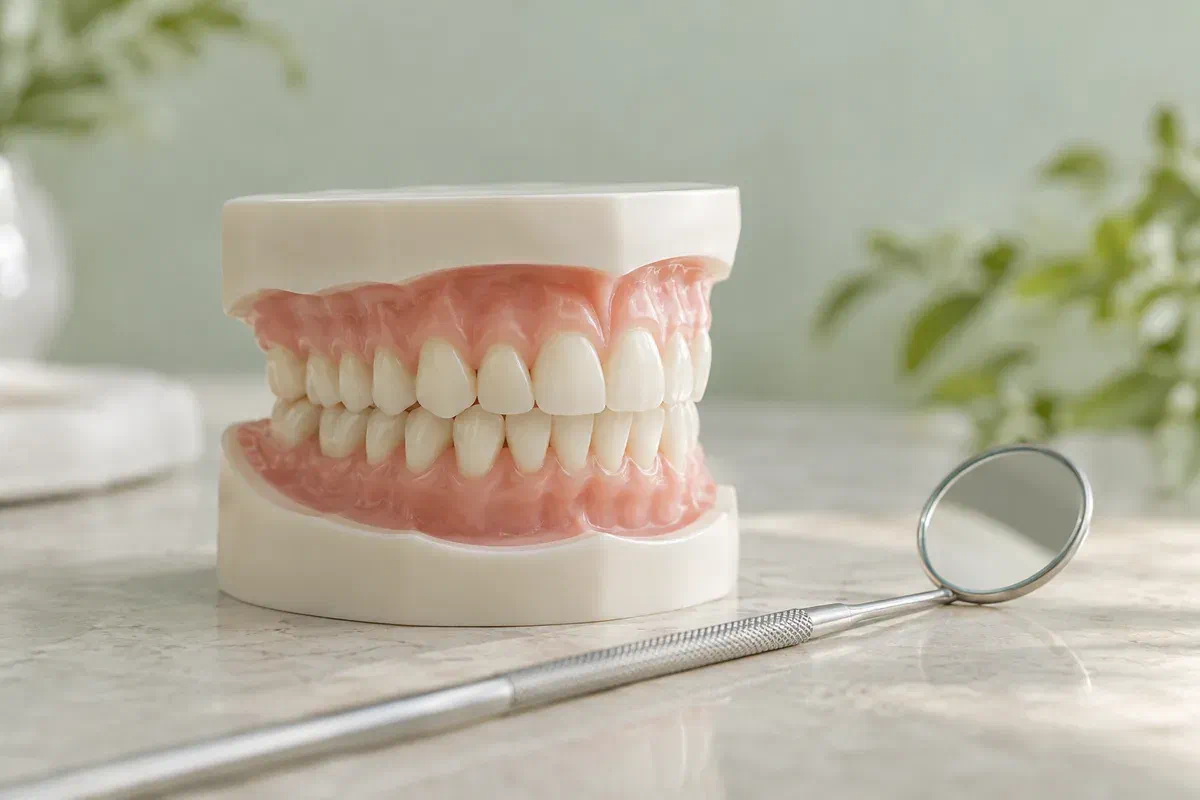
Illustrative paired dental teaching model viewed from the side to show front-tooth overlap
Points to bring up

Three things the clinician will want to hear about

How your smile looks matters, but it is not the whole assessment. Mention symptoms, signs of wear, and anything that has shifted so the bite can be judged in context.

How much of the lower teeth you see

Describe the depth that bothers you and ask what method will be used to evaluate it. Images you have taken are welcome as a talking point, though they cannot determine treatment. Your goals and the rest of the bite give the measurement its meaning.

Contact with gums or the roof of the mouth

Any area that becomes sore, red, or repeatedly touched on closing is worth flagging. Ask if the overlap is responsible and what should be tackled first. Straight-looking teeth do not rule out a tissue problem that needs attention.

Restorations now or in the future

Let the clinician know about worn edges, earlier repairs, and any interest in veneers or bonding. Ask how bite contacts would affect them. A cosmetic restoration and the forces it absorbs are best planned at the same time.

Headaches, jaw discomfort, and clicking need a separate look. They are not always caused by an overbite, and altering the overlap may not relieve them.

Why diagnosis comes before product

Choosing an appliance makes sense only once the goal is defined.

Picking aligners or braces without a diagnosis is a bit like choosing a route before knowing the destination. The assessment should leave you with a plain description of your bite and whether the clinician would monitor it or treat it. If treatment is suggested, you should know what result it is aiming for, beyond a label.

A second benefit is honesty about scope. Lining up crowded front teeth and reducing a deep vertical overlap are separate aims, and one appliance plan may pursue one without the other. Seeing which aim is on the table helps you compare offers fairly and spot their limits.

Contacts identified and explained

Ask which teeth or tissues are involved and how the plan responds to them. Find out whether any damage already present needs separate care. Treatment should be connected to a finding, not simply to a measurement or the name of a system.

Timing shaped by age and complexity

In children and teenagers, growth and the arrival of new teeth can influence when to begin. In adults, jaw relationships and previous work matter more. Ask what factors drive the timing in your case, rather than assuming one appliance suits everyone.

Restorations planned around the result

If cosmetic or repair work is under consideration, ask whether the bite should be evaluated first. Clarify which decisions wait on that. Coordinating the two helps avoid committing to a restoration before its working environment is understood.

What happens, in order

Diagnosis, then a plan, then the hardware.

Depending on findings, the path could be monitoring, orthodontic records, or specialist input. Ask what your first appointment covers and how you will receive the recommendation.

  1. Share the backstory

    Describe the overlap you see, any sore spots, and changes in chewing or appearance. Mention previous orthodontics, trauma, wear, and existing restorations. Tell us your goals, including any appliance preference, and whether other dental treatment is planned.

  2. Examine the bite as a whole

    The clinician looks at upper and lower teeth together and checks gum and tooth health. Further records may be suggested to clarify the pattern. Ask which observations relate to overlap, which relate to projection, and what other bite features are involved.

  3. Compare approaches, including doing nothing yet

    Review suggested tooth movements, suitable appliances, risks, your commitments, and alternatives. Ask how extensive the plan is and whether an orthodontist should be involved. Confirm stages and fees, understanding that any schedule is a best estimate.

  4. Adjust along the way and finish with retention

    Your treating clinician checks progress and responds to any difficulty. Report loose parts, lost trays, or new discomfort. Toward the end, discuss the final contacts, any restorative follow-up, and the retainer routine intended to help hold the result.

Living with an appliance

The routine is part of the treatment.

What you are responsible for depends on the appliance and phase. Ask for a hands-on demonstration and written steps, especially for anything you will manage alone.

Wear trays, elastics, and extras correctly

Aligners only work when worn for the prescribed time, and the same applies to elastics or other add-ons. Confirm where each piece goes and why. Do not swap trays early or alter anything to hurry along, and ask what to do if you fall behind.

Clean carefully and keep dental visits

Ask how to clean around attachments or brackets and how to look after trays. Routine dental care continues during orthodontics. Tell the team about soreness, bleeding, or trouble keeping things clean so it can be dealt with promptly.

Know what follows the last adjustment

Confirm how retainers will be worn and checked, and whether any cosmetic work is still to be planned. Report it if your bite later feels different or a retainer no longer fits. Completing treatment should leave you with a clear plan for upkeep.

Patient information: British Orthodontic Society — retention after active treatment

Possible paths

Which kind of care fits your bite?

Ask what each approach would change, what it would not, and why it suits your findings. Appliance choice and treatment length vary with every bite.

When the teeth themselves can be moved

Braces or aligners

Either may be discussed, depending on the movements required. Ask whether attachments, elastics, or extra stages would be involved. Your preference is useful information, but the choice has to follow what the assessment shows is suitable.

When jaw relationships or growth are involved

Orthodontic and specialist assessment

A fuller evaluation may be advised, with other specialists consulted if necessary. Ask whether the plan concerns teeth, jaws, or both. Surgery is not implied by having an overbite; any such discussion would need a specific diagnosis.

When active correction is not chosen

Monitoring and other care

The clinician may suggest watching the overlap or treating another dental issue first. Ask what will be monitored and when to come back. Good oral-health care remains valuable even if you decide against elective alignment.

Patient information: British Orthodontic Society — comparing limited and comprehensive treatment aims

Appliance and bite questions

Before you commit to a system

Overlap, deep bite, and overjet are often confused. Ask the clinician to show you the findings and explain what the proposed change would achieve.

(905) 876-4488
Are aligners or braces better for overbite?
Neither is better for everyone. The right choice depends on the movements needed, the full bite, and your ability to follow the routine. Ask which options suit your findings and why.
Why can’t I just order aligners without an exam?
An in-person assessment checks oral health, the depth and effect of the overlap, and whether other bite issues are present. Without it, a plan may target the wrong problem. Ask the clinician what an exam would reveal in your case.
What are elastics, and why might I need them?
Elastics are small bands sometimes used with braces or aligners to help guide the bite. Whether they are needed depends on the plan. Ask what they would do for you and how to wear them correctly.
Will I be told how long treatment is likely to take?
You should receive an estimate, but it is not a guarantee. Progress depends on the movements, your response, and how consistently appliances are worn. Ask what could lengthen or shorten the timeline.
Can an overbite return after treatment?
Teeth can tend to shift after active treatment, which is why retention is usually planned. Ask what retainer is recommended and how long it should be worn to help maintain the result.
Does a teenager need a different approach than an adult?
Often, yes. Growth and erupting teeth can affect timing and options for younger patients. Adults have other factors, such as previous dental work. Ask how age shapes the plan being proposed.
Overbite care for Mississauga

Start with the diagnosis, not the device.

Book a visit at our Bronte Street practice to discuss vertical overlap, how your teeth and gums make contact, and what has changed. We will explain the findings and whether monitoring, an orthodontic opinion, or coordinated cosmetic care is the sensible next step.

An examination decides if care is needed at all, and which appliance, schedule, referral, and fee apply. We do not promise a specific method or that symptoms will ease.

Visit Milton Dental Clinic
Unit 1, 342 Bronte St. S, Milton, ON L9T 5B7
Get directions Clinic hours
Monday–Thursday
11am–7pm
Friday–Sunday
By appointment only

Areas we serve

  • Milton
  • Oakville
  • Mississauga
  • Georgetown
  • Halton Hills
  • Acton
  • Campbellville
  • Brampton
  • Burlington
  • Puslinch
  • Rockwood
  • Erin
  • Caledon
  • Etobicoke
  • Old Milton
  • Bronte Meadows
  • Timberlea
  • Dorset Park
  • Dempsey
  • Clarke
  • Beaty
  • Coates
  • Harrison
  • Scott
  • Willmott
  • Ford
  • Bowes
  • Cobden
  • Walker
  • Mountain View
  • Milton Heights
  • Hawthorne Village
  • Valley View
  • Fallingbrook
  • Nassagaweya
  • Trafalgar
  • Esquesing
  • Nelson
  • Brookville
  • Moffat
  • Glen Williams
  • Norval
  • Limehouse
  • Stewarttown
  • Ashgrove
  • Hornby
  • Silver Creek
  • Speyside
  • Scotch Block
  • North Oakville
  • River Oaks
  • Glen Abbey
  • West Oak Trails
  • Palermo
  • Bronte Creek
  • College Park
  • Joshua Creek
  • Uptown Core
  • Preserve
  • Iroquois Ridge
  • Lisgar
  • Meadowvale
  • Meadowvale Village
  • Churchill Meadows
  • Erin Mills
  • Central Erin Mills
  • Streetsville
  • East Credit
  • Creditview
  • Heartland
  • Sheridan
  • Mount Pleasant
  • Credit Valley
  • Huttonville
  • Churchville
  • Springbrook
  • Northwest Brampton
  • Bram West
  • Fletcher's Meadow
  • Fletcher's Creek South
  • Alton Village
  • Orchard
  • Millcroft
  • Headon Forest
  • Tansley
  • Brant Hills
  • Tyandaga
  • Kilbride
  • Lowville
  • Aberfoyle
  • Morriston
  • Arkell
  • Hillsburgh
  • Freelton
  • Carlisle
  • Waterdown
  • Flamborough
  • Mountsberg

How can we help?

Milton Dental Clinic

Have a question about your smile? Choose the option that works best for you.

For urgent dental concerns, please call.
Messages are reviewed during clinic hours.