

Illustrative patient and clinician reviewing upper and lower dental models during a bite discussion
Cosmetic Dentistry

Treatment for Underbite in Caledon

A referral for an underbite can feel like a big step, especially when an orthodontist and a surgeon are both mentioned. From Bolton or elsewhere in Caledon, we can explain why a referral is being suggested, what each specialist would look at, and how the decision stays yours.

Making sense of a referral

A specialist opinion is information, not a booking.

Referrals tend to come up when the cause of a forward lower bite is not straightforward. Lower front teeth closing ahead of the upper ones might be a tooth-position issue, a jaw-relationship issue, or both. When the jaws seem to play a large part, a specialist’s view can help clarify which options are realistic.

Before any referral, the general assessment still matters. It covers how the back teeth meet, any forward slide as you close, the health of your teeth and gums, and growth for younger patients. It also identifies dental work that should be finished first. A profile photo or family resemblance cannot replace that groundwork.

From Caledon, bring the referral letter if you have one, your questions about it, or simply a concern about chewing or appearance. We can explain what an assessment includes and what a specialist would add. Seeing a surgeon to hear their opinion does not commit you to an operation.

Talk through a referral
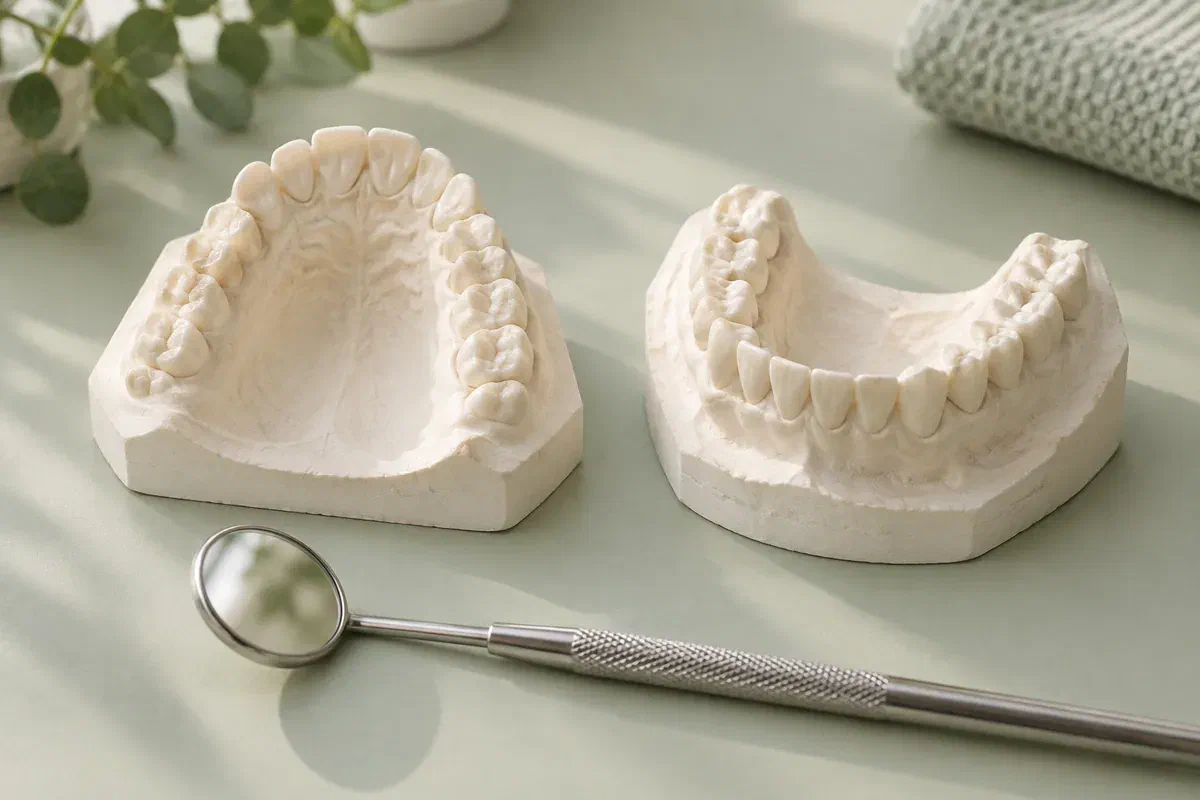
Illustrative upper and lower dental study casts arranged for a bite-planning discussion
Why referrals come up

The concerns that lead to a specialist conversation

Tell the clinician what led you here: a problem you live with daily, a recent change, or a child’s developing bite. That context shapes whether a referral is useful and what it should answer.

A bite that makes cutting food impractical

Describe where the front teeth fail to meet and which foods you avoid. The general examination can then tell whether the issue appears mostly dental or suggests a larger jaw component worth a specialist’s view.

A child’s forward bite that seems to be increasing

A dentist may suggest an orthodontist when development is a key factor. Ask what the referral would help decide and how soon it is advised. Sometimes the specialist recommends monitoring rather than treatment at first.

Damage or problems linked to earlier treatment

Mention worn edges, failing repairs, previous appliances, or a bite that has changed. These may need treatment before or alongside any specialist plan, and not every issue is caused by the underbite.

Underbite names the visible relationship rather than one jaw problem. Ask whether a referral is being suggested because of dental findings, skeletal findings, or both, and what question the specialist is being asked.

What good coordination provides

Each provider knows their part, and so do you.

When more than one clinician is involved, it is easy to lose sight of what each plan is for. A tooth-moving approach keeps the jaws as they are; a combined plan aims to change the jaw relationship. Asking every provider what their part would change, and what it would leave, keeps the comparison clear.

Uncertainty should be shared openly. Growth, how teeth respond, oral health, recovery demands, and your capacity to attend appointments all affect the path. Understanding those factors lets you take the decision at your own pace and see why one more opinion might, or might not, be worthwhile.

A plain explanation before you see anyone else

Ask your dentist to show the findings and describe the main contributors. Is it teeth, jaws, a closing shift, or a mix? Going into a specialist appointment with that understanding makes the conversation more productive.

Honest limits on every side

Ask the orthodontist what a non-surgical plan could not change, and ask the surgeon what surgery would add. Find out which compromises remain either way. The differences should be explained, not left to guesswork.

One clear point of contact

Agree who handles routine checkups and repairs, and who to call with questions between specialist visits. For households across Caledon, knowing the full sequence ahead of time makes travel and scheduling simpler.

The referral pathway

Who does what, and in what order

The sequence depends on the findings, growth, and what you hope to achieve. Ask which decisions belong to you, your dentist, and each specialist.

  1. General assessment and history

    Explain the bite, how it has changed, and what matters most to you. Share earlier orthodontics, any facial injury, existing dental work, and relatives with a similar bite. Your dentist identifies anything that should be treated first.

  2. Records that support the referral

    The clinician decides which records would help a specialist understand the bite. Ask what each one shows and whether it can be sent ahead to avoid repeating it at another office.

  3. Specialist opinions and comparison

    An orthodontist, and in some cases a surgeon, reviews the findings and suggests options with their responsibilities, risks, stages, and fees. Ask whether a plan changes only tooth positions or includes jaw correction. Take time before agreeing to irreversible steps.

  4. Coordinated treatment and follow-up

    If you proceed, confirm which provider leads each stage and how updates will reach your dentist. Follow instructions and attend reviews. Before completion, agree on retention, remaining dental needs, and who monitors the bite long term.

Managing care across providers

Follow the instructions of whoever is treating that stage.

Orthodontic appliances, growth-related approaches, and surgical recovery each have their own routines. When several providers are involved, take guidance on each stage from the one responsible for it.

Keep track of each set of instructions

Write down wear time, cleaning, adjustments, and next appointments for each provider. If a child is involved, agree which tasks need adult help. Ask early when instructions seem to conflict.

Maintain routine dental visits throughout

Cleanings and repairs should continue during specialist treatment. Make sure each office knows what the others are doing. Agree who sees a cracked filling, gum problem, or toothache between appointments.

Understand the phase after active treatment

Ask about retainers and reviews where teeth have moved. After surgery, the surgeon’s recovery instructions take precedence over general orthodontic advice. Find out who will monitor the final bite.

What specialists may discuss

Three possible routes, each with a different team

Ask which findings each route addresses and which it leaves alone. Growth, the severity of the jaw relationship, oral health, and your priorities all guide the conversation.

When tooth movement can reach the goal

Orthodontic care on its own

An orthodontist may suggest braces or suitable aligners after assessment. Ask what would improve with the jaw relationship unchanged and what trade-off remains. The aim should determine the appliance.

When development is still underway

Growth-related treatment for children

For some growing patients, an orthodontist may propose an early phase. Ask what it would accomplish and what later care may still follow. It cannot guarantee the course of growth.

When the skeletal relationship is significant

Orthodontics combined with jaw surgery

Here orthodontic and surgical specialists plan together, comparing possible correction with what non-surgical care could manage. That decision is separate and detailed. Ask both about the order of stages, recovery time, risks, and the alternatives, including choosing not to proceed.

Patient information: American Association of Orthodontists — coordinated surgical orthodontic care

Referral questions

Before you see the specialist

A helpful consultation explains how teeth, jaws, and growth contribute, and why a specialist might be involved. It also respects how much treatment you are prepared to consider.

(905) 876-4488
What questions should I bring to an oral surgeon about my underbite?
Ask what surgery would change, what the stages and recovery involve, what the risks are, and what non-surgical options would and would not achieve. Writing questions down beforehand helps.
Does seeing an orthodontist mean I will end up in braces?
No. An orthodontic consultation explains options and their limits, which may include monitoring or no active treatment. You can take time to decide, ask for clarification, or choose not to proceed. Your general dental care continues either way.
Who coordinates care when several providers treat an underbite?
That should be agreed at the start rather than assumed. Ask which provider leads each stage, how they will share notes and records with one another, and who your main contact will be for everyday questions and urgent concerns.
How long is the usual gap between an underbite referral and a specialist visit?
Wait times vary by specialist and region. Ask at the time of referral what to expect, and whether any fillings, cleanings, or other dental care should be completed in the meantime so the specialist sees an up-to-date picture.
Can I ask for a referral to a different specialist?
Yes. You may prefer another provider for location, schedule, or other reasons. Tell your dentist, who can help arrange it and send the relevant records.
Can my Caledon schedule be considered when visits are planned?
Yes. Tell us which days suit you when booking. Weekday visits run from late morning into the evening, and weekend times can be arranged by appointment. Where practical, we can try to combine the examination, records, and referral discussion so you make fewer trips.
From Caledon

Understand the referral before you accept it.

Arrange a visit to our Bronte Street practice to talk through a suggested referral, a forward lower bite, chewing difficulties, or a child’s changing bite. We will explain the findings and what each specialist might add to the decision.

Only an assessment can tell you if treatment is needed, how much, when, from whom, and at what cost. No specialist or appliance can guarantee a particular outcome or rule out future care.

Visit Milton Dental Clinic
Unit 1, 342 Bronte St. S, Milton, ON L9T 5B7
Get directions Clinic hours
Monday–Thursday
11am–7pm
Friday–Sunday
By appointment only

Areas we serve

  • Milton
  • Oakville
  • Mississauga
  • Georgetown
  • Halton Hills
  • Acton
  • Campbellville
  • Brampton
  • Burlington
  • Puslinch
  • Rockwood
  • Erin
  • Caledon
  • Etobicoke
  • Old Milton
  • Bronte Meadows
  • Timberlea
  • Dorset Park
  • Dempsey
  • Clarke
  • Beaty
  • Coates
  • Harrison
  • Scott
  • Willmott
  • Ford
  • Bowes
  • Cobden
  • Walker
  • Mountain View
  • Milton Heights
  • Hawthorne Village
  • Valley View
  • Fallingbrook
  • Nassagaweya
  • Trafalgar
  • Esquesing
  • Nelson
  • Brookville
  • Moffat
  • Glen Williams
  • Norval
  • Limehouse
  • Stewarttown
  • Ashgrove
  • Hornby
  • Silver Creek
  • Speyside
  • Scotch Block
  • North Oakville
  • River Oaks
  • Glen Abbey
  • West Oak Trails
  • Palermo
  • Bronte Creek
  • College Park
  • Joshua Creek
  • Uptown Core
  • Preserve
  • Iroquois Ridge
  • Lisgar
  • Meadowvale
  • Meadowvale Village
  • Churchill Meadows
  • Erin Mills
  • Central Erin Mills
  • Streetsville
  • East Credit
  • Creditview
  • Heartland
  • Sheridan
  • Mount Pleasant
  • Credit Valley
  • Huttonville
  • Churchville
  • Springbrook
  • Northwest Brampton
  • Bram West
  • Fletcher's Meadow
  • Fletcher's Creek South
  • Alton Village
  • Orchard
  • Millcroft
  • Headon Forest
  • Tansley
  • Brant Hills
  • Tyandaga
  • Kilbride
  • Lowville
  • Aberfoyle
  • Morriston
  • Arkell
  • Hillsburgh
  • Freelton
  • Carlisle
  • Waterdown
  • Flamborough
  • Mountsberg

How can we help?

Milton Dental Clinic

Have a question about your smile? Choose the option that works best for you.

For urgent dental concerns, please call.
Messages are reviewed during clinic hours.