Front teeth that can’t cut food
Describe which foods are difficult and where the front teeth miss. With the examination and any records, that helps distinguish tooth-position findings from jaw factors before a correction is considered.


Photos, X-rays, scans, and models each tell part of the underbite story. For anyone coming from Erin or Hillsburgh, we explain what each record shows about tooth positions, the jaws, and growth, so the treatment conversation rests on findings you can follow.
Seeing the lower front teeth close outside the upper ones raises the question; records help answer it. Images can show how teeth sit within the jaws, models or scans show how the arches fit, and photos capture the face and smile. Together they help show whether tooth position, jaw relationship, or both are behind the bite.
Records add to the examination rather than replacing it. The clinician still checks how the back teeth meet, whether the jaw slides forward on closing, how healthy the gums and enamel are, and growth stage in younger people. No single image, and no family likeness, settles the plan by itself.
From Erin, it may help to know in advance which records could be taken on the first visit. Ask when booking, and bring any earlier X-rays or orthodontic notes. We will explain what the assessment involves and what might follow. Having records taken does not commit you to treatment or point automatically toward surgery.
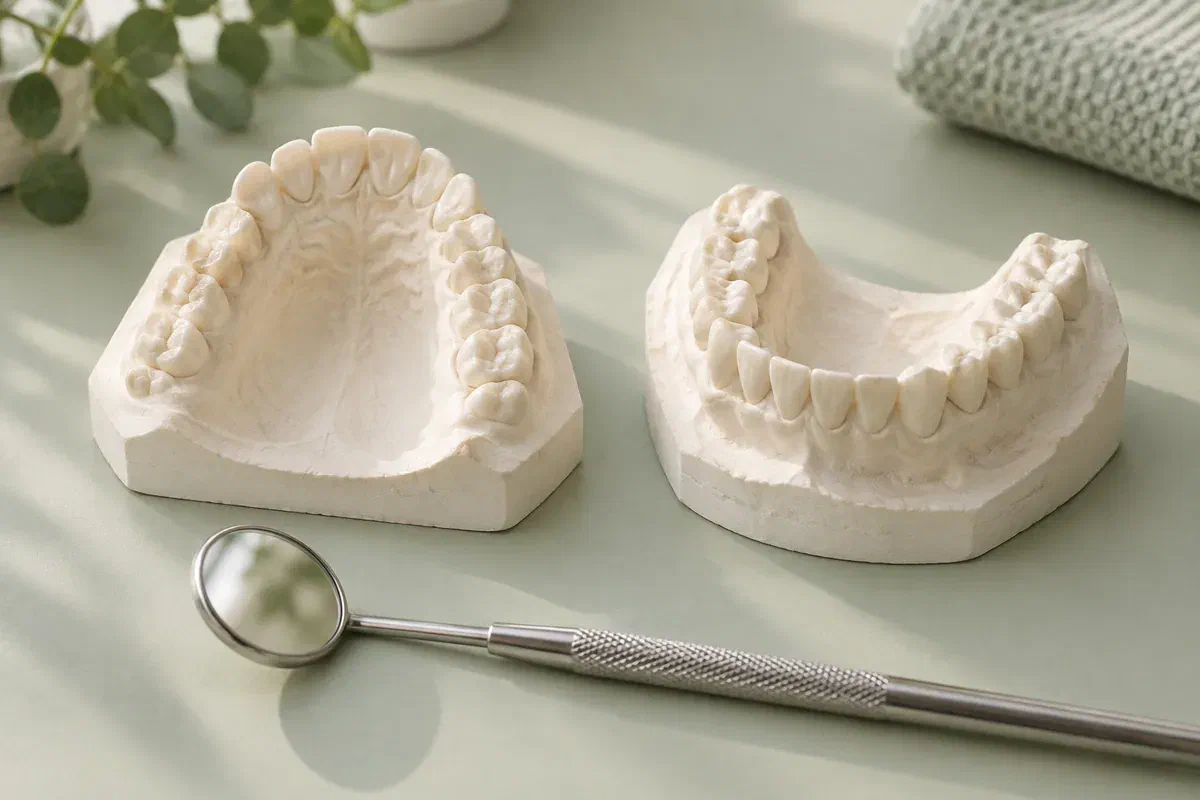
Your own account guides which records are useful. Mention whether the bite has always looked this way, seems to be changing, or appeared during a child’s growth.
Describe which foods are difficult and where the front teeth miss. With the examination and any records, that helps distinguish tooth-position findings from jaw factors before a correction is considered.
Bring it up at a checkup; the dentist can say whether seeing an orthodontist would be useful. Records for children are chosen with growth in mind, and advice on timing is individual. Monitoring is sometimes the first recommendation.
Point out worn edges, failing repairs, past appliances, or a closing pattern that has changed. Older records can show what is different now. Each symptom needs its own assessment, without assuming the underbite explains it.
Underbite describes what is seen when the teeth close, not one particular jaw diagnosis. Ask which findings in your records are dental, which skeletal, and whether the front teeth fit a wider pattern.
With a clear picture of the cause, you can see what different routes are aiming for. Moving teeth works within the current jaw relationship, while other approaches set out to change it. Asking what each plan would alter, and what it would leave as it stands, gives you a better basis for choosing than appliance appearance.
Records also make the uncertain parts easier to discuss. Growth, how teeth respond, oral health, and your capacity to attend appointments all influence results. Talking those through helps you make a considered decision and understand when a specialist’s view would add useful information.
Ask the clinician to point out on the images or models what contributes most to your bite. Is it the teeth, the jaws, a closing shift, or a mix? Seeing it yourself makes the explanation easier to remember.
Discuss what moving teeth alone could not change and what a fuller plan would aim for. Ask which compromises are involved and why. Plans should be distinguished by their goals, not by their fees.
If referral is advised, ask whether your records can be sent ahead so they need not be repeated. Agree who handles routine dental care. For households in Erin, that can save an extra trip.
Which records are needed, and in what order care follows, depends on findings, growth, and goals. Ask what can be decided at the first visit.
Explain what bothers you, when it began, and whether function or appearance matters more. Mention earlier orthodontics, any knock to the jaw, fillings or crowns, and relatives with a similar bite, and bring any older records.
The clinician checks teeth, gums, and how the jaws close, then recommends records suited to your situation. Ask what each one will show and why it is needed. Other dental problems to treat first are identified.
Go through what the records show, then the options with their responsibilities, risks, stages, and fees. Ask whether a specialist should be involved and whether a plan affects teeth only or the jaws too. Take time before irreversible steps.
If you proceed, confirm who leads each stage and how records and updates will be shared. Follow your instructions and attend reviews. Before finishing, talk about retention, remaining needs, and how future records might track change.
Orthodontic appliances, growth-related care, and surgical plans each have their own instructions. Rely on the provider responsible for the care you are actually receiving.
Note wear time, cleaning, any home adjustments, and your next appointment. If a child is in treatment, agree which tasks need help. Phone early about problems instead of improvising changes.
Continue cleanings, checkups, and repairs. Make sure each provider knows what the others are doing. Know ahead of time whom to contact about a cracked filling, tender gum, or aching tooth between specialist visits.
Where teeth have moved, ask about retainers and how they will be reviewed. If surgery is part of the plan, follow the surgeon’s recovery guidance first. Ask whether follow-up records will be used to check stability.
A good consultation makes the evidence about teeth, jaws, and growth understandable. It also gives you room to say how much treatment you want.
Come to our Bronte Street practice to talk about a reversed front bite, chewing concerns, or a child’s changing bite. We will explain what the examination and any records show and outline possible referrals.
Treatment need, scope, timing, specialist involvement, and fees depend on assessment. No record or appliance can guarantee a particular outcome or rule out future care.
