

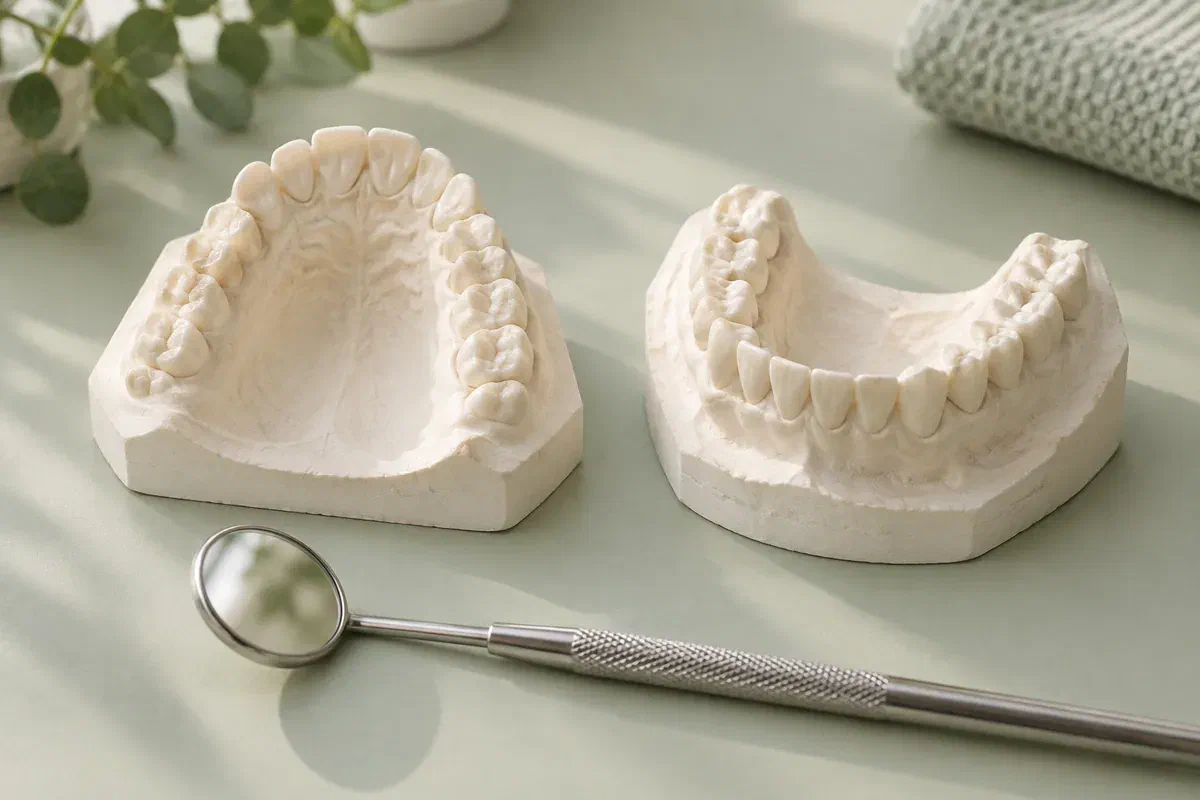
Illustrative patient and clinician reviewing upper and lower dental models during a bite discussion
Cosmetic Dentistry

Treatment for Underbite in Rockwood

Does your jaw seem to slide forward just before your teeth come together? That movement is one of the things an underbite assessment looks for. From Rockwood, you can have the closing pattern, tooth positions, and jaw relationship examined before choosing a direction.

The way the jaw closes

Watch what happens in the last moment of closing.

Most descriptions of underbite stop at the lower front teeth resting in front of the upper ones. What is less obvious, and often more telling, is how the jaw gets there. In some people, a tooth contact nudges the lower jaw forward as they close. In others, the jaw relationship or tooth positions produce the forward bite with no slide at all.

That difference can influence planning, which is why the clinician watches you open and close, checks how the back teeth land, and looks at gum and tooth health. For children, growth matters too. You cannot reliably judge a closing shift in the mirror, and neither can a family comparison.

From Rockwood, bring anything you have noticed, whether it is a clicking feeling, a child who juts the chin forward to bite, or treatment you had years ago. We will explain what the assessment covers and where it might lead. That first visit is not a promise to treat, and surgery is not assumed.

Have your closing pattern checked
Illustrative upper and lower dental study casts arranged for a bite-planning discussion
Clues worth mentioning

Small movements can carry a lot of information.

The clinician benefits from your observations. Note whether the bite feels like it has a resting position and a biting position, whether it is changing, or whether it showed up as a child grew.

Teeth that only meet after a forward shift

Describe whether you feel the jaw move to find a comfortable bite and what happens with foods that need the front teeth. That helps separate tooth-contact effects from jaw factors before any correction is discussed.

A child pushing the jaw forward to bite

Raise it at the next checkup. The dentist may suggest an orthodontic opinion or monitoring, depending on development. Timing is individual, and an early look can explain what is happening even if treatment is not advised yet.

Wear, soreness, or changes after earlier work

Mention worn or chipped edges, a new filling that changed how you bite, past appliances, or jaw discomfort. These may affect the plan or need their own care. Discomfort should be assessed rather than assumed to come from the underbite.

Underbite is a visible description, not one jaw diagnosis. Ask whether your bite involves a closing shift, the teeth, the jaws, or a combination, and how that fits a wider pattern.

What an assessment can reveal

Where the bite starts shapes where treatment aims.

A forward bite caused mainly by a tooth contact is a different planning problem from one rooted in the jaws. Approaches that reposition teeth work within the existing jaw relationship, while others set out to alter it. Asking what a plan would change, and which features it would not touch, helps you compare fairly.

Not everything can be predicted. Growth, the way teeth respond, oral health, and your ability to follow instructions all influence results. Understanding those factors early helps you make a measured choice and see why records or a specialist opinion might be suggested before deciding.

A plain account of how your jaw closes

Ask the clinician to show you where the teeth first touch and whether the jaw then moves. Is the forward bite mainly from teeth, jaws, a shift, or a mix? Every option should be judged against that finding.

Options set against their limits

Discuss what adjusting tooth positions could and could not change and what a broader approach would target. Ask which compromises each brings. The distinction should be spelled out rather than implied by fees.

Referral with a stated purpose

If a specialist is recommended, ask what question they are being asked to answer and how their opinion will feed back into your plan. Settle who looks after routine checkups and repairs in the meantime. For households travelling from Rockwood, clarity about each visit saves time.

Assessing the bite

Open, close, record, compare

How the steps are ordered depends on what the examination shows, whether growth is still underway, and what you hope to change. Some questions can be settled on the day; others need further records.

  1. Explain what you feel and see

    Describe whether the jaw seems to move as you close, when the forward bite became noticeable, and what bothers you most. Share past orthodontics, jaw injuries, dental work, and family history.

  2. Observe the closing pattern

    The clinician watches the jaw open and close, checks first contacts, and examines teeth and gums. Records may be suggested to confirm the relationship; ask what each one shows. Other dental needs are identified here.

  3. Weigh the possible routes

    Review the responsibilities, risks, stages, and fees for suitable options. Ask whether an orthodontist should be involved and whether a plan targets tooth contacts only or the jaw relationship as well. Take time before irreversible steps.

  4. Coordinate care and track the bite

    If you go ahead, clarify which clinician handles which stage and how they will communicate. Follow instructions and attend reviews. Near the end, discuss retention, remaining dental needs, and how the closing pattern will be rechecked.

During treatment

Routines differ between appliances and approaches.

Orthodontic appliances, growth-related care, and surgical plans each come with specific instructions. Follow the guidance of the provider managing the treatment you are actually receiving.

Leave with a clear routine

Confirm wear time, cleaning, home adjustments, and the next review. For a child, agree which parts need a parent’s help. Report problems early rather than altering an appliance or schedule yourself.

Keep general dental care on schedule

Cleanings, checkups, and repairs continue during wider treatment. Tell each provider about the others’ involvement. Know ahead of time who to call about a broken filling, sore tooth, or gum issue between specialist visits.

Ask about the stage after active care

When teeth have been moved, retainers and follow-up visits usually come next. With surgery, the surgeon’s recovery instructions take priority. Find out how your bite, including the way your jaw closes, will be monitored.

Treatment directions

A closing shift, a tooth problem, or a jaw relationship

Each route suits certain findings and not others. Growth, the nature and degree of the bite, oral health, and your priorities guide which are worth exploring.

When the forward bite comes mainly from the teeth

Orthodontics to change tooth positions or contacts

Once the bite is understood, braces or a suitable aligner approach may be an option, sometimes with attention to the specific contact that guides the jaw forward. Find out what would improve with the jaw relationship unchanged and whether any compromise remains. Choose the appliance to fit those goals.

When development still influences the bite

Growth-related approaches for children

For some growing patients, a specialist may suggest an early approach. Ask what it is designed to do and what further care might follow. Early treatment cannot guarantee how growth will proceed.

When a significant skeletal relationship is present

Combined orthodontic and surgical planning

Some adults benefit from hearing orthodontic and surgical opinions together, comparing correction with what non-surgical care can achieve. This is a separate and careful decision. Discuss sequence, recovery, risks, and alternatives.

Patient information: American Association of Orthodontists — coordinated surgical orthodontic care

Questions about the closing bite

Shifts, contacts, and jaw position

A useful consultation explains how teeth, jaws, and development interact in your bite. It should also leave space to say how much treatment you would consider.

(905) 876-4488
What is a functional shift in an underbite?
It generally means the lower jaw moves forward as the teeth close, often because of how certain teeth meet. Ask whether a shift is present in your bite and how it affects the options.
Can a single tooth contact push the whole jaw forward?
In some cases a contact can guide the jaw into a forward position. Whether that applies to you needs examination. Ask the clinician to show you where the first contact happens.
Is jaw clicking connected to an underbite?
Clicking has many possible causes, and it is not necessarily linked to the bite. Mention it during the assessment so it can be considered, and ask whether any separate evaluation is advisable.
Should a forward closing pattern in a young child be checked soon?
It is worth mentioning at the next dental visit. The dentist can assess development and say whether an orthodontic opinion or monitoring makes sense.
Could adjusting a filling change how my jaw closes?
Restorations affect where teeth touch, so they can sometimes influence the bite. Ask whether any existing work is contributing and whether adjustments are appropriate before broader treatment is considered.
What is the easiest way to arrange a visit from Rockwood?
Call to book and mention that you want a bite assessment so enough time is allowed. Our Bronte Street practice is open Monday to Thursday, 11am to 7pm, and Friday to Sunday by appointment.
From Rockwood

See how your bite closes before deciding how to change it.

Visit our Bronte Street practice if your jaw seems to slide forward when you bite, the lower front teeth sit outside the upper ones, or a child closes with the chin pushed forward. We will explain what we observe and any referral that might help.

The need for treatment, its scope and timing, specialist involvement, and fees require assessment. No appliance can guarantee a particular result or rule out future care.

Visit Milton Dental Clinic
Unit 1, 342 Bronte St. S, Milton, ON L9T 5B7
Get directions Clinic hours
Monday–Thursday
11am–7pm
Friday–Sunday
By appointment only

Areas we serve

  • Milton
  • Oakville
  • Mississauga
  • Georgetown
  • Halton Hills
  • Acton
  • Campbellville
  • Brampton
  • Burlington
  • Puslinch
  • Rockwood
  • Erin
  • Caledon
  • Etobicoke
  • Old Milton
  • Bronte Meadows
  • Timberlea
  • Dorset Park
  • Dempsey
  • Clarke
  • Beaty
  • Coates
  • Harrison
  • Scott
  • Willmott
  • Ford
  • Bowes
  • Cobden
  • Walker
  • Mountain View
  • Milton Heights
  • Hawthorne Village
  • Valley View
  • Fallingbrook
  • Nassagaweya
  • Trafalgar
  • Esquesing
  • Nelson
  • Brookville
  • Moffat
  • Glen Williams
  • Norval
  • Limehouse
  • Stewarttown
  • Ashgrove
  • Hornby
  • Silver Creek
  • Speyside
  • Scotch Block
  • North Oakville
  • River Oaks
  • Glen Abbey
  • West Oak Trails
  • Palermo
  • Bronte Creek
  • College Park
  • Joshua Creek
  • Uptown Core
  • Preserve
  • Iroquois Ridge
  • Lisgar
  • Meadowvale
  • Meadowvale Village
  • Churchill Meadows
  • Erin Mills
  • Central Erin Mills
  • Streetsville
  • East Credit
  • Creditview
  • Heartland
  • Sheridan
  • Mount Pleasant
  • Credit Valley
  • Huttonville
  • Churchville
  • Springbrook
  • Northwest Brampton
  • Bram West
  • Fletcher's Meadow
  • Fletcher's Creek South
  • Alton Village
  • Orchard
  • Millcroft
  • Headon Forest
  • Tansley
  • Brant Hills
  • Tyandaga
  • Kilbride
  • Lowville
  • Aberfoyle
  • Morriston
  • Arkell
  • Hillsburgh
  • Freelton
  • Carlisle
  • Waterdown
  • Flamborough
  • Mountsberg

How can we help?

Milton Dental Clinic

Have a question about your smile? Choose the option that works best for you.

For urgent dental concerns, please call.
Messages are reviewed during clinic hours.