

Illustrative patient and clinician reviewing natural tooth shades for an existing veneer concern
Cosmetic Dentistry

Veneer Replacement in Georgetown

When the same veneer chips a second or third time, a new one made the same way may not be the answer. From Georgetown, we look at the restoration, the tooth beneath it, and the forces acting on it, then explain whether repair, rebonding, replacement, or a different approach suits you.

The repeat repair

Chipped again?

A veneer that fails once may have met bad luck: a cherry pit, a fall, a fork in the wrong place. One that keeps chipping or lifting is often telling you something about the bite, a grinding or clenching habit, or the tooth underneath. Finding out which is the most valuable part of any replacement discussion.

With that understood, the options open up. Polishing or a small repair may be reasonable for a minor chip, while a sound veneer that has come loose might be rebonded. Where a new one is needed, its design and any protective measures can respond to the cause. Some teeth are better served by monitoring or a different restoration altogether.

From Georgetown, bring a short history: roughly when the veneer was placed, how many times it has been repaired, and whether you've noticed jaw tiredness or wear on other teeth. If it has come off, keep it in a small container. A call ahead lets the team advise you before any further preparation is considered.

Ask about a veneer that keeps chipping
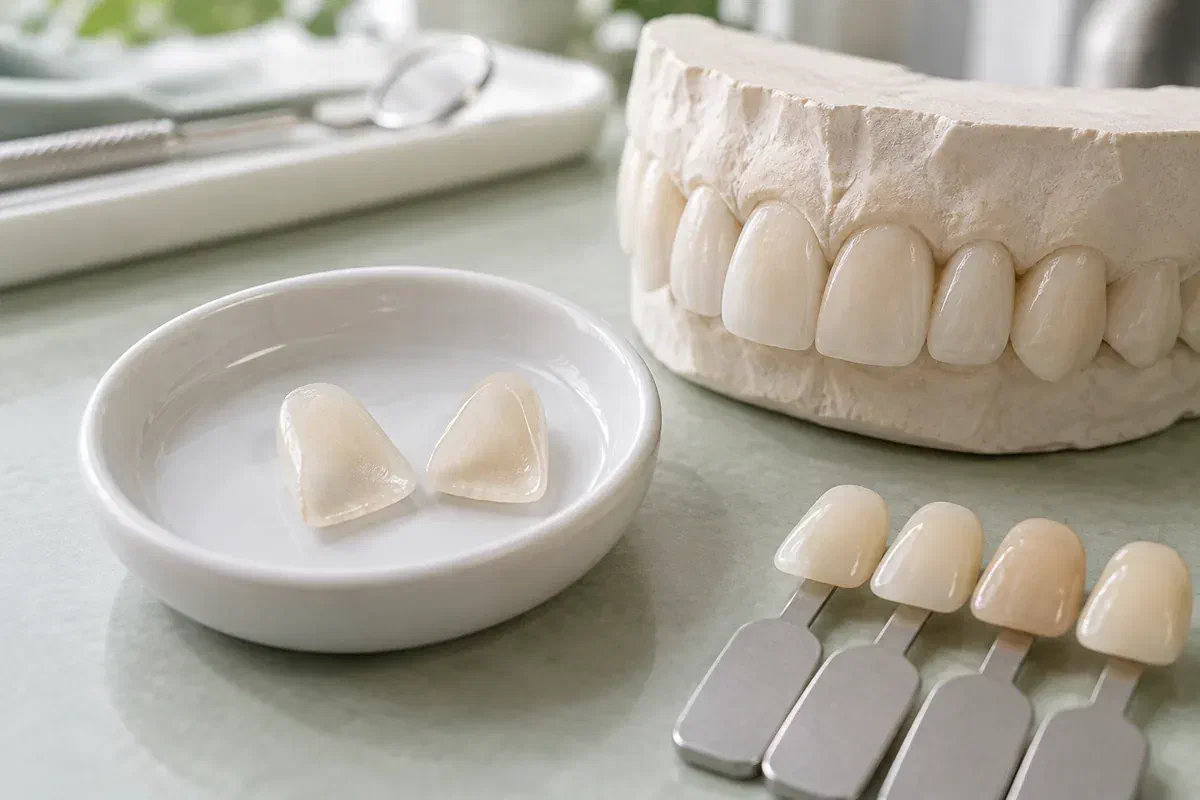
Illustrative thin ceramic veneer samples in a dish beside a dental cast and shade guide
Patterns to mention

Tell us what happened, and how often.

Age is part of the story, but frequency and triggers often matter more. Let us know what you were doing when the damage happened, whether it has happened before, and what you hope for.

Recurrent chips, cracks, or debonding

Describe each event if you can, plus any sharp edges or pain. Store a detached piece safely. Ask how to manage until you're seen, and set aside household glue or emery boards, which can damage the tooth and veneer.

An edge or shade that's changing

Point out where you see a line, stain, or colour shift, and whether it crept in or appeared suddenly. The cause could be the surface, the margin, surrounding teeth, or something else. A visible edge prompts an examination rather than proving the veneer has failed.

Sore teeth, jaw tiredness, or an uneven bite

Mention sensitivity, pain on biting, aching jaw muscles in the morning, or a contact that feels off. These need clinical examination. Grinding, bite issues, or problems with the tooth itself may need managing before a new veneer is planned.

A veneer is bonded to a natural tooth that can still decay or crack, and it is exposed to the same bite forces as the rest of your mouth. Replacement planning should weigh both the tooth's health and those forces, not colour alone.

Breaking the cycle

Find the cause, and the next restoration has a better chance.

A useful assessment names what's going wrong and asks why. Once that's known, you can discuss whether a conservative step is realistic and what a replacement would involve. Recommendations should rest on the findings and the pattern of damage, not simply on how old the veneer is.

If a new veneer is the right choice, planning covers the appearance you'd like and the demands your bite will place on it. Contacts, cleaning access, and long-term maintenance all feed into the design, as may a protective appliance. Looks and durability are planned together.

Patient information: FDI World Dental Federation — evaluating repair before total replacement

Clear reasoning for the approach

Ask what feature of the veneer, tooth, or bite points to the recommended option. If a smaller step won't help, ask why. Understanding the tradeoff lets you weigh benefit against removing further tooth or material.

Shade and shape in context

Explain whether you want the replacement to blend in or are considering a wider change. Ask how one new veneer will compare with neighbouring teeth. Altering other teeth should be discussed as its own decision.

Managing the forces involved

Ask whether grinding, clenching, bite contacts, an old injury, or decay contributed. Find out how the plan responds, for example through design choices or a night guard where appropriate. Repeating the old restoration unchanged may invite the same result.

Working through it

Look for the pattern, then plan the restoration

The appointments depend on the current material, what the examination reveals, and the restoration selected. Ask about the assessment, any temporary stage, lab timing, and what the fee includes.

  1. Map out the veneer's history

    Share when it was placed, how often it has chipped or loosened, and any sensitivity. Bring records if available. The dentist examines the veneer, edges, bite, wear on other teeth, and gums, and may recommend additional investigation.

  2. Decide whether to keep or replace

    Weigh polishing, repair, rebonding, or monitoring against a new veneer or a different restoration. Ask about preparation, what removal might reveal, and how the bite could be managed. Plans can change once the old material is off.

  3. Prepare the tooth and record the bite

    The existing restoration is handled as agreed and the tooth checked again. Shade, shape, bite records, and temporary protection are discussed. Ask how the visits will be sequenced without assuming a same-day option or specific lab system.

  4. Place it, test the bite, and follow up

    At the appropriate stage before final bonding, you'll review the look and fit. After placement, the bite is tested and the surface finished, with care instructions explained. Ask when to come back and how to report any new chipping or bite concern.

Protecting the new work

Small habits that reduce the strain on a veneer

Different instructions apply to a temporary, a repair, and a newly placed veneer. Confirm which fit your stage and whom to call if something changes.

Be gentle with a temporary

Ask about foods to avoid, how to clean it, and what to do should it loosen. Keep the clinic's number available and call before your next visit if a problem appears. Home cements and DIY trimming can make things worse.

Keep the margins clean

Continue the brushing and interdental cleaning recommended for you. Mention it if floss catches, food traps, or the gum near the veneer is sore. Routine exams and professional cleanings are still needed.

Wear protection if it's advised

If a night guard or sports mouthguard is recommended, use it as directed. Avoid biting nails, pens, ice, or packaging. Report any change in your bite, looseness, or ongoing sensitivity rather than waiting to see if it settles.

Options for a fragile veneer

Repair, redesign, or a different restoration

Compare the material, the damage pattern, the tooth's condition, and the forces at work. Ask how each choice balances preserving natural tooth with a result that can stand up to your bite.

When the veneer itself is still sound

Conservative repair or rebonding

A small chip or a lifted veneer may be manageable without replacement, depending on what's found. Ask about the limits and follow-up, especially if bite forces are involved. Conservative care still needs assessment and isn't a permanent guarantee.

When replacement is the better fit

A new veneer designed for your bite

Discuss material, preparation, shade, contour, and any protective appliance. Ask whether the replacement is for one tooth or part of a broader plan. Neighbouring veneers should be assessed on their own merits.

When a veneer may not suit the tooth

A different kind of restoration

Heavy wear, substantial damage, or another clinical problem may mean a veneer isn't the best choice. Ask what alternative restoration or specialist opinion is being suggested and why. Past choices don't fix future ones.

Georgetown veneer questions

Why veneers chip, and what can be done

Bring the history of your veneer and what you'd like the result to be. The examination shows whether replacement is appropriate and what else is worth considering.

(905) 876-4488
Why does my veneer keep chipping in the same spot?
Repeated chipping in one area often relates to how the teeth meet, a grinding or clenching habit, or biting on hard objects. The examination looks at these factors so the plan can respond to them.
Could grinding my teeth at night be damaging my veneer?
It can contribute. Signs may include worn teeth, jaw tiredness, or chips. Ask the dentist whether a night guard is appropriate for you and how it would protect the veneer.
Is a repaired veneer as strong as a new one?
Not always. A repair may be suitable for a small defect, but its strength depends on the material and location. Ask what to expect from a repair and how it compares with replacement in your case.
Will a different material stop my veneer from breaking?
Material is one factor, but managing bite forces and habits matters too. Ask the dentist which materials suit your bite and what else in the plan helps reduce the risk of further damage.
If my veneer comes off whole, can it be put back?
It may be rebonded if the veneer is intact, still fits, and the tooth is healthy. The dentist checks these first. Avoid home glues, and keep the piece safe.
Can follow-up visits from Georgetown be kept to a minimum?
Ask about this when planning. Some stages can occasionally be combined, but the number of visits depends on the findings and the restoration chosen.

Patient information: Canadian Dental Association — bleaching and existing restorative materials

Book from Georgetown

Stop repairing the same veneer without asking why.

Reach out to our Bronte Street practice about a veneer that keeps chipping, loosening, or looking worn. We'll examine it, the tooth under it, and your bite, talk about what can be kept, and explain repair, replacement, or other care.

Material, repair options, preparation, temporaries, protective appliances, timing, and fees depend on the assessment. A new veneer or exact shade match can't be guaranteed in advance.

Visit Milton Dental Clinic
Unit 1, 342 Bronte St. S, Milton, ON L9T 5B7
Get directions Clinic hours
Monday–Thursday
11am–7pm
Friday–Sunday
By appointment only

Areas we serve

  • Milton
  • Oakville
  • Mississauga
  • Georgetown
  • Halton Hills
  • Acton
  • Campbellville
  • Brampton
  • Burlington
  • Puslinch
  • Rockwood
  • Erin
  • Caledon
  • Etobicoke
  • Old Milton
  • Bronte Meadows
  • Timberlea
  • Dorset Park
  • Dempsey
  • Clarke
  • Beaty
  • Coates
  • Harrison
  • Scott
  • Willmott
  • Ford
  • Bowes
  • Cobden
  • Walker
  • Mountain View
  • Milton Heights
  • Hawthorne Village
  • Valley View
  • Fallingbrook
  • Nassagaweya
  • Trafalgar
  • Esquesing
  • Nelson
  • Brookville
  • Moffat
  • Glen Williams
  • Norval
  • Limehouse
  • Stewarttown
  • Ashgrove
  • Hornby
  • Silver Creek
  • Speyside
  • Scotch Block
  • North Oakville
  • River Oaks
  • Glen Abbey
  • West Oak Trails
  • Palermo
  • Bronte Creek
  • College Park
  • Joshua Creek
  • Uptown Core
  • Preserve
  • Iroquois Ridge
  • Lisgar
  • Meadowvale
  • Meadowvale Village
  • Churchill Meadows
  • Erin Mills
  • Central Erin Mills
  • Streetsville
  • East Credit
  • Creditview
  • Heartland
  • Sheridan
  • Mount Pleasant
  • Credit Valley
  • Huttonville
  • Churchville
  • Springbrook
  • Northwest Brampton
  • Bram West
  • Fletcher's Meadow
  • Fletcher's Creek South
  • Alton Village
  • Orchard
  • Millcroft
  • Headon Forest
  • Tansley
  • Brant Hills
  • Tyandaga
  • Kilbride
  • Lowville
  • Aberfoyle
  • Morriston
  • Arkell
  • Hillsburgh
  • Freelton
  • Carlisle
  • Waterdown
  • Flamborough
  • Mountsberg

How can we help?

Milton Dental Clinic

Have a question about your smile? Choose the option that works best for you.

For urgent dental concerns, please call.
Messages are reviewed during clinic hours.