

Illustrative patient and clinician reviewing natural tooth shades for an existing veneer concern
Cosmetic Dentistry

Veneer Replacement in Mississauga

Sometimes a veneer looks perfectly fine yet the tooth under it twinges with cold drinks or the gum beside it stays tender. For anyone travelling from Mississauga, an assessment checks the restoration and the living tooth together before repair, rebonding, or replacement is discussed.

Beneath the surface

When the problem isn't something you can see

Plenty of veneer concerns start with a feeling rather than a look. A sharp response to iced coffee, a dull ache on biting, or gum tissue that bleeds when you floss around one tooth can all prompt the question of replacement. Yet those signals often say more about the tooth and gums than about the porcelain or composite on top.

That is why replacing the veneer isn't automatically the solution. Depending on what the examination shows, the tooth may need its own treatment first, the veneer's edge may need attention, or a sound restoration may simply need monitoring. Repair, rebonding, or a different restoration are also possibilities. The cause comes first.

Coming in from Mississauga, it's worth noting when the symptoms began, what triggers them, and anything you know about the veneer's history. If it has loosened or come off, keep it in a safe container and phone ahead. We can explain what the assessment involves before any further preparation is considered.

Ask about a sensitive veneered tooth
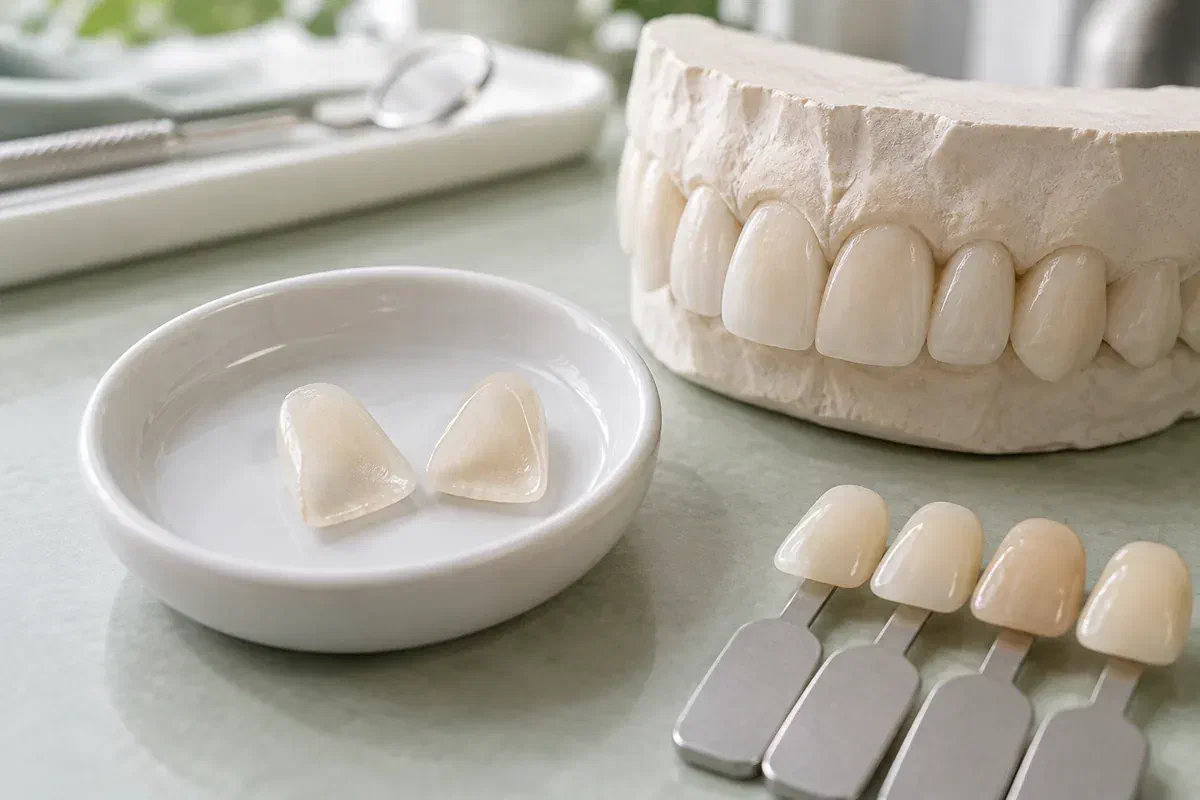
Illustrative thin ceramic veneer samples in a dish beside a dental cast and shade guide
Clues worth sharing

How does the tooth feel, and how does it look?

Age is one detail among many. Describe when the issue started, what makes it better or worse, whether there was an injury, and what you'd like from treatment.

Chipped, fractured, or loose

Let the clinic know about any break, sharp edge, or movement, and whether it hurts. If a piece has come away, keep it somewhere safe. Ask how to manage until your appointment; home adhesives and DIY smoothing can make matters worse.

Changes at the margin or in colour

Show where you've noticed a dark line, stain, or shade shift, and say how quickly it appeared. It could relate to the veneer surface, the bonded edge, the gum, or nearby teeth. A visible margin is something to examine, not an automatic sign of failure.

Twinges, aching, or sore gums

Mention sensitivity to temperature, discomfort when chewing, gum bleeding or swelling, or a contact that feels new. These need a clinical examination. Treating the tooth or gums may be necessary before a new veneer is even considered.

The natural tooth under a veneer can develop decay, cracks, or gum problems like any other. Replacement planning therefore weighs its health and remaining structure, not only the surface appearance.

Getting to the cause

Treat the right problem, not just the visible one.

An assessment should separate a veneer problem from a tooth or gum problem. Once that's clear, you can ask whether a conservative step would help and how a replacement would affect the tooth. Recommendations should follow from findings, not from a general idea that veneers need renewing after a set time.

If a new restoration turns out to be appropriate, planning gives you room to talk about appearance while the dentist considers the tooth's practical needs. Gum health at the margin, how you'll clean the area, and long-term maintenance all shape the design. Comfort and looks need to be solved together.

Patient information: FDI World Dental Federation — evaluating repair before total replacement

Knowing why one option is suggested

Ask which finding about the veneer, tooth, or gum leads to the recommendation. If a less invasive approach isn't advised, ask what rules it out. Seeing the tradeoff helps you balance benefit against removing more of the tooth.

Appearance discussed alongside comfort

Tell the dentist whether you want a match with your current teeth or are open to a different shade. Ask how one replacement will relate to the teeth and restorations nearby. Treating additional teeth is a decision of its own.

Addressing what caused the trouble

Ask whether clenching, bite contacts, gum changes, decay, or an old injury is involved. Find out how the plan deals with it. A new veneer placed over an unaddressed problem may not resolve the symptoms that brought you in.

The path from symptom to plan

Examine first, then decide, then restore.

The number and length of appointments depend on the existing material, the findings, and the restoration you choose. Ask what the first visit includes, whether a temporary is likely, how lab time fits, and what the fee covers.

  1. Describe the symptoms and history

    Explain when the sensitivity or soreness began, when the veneer was placed, and any past repairs. Records help if you have them. The dentist checks the restoration, its edges, your bite, and the gums, and may suggest further tests.

  2. Sort out the tooth before the cosmetics

    If the tooth or gum needs care, that is discussed first. Then you can weigh whether monitoring, polishing, repair, or rebonding is realistic, or whether a new veneer or another restoration makes more sense. Ask how preparation and findings underneath could affect the plan.

  3. Prepare and arrange the new restoration

    Old material is managed as planned and the tooth reassessed. Shade, shape, records, and any temporary protection are agreed. Ask for the expected appointment sequence rather than assuming a specific lab method or same-day service.

  4. Confirm comfort and fit, then review

    At the appropriate stage before final placement, you'll see the fit and appearance. Afterward, bite contacts and finish are checked and home care explained. Ask when to return and how to report lingering sensitivity or a cleaning or appearance issue.

Comfort after treatment

Keep the gum line healthy and watch for changes

Instructions vary for a temporary, a repaired veneer, and a newly bonded one. Ask which apply to your stage, and who you should contact if something changes.

Handle a temporary with care

Ask about foods to avoid, how to keep it clean, and what to do if it loosens. Save the clinic's contact details and call if a problem comes up before your next visit. Avoid home cement kits or adjusting it yourself.

Pay attention to the gum margin

Brush and clean between your teeth as advised, giving the area where veneer meets gum some extra care. If floss catches, food lodges, or the gum stays sore, let us know. Regular checkups and cleanings remain important.

Note new or lingering sensitivity

Avoid using teeth as tools or biting hard objects. If grinding, clenching, or sport puts the tooth at risk, ask about protection. Sensitivity that persists, a changed bite, or looseness should be reported, not left to settle by itself.

What the options look like

Matching the response to the finding

Compare the veneer material, the defect, the tooth's condition, and what you want. Ask how each choice balances preserving natural tooth with a dependable, maintainable result.

When the restoration itself is still sound

Keep the veneer with repair or rebonding

If the issue is contained, a full replacement may not be needed, depending on the findings. Ask about what this approach can achieve, how it may look, and the follow-up involved. It still requires assessment and isn't a permanent promise.

When a fresh restoration fits the situation

Replace it with a new veneer

Talk through material, preparation, colour, contour, and maintenance. Ask whether the new veneer is meant to match one tooth or be part of a broader plan. Neighbouring veneers deserve their own assessment rather than replacement by default.

When the underlying tooth needs more

Treat the tooth with a different restoration

A tooth with significant damage or another clinical problem may need treatment beyond a veneer. Ask why another restoration or a specialist opinion is suggested and what it would involve. Your earlier veneer doesn't limit future options.

Mississauga veneer questions

Sensitivity, gums, and replacement explained

Bring what you know about your veneer and the outcome you'd like. The examination will show whether replacement is appropriate and which alternatives make sense.

(905) 876-4488
Why does a tooth with a veneer become sensitive?
Possible reasons include gum recession exposing root surface, a gap at the margin, decay, a crack, or bite pressure. The examination aims to find which applies. The answer shapes whether the veneer, the tooth, or both need attention.
Can a new veneer stop sensitivity?
Not necessarily. If the cause is decay, a crack, or gum changes, those may need their own treatment. Ask what the dentist thinks is causing the symptom and how each option would address it.
My gum looks red around one veneer. Is the veneer the problem?
It could be related to the margin, plaque build-up, or gum health more generally. Ask the dentist to check the area and show you how to clean it well. Treatment depends on what is found.
Does a small chip always mean the veneer needs to come off?
No. Depending on its size, location, and the material, a chip may be polished or repaired. Ask what a smaller fix would achieve and why replacement would or wouldn’t be advised.
What if something unexpected is found when the old veneer is removed?
The plan may change. Removal can reveal decay or other findings that affect what’s suitable. Ask beforehand how this would be handled, including temporary protection and how revised options would be explained.
From Mississauga, should I call before driving in with a sore veneered tooth?
Yes, a call helps the team understand your symptoms and advise you. For severe pain, swelling, or injury, seek prompt care, including closer to home if that is quicker.

Patient information: Canadian Dental Association — bleaching and existing restorative materials

Book from Mississauga

Comfort first, then appearance.

Speak with our Bronte Street team about a veneered tooth that feels sensitive, sore, loose, or no longer looks right. We'll examine the restoration and the tooth together, discuss what could be kept, and explain repair, replacement, or other care.

Material, repair options, preparation, temporaries, timing, and fees depend on the examination. A new veneer, relief of symptoms, or an exact shade match can't be guaranteed in advance.

Visit Milton Dental Clinic
Unit 1, 342 Bronte St. S, Milton, ON L9T 5B7
Get directions Clinic hours
Monday–Thursday
11am–7pm
Friday–Sunday
By appointment only

Areas we serve

  • Milton
  • Oakville
  • Mississauga
  • Georgetown
  • Halton Hills
  • Acton
  • Campbellville
  • Brampton
  • Burlington
  • Puslinch
  • Rockwood
  • Erin
  • Caledon
  • Etobicoke
  • Old Milton
  • Bronte Meadows
  • Timberlea
  • Dorset Park
  • Dempsey
  • Clarke
  • Beaty
  • Coates
  • Harrison
  • Scott
  • Willmott
  • Ford
  • Bowes
  • Cobden
  • Walker
  • Mountain View
  • Milton Heights
  • Hawthorne Village
  • Valley View
  • Fallingbrook
  • Nassagaweya
  • Trafalgar
  • Esquesing
  • Nelson
  • Brookville
  • Moffat
  • Glen Williams
  • Norval
  • Limehouse
  • Stewarttown
  • Ashgrove
  • Hornby
  • Silver Creek
  • Speyside
  • Scotch Block
  • North Oakville
  • River Oaks
  • Glen Abbey
  • West Oak Trails
  • Palermo
  • Bronte Creek
  • College Park
  • Joshua Creek
  • Uptown Core
  • Preserve
  • Iroquois Ridge
  • Lisgar
  • Meadowvale
  • Meadowvale Village
  • Churchill Meadows
  • Erin Mills
  • Central Erin Mills
  • Streetsville
  • East Credit
  • Creditview
  • Heartland
  • Sheridan
  • Mount Pleasant
  • Credit Valley
  • Huttonville
  • Churchville
  • Springbrook
  • Northwest Brampton
  • Bram West
  • Fletcher's Meadow
  • Fletcher's Creek South
  • Alton Village
  • Orchard
  • Millcroft
  • Headon Forest
  • Tansley
  • Brant Hills
  • Tyandaga
  • Kilbride
  • Lowville
  • Aberfoyle
  • Morriston
  • Arkell
  • Hillsburgh
  • Freelton
  • Carlisle
  • Waterdown
  • Flamborough
  • Mountsberg

How can we help?

Milton Dental Clinic

Have a question about your smile? Choose the option that works best for you.

For urgent dental concerns, please call.
Messages are reviewed during clinic hours.