

Illustrative patient and clinician reviewing natural tooth shades for an existing veneer concern
Cosmetic Dentistry

Veneer Replacement in Puslinch

You've been told a veneer, or several, should be replaced, and you'd like to understand why before agreeing. Coming from Puslinch, you can have the restorations and the natural teeth beneath them examined independently, with the reasoning for repair, rebonding, replacement, or monitoring explained.

A second look at a recommendation

Before you agree to new veneers, ask to see the reasons.

Hearing that your veneers need replacing can come as a surprise, especially if they feel fine and you're happy with how they look. Seeking another opinion is a normal, sensible step. A fresh examination focuses on what can be seen and measured today: the condition of each veneer, its margins, your bite, and the health of every tooth underneath.

Sometimes that review confirms the original advice. Other times it points to smaller options worth considering first, such as polishing, a local repair, rebonding a sound veneer, or keeping a close eye on a minor change. A different restoration may also come up. Either way, you should finish the visit knowing why a particular route is suggested.

Coming from Puslinch, bring any written treatment plan, X-rays you can obtain, and what you know about when the veneers were placed. Note any sensitivity or past repairs. If one comes loose before your appointment, keep it in a small container and phone so the team can advise you before any preparation is discussed.

Request a second opinion
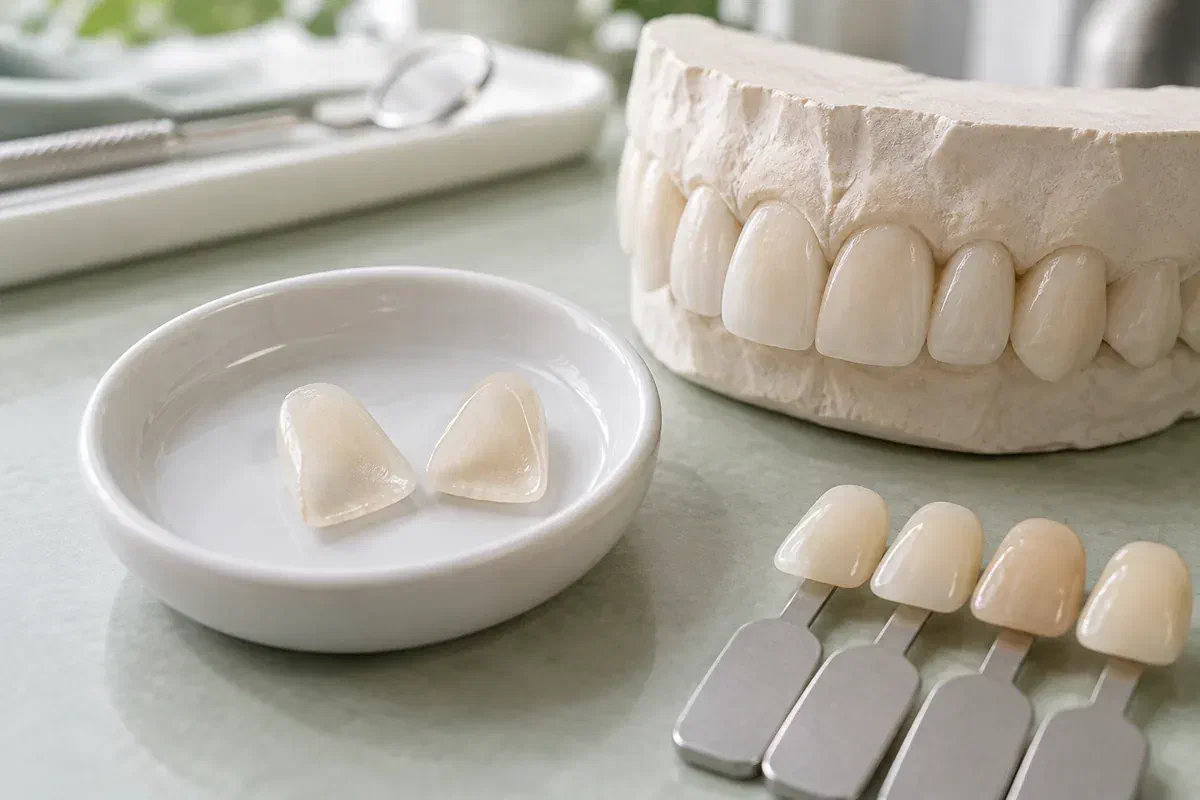
Illustrative thin ceramic veneer samples in a dish beside a dental cast and shade guide
What you were told, and what you notice

Bring both the recommendation and your own observations.

Age by itself rarely justifies replacement. Share what reasons were given to you, when you first noticed any change, whether an injury occurred, and what outcome matters to you.

Visible damage or a loose veneer

If there's a chip, crack, or movement, say so when you call and mention any pain or sharpness. Keep a detached fragment in a container. Ask how to look after the tooth meanwhile; glue from the toolbox and home filing can cause harm.

A margin, stain, or colour concern

If the earlier advice mentioned an edge or shade issue, point to where it is and whether you've seen it change. The cause might be the veneer, the bonded margin, nearby teeth, or another finding. A visible line warrants a look but doesn't prove replacement is needed.

Symptoms in the tooth or gums

Mention cold twinges, discomfort on biting, sore gums, or a contact that feels different. Symptoms call for proper examination, and a cosmetic solution won't address them. The tooth or gums may need treatment before any new veneer.

Each veneer is fixed to a natural tooth that can still develop decay or cracks. A second opinion considers the health and remaining structure of those teeth, not only the appearance of the veneers on top.

What a second opinion offers

Confidence in the plan, whichever way it goes

An independent review describes what's present and whether a conservative step could manage it. You can ask what a repair would preserve compared with what replacing the veneer would remove. A sound recommendation rests on visible findings, rather than a set timetable for how long veneers ought to last.

If replacement is supported, planning gives room to talk about the look you want and the job the tooth has to do. Its contacts with other teeth, how you'll keep it clean, and what maintenance it needs all matter. You'll be in a better position to compare plans when both explain these points.

Patient information: FDI World Dental Federation — evaluating repair before total replacement

Findings you can see

Ask the dentist to show you, where possible, which part of the veneer or tooth supports the recommendation. If a smaller step is unsuitable, ask what rules it out. That clarity helps you decide whether the benefit is worth removing existing material.

One tooth or many, explained separately

If more than one veneer was flagged, ask for each to be discussed on its own. Say whether you'd like to keep your current shade or are open to a change. A plan to redo a whole set should come with separate reasons and alternatives.

The cause behind any failure

Ask whether bite forces, clenching, an old injury, decay, or another factor is involved. Find out how a new plan would deal with it. Replacing veneers without understanding the cause can leave the same problem in place.

How the review works

Examine, explain, and leave the decision with you

If treatment follows, the visits will reflect the current veneer material, the exam results, and the option you settle on. Ask what the review appointment includes, whether temporaries or lab work could be involved later, and what each stage would cost.

  1. Share the earlier plan and history

    Bring any written recommendations, records, or images, along with what you know of the veneers' age, material, and repairs. The dentist examines each restoration, its margins, your bite, and the gums, and may suggest additional investigation.

  2. Hear the options side by side

    Talk through whether monitoring, polishing, repair, or rebonding is realistic for each tooth, and when replacement or another restoration makes more sense. Ask about preparation and how findings under an old veneer could alter the plan.

  3. If you proceed, prepare and plan the restoration

    Any old material is removed according to the agreed plan and the tooth looked at again. You'll decide on shade, shape, and temporary protection. Confirm the order of visits instead of assuming quick turnaround or a particular lab.

  4. Assess the final fit and arrange reviews

    Appearance and fit are checked with you at the proper stage, before the veneer is permanently bonded. Afterward, the dentist confirms the bite feels right, finishes the surface, and explains home care. Ask about review timing and how to report any concern.

Whatever you choose

Care that protects existing and new veneers alike

If you keep your veneers, standard care applies. If you go ahead with treatment, there may be separate advice for a temporary stage and for the finished restoration. Ask which fits and whom to contact.

Handle any temporary gently

Find out which foods to skip, how to clean around the temporary, and what to do if it shifts. Save the clinic's number and get in touch early if a problem develops between appointments. Don't attempt to re-seat it yourself.

Keep veneer edges clean

Brush and clean between your teeth as advised. Tell us if floss tears, food packs in, or the gum along a veneer is tender. Regular checkups and hygiene visits remain essential, whether your veneers are old or new.

Avoid strain and report changes

Keep teeth away from nutshells, bottle tops, and packaging. If you clench, grind, or play sports, ask whether protection is right for you. A changing bite, looseness, or persistent sensitivity should be reported rather than ignored.

What the review may suggest

Agreement, a smaller step, or a different plan

Every veneer is judged on its material, any defect, the health of the tooth, and what you want from your smile. Expect each option to be explained in terms of how much tooth it keeps and how maintainable it is.

When retaining the current restoration is reasonable

Keep the veneer with conservative care

Polishing, a local repair, or rebonding may suit a contained concern if findings allow. Ask what each step realistically delivers, how it will look, and when it should be rechecked. Even conservative care has limits and isn't permanent.

When the findings support replacement

Replace with a new veneer

Discuss materials, preparation, colour, contour, and upkeep. Ask whether the plan covers one tooth or several, and why. Each veneer in a set should have its own reason for being replaced.

When the tooth underneath needs another approach

A different restoration or specialist input

If a tooth is extensively damaged or has another clinical issue, a veneer may not be the best answer. Ask what alternative is proposed, what it involves, and the reasoning. A previous veneer doesn't limit what you can choose next.

Second-opinion questions

Getting another view on veneer replacement

Bring any earlier recommendations and what you'd like to achieve. The examination will show whether replacement is appropriate and what alternatives are worth considering.

(905) 876-4488
Is it okay to get a second opinion about replacing my veneers?
Yes. It’s a reasonable step for any elective or significant treatment. Bring whatever records or written plans you have so the dentist can understand the earlier advice.
What should I bring to a second-opinion visit?
Written treatment plans, recent X-rays if you can get copies, notes on when the veneers were placed, and any history of repairs or sensitivity. Questions you have about the earlier advice are useful too.
What if the second opinion differs from the first?
Ask both dentists to explain their findings and reasoning. Differences sometimes come down to judgement or priorities. Understanding the reasons helps you make the decision that suits you.
My veneers feel fine. Could they still need attention?
Possibly. Issues like margin changes or decay aren’t always felt. The examination checks for these, and the dentist will explain whether anything needs treatment or simply monitoring.
Can one veneer be replaced without changing the others?
Often yes, though matching an older veneer can be challenging. Ask how the shade will be assessed and what would happen if a close match isn’t achieved.
Can a second-opinion visit from Puslinch be combined with other dental care?
Ask when booking. Depending on availability and what’s needed, an examination can sometimes be scheduled alongside a cleaning or other routine care.

Patient information: Canadian Dental Association — bleaching and existing restorative materials

Visiting from Puslinch

An independent look at your veneers

Book time at our Bronte Street practice to have your veneers and the teeth beneath them examined. We'll review any earlier advice, explain what we find, and talk through whether repair, replacement, monitoring, or other care makes sense.

Our findings and options depend on your examination and may or may not match earlier advice. Fees, timing, and suitability of any treatment are confirmed after assessment, and no shade match is guaranteed.

Visit Milton Dental Clinic
Unit 1, 342 Bronte St. S, Milton, ON L9T 5B7
Get directions Clinic hours
Monday–Thursday
11am–7pm
Friday–Sunday
By appointment only

Areas we serve

  • Milton
  • Oakville
  • Mississauga
  • Georgetown
  • Halton Hills
  • Acton
  • Campbellville
  • Brampton
  • Burlington
  • Puslinch
  • Rockwood
  • Erin
  • Caledon
  • Etobicoke
  • Old Milton
  • Bronte Meadows
  • Timberlea
  • Dorset Park
  • Dempsey
  • Clarke
  • Beaty
  • Coates
  • Harrison
  • Scott
  • Willmott
  • Ford
  • Bowes
  • Cobden
  • Walker
  • Mountain View
  • Milton Heights
  • Hawthorne Village
  • Valley View
  • Fallingbrook
  • Nassagaweya
  • Trafalgar
  • Esquesing
  • Nelson
  • Brookville
  • Moffat
  • Glen Williams
  • Norval
  • Limehouse
  • Stewarttown
  • Ashgrove
  • Hornby
  • Silver Creek
  • Speyside
  • Scotch Block
  • North Oakville
  • River Oaks
  • Glen Abbey
  • West Oak Trails
  • Palermo
  • Bronte Creek
  • College Park
  • Joshua Creek
  • Uptown Core
  • Preserve
  • Iroquois Ridge
  • Lisgar
  • Meadowvale
  • Meadowvale Village
  • Churchill Meadows
  • Erin Mills
  • Central Erin Mills
  • Streetsville
  • East Credit
  • Creditview
  • Heartland
  • Sheridan
  • Mount Pleasant
  • Credit Valley
  • Huttonville
  • Churchville
  • Springbrook
  • Northwest Brampton
  • Bram West
  • Fletcher's Meadow
  • Fletcher's Creek South
  • Alton Village
  • Orchard
  • Millcroft
  • Headon Forest
  • Tansley
  • Brant Hills
  • Tyandaga
  • Kilbride
  • Lowville
  • Aberfoyle
  • Morriston
  • Arkell
  • Hillsburgh
  • Freelton
  • Carlisle
  • Waterdown
  • Flamborough
  • Mountsberg

How can we help?

Milton Dental Clinic

Have a question about your smile? Choose the option that works best for you.

For urgent dental concerns, please call.
Messages are reviewed during clinic hours.