

Illustrative clinician and patient discussing a tooth model during an enamel assessment
Cosmetic Dentistry

White Spot Treatment in Acton

Just one white fleck bothers you, and you have no interest in a full smile makeover. Coming from Acton, you can have that single mark examined, understand its cause, and keep the plan as small as the problem.

Keeping the scope small

A single spot deserves a proportionate answer.

Plenty of people put off asking about a white mark because they worry the conversation will spiral into veneers, whitening and a long treatment plan. That worry is understandable. You are allowed to walk in, point at one tooth and say that this is the only thing you want to talk about.

What the dentist does need to know is what that one mark represents. A chalky area can mean the enamel there is losing minerals, which is a health matter before it is a cosmetic one. A fleck that formed as the tooth developed is a different story. A patch on a surface that has started to break down is a third.

Visiting us from Acton, you will get a careful look at the tooth you are concerned about, a quick check of its neighbours for context, and a plain explanation. Any suggestion beyond that single area will be clearly labelled as optional, and you can decline it without fuss.

Ask about one white spot
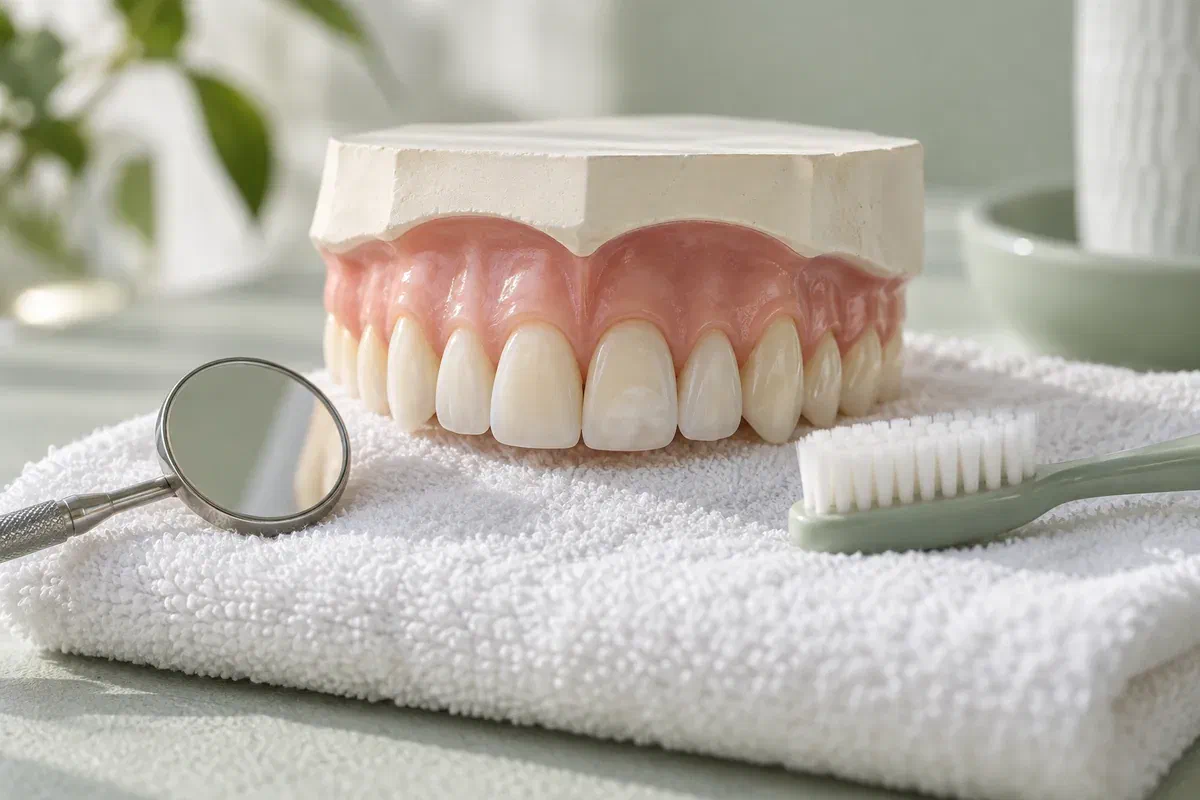
Illustrative dental teaching model with a subtle white enamel patch beside a mirror and toothbrush
Context for that one tooth

When did it appear? Has it changed? Does it feel different?

The exam focuses on your chosen tooth while taking in the gums and nearby enamel. Rough memories are fine; nobody expects a precise date.

A newer patch in a plaque-prone spot

If the mark sits near the gumline, beside a filling, or where a bracket used to be, it may reflect early mineral loss. Protecting that small area comes first. We will look at what might be keeping it at risk and suggest a focused routine.

A fleck that has always been part of the tooth

Marks visible in old photos, or one that has looked the same for years, often trace back to how the enamel formed. These are usually stable. That makes it easier to talk about whether a small cosmetic step is worth it or whether leaving it alone suits you.

A spot that feels rough or sensitive

Let us know about twinges, texture changes, a darker rim or food catching. Those signs may mean this one tooth needs attention for reasons beyond its colour. Please do not scratch at it, and do not rely on a cosmetic product to fix a damaged surface.

One white mark can mean several different things. Enamel in the early stages of mineral loss can often be brought back to stability before a cavity forms; developmental flecks and broken surfaces are managed differently.

Why a focused assessment helps

A small plan that still gets the basics right

Even a narrow plan should say what it is aiming for. If the enamel is losing minerals, the goal is to halt that, and success means the surface stays sound. If the mark is stable and you would like it less visible, success is measured in contrast. The two are not the same, and a spot that is still faintly there does not mean the protective care has failed.

For appearance, ask how much each option changes that single tooth. A conservative technique may leave enamel largely untouched, while bonding adds material that needs looking after. Weigh the likely improvement against those commitments. A softer contrast on one tooth may be all you want, and leaving a sound mark exactly as it is is a valid decision.

A reason for the diagnosis

You should understand what in the exam points to the likely cause and whether a photo or a later look would make it clearer. If the cause is uncertain, ask how that affects whether to try something now or wait.

Prevention for that patch, not your whole life

Talk about how you clean around the mark, what you sip and snack on, and whether a fluoride product would help that area. A couple of targeted habits is often enough. Agree on when the tooth will be looked at again.

An honest sense of what will show

Ask whether the suggested step would blend the fleck into the tooth, reduce its contrast, or mask it with a restoration, and what might still be visible. Any further step is a separate choice. Total disappearance should not be promised up front.

A short, contained sequence

Examine one tooth, protect if needed, pick the smallest step, check.

For many people, the plan stops after prevention and a recheck. For others, a single, limited cosmetic step is discussed once the enamel is in good shape.

  1. Focus the exam

    Show us the mark, tell us roughly how long it has been there and whether anything has changed. The dentist examines the tooth and its immediate neighbours and explains whether the surface looks intact.

  2. Settle the enamel if it needs it

    If there are signs of active mineral loss, you will leave with a focused routine, an explanation of any product suggested, and a review date. We will say what a stable result would look like before talking about appearance.

  3. Consider the least extensive option

    Where you want the mark to be less visible, we compare leaving it, a limited enamel technique such as resin infiltration, or a small bonding. Preparation, isolation, materials and how far blending can go are all explained for that one tooth.

  4. Review and stop if you are happy

    After any step, the result and surface are checked. If a trace of the mark remains and it does not bother you, that can be the end of it. More treatment is a new decision, never an automatic escalation.

Afterwards

Small habits for a small area

Your aftercare will depend on whether you are following prevention, had an enamel procedure or now have bonding. We will point out which guidance is yours and when to come back.

Give the area a little extra attention

Brush gently but thoroughly around the mark, clean between those teeth and use fluoride as recommended. If the angle is awkward, ask us to show you. Let us know if anything feels uncomfortable so we can adjust.

Leave the judging to the review

Different lighting can make one small fleck look bigger or fainter. At the follow-up, the tooth is examined properly and compared with any earlier photos. Mention new roughness, discomfort or growth in the patch.

Keep tools and remedies away

Do not scrape, sand or apply acidic household mixtures to the spot. Ask before whitening, because it can change the contrast around one tooth and affect any bonding colour match.

Options sized to the problem

Start small and only go further if it is worth it.

For a single tooth, the reasoning should be just as clear as for a big plan: what caused the mark, how healthy the enamel is, and what you want. The most limited approach that could work is discussed before anything else.

When the enamel is sound or recovering

Leave it and keep an eye on it

A tailored routine and occasional checks may be all one white fleck needs. It may remain visible, but healthy enamel does not have to be perfectly even in colour, and choosing to live with a stable mark is entirely reasonable.

When one intact patch is a good candidate

A conservative enamel step

Resin infiltration or a similar technique may be considered for a suitable unbroken lesion. We talk through the procedure and what blending is realistic for that single mark, since outcomes vary from one patch to another.

When the surface is damaged or masking is preferred

A small bonding

Tooth-coloured bonding on one tooth can repair a broken surface or mask a stubborn fleck. It adds material that needs upkeep. Veneers or treatment on other teeth would only be discussed if you asked, and are not the default.

Patient information: DMG — indications and limitations for smooth-surface resin infiltration

Questions from Acton

Keeping it to one tooth

General answers for people who want to deal with a single white mark. Your own exam will confirm what applies.

(905) 876-4488
Will the dentist try to sell me treatment on my other teeth?
Our approach is to address the concern you came in with. The dentist will check nearby teeth for context and mention anything relevant to your health, but cosmetic suggestions beyond your chosen tooth are optional and yours to decline.
If I bond one tooth, will it match the others?
The shade is chosen to blend with the surrounding teeth as they are now. If you whiten later, bonding will not lighten along with them, so mention any whitening plans before treatment.
Is it worth treating something so small?
That depends on how much it bothers you and what the exam shows. If the enamel is healthy, leaving it is perfectly sensible. If the mark is part of active mineral loss, protecting it is worthwhile regardless of size.
Can a single white fleck be a sign of a bigger problem?
Occasionally it can point to early mineral loss or a damaged surface. More often a stable fleck is developmental. The exam tells you which, so you are not guessing.
Will treating one spot make the rest of my teeth look worse by comparison?
It is possible that once one area looks more even, you notice small differences elsewhere. Talk this through before treatment so your expectations are clear, and remember you can always stop after one tooth.
Can resin infiltration be done on just one tooth?
Yes, if that tooth has a suitable lesion. The dentist will explain whether your mark is a candidate and what result is realistic. Results vary, and some marks respond better than others.

Patient information: American Dental Association — whitening responses and intrinsic enamel marks

Booking from Acton

Point to the tooth. We will take it from there.

Reach our Bronte Street practice to book an assessment of a single white fleck, a chalky patch near the gums, or a mark left after braces. We will examine it and outline the smallest sensible options.

We can only confirm the cause, condition, suitable treatment, likely blending, number of visits and fees after examining the tooth. A mark may not disappear entirely.

Visit Milton Dental Clinic
Unit 1, 342 Bronte St. S, Milton, ON L9T 5B7
Get directions Clinic hours
Monday–Thursday
11am–7pm
Friday–Sunday
By appointment only

Areas we serve

  • Milton
  • Oakville
  • Mississauga
  • Georgetown
  • Halton Hills
  • Acton
  • Campbellville
  • Brampton
  • Burlington
  • Puslinch
  • Rockwood
  • Erin
  • Caledon
  • Etobicoke
  • Old Milton
  • Bronte Meadows
  • Timberlea
  • Dorset Park
  • Dempsey
  • Clarke
  • Beaty
  • Coates
  • Harrison
  • Scott
  • Willmott
  • Ford
  • Bowes
  • Cobden
  • Walker
  • Mountain View
  • Milton Heights
  • Hawthorne Village
  • Valley View
  • Fallingbrook
  • Nassagaweya
  • Trafalgar
  • Esquesing
  • Nelson
  • Brookville
  • Moffat
  • Glen Williams
  • Norval
  • Limehouse
  • Stewarttown
  • Ashgrove
  • Hornby
  • Silver Creek
  • Speyside
  • Scotch Block
  • North Oakville
  • River Oaks
  • Glen Abbey
  • West Oak Trails
  • Palermo
  • Bronte Creek
  • College Park
  • Joshua Creek
  • Uptown Core
  • Preserve
  • Iroquois Ridge
  • Lisgar
  • Meadowvale
  • Meadowvale Village
  • Churchill Meadows
  • Erin Mills
  • Central Erin Mills
  • Streetsville
  • East Credit
  • Creditview
  • Heartland
  • Sheridan
  • Mount Pleasant
  • Credit Valley
  • Huttonville
  • Churchville
  • Springbrook
  • Northwest Brampton
  • Bram West
  • Fletcher's Meadow
  • Fletcher's Creek South
  • Alton Village
  • Orchard
  • Millcroft
  • Headon Forest
  • Tansley
  • Brant Hills
  • Tyandaga
  • Kilbride
  • Lowville
  • Aberfoyle
  • Morriston
  • Arkell
  • Hillsburgh
  • Freelton
  • Carlisle
  • Waterdown
  • Flamborough
  • Mountsberg

How can we help?

Milton Dental Clinic

Have a question about your smile? Choose the option that works best for you.

For urgent dental concerns, please call.
Messages are reviewed during clinic hours.