

Illustrative clinician and patient discussing a tooth model during an enamel assessment
Cosmetic Dentistry

White Spot Treatment in Brampton

Your child’s new front teeth have come in with cloudy or chalky patches, and you are not sure whether to worry. Families from Brampton can have those marks examined and get a calm explanation of what they mean and what, if anything, to do.

A parent’s question

New teeth, unexpected marks

Permanent incisors often arrive looking a little different from the baby teeth they replace, and sometimes they bring opaque flecks or streaks with them. Parents tend to notice at bedtime brushing or in a school photo. The natural reaction is to wonder whether something went wrong.

Many such marks formed while the tooth was still developing inside the jaw, long before anyone could see it. Others appear later, where plaque has been sitting along the gums and enamel has started to lose minerals. Telling those two apart is the job of the first appointment, and it guides everything that follows.

When you bring your child in from Brampton, we will look at the affected teeth, ask about their health history and brushing habits, and explain the likely cause in words a young person can follow too. For many children, the right plan is good prevention and time, not a cosmetic procedure.

Book a check for your child’s marks
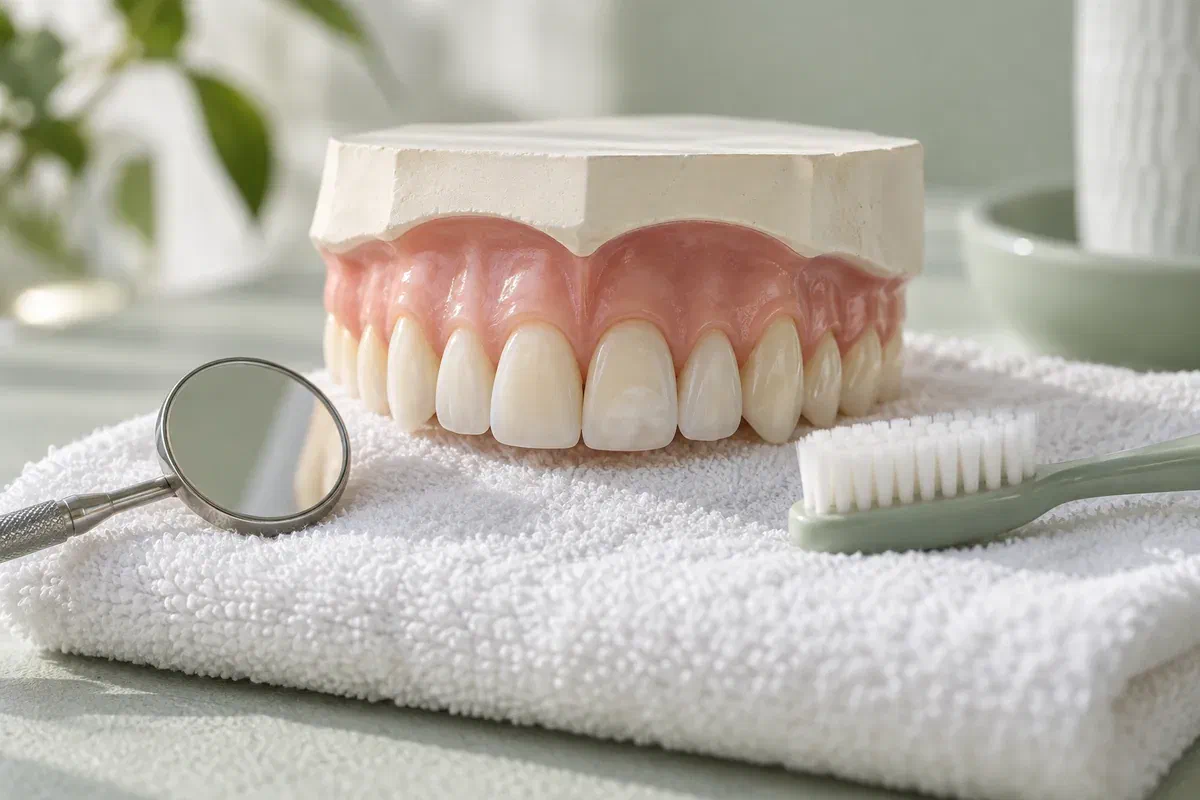
Illustrative dental teaching model with a subtle white enamel patch beside a mirror and toothbrush
Things a parent can share

Small details from home help the exam.

We examine the patches alongside the gums and the rest of the mouth. You do not need precise dates; a rough sense of when the teeth came in and when you spotted the marks is plenty.

Chalky bands along the gumline

Opaque areas hugging the gums, where brushing is often missed, can be early signs that the enamel is losing minerals. In that case, the focus is on routines that let the surface stay strong, such as better plaque removal and fluoride guidance suited to your child’s age.

Flecks that were there from the start

Marks that appeared as soon as the tooth broke through, or that show a similar pattern on matching teeth, usually point to differences in how enamel formed. Mention any childhood illnesses or fluoride sources you know about. These tend to be watched rather than treated urgently.

Patches that feel rough or catch food

Tell us if your child mentions sensitivity, if the spot feels gritty, if it is picking up yellow or brown colour, or if food gets stuck there. Those signs may mean the enamel needs more attention. Please do not let anyone scrape or scrub the area to test it.

A pale mark on a child’s tooth is a clue, not a verdict. Early mineral loss can often be held in check with home care and professional advice, and developmental marks are usually a matter of monitoring.

What the visit sorts out

Is the tooth healthy? Does the look matter yet? Two separate answers.

With young teeth, the first priority is almost always the health of the enamel. A good plan will tell you whether the dentist is aiming to stop mineral loss, simply track a mark that looks settled, or, later on, discuss its appearance. Progress on health is measured differently from progress on colour, and a patch that lingers does not mean home care has failed.

Cosmetic choices for children and teens are usually approached cautiously. Some options touch the enamel very little, others add material, and suitability can change as the child grows. You are entitled to hear what each would involve, why waiting might be wiser, and that leaving a healthy mark alone is a sound decision.

An explanation you can pass on

You should understand what in the exam points to the likely cause, and whether photos or a later visit would help. Pattern across the teeth, timing and texture all feed into it. If the dentist is uncertain, that is useful to know when deciding whether to wait.

A routine that suits a child’s day

Talk through who brushes and when, snacking and sipping between meals, and the right amount of fluoride toothpaste for your child’s age. Simple steps that happen every day beat complicated ones that do not. Set a time for the dentist to look again.

Realistic thoughts on appearance

If your teen is bothered by the marks, ask whether any option would blend them, lessen the contrast, or cover them, and what the right age might be. Find out what may still show. A promise that the marks will disappear should not be made in advance.

How we usually proceed

Look, protect, wait, revisit

For most children, the plan centres on the first two stages. Cosmetic options, where relevant, tend to come later and as a separate conversation.

  1. Meet your child and look closely

    We ask when the teeth came in, how brushing goes at home, and whether the spots have changed. The dentist examines the patches, the neighbouring teeth and the gums, and explains in plain language whether the surface looks sound.

  2. Build a protective plan for home

    If there is plaque-related risk or early mineral loss, we suggest a practical routine and the fluoride approach suited to your child’s age, then set a review. Parents and kids both get a clear picture of what each product is for.

  3. Talk about appearance when the time is right

    For teens bothered by visible marks, options such as monitoring, a limited enamel treatment, or tooth-coloured bonding may be discussed. We go over what each involves, how cooperation in the chair matters, and why some approaches suit older patients better.

  4. Check in before doing anything more

    At the review, we look at both the enamel and the appearance. If a mark is still noticeable, we talk about whether it bothers your child and whether further care makes sense now or later. Nothing more is added by default.

Everyday care at home

Make the routine easy enough to stick.

The details depend on whether your child is following a prevention plan or has had a cosmetic step. We will tell you which applies and when we would like to see the teeth again.

Brush the gumline with care

Angle the bristles toward the gums where plaque gathers, and use the amount of fluoride toothpaste suggested for your child’s age. Younger children usually need a parent to finish the job. If brushing turns into a struggle, tell us so we can suggest a different approach.

Track changes with the dentist, not the camera

School photos and phone pictures are unreliable for comparing white marks. The review visit is where the patch is looked at properly, sometimes with clinical photos. Keep the appointment and mention any new roughness or sensitivity your child reports.

Steer clear of internet remedies

Do not use baking soda scrubs, lemon juice or other acidic mixtures to fade the patches, and hold off on whitening products for children unless the dentist advises otherwise. Gentle consistency protects young enamel far better than experiments.

Choices for young enamel

Most marks need watching, some need protecting, a few need more.

We explain why a particular path suits your child’s age, the cause of the mark and the condition of the enamel. The gentlest workable approach always comes up first.

The usual starting point

Prevention and patient monitoring

Good home care, age-appropriate fluoride and regular reviews are the core plan for most children with white patches. The marks may stay visible, sometimes for years, while the enamel itself remains healthy. That is a perfectly good outcome.

For suitable lesions, when appearance matters

Conservative enamel treatment for older teens

Resin infiltration or similar techniques may be considered for some intact patches once a teen can sit comfortably for the procedure. How well a mark blends varies, so we would discuss the steps and realistic expectations first.

When the surface has broken down

Tooth-coloured bonding

If the enamel is damaged, or a mark continues to cause distress, bonding may be discussed. It adds material to a young tooth, so repairs and upkeep over the years are part of the conversation. More extensive work is seldom appropriate at this age.

Patient information: DMG — indications and limitations for smooth-surface resin infiltration

Brampton parents ask

Children, teens and white enamel marks

These answers are general; your child’s exam will fill in the specifics. The aim is always to separate a health need from an optional cosmetic choice.

(905) 876-4488
Did something I did cause the white marks on my child’s teeth?
Usually there is no single cause to blame. Developmental marks form before the tooth is visible, and early mineral loss has several contributors. The exam is about understanding the cause now and protecting the enamel from here.
Can too much fluoride cause white flecks?
Excess fluoride while teeth are forming can lead to a condition called fluorosis, which often looks like faint white streaks or flecks. Fluoride remains important for protecting teeth, so ask how much toothpaste is right for your child’s age.
Should we wait until my child is older before treating the marks?
For many children, yes, because monitoring and prevention are what young teeth need most. Cosmetic options may be easier to consider once the teen is older and the teeth are fully settled. The dentist can explain what timing makes sense.
My teenager is self-conscious about the spots. What can we do now?
Start with an exam to confirm the enamel is healthy. If it is, the dentist can talk through options suited to a teen, what each involves and what may still show, so your teen can take part in the decision.
Will the patches fade as my child gets older?
Some become less noticeable over time and others stay much the same. Early mineral loss that is well managed can stabilise, but the mark may not disappear. Regular reviews help track what is actually happening.
Is it worth the trip from Brampton if the marks are not bothering anyone?
An exam is still useful because it confirms whether the enamel needs protecting. If everything is stable, you can simply keep an eye on the teeth at routine checkups, and no cosmetic treatment is required.

Patient information: American Dental Association — whitening responses and intrinsic enamel marks

From Brampton to Bronte Street

Bring your child, and bring your questions.

Reach our Bronte Street practice to book a look at white patches on new adult teeth, chalky areas along the gums, or marks your teen has started to notice. We will examine the teeth and walk you through prevention, monitoring and, where suitable, appearance options.

Only an exam can show what is behind a mark, which approach fits, how much it might change, how many appointments are involved and what fees apply. We cannot promise that any patch will disappear.

Visit Milton Dental Clinic
Unit 1, 342 Bronte St. S, Milton, ON L9T 5B7
Get directions Clinic hours
Monday–Thursday
11am–7pm
Friday–Sunday
By appointment only

Areas we serve

  • Milton
  • Oakville
  • Mississauga
  • Georgetown
  • Halton Hills
  • Acton
  • Campbellville
  • Brampton
  • Burlington
  • Puslinch
  • Rockwood
  • Erin
  • Caledon
  • Etobicoke
  • Old Milton
  • Bronte Meadows
  • Timberlea
  • Dorset Park
  • Dempsey
  • Clarke
  • Beaty
  • Coates
  • Harrison
  • Scott
  • Willmott
  • Ford
  • Bowes
  • Cobden
  • Walker
  • Mountain View
  • Milton Heights
  • Hawthorne Village
  • Valley View
  • Fallingbrook
  • Nassagaweya
  • Trafalgar
  • Esquesing
  • Nelson
  • Brookville
  • Moffat
  • Glen Williams
  • Norval
  • Limehouse
  • Stewarttown
  • Ashgrove
  • Hornby
  • Silver Creek
  • Speyside
  • Scotch Block
  • North Oakville
  • River Oaks
  • Glen Abbey
  • West Oak Trails
  • Palermo
  • Bronte Creek
  • College Park
  • Joshua Creek
  • Uptown Core
  • Preserve
  • Iroquois Ridge
  • Lisgar
  • Meadowvale
  • Meadowvale Village
  • Churchill Meadows
  • Erin Mills
  • Central Erin Mills
  • Streetsville
  • East Credit
  • Creditview
  • Heartland
  • Sheridan
  • Mount Pleasant
  • Credit Valley
  • Huttonville
  • Churchville
  • Springbrook
  • Northwest Brampton
  • Bram West
  • Fletcher's Meadow
  • Fletcher's Creek South
  • Alton Village
  • Orchard
  • Millcroft
  • Headon Forest
  • Tansley
  • Brant Hills
  • Tyandaga
  • Kilbride
  • Lowville
  • Aberfoyle
  • Morriston
  • Arkell
  • Hillsburgh
  • Freelton
  • Carlisle
  • Waterdown
  • Flamborough
  • Mountsberg

How can we help?

Milton Dental Clinic

Have a question about your smile? Choose the option that works best for you.

For urgent dental concerns, please call.
Messages are reviewed during clinic hours.