

Illustrative clinician and patient discussing a tooth model during an enamel assessment
Cosmetic Dentistry

White Spot Treatment in Campbellville

Noticed a pale patch on a tooth but would rather not make a special trip just for that? From Campbellville, the mark can often be looked at during a visit you already have planned, with a clear plan for home care and next steps.

Fitting it into the calendar

A white mark rarely needs its own special trip.

Out in the rural edge of Milton, a dental visit often gets bundled with errands, school pickups and other appointments. So when a chalky patch turns up on someone’s tooth, the practical question is whether it can wait until the next checkup or needs to be seen sooner.

Usually the answer depends on what kind of mark it is. A patch that sits on enamel losing minerals benefits from early protective care, because it is the stage where the process can often be slowed. A fleck that formed with the tooth is typically stable and can be discussed at a routine visit without hurry.

For households in Campbellville, we can often look at the mark alongside a cleaning or another family member’s appointment. We examine the tooth, explain what it likely is, and set out what to do at home, so the next visit is planned rather than reactive. If the mark turns out to need closer attention, we will say so clearly and help you find a sensible time to come back.

Add a white spot check to your next visit
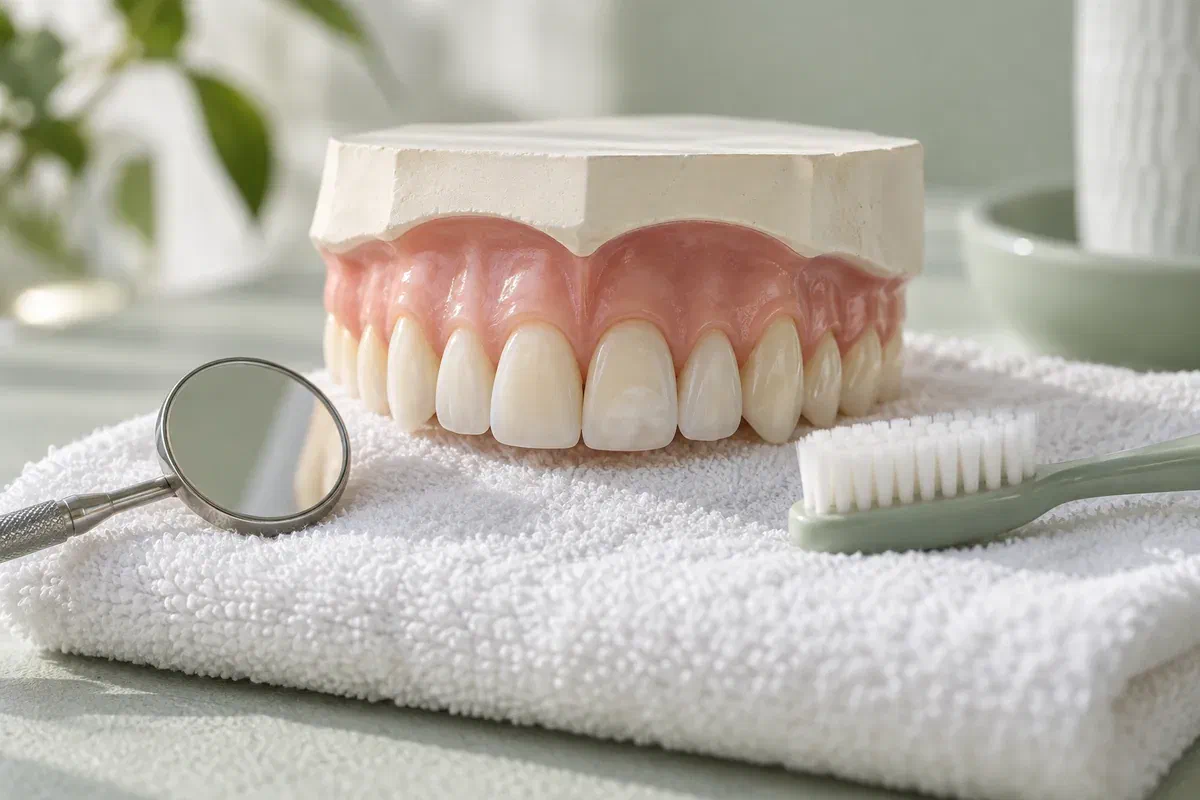
Illustrative dental teaching model with a subtle white enamel patch beside a mirror and toothbrush
Signals worth passing on

Three things that tell us how soon to look

During the exam we look at the patch, the gums and the teeth around it. Share what you can about its history, even if it is a rough guess.

Chalkiness that showed up recently

A fresh dull patch near the gums or between teeth can be early mineral loss. If that is what we find, a short protective routine is the priority. We will also look at day-to-day habits that might be feeding it, such as frequent sweet drinks during long working days.

A mark that has been there for years

Patches visible in old photographs, or a similar pattern on several teeth, often come from how the enamel formed. These usually are not urgent. We can explain the likely cause and, if appearance bothers you, talk about options at a pace that suits you.

Roughness, sensitivity or catching food

Mention twinges, a gritty feel, a brown margin or floss shredding at the site. These signs suggest the surface may be breaking down, which may mean booking sooner. Avoid scraping the area, and remember that cosmetic products cannot rebuild damaged enamel.

The look of a patch does not tell us everything about it. Early mineral loss can often be stabilised before a cavity forms, which is a good reason not to leave a new chalky area unchecked for too long.

Getting more from fewer visits

Know the goal, and how you will know it is working

The plan should make its purpose plain. Perhaps the aim is to stop further mineral loss, perhaps it is to keep watch on a settled mark, or perhaps you would like the patch to be less noticeable. Each has a different yardstick, and a spot that remains faintly visible may still be resting on enamel that is in good health.

If changing the appearance is on your list, find out what it asks of the tooth and of your schedule. Some approaches leave enamel almost as it is; others add material that needs occasional maintenance. Weigh likely improvement against those commitments. A modest change could be plenty, and deciding to leave a stable mark alone is a legitimate result.

A diagnosis explained in plain words

You should understand what in the exam suggests the cause and whether a photo or a later look would help confirm it. If there is uncertainty, ask whether it can be resolved at your next routine visit rather than a separate one.

Home care that does most of the work

With visits spaced out, daily habits carry a lot of weight. We will talk about brushing and cleaning near the patch, snacks and drinks through the day, and any fluoride product that suits you, then agree on a review that lines up with your usual checkups.

A plain-spoken view of appearance

Ask whether an option is designed to blend the patch, soften its contrast or mask it beneath bonding, and what may stay visible once it has settled. Any extra step would be its own decision, made after you have seen the first result. Nobody should guarantee the mark will disappear before treatment.

How the plan usually runs

Check, protect, consider, review: spread across visits you already make

Many people only need the first two steps. When a cosmetic option is wanted, we can often schedule it alongside other appointments.

  1. A look during a routine appointment

    Tell us when you noticed the mark, any history of braces, sensitivity, and anything you have tried. The dentist examines the tooth and its surroundings and explains whether the surface appears sound or whether more information is needed.

  2. A home routine and a matched review

    If active mineral loss seems likely, we set out a simple prevention plan and explain each product. The review can often coincide with your next cleaning, and we will tell you what a stable result should look like.

  3. A cosmetic conversation, when it suits you

    For a mark you would like to change, we compare monitoring, a limited enamel technique and bonding. We cover preparation, isolation, materials, realistic limits and how the steps could be timed around other appointments.

  4. A check before any further step

    After treatment or a period of prevention, the area is reviewed. If part of the mark is still visible, we discuss whether more care is worth it. Additional work is decided separately, never assumed.

Day to day

Routines that hold up on busy days

Instructions depend on whether you are following prevention, had an enamel treatment or received bonding. We will tell you which apply and when we would like to see the tooth again.

Keep the routine practical

Brush twice a day, clean between teeth and use the fluoride product suggested for you. If early starts or long days make that hard, tell us and we will help simplify it. A routine that fits real life is the one that works.

Compare at the clinic, not at the sink

Lighting and moisture on the tooth change how a white mark looks. At the review, the tooth is examined properly and compared with earlier notes or photos. Note any new roughness or sensitivity in the meantime.

Leave the patch alone

Do not scrape or sand the spot or try acidic home remedies. Ask before using whitening products, especially if a cosmetic step is planned. Steady care protects the enamel better than experiments.

What you can choose between

Different marks, different routes

We explain why an option fits the cause, the condition of the enamel and your priorities. The gentlest approach that could meet your goal is considered first.

When enamel health comes first

Prevention and periodic review

Targeted home care with checks at routine visits may be all that is needed for a newer lesion or a long-stable mark. The patch may still show, and that is perfectly acceptable when the tooth itself is healthy.

When an intact patch qualifies

A limited enamel technique

Resin infiltration or a similar conservative technique may be considered in selected cases. We explain the steps, any preparation, and what degree of blending is realistic for your particular mark.

When the surface needs restoring

Bonding

If the enamel has broken down, or a mark still troubles you after gentler steps, tooth-coloured bonding may be discussed. It adds material that needs upkeep. Veneers are not the default answer to a single patch.

Patient information: DMG — indications and limitations for smooth-surface resin infiltration

Campbellville questions

Timing and practicalities

General answers to help you decide when and how to have a white mark checked. Your exam will fill in the details.

(905) 876-4488
Can a white spot wait until my next regular checkup?
A stable mark with no symptoms often can. A new chalky patch, especially near the gums, is better checked sooner, because early mineral loss responds best to early care. If unsure, call and describe it.
Can several family members have their marks looked at in one visit?
Often appointments can be arranged back to back. Mention it when booking and the team can let you know what is practical for your household. Grouping visits this way can save a lot of back-and-forth driving.
What daily habits make white spots more likely?
Frequent sipping of sugary or acidic drinks, snacking through the day and missed cleaning along the gums can all raise the risk of mineral loss. The dentist can suggest changes that fit your routine.
Does well water affect white marks on teeth?
Fluoride levels in private wells vary, which can be relevant to both protection and fluorosis. If your household uses a well, mention it, and ask whether testing or a different fluoride approach would be useful.
If the spot is purely cosmetic, is there any reason to have it checked?
Yes, mainly to confirm that it is purely cosmetic. Once the enamel is known to be sound, whether to treat the appearance is up to you, and leaving it is a reasonable choice.
Will whitening at home make a white spot blend in?
Not reliably. It may soften the contrast, leave it unchanged, or make the patch more noticeable for a while. Discuss it with the dentist first so it does not complicate other treatment.

Patient information: American Dental Association — whitening responses and intrinsic enamel marks

Booking from Campbellville

Mention the mark when you book your next visit.

Contact our Bronte Street practice to have a white patch, an enamel change or a post-braces mark assessed, on its own or alongside other appointments. We will explain prevention, monitoring and appearance choices.

The cause of a mark, its condition, which treatment suits it, how much it may blend, how many visits are needed and fees all depend on an exam. A visible mark may not be removed completely.

Visit Milton Dental Clinic
Unit 1, 342 Bronte St. S, Milton, ON L9T 5B7
Get directions Clinic hours
Monday–Thursday
11am–7pm
Friday–Sunday
By appointment only

Areas we serve

  • Milton
  • Oakville
  • Mississauga
  • Georgetown
  • Halton Hills
  • Acton
  • Campbellville
  • Brampton
  • Burlington
  • Puslinch
  • Rockwood
  • Erin
  • Caledon
  • Etobicoke
  • Old Milton
  • Bronte Meadows
  • Timberlea
  • Dorset Park
  • Dempsey
  • Clarke
  • Beaty
  • Coates
  • Harrison
  • Scott
  • Willmott
  • Ford
  • Bowes
  • Cobden
  • Walker
  • Mountain View
  • Milton Heights
  • Hawthorne Village
  • Valley View
  • Fallingbrook
  • Nassagaweya
  • Trafalgar
  • Esquesing
  • Nelson
  • Brookville
  • Moffat
  • Glen Williams
  • Norval
  • Limehouse
  • Stewarttown
  • Ashgrove
  • Hornby
  • Silver Creek
  • Speyside
  • Scotch Block
  • North Oakville
  • River Oaks
  • Glen Abbey
  • West Oak Trails
  • Palermo
  • Bronte Creek
  • College Park
  • Joshua Creek
  • Uptown Core
  • Preserve
  • Iroquois Ridge
  • Lisgar
  • Meadowvale
  • Meadowvale Village
  • Churchill Meadows
  • Erin Mills
  • Central Erin Mills
  • Streetsville
  • East Credit
  • Creditview
  • Heartland
  • Sheridan
  • Mount Pleasant
  • Credit Valley
  • Huttonville
  • Churchville
  • Springbrook
  • Northwest Brampton
  • Bram West
  • Fletcher's Meadow
  • Fletcher's Creek South
  • Alton Village
  • Orchard
  • Millcroft
  • Headon Forest
  • Tansley
  • Brant Hills
  • Tyandaga
  • Kilbride
  • Lowville
  • Aberfoyle
  • Morriston
  • Arkell
  • Hillsburgh
  • Freelton
  • Carlisle
  • Waterdown
  • Flamborough
  • Mountsberg

How can we help?

Milton Dental Clinic

Have a question about your smile? Choose the option that works best for you.

For urgent dental concerns, please call.
Messages are reviewed during clinic hours.