

Illustrative clinician and patient discussing a tooth model during an enamel assessment
Cosmetic Dentistry

White Spot Treatment in Etobicoke

Making the trip from Etobicoke for a white enamel mark? With a little preparation, the first appointment can cover the exam, the likely cause and a clear plan, so any follow-up visits are fewer and have a definite purpose.

Making the longer trip worthwhile

One well-prepared visit can answer most of your questions

When reaching the dentist takes real planning, it is worth arriving with everything that might help. For a white enamel patch, that means old photos, any orthodontic records, a note of when you first spotted it, and a list of products you have already tried.

The reason is simple. A pale mark can come from recent mineral loss, from the way the enamel formed, or from a surface that has begun to break down. The cause decides whether the next step is protective care at home, a period of watching, or a cosmetic conversation, and good background speeds that decision.

From Etobicoke, we aim to make that first appointment as complete as possible: a careful exam, an explanation of the likely cause, and a plan that spells out what happens at home and whether, or when, you would need to come back.

Plan your white spot assessment
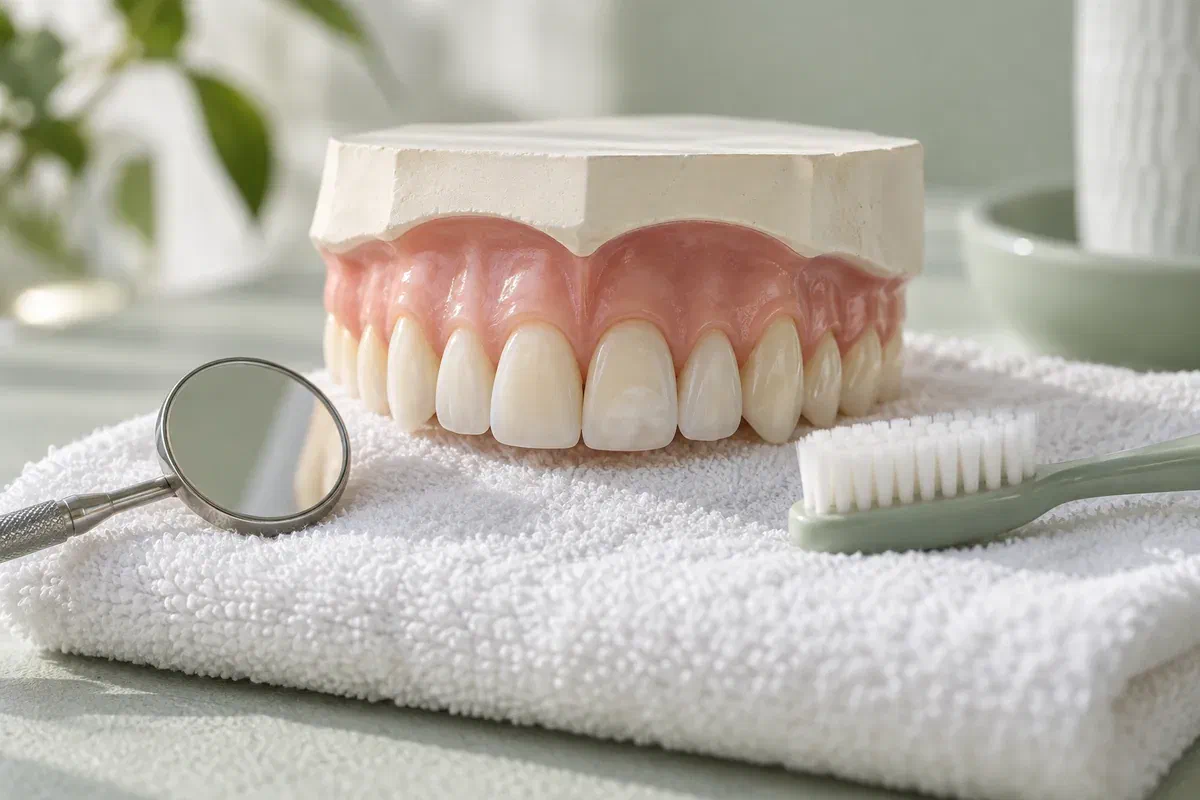
Illustrative dental teaching model with a subtle white enamel patch beside a mirror and toothbrush
What to note before you leave home

A short list now saves a second trip later

We will examine the patch together with nearby teeth and gums. Jot down what you remember beforehand; approximate answers are still valuable.

Where the mark sits and when it showed up

Patches near the gumline or in the outline of former brackets may reflect enamel that has lost minerals. Note roughly when they appeared and anything that changed around then, such as diet or a new appliance. That helps us judge whether the process is still active.

Evidence that it has always been there

Childhood photos showing the same mark, or a matching pattern on several teeth, often point to enamel development. If you can find such a picture, bring it. Knowing the origin narrows down which appearance options are worth discussing.

Anything that feels off

Write down sensitivity, roughness, darker edges or food catching at the site. Those details may shift priorities toward treating the tooth itself. In the meantime, leave the area alone rather than scraping it, and do not expect a cosmetic product to fix a structural problem.

Seeing a white area tells us where to focus, but not yet why. Early mineral loss can often be stabilised before a cavity develops; other causes call for other plans, and the exam is how we tell them apart.

Leaving with a plan, not more questions

Clarity on the enamel, then on the appearance

By the end of the assessment you should know which goal comes first. That may be halting active mineral loss, simply keeping track of a mark that looks unchanged, or considering how to make a patch less obvious. These goals sometimes run together, yet each is measured on its own terms, and a spot that is still faintly visible can sit on perfectly healthy enamel.

Before agreeing to any cosmetic step, find out how much it changes the tooth and how much follow-up it needs. Some treatments leave enamel nearly untouched; others add material that will need care for years. A modest improvement may be enough, and choosing not to treat a stable mark is a legitimate outcome of the visit.

A clear account of the cause

You should hear what in the exam supports the diagnosis and whether photographs or a later look would add certainty. If the cause is unclear, ask how that affects timing, since you may prefer to combine a recheck with another appointment you already need.

Home care that does the heavy lifting

Because visits take more planning, the daily routine matters even more. We will go over how you clean near the patch, snacking and sipping habits, and any fluoride product that suits you, and agree on a review date that fits your schedule.

A straight answer about the look

Ask whether an option aims to blend the mark, reduce contrast or cover it with tooth-coloured material, and what may still show afterward. Any further treatment would be a separate decision. Promises of complete disappearance should not be made in advance.

Keeping appointments to a minimum

How the visits are sequenced

Some people need only the first visit and a later review. Others go on to a cosmetic step, which we plan so that the number of trips stays sensible.

  1. A thorough first appointment

    We go through your notes, photos and history, then examine the patch, the teeth around it and your gums. You will hear whether the surface appears intact and whether anything else is needed before a recommendation can be made.

  2. A home plan with a clear review date

    If there is plaque-related risk or active mineral loss, you leave with a routine that targets it, an explanation of each product, and a follow-up date. We will say what we will be looking for when you return.

  3. An appearance discussion, if you want one

    Where suitable, options such as continued monitoring, a limited enamel technique, or a restoration are compared. We explain preparation, isolation, materials and realistic limits, and talk through how to group the steps into as few visits as practical.

  4. A review before anything else is added

    We check the response and the surface at the agreed time. If some of the mark remains, you decide whether it bothers you enough to act on. Any extra treatment is a fresh decision rather than an automatic next stage.

Between trips

Most of the work happens at home.

We will send you home with written instructions matched to your treatment, whether that is a prevention routine, an enamel procedure or a restoration, along with your review date.

Keep the routine simple and steady

Brush and clean between teeth as shown, and use the fluoride product recommended for you. If a spot is hard to reach, we can demonstrate during your visit so you do not need an extra trip. Tell us early if anything is uncomfortable.

Save comparisons for the review

Different rooms and phone cameras make white marks look better or worse from day to day. Clinical photos taken at each visit give a fairer comparison. Between appointments, just note any change in texture, comfort or size.

Skip the home experiments

Avoid scraping, sanding or acidic household remedies, and check with us before using whitening products, especially if another step is planned. A steady approach protects the enamel and avoids an unplanned visit.

Comparing what is available

Different tools for different findings

We will explain why a given option fits your mark, its cause and your priorities, and how many visits it is likely to involve. The least invasive approach that works is discussed first.

When stability is the main aim

A prevention routine with check-ins

Many white areas need nothing more than targeted home care and occasional reviews, which suits people who prefer fewer appointments. The patch may remain visible even while the enamel stays healthy, and that is a reasonable result.

When the lesion is a good candidate

Minimal enamel treatment

Resin infiltration or a similar technique may suit certain intact patches. We would discuss how it is done, what preparation is involved and how much blending is realistic for your mark before planning the visit.

When the surface needs repair

Restorative coverage

A broken-down surface, or a mark that still troubles you after simpler steps, may lead to bonding. Adding material brings maintenance and possible future repairs. More extensive options such as veneers are not the default for a single patch.

Patient information: DMG — indications and limitations for smooth-surface resin infiltration

Questions about planning from Etobicoke

Practical answers for a longer trip

General guidance on white enamel marks and how to plan care around them. Your exam will confirm what applies to your teeth.

(905) 876-4488
Can the assessment and a cleaning happen at the same appointment?
Often they can be planned together. Mention it when booking, and the team can let you know what is practical. Combining visits is a sensible way to reduce the number of trips.
What should I bring to my first white spot appointment?
Bring any photos that show the mark over time, orthodontic records if you had braces, a list of products you have used, and notes on sensitivity. These help the dentist reach a clearer picture in one visit.
How many visits does white spot care usually take?
It depends entirely on the cause and the plan. Some people need one assessment and a later review; others add a cosmetic step. The dentist will outline the likely number of visits once the mark has been examined.
Is a white patch something that can wait until it suits my schedule?
A stable mark with no symptoms usually does not need urgent attention, but an early exam tells you whether the enamel needs protecting now. Pain, a break or swelling should not wait.
Can I have the cosmetic step done on the same day as the assessment?
Sometimes the dentist needs to see how the enamel responds to prevention first, or gather more information. Whether same-day treatment is suitable depends on the findings, so ask once the exam is done.
If I whiten at home first, will that change what you can do?
It may. Bleaching can alter the contrast around a white mark and affect how other treatments are timed. Talk to the dentist before whitening so the order of steps works in your favour.

Patient information: American Dental Association — whitening responses and intrinsic enamel marks

Booking from Etobicoke

Plan it once, plan it well.

Call or book with our Bronte Street practice and mention that you are travelling, so we can make the most of each appointment. We will examine the patch and explain your preventive, monitoring and cosmetic choices.

The cause of the mark, its condition, the right approach, how much it may change, how many visits it takes and the fees can only be confirmed after an exam. A complete disappearance cannot be promised.

Visit Milton Dental Clinic
Unit 1, 342 Bronte St. S, Milton, ON L9T 5B7
Get directions Clinic hours
Monday–Thursday
11am–7pm
Friday–Sunday
By appointment only

Areas we serve

  • Milton
  • Oakville
  • Mississauga
  • Georgetown
  • Halton Hills
  • Acton
  • Campbellville
  • Brampton
  • Burlington
  • Puslinch
  • Rockwood
  • Erin
  • Caledon
  • Etobicoke
  • Old Milton
  • Bronte Meadows
  • Timberlea
  • Dorset Park
  • Dempsey
  • Clarke
  • Beaty
  • Coates
  • Harrison
  • Scott
  • Willmott
  • Ford
  • Bowes
  • Cobden
  • Walker
  • Mountain View
  • Milton Heights
  • Hawthorne Village
  • Valley View
  • Fallingbrook
  • Nassagaweya
  • Trafalgar
  • Esquesing
  • Nelson
  • Brookville
  • Moffat
  • Glen Williams
  • Norval
  • Limehouse
  • Stewarttown
  • Ashgrove
  • Hornby
  • Silver Creek
  • Speyside
  • Scotch Block
  • North Oakville
  • River Oaks
  • Glen Abbey
  • West Oak Trails
  • Palermo
  • Bronte Creek
  • College Park
  • Joshua Creek
  • Uptown Core
  • Preserve
  • Iroquois Ridge
  • Lisgar
  • Meadowvale
  • Meadowvale Village
  • Churchill Meadows
  • Erin Mills
  • Central Erin Mills
  • Streetsville
  • East Credit
  • Creditview
  • Heartland
  • Sheridan
  • Mount Pleasant
  • Credit Valley
  • Huttonville
  • Churchville
  • Springbrook
  • Northwest Brampton
  • Bram West
  • Fletcher's Meadow
  • Fletcher's Creek South
  • Alton Village
  • Orchard
  • Millcroft
  • Headon Forest
  • Tansley
  • Brant Hills
  • Tyandaga
  • Kilbride
  • Lowville
  • Aberfoyle
  • Morriston
  • Arkell
  • Hillsburgh
  • Freelton
  • Carlisle
  • Waterdown
  • Flamborough
  • Mountsberg

How can we help?

Milton Dental Clinic

Have a question about your smile? Choose the option that works best for you.

For urgent dental concerns, please call.
Messages are reviewed during clinic hours.