

Illustrative clinician and patient discussing a tooth model during an enamel assessment
Cosmetic Dentistry

White Spot Treatment in Milton

The braces are off, and now there are pale outlines where the brackets sat. Our Milton team can examine those marks, explain whether the enamel needs protecting first, and talk through ways to make them less obvious if you want that.

After the brackets come off

Those chalky outlines have a story worth reading.

Debonding day is supposed to be the big reveal, so spotting faint white rectangles on the front teeth can feel unfair. Plaque that lingered around brackets may have drawn minerals out of the enamel in those areas. Other pale patches were there long before orthodontics and simply went unnoticed behind the hardware.

That difference matters because each kind of mark calls for its own plan. A patch caused by recent mineral loss may need a protective routine before anyone thinks about its colour. A mark that formed while the tooth was developing raises a separate set of questions about blending, masking, or simply leaving it.

Here in Milton, you can bring your orthodontic dates, any photos taken while the braces were on, and a list of what bothers you about the marks. We will examine the surfaces, explain what we see, and lay out choices without assuming the answer is drilling or covering the tooth.

Book a look at post-braces marks
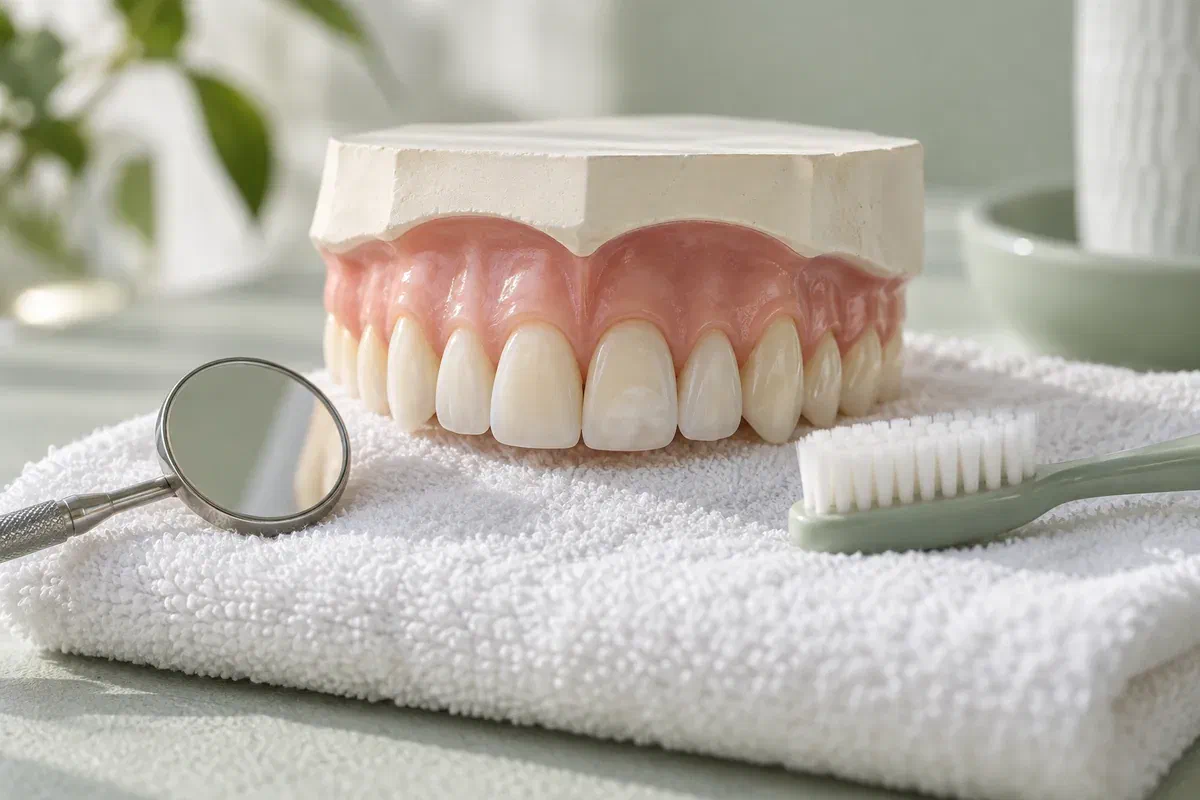
Illustrative dental teaching model with a subtle white enamel patch beside a mirror and toothbrush
Details to mention at the visit

Timing, location and texture shape the conversation.

The examination looks at the patch, the enamel around it, and your gums and cleaning habits. Partial memories still help, so share what you can about when the spots first caught your eye.

Spots that outline where brackets were bonded

Marks that trace the edges of former brackets, or that sit near the gumline, may point to early enamel mineral loss. Ask whether plaque or diet is still putting the area at risk, and what protective steps make sense before the appearance becomes the focus.

Patches you think were always there

If old school photos show the same marks, or several teeth share a similar pattern, say so. Spots that formed as the enamel developed are assessed differently from newer lesions. Ask how that origin changes monitoring and which appearance options are worth discussing.

Areas that feel different to the tongue

Roughness, twinges with cold drinks, brownish edges, or food snagging at the spot are worth reporting. These signs can move the patch from a cosmetic question to a priority for the tooth itself. Avoid picking at it, and do not assume a cosmetic product will fix a deeper issue.

Seeing a white mark tells us where to look, not what is wrong. Early mineral loss can sometimes be managed before a cavity develops, whereas a broken surface or a developmental condition may need something quite different.

What you should leave knowing

Two questions, kept apart: is the enamel healthy, and does the colour bother you?

A clear plan names its main goal. It might be slowing further mineral loss, keeping watch over a mark that looks stable, or softening how visible a patch is. Sometimes more than one goal applies, but they are measured differently, so ask how success will be judged. A spot that stays partly visible can still sit on enamel that is doing well.

It is also fair to ask how much each appearance option changes the tooth. Weigh how likely the mark is to fade against the limits, the upkeep, and any enamel that would be altered. A partial improvement can be a sensible target, and choosing to leave a healthy patch alone is always on the table.

Reasons that fit your own teeth

Ask what in the exam points to the suggested cause, and whether photographs or a later check would sharpen the picture. Pattern, history and the feel of the surface all inform the answer. When the cause is not certain, ask how that uncertainty affects which treatment is sensible.

Attention to what keeps the risk going

Talk through how you clean near the patch, snacking and drinking habits, and any fluoride product being suggested. A short routine you will actually follow beats a shelf of products with unclear roles. Settle on a date to look at the area again and what changes to flag before then.

Honest expectations about the look

Find out whether an option aims to blend the patch into the surrounding enamel, lower the contrast, or cover it with a tooth-coloured material. Ask what might still show afterward and whether a further step would be its own decision. Nobody should promise the mark will vanish before seeing how it responds.

How a plan unfolds in Milton

Look closely, protect first, then talk appearance.

The order depends on what the mark turns out to be. Some people only need prevention and a recheck, while others move on to a separate conversation about a cosmetic approach.

  1. Go over the background and the surface

    Share when you noticed the patch, how long the braces were on, any sensitivity, and anything you have tried at home. The dentist examines the affected teeth and their neighbours. Ask whether the enamel surface is intact and whether anything else is needed before a recommendation.

  2. Set a protective routine and a recheck

    When active mineral loss or plaque build-up is part of the picture, agree on a realistic home routine and a follow-up date. Make sure you know what each recommended product is for and how to use it. Ask what you would need to see before the tooth is ready for a cosmetic discussion.

  3. Weigh the cosmetic paths that suit the mark

    Options may include continued observation, a targeted enamel procedure, or a restoration in some cases. Ask about how the tooth would be prepared and kept dry, the materials involved, and how far masking can go. The aim is to judge what suits this mark, not to apply one method to every patch.

  4. Review the outcome before doing more

    Agree when the colour and the surface will be checked again. If some of the mark still shows, talk about whether it matters and whether more treatment is worth it. Any further step deserves its own decision, rather than an incomplete blend becoming an automatic case for a larger restoration.

Caring for the patch between visits

Steady habits now make the next review meaningful.

What you do at home depends on whether you are on a prevention plan, have had an enamel procedure, or have a new restoration. Ask which instructions match your situation and when you will be seen again.

Stick with the routine you agreed on

Brush, clean between teeth, and use fluoride the way it was recommended for you. If the spot is hard to reach around a retainer or a crowded area, ask to be shown a better angle. Say so if anything feels sore or awkward, so the plan can be adjusted instead of dropped.

Let the follow-up do the comparing

Ask how the area will be compared over time and whether clinical photos would help. Bathroom lighting and phone cameras can make a mark look better or worse from one day to the next. Keep the review date and mention any change in texture, comfort, or the size of the patch.

Skip scrubbing and surprise whitening

Do not sand, scrape, or rub acidic home remedies on the spot. Check with us before trying whitening, particularly if another cosmetic step is planned. Protecting the enamel works better than repeated attempts each time the patch catches the light.

Options at our Milton clinic

Each option answers a different question about the tooth.

Ask why a particular approach fits the cause, the condition of the surface, and what you care about most. Start by considering the smallest change that would work before committing to something bigger.

When protecting the enamel comes first

Protect the enamel and keep watch

A tailored prevention plan with regular checks may be enough for post-braces demineralisation or a patch that has stopped changing. Ask what improvement looks like clinically and whether the patch may stay visible. Healthy enamel does not have to be perfectly even in colour for watching it to be a good choice.

When the patch and surface qualify

A targeted enamel appearance procedure

Resin infiltration or a similar limited enamel technique may be an option in selected cases. Ask how it is done, what preparation is involved, and how well it may blend your particular mark. Results vary, and a white colour or an unbroken surface does not on its own predict the cosmetic outcome.

When adding material is justified

Tooth-coloured bonding or a restoration

If the enamel has broken down, or the outline still bothers you after gentler care, adding resin may come up. Ask how much tooth would be affected, how it can be repaired later, and what upkeep it needs. Veneers are not the default next move for every patch or every partial result.

Patient information: DMG — indications and limitations for smooth-surface resin infiltration

Common questions after orthodontics

What people ask once the braces are gone

Answers depend on the cause, the state of the enamel, and your own priorities. An exam helps sort a health concern from an elective cosmetic choice.

(905) 876-4488
Should I wait a while after debonding before having the marks assessed?
There is no need to wait to have them looked at. An early exam can tell you whether the enamel needs protective care now. Any cosmetic treatment timing is a separate question, and the dentist can explain whether a period of monitoring makes sense first.
My retainer covers the spots. Does that change anything?
It can affect how plaque collects and how you clean those surfaces, so bring the retainer along. Ask how to keep both the appliance and the teeth clean, and whether the retainer affects the timing of any appearance treatment.
Do the marks prove I did not brush properly during orthodontic treatment?
Not necessarily, and blame does not help plan care. Brackets make cleaning harder for everyone, and some pale areas have developmental causes instead. What matters now is understanding the current condition of the enamel and what will protect it.
Is a white mark always the first stage of a cavity?
No. Some white areas reflect early mineral loss that has not broken through the surface, and others formed as the tooth developed. The dentist examines the surface and asks about history to tell these apart, then explains whether the finding is active, stable, or an established defect.
Could whitening my teeth make the post-braces marks less obvious?
It might change the contrast, but the effect is not predictable and can sometimes make a patch stand out more for a time. Talk it through before bleaching, especially if another cosmetic step is planned. Whitening alone cannot guarantee an even look.
Can I treat only the two front teeth that bother me?
Yes. Point to the teeth you care about and say how far you want to go. The dentist will still check the surrounding teeth, but a wider cosmetic plan should only come up as a separate, clearly explained option, and leaving the rest as they are is fine.

Patient information: American Dental Association — whitening responses and intrinsic enamel marks

Arrange a Milton assessment

Show us the marks the mirror keeps pointing out.

Get in touch with our Bronte Street practice about white patches, enamel changes, or concerns that showed up once braces came off. We will examine the teeth and walk you through prevention, monitoring, and cosmetic possibilities.

Cause, surface condition, suitability, how well a mark blends, number of appointments, and fees all depend on an assessment. We cannot promise a visible mark will disappear completely.

Visit Milton Dental Clinic
Unit 1, 342 Bronte St. S, Milton, ON L9T 5B7
Get directions Clinic hours
Monday–Thursday
11am–7pm
Friday–Sunday
By appointment only

Areas we serve

  • Milton
  • Oakville
  • Mississauga
  • Georgetown
  • Halton Hills
  • Acton
  • Campbellville
  • Brampton
  • Burlington
  • Puslinch
  • Rockwood
  • Erin
  • Caledon
  • Etobicoke
  • Old Milton
  • Bronte Meadows
  • Timberlea
  • Dorset Park
  • Dempsey
  • Clarke
  • Beaty
  • Coates
  • Harrison
  • Scott
  • Willmott
  • Ford
  • Bowes
  • Cobden
  • Walker
  • Mountain View
  • Milton Heights
  • Hawthorne Village
  • Valley View
  • Fallingbrook
  • Nassagaweya
  • Trafalgar
  • Esquesing
  • Nelson
  • Brookville
  • Moffat
  • Glen Williams
  • Norval
  • Limehouse
  • Stewarttown
  • Ashgrove
  • Hornby
  • Silver Creek
  • Speyside
  • Scotch Block
  • North Oakville
  • River Oaks
  • Glen Abbey
  • West Oak Trails
  • Palermo
  • Bronte Creek
  • College Park
  • Joshua Creek
  • Uptown Core
  • Preserve
  • Iroquois Ridge
  • Lisgar
  • Meadowvale
  • Meadowvale Village
  • Churchill Meadows
  • Erin Mills
  • Central Erin Mills
  • Streetsville
  • East Credit
  • Creditview
  • Heartland
  • Sheridan
  • Mount Pleasant
  • Credit Valley
  • Huttonville
  • Churchville
  • Springbrook
  • Northwest Brampton
  • Bram West
  • Fletcher's Meadow
  • Fletcher's Creek South
  • Alton Village
  • Orchard
  • Millcroft
  • Headon Forest
  • Tansley
  • Brant Hills
  • Tyandaga
  • Kilbride
  • Lowville
  • Aberfoyle
  • Morriston
  • Arkell
  • Hillsburgh
  • Freelton
  • Carlisle
  • Waterdown
  • Flamborough
  • Mountsberg

How can we help?

Milton Dental Clinic

Have a question about your smile? Choose the option that works best for you.

For urgent dental concerns, please call.
Messages are reviewed during clinic hours.