

Illustrative clinician and patient discussing a tooth model during an enamel assessment
Cosmetic Dentistry

White Spot Treatment in Mississauga

Tried whitening strips and the pale patches seem brighter than before? People from Mississauga can have those marks examined, learn why bleaching affected them that way, and weigh calmer options for the enamel and its appearance.

When whitening backfires

Brighter teeth, brighter spots

A common story goes like this: someone buys a whitening kit hoping to even out a few cloudy marks, and a week later the marks look more obvious than ever. It is discouraging, but not unusual. Bleaching affects patches and surrounding enamel in ways that are hard to predict without knowing the cause.

Some white areas come from enamel that has lost minerals, often where plaque sat for a long time. Others developed before the tooth ever came in. A few sit on a surface that has started to break down. Those differences decide whether the next step should be protective, cosmetic, or simply patient monitoring.

From Mississauga, you can bring the product you used, roughly how long you used it, and photos from before you started. Our team will examine the teeth, explain what is likely going on, and help you compare approaches without rushing to cover anything.

Get advice after whitening
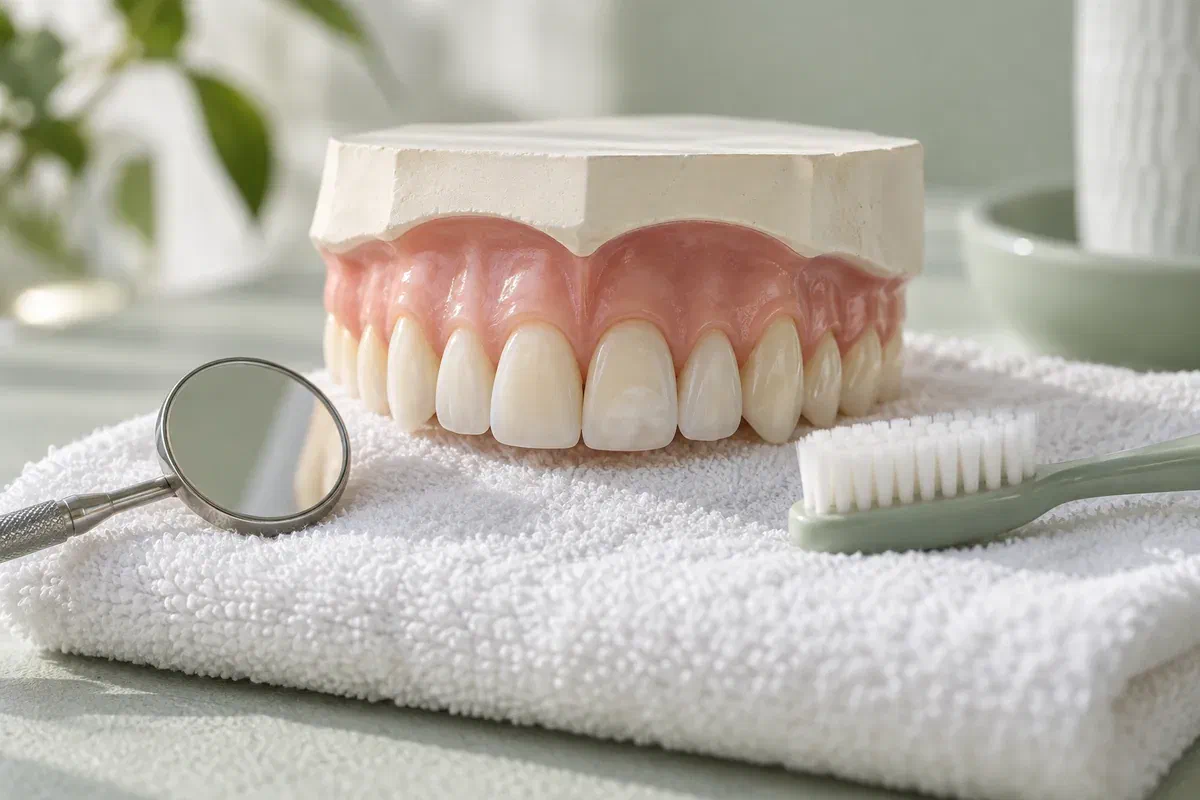
Illustrative dental teaching model with a subtle white enamel patch beside a mirror and toothbrush
Worth telling the dentist

The products you used and the patch’s past both count.

The exam covers the mark, the enamel nearby, and your gums and habits. Estimates are fine, so share what you recall about when the spots appeared and what you have put on your teeth.

Spots near the gumline or former brackets

Chalky areas in places where plaque builds up easily may reflect early mineral loss. If that is the case, the enamel needs protection before its colour is addressed. We will talk about habits or conditions that may be keeping the risk active and what can reduce it.

Patches that predate any whitening

Marks visible in older photos, or a similar pattern across several teeth, often trace back to enamel development. Bleaching may have shifted the contrast without changing the cause. Knowing the origin helps us explain which treatments are more likely to respond.

New sensitivity or roughness since bleaching

Tell us about twinges, a gritty texture, darker edges, or food catching near the patch. Those details can make caring for the tooth the priority. Please stop any further home bleaching for now, and do not scratch at the area to judge how deep it goes.

Bleaching did not necessarily create the patch; it may only have revealed it. Enamel in the early stages of mineral loss can often be stabilised with the right care, whereas a cavity or a developmental difference is handled in another way.

Why a pause and an exam help

Sorting the shade question from the enamel question

After a frustrating round of whitening, it helps to slow down and set a clear aim. Is the priority to stop mineral loss, to keep watch on a mark that is not changing, or to make a patch less noticeable? Each goal has its own way of measuring progress, and a mark that is still faintly visible does not mean the preventive side has gone wrong.

If you do want to change the appearance, ask what each option involves for the tooth. Some leave enamel largely as it is; others involve preparation or added material. Weigh the expected improvement against the limits and upkeep. Reducing the contrast may be enough, and leaving a stable patch alone is still a legitimate choice.

Clear reasons behind the diagnosis

You should hear what in the exam supports the likely cause and whether photographs or a recheck would make it clearer. Location, history and how the surface feels all play a role. Where the cause is unclear, ask how that uncertainty affects the choice of treatment.

A simpler, targeted home routine

Talk about how you brush and clean near the patch, what you drink and snack on through the day, and any fluoride product being recommended. Fewer products with clear purposes tend to work better than many. Agree on when to review the area and what to report in between.

A realistic view of the colour

Find out whether an option is designed to blend the mark, tone down the contrast, or cover it with tooth-coloured material. Ask what may stay visible and whether a further step would be decided separately. Nobody can promise the patch will disappear before seeing how it responds.

From frustration to a plan

Stop, assess, protect, and only then consider cosmetics.

Not everyone needs all four stages. Plenty of people stop after the protective phase, while others go on to a cosmetic conversation once the enamel has settled.

  1. Describe what you tried and what changed

    Share the whitening product, how long you used it, when you first noticed the patches, and any sensitivity or braces history. The dentist examines the teeth and explains whether the enamel surface is intact and what else would help before recommending anything.

  2. Settle any active risk first

    Where plaque or diet is still drawing minerals out of the enamel, agree on a practical prevention routine and a review date. Each product should have a clear role. Ask what the dentist will look for before the tooth is considered ready for appearance treatment.

  3. Compare cosmetic approaches for your mark

    Monitoring, a limited enamel technique, or a restoration may all be relevant. Ask about preparation, isolation, materials, and how far masking can go. Timing alongside any future whitening is part of this, since the order of treatments can affect the result.

  4. Review before stacking treatments

    A follow-up shows how the enamel and the shade have responded. Faint traces sometimes remain, and you get to decide whether they bother you enough to act on. Anything extra is weighed fresh, never assumed simply because the first step fell short of perfect.

In the weeks that follow

Give the enamel a steady routine and a rest from experiments

A prevention programme, an enamel procedure and a new restoration each come with slightly different care. We will spell out which guidance is yours and pencil in the date we would like to see the area again.

Keep to the routine we set together

Twice-daily brushing, cleaning between the teeth and the fluoride product suggested for you form the backbone. Awkward angles are common near the gums, so a short demonstration can help. If something stings or feels impractical, tell us and we will rework it.

Let the follow-up measure change

Freshly whitened teeth and harsh bathroom bulbs both play tricks on the eye. We may take clinical photos so that comparisons happen under the same conditions each time. Between visits, simply note any roughness, tenderness or growth in the patch.

Put the whitening kit away for now

Check with us before starting another round of bleaching, especially if an appearance treatment is planned. Avoid scraping, sanding or acidic home remedies. A considered plan protects the enamel better than trying one product after another.

Possible next steps

Monitor, infiltrate, or restore?

Each route below solves a different problem, so the reasoning behind a recommendation matters as much as the recommendation itself. Lighter-touch choices get considered first.

If enamel health is the main concern

Keep watch with prevention

For early mineral loss, or a mark that has not changed in years, a tailored routine plus periodic checks may be all that is needed. The patch could stay faintly visible even when the enamel beneath it is doing well, and that is an acceptable outcome.

If the lesion and surface qualify

A limited enamel procedure

Resin infiltration is one conservative technique that can soften the look of certain unbroken lesions. How well it blends depends on the depth and cause of your particular mark, so we would talk through preparation and likely results before you decide.

If added material is justified

Bonding or other restoration

Where the surface has broken down, or a mark still troubles you after gentler steps, tooth-coloured bonding may come up. It means adding material, which brings its own upkeep and future repairs. Veneers are rarely the right first answer to a single patch.

Patient information: DMG — indications and limitations for smooth-surface resin infiltration

Mississauga questions

After whitening, before deciding

Short answers to the questions people tend to bring after a whitening attempt. Your own exam will fill in the details that matter for your teeth.

(905) 876-4488
Why did my white spots look more obvious after using whitening strips?
Bleaching can change how the patch and the surrounding enamel reflect light, and the effect varies with the cause. Sometimes contrast increases for a time. An exam helps explain what happened and whether a different approach suits your marks better.
Will the extra contrast settle down if I stop whitening?
It may change over time, but that is hard to predict. The dentist can examine the teeth and suggest whether to wait and review, adjust your routine, or consider an appearance treatment once the enamel is stable.
Is it safe to keep whitening while a white spot is being treated?
Ask before continuing. Whitening can affect the timing and result of other appearance treatments, and the sequence matters. The dentist can advise when, or whether, bleaching fits into your plan.
Could the patch be a sign of early decay rather than a whitening effect?
It could be either, or neither. Some white spots reflect early mineral loss, and others are developmental. Feeling the texture, checking where the patch sits, and hearing its history usually tell the dentist which category it falls into.
Can bonding be colour-matched if I plan to whiten again later?
Tooth-coloured materials do not respond to bleaching the way natural enamel does, so the order of treatments matters. Discuss any future whitening before bonding, so the shade can be planned around your intended tooth colour.
Do I have to treat a spot that only bothers me in certain light?
No. It is still worth an exam so you know the enamel is sound. Once that is confirmed, leaving a mark that only shows under certain lighting is entirely your call, and nothing about its appearance obliges you to treat it.

Patient information: American Dental Association — whitening responses and intrinsic enamel marks

Coming from Mississauga

Bring the kit, the photos and your questions.

Call or book online with our Bronte Street practice if bleaching, braces or time have left you with patches you want explained. Expect a careful exam and a straightforward conversation about protecting, watching or softening the marks.

Until we have examined the tooth, we cannot say what caused the mark, which treatment suits it, how much it may fade, how many visits it needs, or what it will cost. Nobody can promise it will vanish entirely.

Visit Milton Dental Clinic
Unit 1, 342 Bronte St. S, Milton, ON L9T 5B7
Get directions Clinic hours
Monday–Thursday
11am–7pm
Friday–Sunday
By appointment only

Areas we serve

  • Milton
  • Oakville
  • Mississauga
  • Georgetown
  • Halton Hills
  • Acton
  • Campbellville
  • Brampton
  • Burlington
  • Puslinch
  • Rockwood
  • Erin
  • Caledon
  • Etobicoke
  • Old Milton
  • Bronte Meadows
  • Timberlea
  • Dorset Park
  • Dempsey
  • Clarke
  • Beaty
  • Coates
  • Harrison
  • Scott
  • Willmott
  • Ford
  • Bowes
  • Cobden
  • Walker
  • Mountain View
  • Milton Heights
  • Hawthorne Village
  • Valley View
  • Fallingbrook
  • Nassagaweya
  • Trafalgar
  • Esquesing
  • Nelson
  • Brookville
  • Moffat
  • Glen Williams
  • Norval
  • Limehouse
  • Stewarttown
  • Ashgrove
  • Hornby
  • Silver Creek
  • Speyside
  • Scotch Block
  • North Oakville
  • River Oaks
  • Glen Abbey
  • West Oak Trails
  • Palermo
  • Bronte Creek
  • College Park
  • Joshua Creek
  • Uptown Core
  • Preserve
  • Iroquois Ridge
  • Lisgar
  • Meadowvale
  • Meadowvale Village
  • Churchill Meadows
  • Erin Mills
  • Central Erin Mills
  • Streetsville
  • East Credit
  • Creditview
  • Heartland
  • Sheridan
  • Mount Pleasant
  • Credit Valley
  • Huttonville
  • Churchville
  • Springbrook
  • Northwest Brampton
  • Bram West
  • Fletcher's Meadow
  • Fletcher's Creek South
  • Alton Village
  • Orchard
  • Millcroft
  • Headon Forest
  • Tansley
  • Brant Hills
  • Tyandaga
  • Kilbride
  • Lowville
  • Aberfoyle
  • Morriston
  • Arkell
  • Hillsburgh
  • Freelton
  • Carlisle
  • Waterdown
  • Flamborough
  • Mountsberg

How can we help?

Milton Dental Clinic

Have a question about your smile? Choose the option that works best for you.

For urgent dental concerns, please call.
Messages are reviewed during clinic hours.