

Illustrative clinician and patient discussing a tooth model during an enamel assessment
Cosmetic Dentistry

White Spot Treatment in Oakville

A wedding, a graduation or a new headshot can make one pale patch on a front tooth feel enormous. For people in Oakville, we start by finding out what the mark is, then talk honestly about what can change, and how soon.

Camera-ready, or close to it

When a photo date puts one spot in the spotlight

Flash photography is hard on white marks. A patch you hardly notice in daily life can look stark in a close-up, and once an event is on the calendar it is natural to want it gone. That wish is valid, and it is worth raising early rather than in the final weeks.

The tricky part is that a white area can mean several things. It may be enamel that has recently lost minerals, a difference that formed as the tooth grew, or a surface that has already broken down. Each one needs a different first step, and some first steps are about protection rather than looks.

Coming to us from Oakville, you can expect an exam of the patch and the surrounding teeth, a plain explanation of the likely cause, and a frank talk about what a timeline can and cannot do. Some marks respond well to limited treatment, and some are best left for later.

Plan an assessment ahead of your event
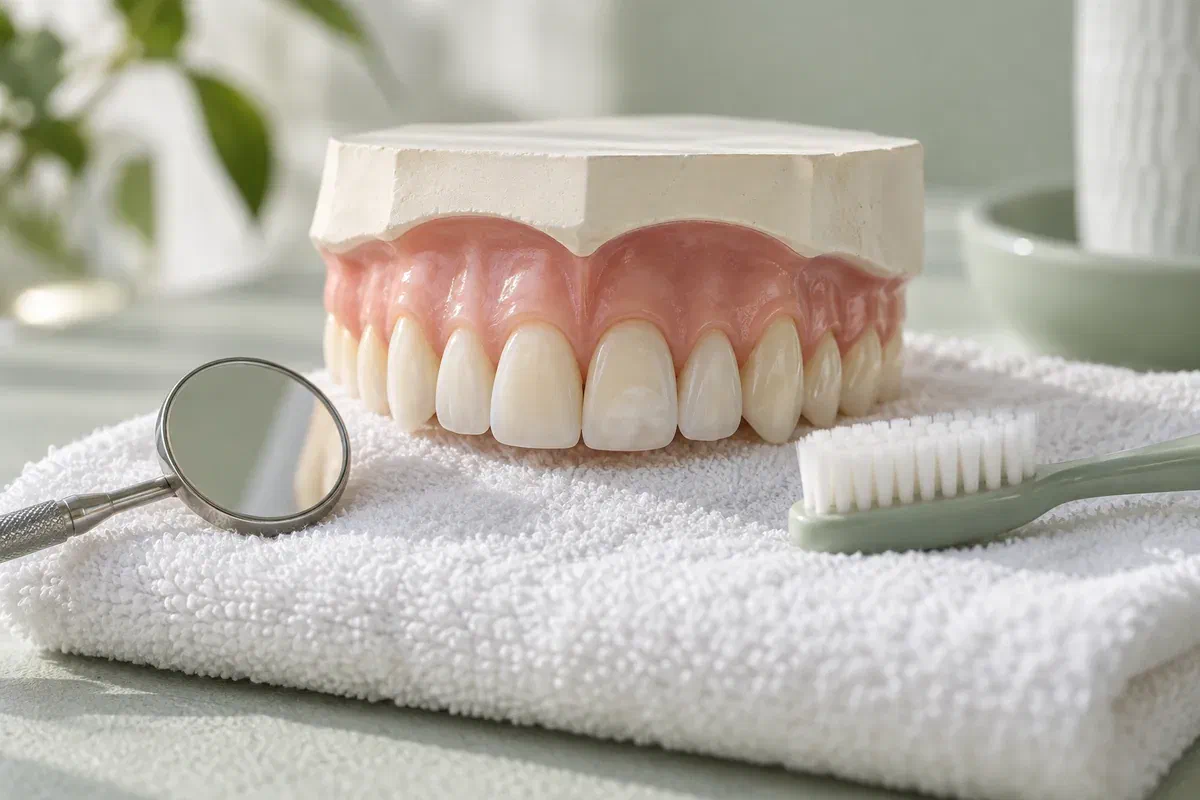
Illustrative dental teaching model with a subtle white enamel patch beside a mirror and toothbrush
What helps us read the mark

Is it new, old, or changing?

We look at the patch in context, including the gums, nearby fillings and how you clean. Approximate answers are fine, so do not worry if you cannot pin down exactly when you first spotted it.

Recently noticed near the gums or old brackets

A chalky area along the gumline or where orthodontic brackets used to sit may reflect early mineral loss. If so, protecting that enamel takes priority over the colour. We will talk about what is still feeding the risk, such as plaque or frequent snacking, and how to reduce it.

Present for as long as you can remember

Marks that show up in childhood pictures, or that appear in a pattern on several teeth, often relate to how the enamel developed. These are usually discussed in terms of stability and appearance. The origin also influences which treatments tend to respond and which are less predictable.

Rough, tender, or picking up stain

Tell us about sensitivity, a gritty feel, a brown edge, or food catching at the spot. Those signs can shift the visit from cosmetic planning to caring for the tooth. Please do not scratch at the area to see how deep it goes, and do not assume a cosmetic fix will solve a structural problem.

A white patch is something we see, not a diagnosis on its own. Early mineral loss can sometimes be reversed or halted before a cavity forms, while a broken surface or developmental condition needs a different plan.

Getting clarity before the countdown

Know what you are treating, and why.

With a date in mind, it is tempting to skip straight to the cosmetic step. A good plan still states its purpose: halting mineral loss, keeping an eye on a settled mark, or making a patch less visible. Those goals can run side by side, but they are judged in different ways, and a patch that still shows a little has not necessarily been treated badly.

Equally important is knowing what each option asks of the tooth. Some approaches leave the enamel largely as it is, while others involve preparation or added material. Compare the likely improvement with its limits and upkeep. A softer contrast in photos might be enough, and keeping a stable mark untouched remains a fair decision.

A cause that has been explained

You should hear which findings point to the suggested diagnosis, and whether photographs or a recheck later would add certainty. Location, pattern and history all play a part. If the dentist cannot be sure, ask how that affects the choice between waiting and treating now.

Prevention you can keep up during a busy season

Event planning tends to upend routines. Talk about how you clean near the spot, what and how often you sip or snack, and whether a fluoride product is being suggested. Keep it simple enough to follow, and agree on when the area will be looked at again.

An honest forecast for the photos

Ask whether the approach is meant to blend the patch, tone down its contrast, or hide it under a layer of resin. Find out what might still be visible on the day and whether any extra step would be separate. No one can promise the mark will disappear before it has been treated and reviewed.

Working back from your date

Four steps, in an order that protects the tooth

Not everyone goes through every stage. For some, prevention and a follow-up are the whole plan; for others, a cosmetic procedure is discussed once the enamel is ready.

  1. Tell us the timeline and the history

    Share your event date, when the mark appeared, any braces or past treatment, sensitivity, and anything tried at home. The dentist examines the tooth and the teeth around it, then explains whether the surface is intact and what else is needed before recommending anything.

  2. Protect any enamel that is at risk

    If there are signs of active mineral loss or plaque-related risk, the first goal is a workable prevention routine with a review date. You will hear what each product is for. Ask what the dentist will look for before saying the tooth is ready for a cosmetic step.

  3. Match a cosmetic option to the mark

    Possibilities range from simply monitoring, to a limited enamel procedure, to a restoration in certain cases. Ask how the tooth would be prepared and isolated, what materials are involved, and how far masking can realistically go. Timing around your event should be part of this conversation.

  4. Review before deciding on anything more

    Set a date to check the appearance and the surface. If some of the patch remains, discuss whether it bothers you enough to pursue further treatment. That would be its own decision, not an automatic upgrade to a larger restoration because the first result was partial.

Looking after the area

Small daily habits, one scheduled check

Your aftercare depends on whether you are on a prevention plan, had an enamel procedure, or received a restoration. We will tell you which advice applies and when you are due back.

Follow the routine as prescribed

Keep up the brushing, between-teeth cleaning and fluoride use recommended for you. If the area is hard to reach, ask for a quick demonstration at your next visit. Let us know if something feels uncomfortable, because a routine you abandon cannot help the enamel.

Trust the review over the selfie

Phone cameras and different lighting can make a patch look worse one day and fine the next. Ask how the area will be compared at follow-up and whether clinical photos would help. Mention any change in texture, comfort or the size of the mark when you come in.

Hold off on scrubbing and DIY whitening

Do not scrape, sand or use acidic household mixtures on the spot. Check with us before starting any whitening, especially in the run-up to a planned procedure. Rushed experiments before an event can leave the enamel worse off.

Approaches to discuss

Three directions, each with its own trade-offs

Each recommendation should come with its reasoning, tied to what caused the mark and how much time you have. The gentlest approach that meets your goal should be considered before anything more involved.

For early mineral loss or a settled mark

Watchful prevention

A personalized prevention plan with periodic checks may be all a tooth needs. Ask what improvement would mean clinically and whether the patch may stay visible. Enamel can be perfectly healthy without matching its neighbours shade for shade.

For suitable, unbroken surfaces

Limited enamel treatment

Resin infiltration or another conservative enamel technique can be considered in appropriate cases. Ask about the steps involved and how well your particular patch is likely to blend. Results vary from mark to mark, so an intact white area is not a promise of a predictable result.

When added material is warranted

Bonding or a restoration

When the enamel is broken, or the patch will clearly still show in photos after gentler steps, a restoration may be worth weighing. Ask how much tooth would be involved, whether it can be repaired, and what maintenance it needs. Veneers are not the automatic next step for a single patch or a partial result.

Patient information: DMG — indications and limitations for smooth-surface resin infiltration

Questions from Oakville

Timing, photos and what to expect

Answers depend on what is causing the mark, the state of the enamel and your goals. An exam helps tell a health concern apart from an elective cosmetic choice.

(905) 876-4488
How far ahead of a wedding should I have a white spot looked at?
As early as you can. An early exam leaves room for any preventive care, a review, and a cosmetic step if it suits the mark. The dentist can explain what is realistic for your timeline once the cause and surface are known.
Why do white marks look worse in flash photos?
Bright, direct light can exaggerate the contrast between the patch and the surrounding enamel. That is one reason clinical photographs taken under consistent conditions are more useful for tracking change than everyday pictures.
Is it possible to treat the spot one week and be photographed the next?
That depends on the cause, the surface and the approach chosen. Some limited procedures may be possible in a short window, but the dentist needs to assess suitability first. Leaving some buffer is wise in case a review or adjustment is needed.
Could a chalky patch actually be a cavity in disguise?
It can be an early stage of mineral loss, though not every white patch is decay, and some formed during tooth development. The dentist checks whether the surface is intact and asks about history to explain whether the finding is active, stable or an established defect.
What if whitening before the event makes the spot stand out?
Whitening can change contrast in unpredictable ways, sometimes making a patch more noticeable for a while. Discuss the order of treatments before bleaching so one step does not undo the plan for another. An even shade cannot be guaranteed from whitening alone.
If the spot does not bother me day to day, should I still mention it?
Yes. An exam can confirm that the mark is stable and that nothing needs protecting. If it is healthy, observation is a perfectly reasonable choice, and you are under no obligation to pursue cosmetic treatment for an appearance difference.

Patient information: American Dental Association — whitening responses and intrinsic enamel marks

Booking from Oakville

Let us see the spot before the photographer does.

Contact our Bronte Street practice about a white patch, a change in your enamel, or marks left after orthodontic treatment. We will examine the tooth and explain prevention, monitoring and cosmetic options, with your timeline in mind.

Cause, surface condition, suitability, how well a mark blends, number of visits and fees all depend on an assessment. Complete removal of a visible mark cannot be promised.

Visit Milton Dental Clinic
Unit 1, 342 Bronte St. S, Milton, ON L9T 5B7
Get directions Clinic hours
Monday–Thursday
11am–7pm
Friday–Sunday
By appointment only

Areas we serve

  • Milton
  • Oakville
  • Mississauga
  • Georgetown
  • Halton Hills
  • Acton
  • Campbellville
  • Brampton
  • Burlington
  • Puslinch
  • Rockwood
  • Erin
  • Caledon
  • Etobicoke
  • Old Milton
  • Bronte Meadows
  • Timberlea
  • Dorset Park
  • Dempsey
  • Clarke
  • Beaty
  • Coates
  • Harrison
  • Scott
  • Willmott
  • Ford
  • Bowes
  • Cobden
  • Walker
  • Mountain View
  • Milton Heights
  • Hawthorne Village
  • Valley View
  • Fallingbrook
  • Nassagaweya
  • Trafalgar
  • Esquesing
  • Nelson
  • Brookville
  • Moffat
  • Glen Williams
  • Norval
  • Limehouse
  • Stewarttown
  • Ashgrove
  • Hornby
  • Silver Creek
  • Speyside
  • Scotch Block
  • North Oakville
  • River Oaks
  • Glen Abbey
  • West Oak Trails
  • Palermo
  • Bronte Creek
  • College Park
  • Joshua Creek
  • Uptown Core
  • Preserve
  • Iroquois Ridge
  • Lisgar
  • Meadowvale
  • Meadowvale Village
  • Churchill Meadows
  • Erin Mills
  • Central Erin Mills
  • Streetsville
  • East Credit
  • Creditview
  • Heartland
  • Sheridan
  • Mount Pleasant
  • Credit Valley
  • Huttonville
  • Churchville
  • Springbrook
  • Northwest Brampton
  • Bram West
  • Fletcher's Meadow
  • Fletcher's Creek South
  • Alton Village
  • Orchard
  • Millcroft
  • Headon Forest
  • Tansley
  • Brant Hills
  • Tyandaga
  • Kilbride
  • Lowville
  • Aberfoyle
  • Morriston
  • Arkell
  • Hillsburgh
  • Freelton
  • Carlisle
  • Waterdown
  • Flamborough
  • Mountsberg

How can we help?

Milton Dental Clinic

Have a question about your smile? Choose the option that works best for you.

For urgent dental concerns, please call.
Messages are reviewed during clinic hours.