

Illustrative clinician and patient discussing a tooth model during an enamel assessment
Cosmetic Dentistry

White Spot Treatment in Rockwood

Not every white mark needs treating. Visiting from Rockwood, you can have a pale enamel patch examined simply to learn whether it is healthy, and then decide, without pressure, whether to leave it, watch it or change its look.

The option people forget about

Sometimes the best plan is to leave it be

A lot of people who ask about a pale patch are not actually hoping for treatment. They just want to know it is not a problem. That is a perfectly good reason to book, and the answer is often reassuring. Wanting information without committing to anything is a sensible way to approach your own teeth, and nobody here will treat it as a waste of an appointment.

To give that reassurance honestly, though, the dentist has to work out what the mark is. A white area can be enamel that is losing minerals, which is worth protecting before it progresses. It can be a difference that formed as the tooth grew, which usually stays as it is. Or it can sit on a surface that has begun to break down, which needs care. Only the first two are typically safe to simply monitor.

Coming in from Rockwood, you will get an unhurried exam, a clear explanation of which kind of mark you have, and a frank view on whether anything needs doing. If the answer is no, you are welcome to leave it exactly as it is.

Find out if your white mark needs anything
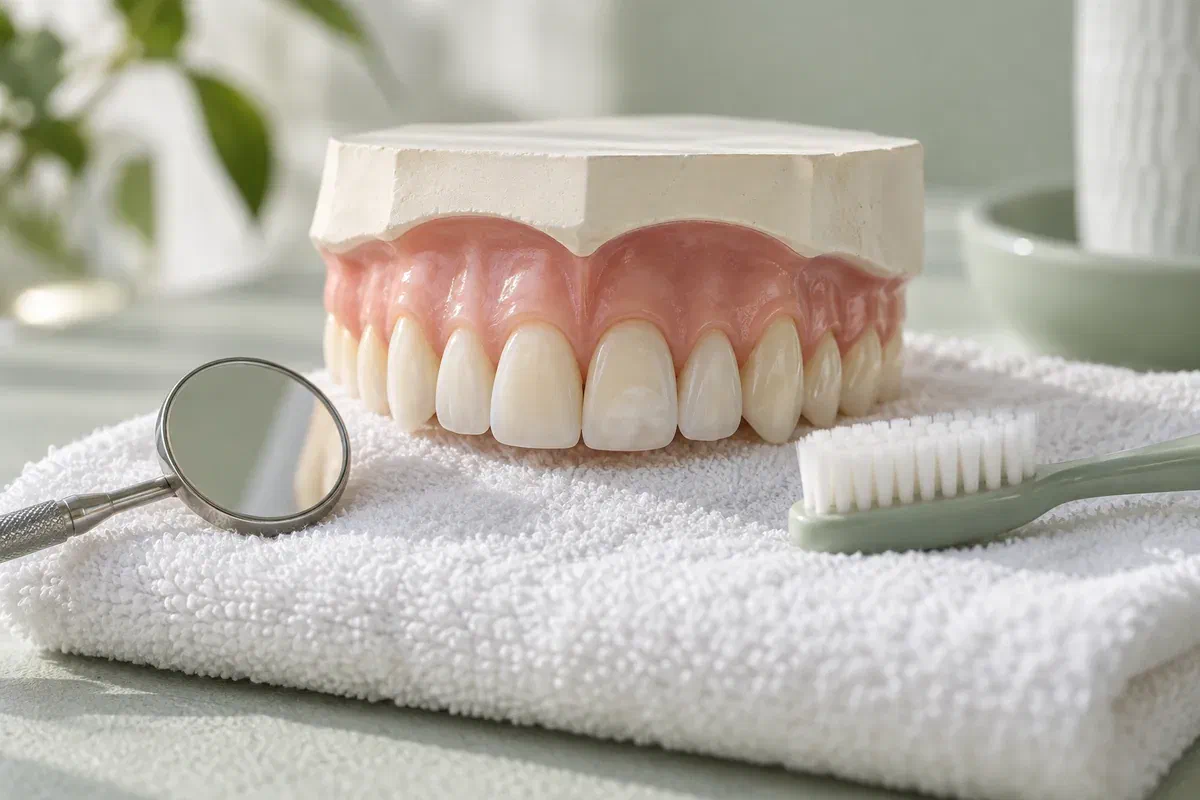
Illustrative dental teaching model with a subtle white enamel patch beside a mirror and toothbrush
What decides whether watching is enough

History, location and feel all count.

The exam looks at the mark, the gums and the nearby enamel. Even vague answers about when it appeared are useful, so share what you remember.

A recent patch where plaque gathers

Newer chalky areas along the gumline or around old bracket sites may be active mineral loss. Here, simply watching is not quite enough on its own; a small change in routine can help keep the enamel stable. We will explain what might be driving it.

A mark you have always had

If the patch appears in childhood photos or matches marks on other teeth, it most likely relates to enamel development. These tend to be stable, and observation is often the natural choice. We will confirm the surface is sound before saying so.

Any roughness, stain or discomfort

Tell us if the spot feels gritty, has a darker edge, collects food or causes twinges. Those signs move the mark out of the watch-and-wait category, because the surface may need attention. Please do not scrape the area to test it.

Leaving a mark untreated is a decision best made with good information. Early mineral loss can often be stabilised before a cavity forms, and developmental marks are commonly left alone, but a broken surface usually needs care.

What you gain from asking

Peace of mind first, appearance choices second

The most useful outcome of an exam may simply be knowing what you are looking at. From there, the plan can state its aim: protecting enamel that is losing minerals, watching a mark that is not changing, or, if you wish, reducing how visible it is. These goals are judged differently, and a patch that stays visible can be entirely compatible with healthy enamel.

If you do become curious about changing the look, ask what each option would demand of the tooth. Some techniques leave enamel almost untouched, while bonding adds material that will need care over the years. Compare the likely improvement with those commitments. A healthy mark left alone costs the tooth nothing, which is worth remembering.

A diagnosis you can trust

Ask what in the exam supports the dentist’s view, and whether photographs or a later look would confirm it. If the cause is uncertain, ask whether a period of observation is the sensible way to find out.

A light-touch prevention plan

Even when no treatment is needed, a few habits help. Talk through cleaning near the mark, snacks and drinks between meals, and whether your fluoride toothpaste is enough. Agree on when the area should be looked at again.

Honest answers if you change your mind

Should you later want the mark less visible, ask whether an option would blend it, soften its contrast or mask it under bonding, and what might still show. Results cannot be promised ahead of time.

What a visit involves

Examine, reassure or protect, and keep the door open

For many people, the process ends after the first two steps. The cosmetic stage is there only if you want it.

  1. Look closely at the mark

    Tell us how long it has been there, whether it has changed, any past braces and any sensitivity. The dentist examines the patch and surrounding teeth and explains whether the surface appears sound.

  2. Confirm it is safe to watch, or protect it

    If the mark is stable, you may simply be advised to keep an eye on it at routine checkups. If there are signs of active mineral loss, you will get a short prevention plan and a review date, with the purpose of each product explained.

  3. Talk about appearance only if you ask

    Should you want the mark to look different, monitoring, a limited enamel technique and bonding can be compared. We go over preparation, isolation, materials and how much change is realistic for your particular patch.

  4. Revisit at your regular checkup

    The mark is looked at again as part of routine care. If it stays the same, nothing more is needed. If you chose a cosmetic step, we review the result and discuss whether anything further is worthwhile, as a separate decision.

Living with a monitored mark

Not much changes, and that is the point.

Most people who choose observation simply carry on with good everyday care. If you had a cosmetic step or are following a prevention plan, we will give you the specific guidance that applies.

Keep up ordinary good habits

Brush twice daily with fluoride toothpaste and clean between your teeth. If the mark is near the gums, pay a little extra attention there. Ask us if you would like a refresher on technique.

Notice changes without obsessing

White marks look different in different light, so do not worry about day-to-day impressions. What matters is a real change in size, texture or comfort. If you notice one, mention it at your next visit or call sooner.

Skip the home fixes

Do not scrape or sand the patch, and avoid acidic home remedies. Ask before using whitening products, which can sometimes make a mark stand out more for a while.

The full range, from nothing to something

Observation is a real option, not a fallback.

We explain how each approach relates to what is causing the mark, the state of the surface and what you want. The least invasive choice that meets your goal comes first.

For stable marks and settled lesions

Observation with good daily care

For many white areas, routine care and a look at each checkup are all that is needed. The mark stays as it is, and the enamel remains healthy. Choosing this is entirely reasonable, and it leaves every other option available should your feelings about the mark change in a few years.

If you later want a softer look

A conservative enamel technique

Resin infiltration or a similar approach may be considered for some intact lesions. We discuss the steps and how well your mark may blend, because outcomes vary and cannot be guaranteed.

If the surface is damaged or masking is wanted

Tooth-coloured bonding

Bonding can repair a broken-down surface or mask a stubborn mark. It adds material that needs maintenance. Veneers would be a far bigger step and are not the usual answer for a single patch.

Patient information: DMG — indications and limitations for smooth-surface resin infiltration

Rockwood questions

Leaving it, watching it, or treating it

General answers for people weighing whether a white mark needs anything at all. Your exam will confirm what is right for you.

(905) 876-4488
Is it bad for the tooth to leave a white mark untreated?
Not if the mark is stable and the surface is sound. Active mineral loss is different, because protecting the enamel helps prevent progression. The exam tells you which you have.
How will I know if a monitored mark is getting worse?
Signs include roughness, sensitivity, a darker edge or the patch growing. The dentist will also compare it at your checkups. If you notice changes in between, mention them.
Can I decide to treat it later if it starts to bother me?
Yes. Choosing observation now does not close any doors. You can raise appearance options at any future visit, and the dentist will reassess what suits the mark at that time.
Do developmental white marks ever turn into cavities?
A developmental mark is not decay in itself, but any tooth surface can develop problems if plaque and diet allow. Good daily care protects it just like the rest of your teeth.
Will my regular checkups cover monitoring the spot?
In most cases, yes. The dentist can note the mark and look at it during routine visits. If more frequent review is needed, you will be told why.
Is there any reason to avoid whitening if I am only monitoring the mark?
Whitening can change the contrast around the patch and sometimes make it more noticeable. If you plan to whiten, mention the mark first so the dentist can explain what to expect.

Patient information: American Dental Association — whitening responses and intrinsic enamel marks

Visiting from Rockwood

Come for answers. Treatment is optional.

Reach our Bronte Street practice to have a white patch, an enamel change or a post-braces mark examined. We will tell you plainly whether it needs anything, and explain monitoring and appearance options if you want them.

We can only tell you whether a mark needs care, which approach would suit it, how much it might change, how many appointments are involved and what it would cost once we have examined it. A visible mark may not disappear completely, even with treatment.

Visit Milton Dental Clinic
Unit 1, 342 Bronte St. S, Milton, ON L9T 5B7
Get directions Clinic hours
Monday–Thursday
11am–7pm
Friday–Sunday
By appointment only

Areas we serve

  • Milton
  • Oakville
  • Mississauga
  • Georgetown
  • Halton Hills
  • Acton
  • Campbellville
  • Brampton
  • Burlington
  • Puslinch
  • Rockwood
  • Erin
  • Caledon
  • Etobicoke
  • Old Milton
  • Bronte Meadows
  • Timberlea
  • Dorset Park
  • Dempsey
  • Clarke
  • Beaty
  • Coates
  • Harrison
  • Scott
  • Willmott
  • Ford
  • Bowes
  • Cobden
  • Walker
  • Mountain View
  • Milton Heights
  • Hawthorne Village
  • Valley View
  • Fallingbrook
  • Nassagaweya
  • Trafalgar
  • Esquesing
  • Nelson
  • Brookville
  • Moffat
  • Glen Williams
  • Norval
  • Limehouse
  • Stewarttown
  • Ashgrove
  • Hornby
  • Silver Creek
  • Speyside
  • Scotch Block
  • North Oakville
  • River Oaks
  • Glen Abbey
  • West Oak Trails
  • Palermo
  • Bronte Creek
  • College Park
  • Joshua Creek
  • Uptown Core
  • Preserve
  • Iroquois Ridge
  • Lisgar
  • Meadowvale
  • Meadowvale Village
  • Churchill Meadows
  • Erin Mills
  • Central Erin Mills
  • Streetsville
  • East Credit
  • Creditview
  • Heartland
  • Sheridan
  • Mount Pleasant
  • Credit Valley
  • Huttonville
  • Churchville
  • Springbrook
  • Northwest Brampton
  • Bram West
  • Fletcher's Meadow
  • Fletcher's Creek South
  • Alton Village
  • Orchard
  • Millcroft
  • Headon Forest
  • Tansley
  • Brant Hills
  • Tyandaga
  • Kilbride
  • Lowville
  • Aberfoyle
  • Morriston
  • Arkell
  • Hillsburgh
  • Freelton
  • Carlisle
  • Waterdown
  • Flamborough
  • Mountsberg

How can we help?

Milton Dental Clinic

Have a question about your smile? Choose the option that works best for you.

For urgent dental concerns, please call.
Messages are reviewed during clinic hours.