

Illustrative patient describing a previous sensitivity experience during a dental consultation
Cosmetic Dentistry

Whitening for Sensitive Teeth in Acton

Most of your teeth felt fine after whitening, but one kept aching long after the rest calmed down. That single tooth deserves a proper look. Coming from Acton, you can have it examined, talk through the reaction, and decide on cosmetic plans only once the cause is clearer.

The tooth that would not settle

When one tooth stands out, start there.

A general, short-lived twinge across several teeth is one thing. A single tooth that throbs, aches when you bite or flares with hot tea weeks later is another. That pattern can have nothing to do with the gel. A crack, deep decay or a leaky filling may have been there all along, and whitening only drew attention to it.

So this visit begins with the tooth, not the shade. Whitening for sensitive teeth is not a product with a comfort guarantee. It is a careful assessment of why you reacted, whether one area needs treatment, and whether further bleaching is a sensible idea once that is sorted. Often the next step is dental care first.

Coming from Acton, let us know which tooth troubles you, when it started and what sets it off. Bring the whitening product name if you can. Please avoid using it again in the meantime. The dentist will examine the area, explain what they find and talk through options, including setting whitening aside for good.

Have a sore tooth checked after whitening
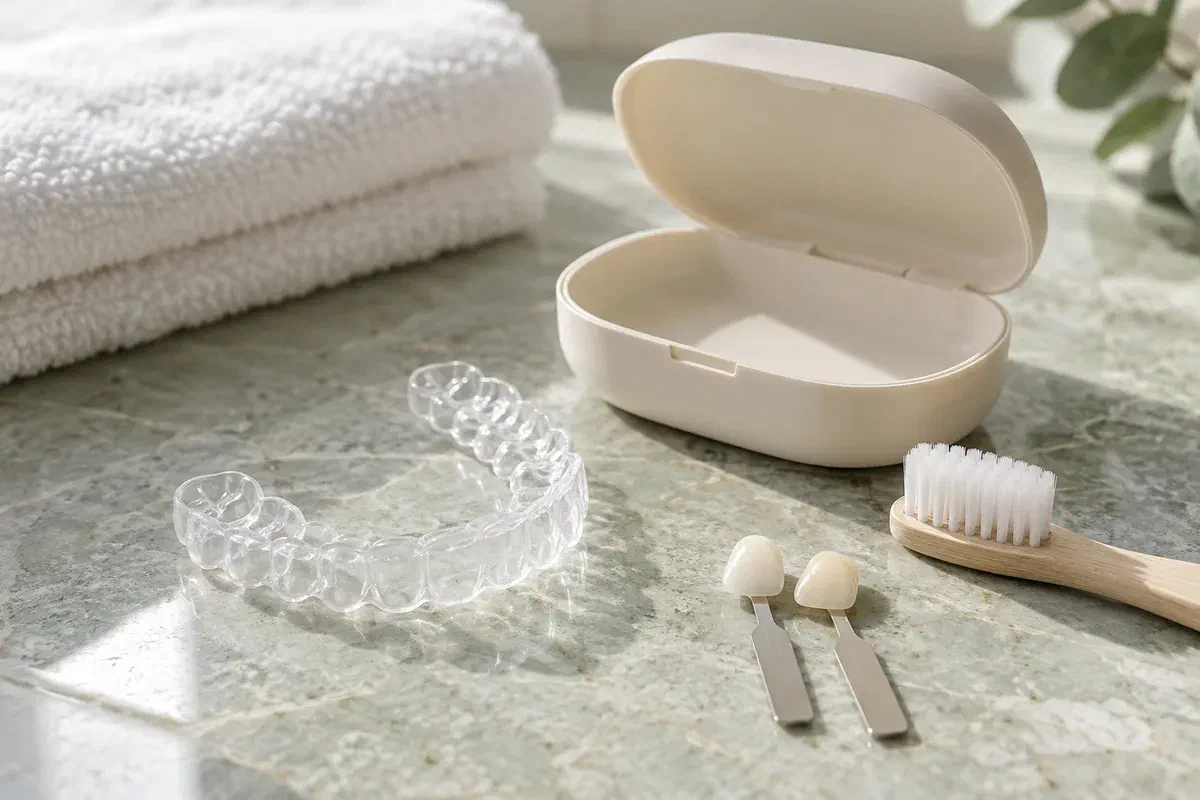
Illustrative empty whitening tray, open case, soft toothbrush, and natural shade samples
Separating the signals

Spread-out twinges and one aching tooth are different problems.

It helps to describe where discomfort sat and how it behaved. That tells the dentist what to examine before any talk of more whitening.

Brief sensitivity during a particular kit

Share the product name and how you used it, including whether a whitening toothpaste was part of the routine. Bring packaging if you kept it. You do not need to know the strength, and there is no reason to reuse it first.

A tooth that was sensitive before whitening

If that same tooth already reacted to cold, sweets, brushing or chewing, say so. Decay, cracks, wear, ageing fillings and exposed root surfaces can all explain it. A sensitive-teeth product cannot locate or treat that problem.

Pain that stays put, or gum soreness nearby

Try to say whether the trouble is in the gum or inside the tooth. Mention whether it hurts on biting, with temperature, or for no obvious reason, and whether it lingers or comes back. These details often move a dental problem to the front of the queue.

Stop using a whitening product that causes pain and contact a dental professional. A tooth that keeps hurting should be checked rather than worked around.

What an exam can clear up

A diagnosis for the tooth, then a decision about colour

Finding out why one tooth keeps hurting is valuable whatever you decide about whitening. The dentist can explain what needs care first and how that affects any cosmetic plan. Plenty of people treat the tooth, let things settle, and only then decide whether lightening still matters to them, or not.

Should another attempt follow, the plan comes with clear support: whom to call, which symptoms to watch for, and when you will be reviewed. That support reduces guesswork without removing every risk. If the same tooth reacts again, you will know exactly what to do rather than trying fixes at home.

Advice tied to the tooth that reacted

Explain what that tooth did and what would reassure you about any future plan. The dentist should connect their recommendation to the findings and your history. Changing brands, on its own, does not answer why one tooth hurt.

Clarity about what remains uncertain

Ask what can be adjusted with professional guidance and what cannot be predicted. Sensitivity is possible with any method. You can choose not to whiten again, even if the dentist feels it would be clinically reasonable.

Thinking about restorations near the sore tooth

Perhaps the tooth that hurt has a filling or crown, or sits beside one; if so, mention it. Restorations keep their colour while natural teeth lighten. Ask how a shade change might affect the look and whether any related work would be your choice rather than an add-on.

What to expect

Locate the problem, treat what needs treating, then talk shade.

The steps depend on what the exam finds. Leave the whitening product unused while you wait for advice, especially with one tooth still sore.

  1. Point to the tooth and tell its story

    Show the dentist which tooth bothers you and describe what triggers it, when it started and whether it changed after you stopped whitening. Mention other products and any earlier dental work on that tooth. If you have kept notes or remember roughly how many days the ache lasted, share that too; approximate answers are perfectly useful.

  2. Examine and investigate the area

    The dentist checks the tooth and surrounding gum and may recommend further tests such as imaging. Ask whether it needs treatment before anything cosmetic. A whitening reaction does not exclude a separate cause.

  3. Plan treatment, then consider whitening

    Discuss what the tooth needs, the fees and alternatives, and only then whether whitening is appropriate. If it is, the dentist selects a product and gives you personal instructions. Confirm how to respond if that tooth or your gums react.

  4. Review with the tooth in mind

    At follow-up, report how the sore tooth has behaved, as well as any use that strayed from the plan. Ask whether the current shade is a good stopping point. Additional sessions or touch-ups are a separate conversation.

Keeping an eye on things

Pay attention to that tooth, and tell us what it does.

Follow the guidance for your plan and your mouth. A friend’s routine, an online schedule or an earlier kit’s leaflet may not apply to you.

Note how the tooth responds

Keep your instructions, and jot down any discomfort with the date and the tooth involved. Bring the notes to your review. Avoid combining products, adding sessions or diluting a preparation.

Stop and call if the ache returns

If the same tooth starts hurting again, pause and contact the team before the next application. Say whether it settles or persists. Adjusting trays, shortening wear or adding a desensitizing paste yourself may hide the problem rather than solve it.

Keep cleaning gentle and thorough

Ask which toothpaste and brushing technique suit sensitive teeth, and tell us if the sore area is hard to clean. Whitening does not replace checkups and cleanings, and a lighter shade should never come before a healthy tooth.

Routes from here

Fix the tooth first. Then see whether whitening still matters.

Match your concern with the right kind of care. Ask which option addresses it and what it can realistically achieve, without unnecessary treatment.

When one area needs care first

Treat the sore tooth and pause whitening

If the exam finds a problem, treatment can be discussed on its own terms. Putting bleaching on hold gives the tooth time and lets you return to the cosmetic question later with better information. Some people find that, once the ache is gone, the colour bothers them far less than it did.

When some colour sits on the outside

Cleaning for surface staining

Ask whether surface stain is part of what you notice and whether a professional cleaning makes sense. Cleaning and bleaching are different, so a brighter look after cleaning is not a change to the tooth’s natural colour.

When assessment supports another attempt

Whitening once the tooth is sorted

Go over the chosen approach, what you will be asked to do, how reactions are handled and when follow-up happens. Ask why it suits your history. It stays your elective choice, with no promised shade or comfort.

Patient information: American Dental Association — whitening methods, natural teeth, and possible sensitivity

Questions from Acton about a sore tooth

Your single-tooth questions, answered

Bring details of the product and the tooth that bothers you. The dentist will explain the exam findings and whether more cosmetic treatment is reasonable.

(905) 876-4488
Why would only one tooth hurt after whitening?
A single tooth may have a crack, decay, a worn area or a filling that is letting sensation through. Whitening can make such a tooth more noticeable. An exam helps the dentist work out the cause and whether it needs treatment.
Could the sore tooth need an X-ray or other tests?
The dentist may suggest imaging or other checks depending on what they see and what you describe. Ask what each test is for and how it might change the plan.
Can I whiten around the sore tooth while it is being looked after?
Ask the dentist before doing anything. It is usually sensible to sort out a painful tooth before elective whitening. The advice will depend on what is found and how the tooth responds to treatment.
If the tooth stops hurting, does that mean it is fine?
Not necessarily. Pain that fades can still be worth checking, especially if it was localized or long-lasting. Describe what happened so the dentist can decide whether the tooth needs a closer look.
Does a tooth with a large filling whiten the same as the others?
The filling itself will not lighten, and the tooth around it may look different afterward. Ask how this could affect your smile. Any change to the filling would be a separate, optional decision.
What if the exam finds nothing wrong with that tooth?
That is still useful to know. The dentist can talk through whether whitening is reasonable and what precautions make sense. You remain free to decide against whitening, and coming in creates no obligation to buy anything.
Book from Acton

Bring the sore tooth in. The cosmetic plan can wait.

Call our Bronte Street practice if one tooth has kept hurting after whitening. We will examine it, explain what we find and help you decide on treatment first and whitening later, if at all.

Suitability, product, instructions, fees and colour change are all set after assessment. Sensitivity can still occur, and no shade or comfortable result is guaranteed.

Visit Milton Dental Clinic
Unit 1, 342 Bronte St. S, Milton, ON L9T 5B7
Get directions Clinic hours
Monday–Thursday
11am–7pm
Friday–Sunday
By appointment only

Areas we serve

  • Milton
  • Oakville
  • Mississauga
  • Georgetown
  • Halton Hills
  • Acton
  • Campbellville
  • Brampton
  • Burlington
  • Puslinch
  • Rockwood
  • Erin
  • Caledon
  • Etobicoke
  • Old Milton
  • Bronte Meadows
  • Timberlea
  • Dorset Park
  • Dempsey
  • Clarke
  • Beaty
  • Coates
  • Harrison
  • Scott
  • Willmott
  • Ford
  • Bowes
  • Cobden
  • Walker
  • Mountain View
  • Milton Heights
  • Hawthorne Village
  • Valley View
  • Fallingbrook
  • Nassagaweya
  • Trafalgar
  • Esquesing
  • Nelson
  • Brookville
  • Moffat
  • Glen Williams
  • Norval
  • Limehouse
  • Stewarttown
  • Ashgrove
  • Hornby
  • Silver Creek
  • Speyside
  • Scotch Block
  • North Oakville
  • River Oaks
  • Glen Abbey
  • West Oak Trails
  • Palermo
  • Bronte Creek
  • College Park
  • Joshua Creek
  • Uptown Core
  • Preserve
  • Iroquois Ridge
  • Lisgar
  • Meadowvale
  • Meadowvale Village
  • Churchill Meadows
  • Erin Mills
  • Central Erin Mills
  • Streetsville
  • East Credit
  • Creditview
  • Heartland
  • Sheridan
  • Mount Pleasant
  • Credit Valley
  • Huttonville
  • Churchville
  • Springbrook
  • Northwest Brampton
  • Bram West
  • Fletcher's Meadow
  • Fletcher's Creek South
  • Alton Village
  • Orchard
  • Millcroft
  • Headon Forest
  • Tansley
  • Brant Hills
  • Tyandaga
  • Kilbride
  • Lowville
  • Aberfoyle
  • Morriston
  • Arkell
  • Hillsburgh
  • Freelton
  • Carlisle
  • Waterdown
  • Flamborough
  • Mountsberg

How can we help?

Milton Dental Clinic

Have a question about your smile? Choose the option that works best for you.

For urgent dental concerns, please call.
Messages are reviewed during clinic hours.