

Illustrative patient describing a previous sensitivity experience during a dental consultation
Cosmetic Dentistry

Whitening for Sensitive Teeth in Burlington

That sharp zing from an iced drink in the middle of a whitening course is hard to forget. If you are in Burlington and wondering whether to try again, start by telling a dentist what happened, getting your teeth checked, and hearing your options without any pressure.

When a cold sip stopped you short

One iced coffee, one sharp jolt, and the trays went back in the box.

Many people describe the same moment. A few days into whitening, something cold touches the front teeth and a quick, bright pain shoots through them. Some push on. Others stop at once and wonder whether their teeth are simply too sensitive for any kind of bleaching. Neither guess tells you much about what is really going on.

This service exists for that uncertainty. It does not offer a formula that guarantees comfort. The dentist reviews the reaction, looks for any other reason your teeth might be touchy, and talks with you about whether further lightening is wise. Occasionally the most helpful outcome is treatment for a tooth, or a decision to leave your shade as it is.

From Burlington, it helps to bring the kit or a photo of its label, and to remember roughly how many days in the jolt began and how long it took to fade. There is no need to set it off again for us to believe you. We will check your mouth and lay out each option, including not whitening.

Discuss whitening after cold sensitivity
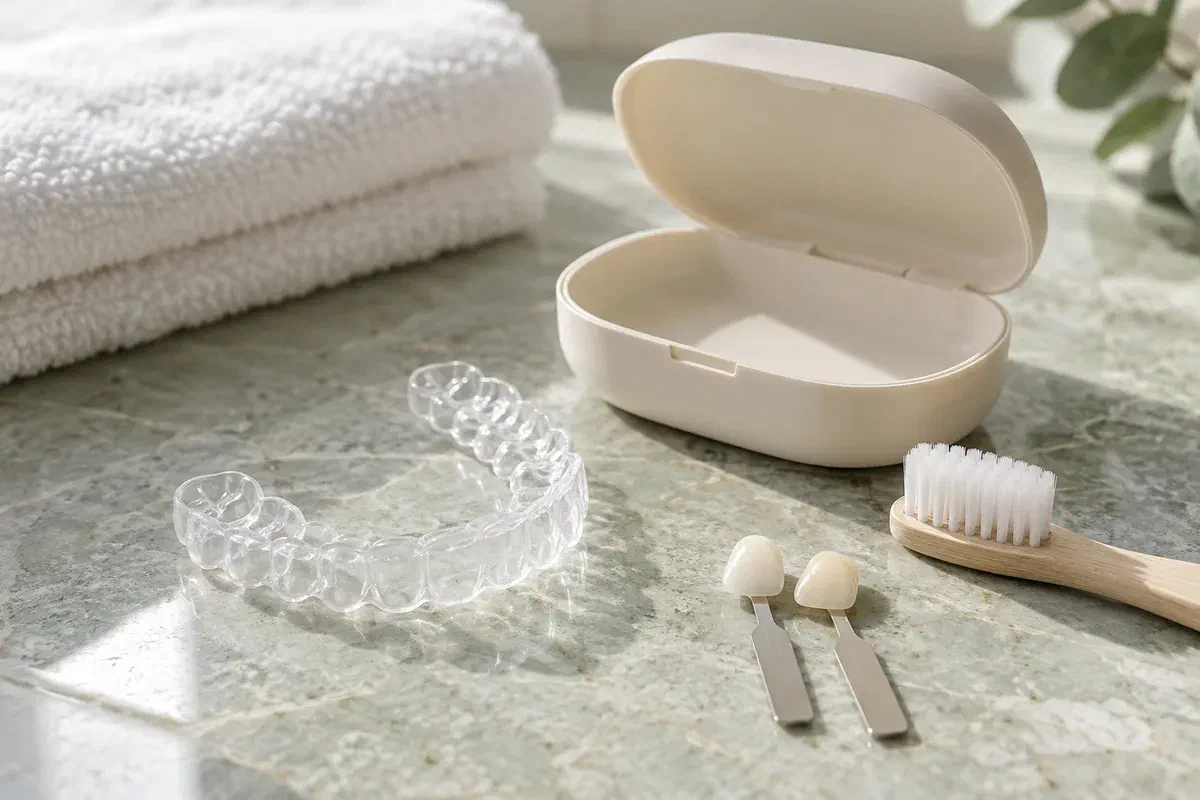
Illustrative empty whitening tray, open case, soft toothbrush, and natural shade samples
Telling us how it felt

Sharp, dull, gum-deep or tooth-deep?

The word sensitive covers a lot of ground. A simple description of what you noticed helps the dentist judge what to look at before anyone talks about another attempt.

A reaction tied to a specific kit

Note whether you used trays, strips or a paint-on gel, and the instructions that came with them. Say if a whitening toothpaste or rinse was also in the mix. There is no need to know the concentration or to use it again before your visit.

Twinges that were around before

Cold water, ice cream, a hard bite or brushing may have bothered a tooth well before you whitened. Decay, wear, cracks, ageing fillings and gums that have pulled back from the root can all be behind that. Packaging that mentions sensitive teeth cannot tell you which applies.

Raw gums or a tooth that keeps throbbing

Think about whether the soreness sat along the gum edge or felt deep in the tooth itself. Report anything that hung around after you stopped, returned without whitening or stayed in one place. That may move the priority from shade to finding a dental problem.

When a whitening product causes a reaction, put it away and ask a dental professional what to do. Using more of it to finish the pack or hit a colour is not advisable.

What a careful review gives you

Your jolt gets explained, not dismissed.

It is easy to treat a brighter smile and a healthy one as the same goal. An exam pulls them apart. You can ask what deserves attention first, which findings matter for whitening, and why. Some people leave with a tooth to treat. Some leave content to wait or keep their shade. All of those visits are worthwhile.

If trying again is reasonable, you will know before you start exactly how to handle trouble: whom to call, what to report and when your review is. That cannot make a reaction impossible. It does mean you are not left guessing, trimming trays or doubling up products when your teeth start to complain.

Suggestions that answer your history

Tell the dentist what made you stop and what would make another option feel manageable. Any recommendation should come with an explanation that links back to your reaction. Being handed a different brand is not, by itself, a reason to expect a different result.

Clarity about what stays uncertain

Some parts of a plan can be adjusted with guidance; others remain unpredictable. Nobody should describe a method as sure to prevent sensitivity. You can also decide that a lighter colour is not worth the risk of that jolt, even if whitening is clinically reasonable for you.

Attention to fillings and crowns in view

Bleaching changes natural teeth, not restorations. Before choosing a shade, ask how a lighter colour could affect the way visible fillings, crowns or veneers blend in. If replacing anything comes up, it should be presented as optional rather than folded into the whitening plan.

The path through the appointment

Listen. Examine. Decide. Review.

Your symptoms and the exam findings set the pace. Until you have advice, please leave any remaining whitening supplies untouched, particularly if they caused problems.

  1. Recount the earlier course

    Describe the product type, how often you wore or applied it, the day symptoms began and how they changed once you stopped. Mention other products and whether a clinician saw you at the time. It is fine to say you are not sure about some details.

  2. Check the teeth that reacted

    The dentist examines the sensitive teeth and nearby gums and may recommend additional tests. Ask whether anything should be treated before cosmetic work begins. Reacting to whitening once does not mean a separate dental problem is absent now.

  3. Settle on yes, not yet, or no

    Compare the expected benefit with the limitations, fees and alternatives. When whitening is appropriate, the dentist chooses the product and gives you personal instructions. Ask when you will be reviewed and how to act if teeth or gums become sore.

  4. Pause and assess before going further

    At the follow-up, describe your experience honestly, including anything you did outside the instructions. Ask whether the current colour is a good place to stop. Extra sessions or future top-ups should be talked about separately, not assumed.

Comfort along the way

A twinge is worth a phone call.

Use the guidance given for your plan and your teeth. A coworker’s method, a schedule from a website or the leaflet from your earlier kit may not be right for you.

Track what you use and any reaction

Keep the instructions, and jot down any sensitivity with the date and the teeth involved. Bring those notes to your review so comfort gets discussed, not just colour. Steer clear of combining products, adding sessions or thinning the gel.

Hold off and ask before resuming

After stopping for discomfort, get advice before the next application. Tell us whether it has settled or is still noticeable. Cutting wear time, changing trays or adding a desensitizing product on your own may not deal with the actual cause.

Keep brushing gentle and consistent

Ask which toothpaste and technique suit your sensitivity, and mention any spot that hurts to clean. Routine checkups and cleanings remain important, and the wish for a whiter smile should never get in the way of caring for your teeth and gums.

Paths forward

Whitening again is one choice among several.

Weigh the cause of your discomfort against the change you would like. Ask which option suits that concern and what it can sensibly achieve, without piling on treatment.

When comfort or tooth health comes first

Address the sensitivity and hold off on whitening

Your exam may reveal a separate problem or an area to watch. That care can be considered for its own sake before any cosmetic decision. Delaying elective bleaching means you can return to it later, better informed and under no pressure.

When surface stain is part of the picture

Try a professional cleaning

Ask whether external stain is contributing to the colour you notice and whether cleaning would be suitable. The two treatments have different aims, so a fresher look after stain removal is not a guaranteed change in the tooth’s natural shade.

When the dentist supports trying again

A tailored plan for another attempt

Go through the method, the instructions, the reactions that could occur and the follow-up. Ask why this approach fits your history and how to raise a problem. It remains your elective, informed choice, with no promised shade or pain-free guarantee.

Patient information: American Dental Association — whitening methods, natural teeth, and possible sensitivity

Burlington questions about sensitive whitening

Things people ask before trying again

Come with your product details and any doubts about another round. The dentist can explain what the examination shows and whether more cosmetic treatment makes sense.

(905) 876-4488
Why do cold drinks hurt so much more while I am whitening?
Many people notice temperature sensitivity during or after bleaching, but the reasons vary from person to person. Tell the dentist which teeth reacted and to what. They can check for other causes, such as exposed roots or worn areas, before giving advice.
Should I avoid cold foods completely if I try whitening again?
Ask for advice that fits your plan rather than following general rules. The dentist may suggest ways to manage comfort during treatment. If a cold trigger causes sharp or lasting pain, stop and report it instead of simply avoiding the trigger.
Are strips, trays and paint-on gels likely to feel different?
Products differ in how they are applied and how long they stay in contact with teeth and gums. Which one suits you depends on your history and the exam. Ask the dentist to explain the method they recommend and why.
The sensitivity went away. Does that mean I can pick up where I left off?
Speak with a dentist before restarting. Symptoms easing does not confirm that repeating the same routine is appropriate. Advice depends on the product, your response and what the exam shows, including any other cause of sensitivity.
Could whitening make an existing cavity hurt more?
A tooth with decay or a damaged filling may already be sensitive, and you might notice it more during whitening. That is one reason the dentist checks your teeth first. Any problem found can be treated before an elective treatment is considered.
Is it fine to keep my natural shade after all this?
Absolutely. Whitening is optional, and choosing your current colour is a valid result. Health findings can be handled separately, and getting advice never commits you to a product, a course or later top-ups.
Sensitive-teeth whitening for Burlington

Tell us about the jolt. We will help you decide what is next.

Contact our Bronte Street practice to review a past whitening reaction or ongoing sensitivity. We will look at your teeth and gums, explain realistic choices and respect your decision to go ahead carefully or set whitening aside.

Suitability, product choice, instructions, fees and colour change depend on assessment. Sensitivity can still occur, and no shade or comfortable experience is guaranteed.

Visit Milton Dental Clinic
Unit 1, 342 Bronte St. S, Milton, ON L9T 5B7
Get directions Clinic hours
Monday–Thursday
11am–7pm
Friday–Sunday
By appointment only

Areas we serve

  • Milton
  • Oakville
  • Mississauga
  • Georgetown
  • Halton Hills
  • Acton
  • Campbellville
  • Brampton
  • Burlington
  • Puslinch
  • Rockwood
  • Erin
  • Caledon
  • Etobicoke
  • Old Milton
  • Bronte Meadows
  • Timberlea
  • Dorset Park
  • Dempsey
  • Clarke
  • Beaty
  • Coates
  • Harrison
  • Scott
  • Willmott
  • Ford
  • Bowes
  • Cobden
  • Walker
  • Mountain View
  • Milton Heights
  • Hawthorne Village
  • Valley View
  • Fallingbrook
  • Nassagaweya
  • Trafalgar
  • Esquesing
  • Nelson
  • Brookville
  • Moffat
  • Glen Williams
  • Norval
  • Limehouse
  • Stewarttown
  • Ashgrove
  • Hornby
  • Silver Creek
  • Speyside
  • Scotch Block
  • North Oakville
  • River Oaks
  • Glen Abbey
  • West Oak Trails
  • Palermo
  • Bronte Creek
  • College Park
  • Joshua Creek
  • Uptown Core
  • Preserve
  • Iroquois Ridge
  • Lisgar
  • Meadowvale
  • Meadowvale Village
  • Churchill Meadows
  • Erin Mills
  • Central Erin Mills
  • Streetsville
  • East Credit
  • Creditview
  • Heartland
  • Sheridan
  • Mount Pleasant
  • Credit Valley
  • Huttonville
  • Churchville
  • Springbrook
  • Northwest Brampton
  • Bram West
  • Fletcher's Meadow
  • Fletcher's Creek South
  • Alton Village
  • Orchard
  • Millcroft
  • Headon Forest
  • Tansley
  • Brant Hills
  • Tyandaga
  • Kilbride
  • Lowville
  • Aberfoyle
  • Morriston
  • Arkell
  • Hillsburgh
  • Freelton
  • Carlisle
  • Waterdown
  • Flamborough
  • Mountsberg

How can we help?

Milton Dental Clinic

Have a question about your smile? Choose the option that works best for you.

For urgent dental concerns, please call.
Messages are reviewed during clinic hours.