

Illustrative patient describing a previous sensitivity experience during a dental consultation
Cosmetic Dentistry

Whitening for Sensitive Teeth in Campbellville

Sometimes it is not the teeth that complain after whitening but the gums: pale patches, a burning edge, tenderness where the tray sat. From Campbellville, you can have those tissues checked, the reaction reviewed, and any future whitening considered with care.

When the gums took the brunt

Stinging gums are a reason to pause, not to push on.

Picture taking out a whitening tray and seeing a white band along the gum line, or feeling a raw, burning strip that lasts into the evening. Gel that reaches soft tissue can irritate it, and an ill-fitting tray or strip can make that more likely. It feels different from tooth sensitivity, and it deserves its own description.

Our sensitive-teeth whitening consultation looks at both teeth and gums. It cannot promise that a future attempt will be free of irritation. The dentist reviews what happened, checks the tissues and teeth for any other problem, and talks with you honestly about whether further bleaching is appropriate, and if so, how the risk might be managed.

Many households around Campbellville like to group appointments where possible, so mention if you would like a checkup or cleaning booked nearby. Bring the product name or packaging and describe where your gums hurt and for how long. There is no need to test it again first. We will set out your options, including leaving whitening behind.

Get your gums checked after whitening
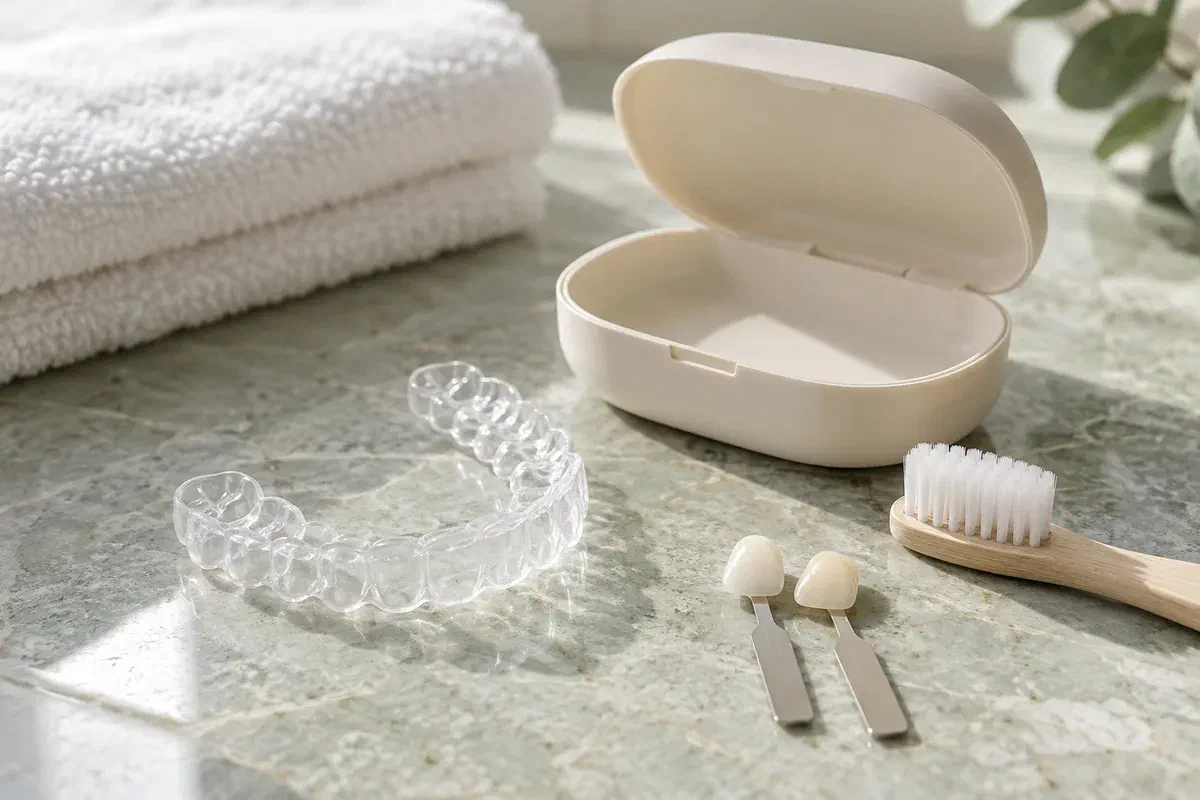
Illustrative empty whitening tray, open case, soft toothbrush, and natural shade samples
Telling gum from tooth

Surface burn, deep ache, or both

Gum irritation and tooth pain can happen together or separately. Describing each helps the dentist know where to look before discussing another attempt.

Irritation that followed a tray or strip

Say what kind of product you used, how it sat against your gums and how long you wore it. Mention any whitening toothpaste as well. Packaging helps if you kept it; there is no need to work out the concentration yourself.

Tooth sensitivity that was there already

Teeth that already reacted to cold, sweets, brushing or biting may have a separate cause, such as decay, wear, a crack, an older filling or gum recession exposing the root. A product sold as sensitive-friendly will not reveal which applies.

Gum patches that linger, or one sore tooth

Report gum areas that stayed white, raw or tender after you stopped, as well as any single tooth that kept aching. Note whether symptoms came back without whitening. Those details can shift the focus to checking the tissues or a tooth before anything cosmetic.

If a whitening product irritates your gums or teeth, stop and seek advice from a dental professional. Using more to finish the kit is not a good idea.

The value of looking first

Healthy gums come before a lighter shade.

An exam sorts out whether the irritation has settled, whether there is a separate gum or tooth problem, and how that affects any whitening advice. You can ask what needs care first and why. If the conclusion is to wait or to leave your colour as it is, you have still gained a clear answer.

If another attempt makes sense, you should know beforehand how to respond if your gums sting again: whom to call, what to describe and when your review is booked. Even with care, irritation remains possible. A plan simply means you will not be left guessing or trimming trays at the kitchen table.

Advice that accounts for the soft tissues

Explain how your gums reacted and what would make you willing to consider another option. The dentist should link their suggestion to that experience, including how fit and contact with the gums are handled. A new brand alone is no explanation.

Candour about lingering uncertainty

Ask what can be adjusted under guidance and what cannot be controlled. No method can promise to avoid gum irritation or tooth sensitivity. You are entitled to decide the possible improvement is not worth it.

Restorations and the overall look

Fillings, crowns and veneers stay the same colour when natural teeth lighten. Point out any that show when you smile, and ask how they might compare after whitening. Replacing anything would be its own optional decision.

How we approach it

Check the gums, check the teeth, then talk options.

The visit depends on how your gums and teeth feel today. Please keep any leftover whitening product unused until you have advice.

  1. Describe what happened to your gums

    Explain the product, how it was applied, where the gums were affected, when it started and how long it lasted after you stopped. Mention any tooth pain too, and whether someone examined you at the time. Uncertain details can be noted as such.

  2. Examine soft tissue and teeth

    The dentist looks at the gum areas you describe and the nearby teeth, and may suggest further checks. Ask whether anything needs treatment first. A previous reaction to whitening does not mean nothing else is involved.

  3. Talk through whether and how to proceed

    Discuss the potential benefit, limitations, fees and alternatives. If whitening is suitable, the dentist chooses the product and explains how to use it in a way that suits your mouth. Ask how to respond if your gums or teeth become sore.

  4. Review the gums before going further

    At follow-up, describe how your gums and teeth responded and anything you did differently from the plan. Ask whether your current shade is a sensible place to stop. Further sessions or top-ups deserve their own discussion.

Caring for gums during a plan

Watch the gum line and speak up early.

Use the instructions given for your plan and your mouth. A neighbour’s method, an online routine or an earlier kit’s leaflet may not apply.

Note any gum changes

Keep the instructions, and write down any stinging, white patches or tooth sensitivity with the date and location. Bring your notes to review. Avoid using more gel than directed, combining products or diluting anything.

Contact us before carrying on

If irritation made you stop, ask for advice before the next application. Tell us whether it has healed or is still tender. Trimming a tray, using less time or adding a soothing product on your own may not address why it happened.

Brush gently around tender areas

Ask which toothpaste and brushing approach are kind to sensitive gums and teeth, and say if an area is painful to clean. Regular checkups and cleanings still matter, and whitening should never get in the way of healthy gums.

After gum irritation

Pick a path that respects your gums.

Think about whether the problem was gums, teeth or both, and what change you want. Ask which option suits you and what it can realistically achieve.

When tissues or teeth need attention first

Let things heal and hold off on whitening

The exam may show that gums need time or that a tooth needs care. That can be discussed on its own merits first. Postponing elective bleaching means you can revisit it later with more information and no rush.

When some of the colour is external

A professional cleaning for surface stain

Ask whether surface stain contributes to what you see and whether cleaning is suitable. Cleaning and bleaching do different things, so a brighter look after cleaning is not a change in natural tooth colour.

When the exam supports another attempt

A whitening plan with gum protection in mind

Ask how the approach limits contact with your gums, what to watch for and when you will be seen again. Understand why it suits your history. It remains your elective, informed decision, with no shade or comfort guaranteed.

Patient information: American Dental Association — whitening methods, natural teeth, and possible sensitivity

Gum questions from Campbellville

About gums, trays and trying again

Bring the product details and describe how your gums reacted. The dentist can explain what they see and whether further cosmetic treatment is sensible.

(905) 876-4488
Why did my gums turn white after wearing a whitening tray?
Whitening gel that contacts the gums can irritate them and sometimes cause temporary pale patches. Describe how long it lasted and whether it hurt. The dentist can check the area and talk about whether any future approach needs to change.
Could a poorly fitting tray have caused my gum irritation?
Fit can affect how much gel reaches the gums. Bring the tray if you still have it. The dentist can look at it and explain options, such as a professionally made tray, if whitening is recommended.
Is it safe to keep whitening if only my gums are sore and my teeth feel fine?
Stop and get advice. Gum irritation is a reaction worth reporting, even when teeth feel comfortable. The dentist can decide whether the tissues need time to heal before anything else.
My gums healed. Can I restart the same strips now?
Please ask a dentist before restarting. Healing does not show that repeating the same routine is suitable. The advice depends on the product, how you reacted and what the exam shows.
Will a cleaning bother my gums if they are still a little tender?
Tell the hygienist or dentist about the recent irritation before they begin. They can check the area and adjust their approach or suggest waiting. Mention any spots that are painful to touch or brush.
Is it okay to decide whitening is not for me after a gum reaction?
Yes. Whitening is elective, and keeping your natural shade is entirely reasonable. Any gum or tooth findings can be looked after separately, and attending a consultation creates no obligation.
Campbellville whitening and gum care

Let us take a look at those gums.

Book with our Bronte Street practice to talk over gum irritation or tooth sensitivity from whitening. We will examine the area, explain what we see and support whichever path suits you, from a careful new plan to no whitening at all.

Suitability, product, instructions, fees and colour change are determined after assessment. Irritation or sensitivity can still occur, and no shade or comfortable outcome is guaranteed.

Visit Milton Dental Clinic
Unit 1, 342 Bronte St. S, Milton, ON L9T 5B7
Get directions Clinic hours
Monday–Thursday
11am–7pm
Friday–Sunday
By appointment only

Areas we serve

  • Milton
  • Oakville
  • Mississauga
  • Georgetown
  • Halton Hills
  • Acton
  • Campbellville
  • Brampton
  • Burlington
  • Puslinch
  • Rockwood
  • Erin
  • Caledon
  • Etobicoke
  • Old Milton
  • Bronte Meadows
  • Timberlea
  • Dorset Park
  • Dempsey
  • Clarke
  • Beaty
  • Coates
  • Harrison
  • Scott
  • Willmott
  • Ford
  • Bowes
  • Cobden
  • Walker
  • Mountain View
  • Milton Heights
  • Hawthorne Village
  • Valley View
  • Fallingbrook
  • Nassagaweya
  • Trafalgar
  • Esquesing
  • Nelson
  • Brookville
  • Moffat
  • Glen Williams
  • Norval
  • Limehouse
  • Stewarttown
  • Ashgrove
  • Hornby
  • Silver Creek
  • Speyside
  • Scotch Block
  • North Oakville
  • River Oaks
  • Glen Abbey
  • West Oak Trails
  • Palermo
  • Bronte Creek
  • College Park
  • Joshua Creek
  • Uptown Core
  • Preserve
  • Iroquois Ridge
  • Lisgar
  • Meadowvale
  • Meadowvale Village
  • Churchill Meadows
  • Erin Mills
  • Central Erin Mills
  • Streetsville
  • East Credit
  • Creditview
  • Heartland
  • Sheridan
  • Mount Pleasant
  • Credit Valley
  • Huttonville
  • Churchville
  • Springbrook
  • Northwest Brampton
  • Bram West
  • Fletcher's Meadow
  • Fletcher's Creek South
  • Alton Village
  • Orchard
  • Millcroft
  • Headon Forest
  • Tansley
  • Brant Hills
  • Tyandaga
  • Kilbride
  • Lowville
  • Aberfoyle
  • Morriston
  • Arkell
  • Hillsburgh
  • Freelton
  • Carlisle
  • Waterdown
  • Flamborough
  • Mountsberg

How can we help?

Milton Dental Clinic

Have a question about your smile? Choose the option that works best for you.

For urgent dental concerns, please call.
Messages are reviewed during clinic hours.