

Illustrative patient describing a previous sensitivity experience during a dental consultation
Cosmetic Dentistry

Whitening for Sensitive Teeth in Etobicoke

When the trip in from Etobicoke takes planning, one well-prepared consultation about a past whitening reaction is worth more than several rushed ones. Arrive with your product details and symptom history, have your teeth examined, and leave knowing whether another try makes sense.

Making the journey worthwhile

Prepare well, and one visit can answer a lot.

Our Bronte Street practice is a longer trip from Toronto’s west end than from most places we see people from, so it pays to arrive organised. After a whitening attempt that made your teeth hurt, the most useful thing you can carry is information: the product, how you used it, what you felt, and how things changed once you stopped.

With that in hand, the appointment can focus on what matters. Whitening for sensitive teeth is not a promise of a reaction-free product. It is an assessment of why you reacted, a search for any other dental cause, and a frank talk about whether bleaching again is sensible. Sometimes the answer is treatment for a tooth, or no whitening at all.

Before you set out from Etobicoke, gather the box or a photo of the label and jot a quick timeline on your phone. Please do not repeat the treatment to check whether it still hurts. The dentist will examine your teeth and gums and explain each realistic choice, including keeping your current shade.

Plan a whitening sensitivity consultation
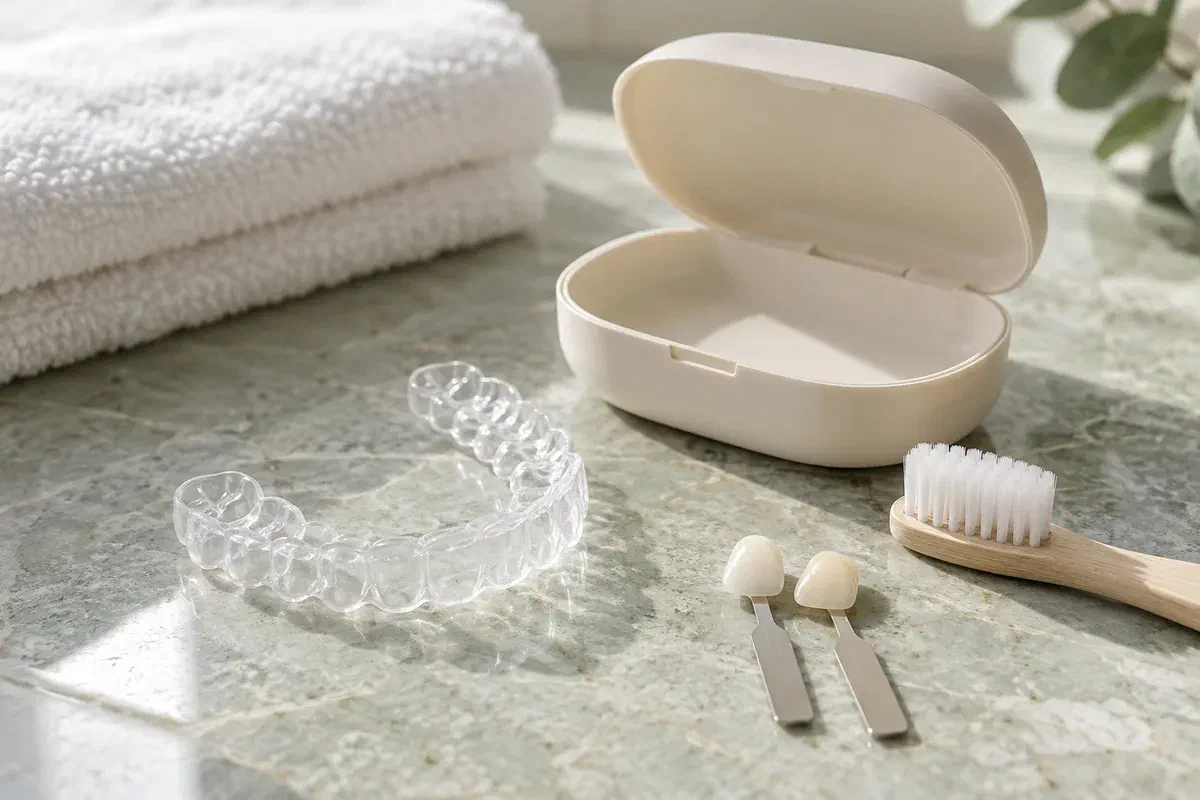
Illustrative empty whitening tray, open case, soft toothbrush, and natural shade samples
What to note before you come

A few minutes of notes can save a second trip.

Sensitivity is a broad word. Writing down what kind you had lets the dentist plan the right checks before any discussion of lightening.

The product you associate with the pain

List the name, the type and the directions you followed, plus any whitening toothpaste or rinse used at the same time. A photo of the packaging is enough if the box is gone. You do not need to know the strength or reuse it first.

Symptoms that existed before whitening

Write down whether cold, sweet food, brushing or chewing already caused discomfort. Possible reasons include decay, worn or cracked teeth, older restorations and exposed roots. A product sold for sensitive teeth cannot identify which one is involved.

Gum soreness or a single painful tooth

Note whether the trouble seemed to be in the gums or deeper in a tooth, and whether it lingered, returned or stayed in one place. Details like these may mean an exam for a dental problem takes priority over any cosmetic plan.

Stop a whitening product that causes a reaction and get advice from a dental professional, nearby if needed. Do not keep going to use up the product or hit a colour.

Value from a focused appointment

Clear findings and a plan you can follow from home

A careful exam lets you separate two questions: do you want lighter teeth, and are your teeth ready for bleaching right now? The dentist explains what needs attention first and why it affects the advice. If the result is to wait, or to leave your colour unchanged, the trip has still done its job.

If a new attempt is reasonable, most of the work may happen at home, so the plan has to be clear. You should leave knowing whom to call, what to describe and when a check-in is due. That will not remove every risk. It does mean you can handle a twinge by phone rather than guessing.

Recommendations explained against your history

Say what put you off last time and what you would need to hear before considering something different. Then ask the dentist to connect their suggestion to that history. A change of brand without an explanation does not justify trying again.

No promises the dentist cannot keep

Ask which parts of the plan can be adjusted and which remain uncertain. Any method can still cause sensitivity. You can decide the cosmetic benefit is not worth the risk, even if whitening is clinically reasonable for you.

Your visible dental work in the picture

Fillings, crowns and veneers do not change colour with bleaching. Ask how lightening your natural teeth might affect their match and whether any replacement would be optional. The aim is a whole-smile view, not an automatic restorative add-on.

What happens on the day

Much can be covered in a single well-planned visit.

Whether more appointments are needed depends on your symptoms and the exam. Until then, leave any stored whitening product unused, especially one linked to a reaction.

  1. Go through your notes

    Walk the dentist through the product, how you used it, when discomfort began and what happened after you stopped. Mention other products and whether anyone examined the reaction. Where you are unsure, simply say so.

  2. Examine and decide on any tests

    The dentist checks the teeth and gums involved and may suggest further investigation. Ask whether something should be treated before cosmetic work, and whether that care could be grouped to reduce trips. An old reaction does not rule out a new issue.

  3. Agree on proceeding, waiting or declining

    Talk through the benefit, the limits, the fees and other options. If whitening fits, the dentist chooses the product and gives instructions for home use. Ask how follow-up will work from a distance and what to do if your teeth or gums react.

  4. Review before any further lightening

    Keep the agreed follow-up, whether in person or as advised, and describe your experience honestly. Ask whether your current colour is a good stopping point. More sessions or top-ups deserve a separate discussion.

Managing comfort from a distance

Know who to call, and when to seek help closer to home.

Follow the guidance for your chosen approach and your mouth. A friend’s routine, an online timetable or an earlier product’s leaflet may not suit your plan.

Keep a running record

Hold on to the instructions, and note any reaction with the date and area on your phone. That record makes a phone call or your next visit far more useful. Avoid combining products, adding sessions or diluting the gel.

Phone before resuming after discomfort

If something hurt and you stopped, call for advice before applying again. Explain whether it has settled or is still there. Shortening sessions, trimming trays or adding a desensitizing product on your own may miss the reason it happened.

Keep daily care consistent

Ask which toothpaste and brushing technique suit your sensitivity, and mention any area that hurts to clean. Whitening is no substitute for routine checkups, and the pursuit of a lighter shade should not disrupt care for your teeth and gums.

Deciding what to do next

You might whiten again, or you might not need to.

Weigh the cause of your discomfort against the change you want. Ask which choice fits and what it can realistically achieve, without extra visits or treatment you do not need.

When tooth health comes before appearance

Treat the sensitivity and postpone whitening

The exam might identify a separate problem or something to keep an eye on. That care can be planned on its own merits first. Postponing bleaching lets you revisit the idea later with better information.

When some of the colour sits on top

Professional cleaning for surface stain

Ask whether external stain is part of what you notice and whether a cleaning could be done during the same visit. Cleaning and bleaching aim at different things, so a brighter look after cleaning is not a change in the tooth’s own shade.

When the dentist supports another attempt

A home whitening plan with clear support

Review the method, instructions, possible reactions and how follow-up will work from Etobicoke. Ask what makes the plan suitable for your history. It remains an informed, elective choice, without a promised shade or comfort.

Patient information: American Dental Association — whitening methods, natural teeth, and possible sensitivity

Planning questions

Before you make the trip

Bring your product details and any concerns about another round. The dentist will explain the exam findings and whether more cosmetic treatment makes sense.

(905) 876-4488
Can the consultation and any needed cleaning happen on the same day?
Ask when booking. Depending on scheduling and what the dentist finds, it may be possible to group some steps. A cleaning addresses surface stain and is a different service from bleaching, so each should be discussed as its own choice.
If I get sensitivity at home during a plan, can I call instead of coming in?
Yes, call to describe what is happening. The team can advise whether you should pause, come in, or seek care elsewhere. Do not change the routine on your own while you wait to speak with someone.
What counts as urgent enough to see a dentist near Etobicoke rather than drive out?
Severe or worsening pain, facial swelling, a broken tooth or symptoms that stop you eating or sleeping need prompt attention. Call first, and if travelling is not practical, seek urgent dental care closer to home.
Do I need to bring my old whitening trays?
Bringing them can help, along with the product packaging or a photo of it. The dentist can see what you used and how. Please do not use the trays again before the visit.
Will the dentist tell me the strength I should buy?
If whitening is recommended, the dentist will select an appropriate product and give individual instructions. Avoid choosing or altering a concentration yourself. Even a carefully chosen product may still cause some sensitivity or gum irritation.
Can I simply decide to keep my teeth as they are?
Yes. Whitening is elective, and staying with your natural shade is a sound decision. Any health findings can be handled separately, and making the trip for advice leaves you under no obligation to buy or start anything.
From Etobicoke to Bronte Street

One organised visit, then a clear decision

Schedule a consultation at our Bronte Street practice and bring your product details and symptom notes. We will examine your teeth, explain the options and help you plan any next steps with as few trips as sensible.

Every part of a plan, from suitability and product to instructions, fees and colour change, is set after we examine you. Sensitivity may still occur, and we cannot promise a shade or a comfortable course.

Visit Milton Dental Clinic
Unit 1, 342 Bronte St. S, Milton, ON L9T 5B7
Get directions Clinic hours
Monday–Thursday
11am–7pm
Friday–Sunday
By appointment only

Areas we serve

  • Milton
  • Oakville
  • Mississauga
  • Georgetown
  • Halton Hills
  • Acton
  • Campbellville
  • Brampton
  • Burlington
  • Puslinch
  • Rockwood
  • Erin
  • Caledon
  • Etobicoke
  • Old Milton
  • Bronte Meadows
  • Timberlea
  • Dorset Park
  • Dempsey
  • Clarke
  • Beaty
  • Coates
  • Harrison
  • Scott
  • Willmott
  • Ford
  • Bowes
  • Cobden
  • Walker
  • Mountain View
  • Milton Heights
  • Hawthorne Village
  • Valley View
  • Fallingbrook
  • Nassagaweya
  • Trafalgar
  • Esquesing
  • Nelson
  • Brookville
  • Moffat
  • Glen Williams
  • Norval
  • Limehouse
  • Stewarttown
  • Ashgrove
  • Hornby
  • Silver Creek
  • Speyside
  • Scotch Block
  • North Oakville
  • River Oaks
  • Glen Abbey
  • West Oak Trails
  • Palermo
  • Bronte Creek
  • College Park
  • Joshua Creek
  • Uptown Core
  • Preserve
  • Iroquois Ridge
  • Lisgar
  • Meadowvale
  • Meadowvale Village
  • Churchill Meadows
  • Erin Mills
  • Central Erin Mills
  • Streetsville
  • East Credit
  • Creditview
  • Heartland
  • Sheridan
  • Mount Pleasant
  • Credit Valley
  • Huttonville
  • Churchville
  • Springbrook
  • Northwest Brampton
  • Bram West
  • Fletcher's Meadow
  • Fletcher's Creek South
  • Alton Village
  • Orchard
  • Millcroft
  • Headon Forest
  • Tansley
  • Brant Hills
  • Tyandaga
  • Kilbride
  • Lowville
  • Aberfoyle
  • Morriston
  • Arkell
  • Hillsburgh
  • Freelton
  • Carlisle
  • Waterdown
  • Flamborough
  • Mountsberg

How can we help?

Milton Dental Clinic

Have a question about your smile? Choose the option that works best for you.

For urgent dental concerns, please call.
Messages are reviewed during clinic hours.