

Illustrative patient describing a previous sensitivity experience during a dental consultation
Cosmetic Dentistry

Whitening for Sensitive Teeth in Old Milton

Teeth that have collected fillings, a crown or two and a little gum recession over the years can react to whitening in ways that are hard to predict. For Old Milton, we offer a calm review of what went wrong last time and an honest view of whether another try fits.

Older smiles, earlier reactions

A mouth with history needs a careful look before bleaching.

Over decades, teeth pick up stories: a filling from childhood, a crown after a crack, gums that have drawn back slightly along the lower front teeth. When you tried whitening and felt sharp twinges or a dull ache, any of those details could have played a part. They also shape what a lighter shade would look like next to your existing work.

So the visit is less about finding a softer product and more about understanding your teeth as they are now. Whitening for sensitive teeth does not come with a promise of zero discomfort. It means weighing why you reacted, whether a separate problem needs care, and whether bleaching is worth considering again for you.

Our Bronte Street practice sits a short way from Milton’s historic downtown, and many people from Old Milton have known their teeth for a long time. Tell us what you used, how it felt, and how long it took to settle. You do not need to repeat it. We will explain the options plainly, and staying with your natural colour is one of them.

Review a past whitening reaction with us
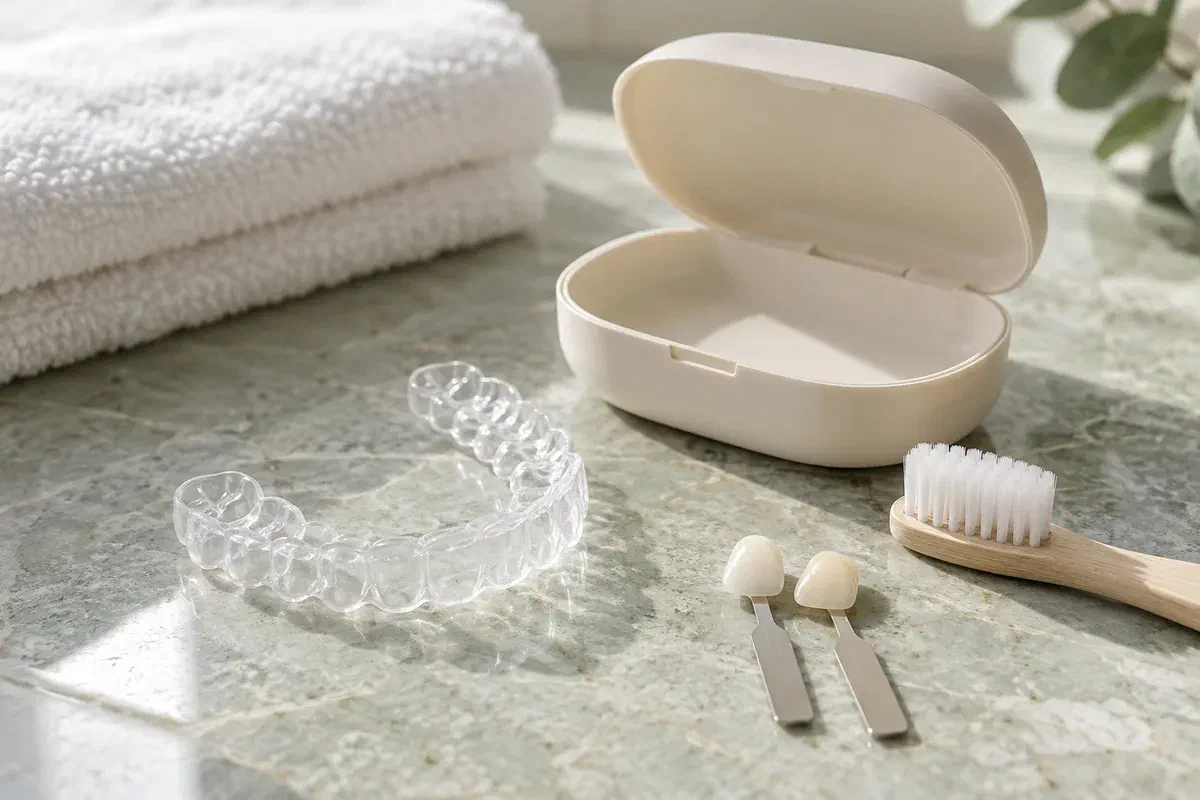
Illustrative empty whitening tray, open case, soft toothbrush, and natural shade samples
Details worth mentioning

Old work, exposed roots, sore gums: each tells a different story.

When an older mouth feels sensitive, the cause is not always the whitening itself. A clear history lets the dentist decide what to examine before discussing another attempt.

A product that seemed to set things off

Bring whatever is left of the kit, or write down the name and the directions. Mention whether you were also using whitening toothpaste or rinses. Nobody expects you to know the exact strength, and there is no reason to try it again before we meet.

Twinges that were already part of life

If cold coffee, ice cream or a firm toothbrush already caught a tooth, say so. Worn edges, cracks, aging fillings, decay at a margin and root surfaces left bare by receding gums can all be sensitive. A gel sold as gentle cannot tell you which of these is involved.

Tender gums or a single tooth that will not settle

Try to separate soreness at the gumline from pain that feels deep in a tooth. Point out anything that lingered, returned without whitening or stayed in one place. Those clues may make investigation of a dental problem more urgent than any conversation about shade.

Stop a whitening product that causes a reaction and get advice from a dental professional. Adding more applications to finish a kit or reach a colour is not the way forward.

What you gain from talking first

Clear advice that takes your dental history into account

An exam can untangle two things that often blur together: the wish for a brighter smile and the question of whether your teeth are ready for bleaching. Ask what should be looked after first and how each finding changes the advice. Leaving with a plan to wait, or to change nothing, is still a good result.

Should another attempt make sense, the instructions and the backup plan come before the first application. You will know who to phone, which symptoms matter, and when a check-in is booked. That structure cannot remove all risk. It does help you avoid improvising if a tooth starts to protest.

Recommendations tied to your own reaction

Say what made the last attempt hard to tolerate and what would help you feel comfortable trying something different. The dentist should connect any suggestion to that experience. A new brand name, on its own, does not explain why a second attempt would suit you better.

Straight talk about the limits

Ask which parts of a plan can be adjusted under guidance and what stays unpredictable. No approach can be described as certain to avoid sensitivity. You are free to decide that a lighter shade is not worth the risk, even when the dentist sees no clinical reason against it.

Room for crowns, bridges and older fillings

Restorations generally keep their colour when natural teeth are bleached. Before choosing a shade, ask how the change might affect the way your existing work blends in, and whether any replacement would be optional. A cosmetic choice should not grow into a restorative overhaul by default.

What the visit involves

History, examination, decision, follow-up.

The order and number of visits depend on how your teeth feel and what we find. Leave any old whitening supplies in the cupboard until you have advice, particularly after a bad experience.

  1. Piece together what happened

    Tell us about the product, how you applied it, when symptoms appeared and how quickly they faded once you stopped. Mention other products from the same period and whether anyone checked the reaction. If you cannot remember every detail, that is fine to say.

  2. Examine the teeth, gums and existing work

    The dentist checks the areas you describe, including older fillings and crowns, and may suggest further tests. Ask whether something needs treatment before cosmetic work. Having reacted to whitening before does not mean there is no other dental issue today.

  3. Choose between proceeding, pausing and declining

    Weigh the likely benefit against the limits, the fees and the alternatives. If whitening is suitable, the dentist selects the product and gives instructions written for you. Ask when a review will happen and what to do if your teeth or gums become uncomfortable.

  4. Reassess before any further lightening

    Attend the follow-up and describe your experience honestly, including any departures from the instructions. Ask whether the colour you have now is a sensible place to stop. Extra rounds or top-ups later on deserve their own discussion instead of being assumed.

Living with a whitening plan

If something aches, tell us rather than toughing it out.

Follow the guidance for your chosen method and your teeth. Advice that worked for a friend, a schedule found online or the leaflet from an earlier kit may not match your plan.

Note what you use and how it feels

Keep the instructions and packaging, and write down any reaction with the day and the tooth or area involved. Bring that record to your review so the conversation covers comfort as well as colour. Avoid mixing products, adding sessions or diluting the gel yourself.

Pause and phone before carrying on

If discomfort made you stop, get advice before the next application. Let the team know whether it has eased or is still present. Shortening wear time, trimming a tray or adding a desensitizing paste on your own may leave the underlying cause unaddressed.

Protect the routine that keeps teeth healthy

Ask which toothpaste and brushing approach suit your sensitivity, especially around exposed roots. Tell us if a spot is painful to clean. Regular checkups and hygiene visits still matter, and a whitening project should never push them aside.

Possible next steps

Bleaching again is not the only route.

Think about what caused the discomfort and what kind of change you want. Ask which choice fits that concern and what it can sensibly achieve, without adding work you do not need.

When a tooth or the gums need care first

Treat the sensitivity and set whitening aside

The exam might point to a separate problem or a reason to monitor an area. That care can be discussed on its own terms before appearance comes up. Postponing an elective treatment lets you revisit it later with more information and less pressure.

When part of the dullness sits on the surface

Remove surface stain with a cleaning

Ask whether surface buildup contributes to the colour you notice and whether a cleaning would help. Cleaning and bleaching aim at different things, so a fresher look after stain removal should not be mistaken for a change to the natural shade of the tooth.

When the exam supports another attempt

A carefully considered whitening plan

Review the method, instructions, possible reactions and the follow-up arrangements. Ask what makes this approach reasonable given your history and existing dental work. The result is your informed choice, with no promised shade and no guarantee against sensitivity.

Patient information: American Dental Association — whitening methods, natural teeth, and possible sensitivity

Questions we hear

Ask freely. Nothing here commits you.

Bring the details of what you used and any worries about trying again. The dentist will explain what the exam shows and whether more cosmetic treatment is sensible.

(905) 876-4488
Can teeth with receding gums be whitened without the roots hurting?
Exposed root surfaces can be sensitive, and there is no guarantee bleaching will feel comfortable around them. The dentist can look at how much root is showing and talk through whether whitening is advisable, or whether managing that sensitivity should come first.
My crown is a slightly different colour already. Would whitening make it stand out more?
It could. Crowns and fillings usually stay the same shade while natural teeth lighten. Ask the dentist to show you how your current work compares and what the trade-offs would be. Replacing a restoration to match would be a separate, optional decision.
How long ago did the reaction need to settle before I ask about trying again?
There is no set waiting period that suits everyone. What matters is whether symptoms have fully eased and what an exam shows now. Book a visit when you are ready to talk, and mention if anything still feels tender.
Is a whitening strip from years ago still safe to use now?
Do not reach for an old product before getting advice, especially one that caused trouble. Check its packaging for dates, but more importantly ask whether whitening suits your teeth today. The dentist can suggest a suitable product if bleaching is recommended at all.
Why would the dentist want to look at one tooth separately?
Pain that stays in one place or keeps returning deserves its own check. Explain whether it hurts when biting, with temperature or for no clear reason. A single sore tooth may have a cause that has nothing to do with the rest of your whitening experience.
Do I have to whiten at all after the consultation?
No. Whitening is entirely optional. You can keep your natural shade, and any health findings can be handled separately. Coming in for advice does not sign you up for a product, a course or future touch-ups.
Old Milton whitening sensitivity visits

Bring the story of your last attempt, and we will plan from there.

Get in touch with our Bronte Street practice to review a whitening reaction or ongoing sensitivity. We will examine your teeth and existing work, explain the realistic options, and support you whether you go ahead or leave whitening aside.

Suitability, the product chosen, instructions, fees and colour change all depend on assessment. Sensitivity can still occur, and no shade or comfortable outcome is guaranteed.

Visit Milton Dental Clinic
Unit 1, 342 Bronte St. S, Milton, ON L9T 5B7
Get directions Clinic hours
Monday–Thursday
11am–7pm
Friday–Sunday
By appointment only

Areas we serve

  • Milton
  • Oakville
  • Mississauga
  • Georgetown
  • Halton Hills
  • Acton
  • Campbellville
  • Brampton
  • Burlington
  • Puslinch
  • Rockwood
  • Erin
  • Caledon
  • Etobicoke
  • Old Milton
  • Bronte Meadows
  • Timberlea
  • Dorset Park
  • Dempsey
  • Clarke
  • Beaty
  • Coates
  • Harrison
  • Scott
  • Willmott
  • Ford
  • Bowes
  • Cobden
  • Walker
  • Mountain View
  • Milton Heights
  • Hawthorne Village
  • Valley View
  • Fallingbrook
  • Nassagaweya
  • Trafalgar
  • Esquesing
  • Nelson
  • Brookville
  • Moffat
  • Glen Williams
  • Norval
  • Limehouse
  • Stewarttown
  • Ashgrove
  • Hornby
  • Silver Creek
  • Speyside
  • Scotch Block
  • North Oakville
  • River Oaks
  • Glen Abbey
  • West Oak Trails
  • Palermo
  • Bronte Creek
  • College Park
  • Joshua Creek
  • Uptown Core
  • Preserve
  • Iroquois Ridge
  • Lisgar
  • Meadowvale
  • Meadowvale Village
  • Churchill Meadows
  • Erin Mills
  • Central Erin Mills
  • Streetsville
  • East Credit
  • Creditview
  • Heartland
  • Sheridan
  • Mount Pleasant
  • Credit Valley
  • Huttonville
  • Churchville
  • Springbrook
  • Northwest Brampton
  • Bram West
  • Fletcher's Meadow
  • Fletcher's Creek South
  • Alton Village
  • Orchard
  • Millcroft
  • Headon Forest
  • Tansley
  • Brant Hills
  • Tyandaga
  • Kilbride
  • Lowville
  • Aberfoyle
  • Morriston
  • Arkell
  • Hillsburgh
  • Freelton
  • Carlisle
  • Waterdown
  • Flamborough
  • Mountsberg

How can we help?

Milton Dental Clinic

Have a question about your smile? Choose the option that works best for you.

For urgent dental concerns, please call.
Messages are reviewed during clinic hours.