

Illustrative private dental conversation about an oral health concern
General & Family Dentistry

Bad Breath Assessment and Treatment

You should be able to ask about persistent bad breath without embarrassment. Arrange an assessment in Milton to explore possible oral causes and a care plan that goes beyond temporarily covering the smell.

A closer look at bad breath assessment and treatment

A sensitive concern deserves a straightforward conversation.

Persistent bad breath, also called halitosis, can make ordinary conversations feel uncomfortable. It is a valid reason to arrange a dental assessment, even if your teeth do not hurt and you are unsure whether anyone else notices it. You do not need to describe the concern perfectly or apologize for bringing it up.

Breath odour can have several contributors. The teeth, gums, tongue, saliva, dentures, and daily habits may all be relevant to an oral assessment. A temporary change after a particular food is different from a concern that keeps returning despite routine care. Treatment should respond to the findings rather than begin with a promise that one rinse will solve every case.

At Milton Dental Clinic, we start with a private conversation about what you have noticed, how long it has been happening, and what you have already tried. We can assess oral causes and explain appropriate next steps. If the findings suggest that medical assessment would be useful, that possibility can be discussed without assuming that every breath concern comes from the stomach.

Arrange a confidential oral assessment
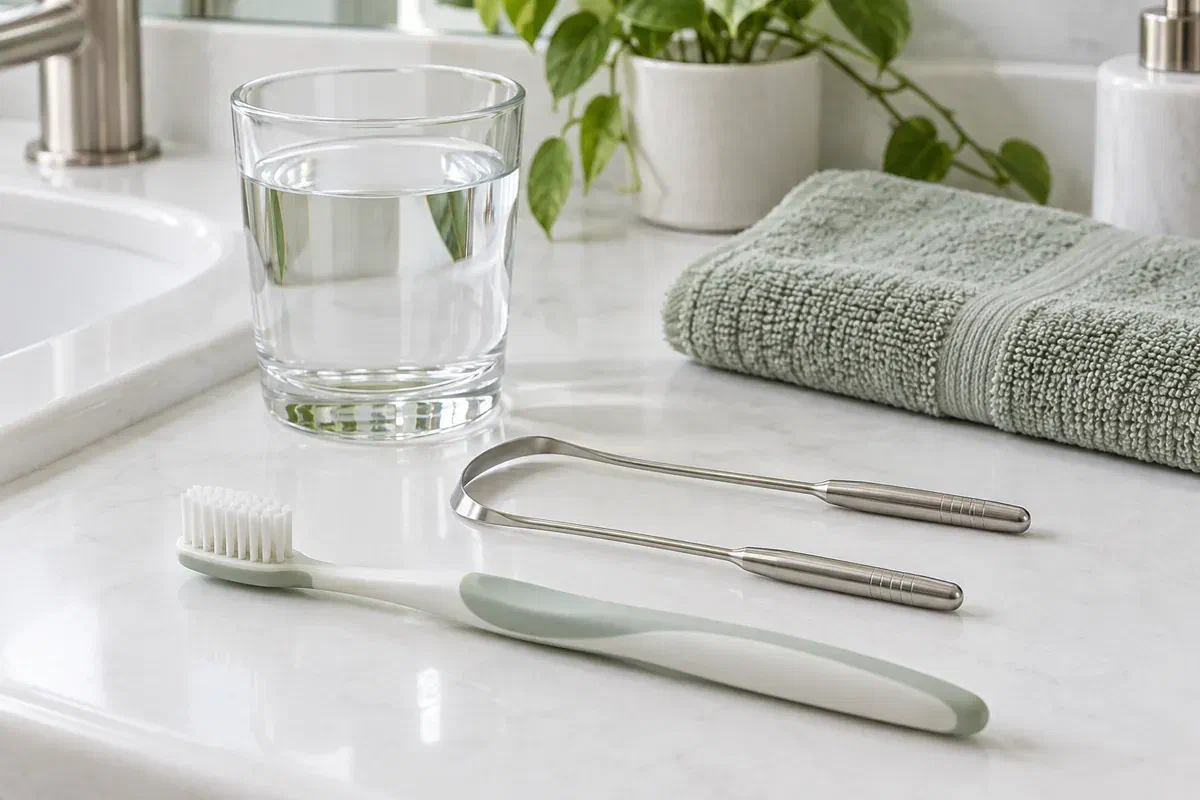
Toothbrush, tongue cleaner, and glass of water illustrating everyday oral care
Reasons to have it checked

Look at the accompanying signs, not just the odour.

Tell us whether the concern occurs mainly on waking, after meals, or throughout the day. Other changes in the mouth can help identify what needs attention, but no single symptom confirms the cause.

Bleeding gums or food catching

Plaque, gum inflammation, and areas that trap food may contribute to a persistent concern. Explain where cleaning feels difficult or where food repeatedly lodges. The examination can check the gums, teeth, and existing restorations rather than simply recommending a stronger flavour of toothpaste.

A mouth that feels dry

Reduced saliva may affect breath and oral comfort. Mention thirst, a sticky feeling, mouth breathing, and any medication changes. Dryness has different possible causes, and a product recommendation should fit the wider history rather than replace it.

An appliance or denture to review

Removable appliances need their own cleaning routine, and a denture that traps debris or no longer fits deserves assessment. Bring the appliance and describe how you care for it. The supporting tissues need checking as well as the appliance itself.

A bad taste with swelling, significant tooth pain, or discharge may indicate a problem needing prompt attention. Call rather than relying on breath products while waiting for a routine visit.

What an assessment can clarify

Replace guesswork with a more specific next step.

People often try several products before asking for help. The useful change is to connect advice with an observed need: a difficult cleaning area, a gum problem, an appliance issue, or persistent dryness. That makes it easier to understand why a particular action is recommended and how its effect will be reviewed.

The appointment also gives you space to explain the effect on daily life. If worry about breath is affecting social situations or leading to repeated checking, say so. Your concern should be heard respectfully, including when the examination does not identify a clear oral cause or when further assessment is appropriate.

A focused review of oral health

Checking the teeth, gums, and soft tissues can identify concerns that a mint or rinse would not address. Findings are explained before treatment is proposed, so a breath complaint does not automatically become a recommendation for extensive dentistry.

Advice you can demonstrate back

If cleaning technique needs adjustment, ask for a demonstration using the tools you can manage. It is more useful to leave knowing how to reach one troublesome area than to receive a long list of unfamiliar products.

A clear follow-up decision

Agree when to review the response and what would prompt another type of assessment. Persistent symptoms deserve a defined next step rather than an indefinite cycle of trying new products without checking the underlying concern.

Your visit, explained

Start with your observations and work through the findings.

Bring a list of medicines and the oral care products you use. If you have noticed a timing pattern, explain it. Ask when booking whether there are any preparation instructions for the assessment.

  1. Discuss the history privately

    We ask when the concern began, whether it is persistent, and what makes it seem better or worse. Relevant medical symptoms, smoking, dryness, and denture use may be discussed. Tell us what you have tried and whether any product caused irritation.

  2. Examine the mouth

    The teeth, gums, tongue, and other oral tissues are assessed, with attention to plaque, inflammation, decay, food retention, and appliances. Further investigations are recommended when they would help answer a clinical question. No particular test or device is assumed to be necessary for everyone.

  3. Explain the treatment priorities

    Discuss the findings and any care needed for gum disease, a damaged tooth, or another identified problem. Home care advice and possible dry-mouth support are tailored to the situation. Ask about fees and whether recommended dental treatment addresses the breath concern or a separate finding.

  4. Review the response and next steps

    Follow-up considers what has changed and what remains troublesome. If oral treatment does not account for the concern or relevant medical symptoms are present, further healthcare assessment may be advised. The plan should acknowledge uncertainty rather than promise a result that cannot be guaranteed.

Care between visits

Choose a manageable routine instead of stronger masking.

Follow the plan agreed after the assessment. If a product stings, makes the mouth feel drier, or is difficult to use, tell the team so alternatives can be considered.

Clean the whole relevant area

Brush with fluoride toothpaste and clean between teeth each day using suitable tools. Gentle tongue cleaning may be discussed where appropriate. Avoid aggressive scraping or brushing until tissues bleed; more pressure is not a substitute for an effective technique.

Give appliances their own care

Clean dentures or removable appliances using the method advised for their material, and follow the recommended wearing schedule. Ask about storage and cleaning products if you are uncertain. Do not use harsh household cleaners to try to remove an odour.

Discuss dryness and medical changes

Report ongoing dry mouth and review relevant medication concerns with the prescribing clinician. Do not stop a medicine yourself. Water and suitable saliva-supporting measures may help with comfort, but persistent dryness deserves assessment of its cause and effect on the teeth.

Patient information: NHS — caring for the mouth when breath is a concern · NIDCR — dry mouth

Care depends on the findings

There is no single treatment for every breath concern.

The aim is to address an identified contributor where possible. Ask how the recommended care relates to the assessment and what will happen if the concern continues.

When plaque or gum disease contributes

Cleaning support and gum care

A tailored cleaning routine and appropriate professional gum treatment may be recommended. The amount of care depends on the condition of the tissues. A routine cleaning and treatment for established periodontal disease are not necessarily the same appointment or procedure.

When a tooth or appliance needs attention

Treatment of a local oral problem

Decay, a food-trapping restoration, or an appliance concern may need specific care. Discuss the diagnosis, alternatives, and expected benefit. Correcting one finding should not be presented as a guarantee that every possible source of odour has been removed.

When the explanation is broader or uncertain

Further assessment or symptom support

Dry-mouth care, a product chosen for a particular purpose, or medical assessment may be appropriate. A cosmetic rinse can temporarily change breath without treating disease. Ask whether a proposed product is intended for comfort, prevention, or an identified condition.

Patient information: American Dental Association — mouthrinse and its limitations

Questions you can ask without embarrassment

A private concern is still a valid reason to visit.

You can explain your worry in your own words. We can begin with the history and examination, even if you do not know whether the concern is coming from your teeth, gums, or something else.

(905) 876-4488
Can I book for bad breath even if my teeth do not hurt?
Yes. Pain is not required for an oral assessment. Explain whether the concern is persistent, whether there are associated changes, and what you have tried. Some oral problems can be present without toothache, while other breath concerns may not have a dental cause.
Will mouthwash alone resolve a persistent breath problem?
Not reliably. Some rinses temporarily mask odour, while others have a specific therapeutic role. Neither replaces an assessment of a persistent concern or effective daily cleaning. Ask which type, if any, is appropriate for your findings and how long it should be used.
Does persistent bad breath always come from the stomach?
No. Oral contributors are important to assess, including the gums, tongue, saliva, and appliances. Medical conditions can also be relevant in some cases. The next step should follow the history and findings rather than assuming a stomach problem before the mouth has been evaluated.
Should I stop my medication if dry mouth seems to affect my breath?
Do not stop or change prescribed medicine without advice from the prescribing clinician. Bring a current list and explain when dryness began. The dental team can discuss oral care and the need for a medication review while the clinician considers whether any change is appropriate.
What if I remain worried about my breath after the oral examination is normal?
Explain that the concern continues and how it affects you. Review what was assessed and whether another healthcare opinion would be useful. Repeated use of harsh products or constant checking is not a substitute for a plan that addresses both the symptoms and your ongoing worry.
Can a removable denture contribute to breath odour?
Debris on an appliance, difficulties cleaning it, or problems with the supporting tissues can be relevant. Bring the denture so its condition and fit can be assessed. Ask for a material-appropriate cleaning routine rather than trying increasingly strong products that may damage the appliance or irritate the mouth.
Bad breath assessment and treatment in Milton

Let’s make a difficult topic easier to discuss.

Arrange a visit at our Bronte Street clinic to talk about persistent breath concerns and have your oral health assessed. Bring your questions and a list of the products or medicines you use. We can explain what we find and agree on a practical next step.

Call about significant pain, swelling, or a sudden concerning change. Online requests are for non-urgent appointments.

Visit Milton Dental Clinic
Unit 1, 342 Bronte St. S, Milton, ON L9T 5B7
Get directions Clinic hours
Monday–Thursday
11am–7pm
Friday–Sunday
By appointment only

How can we help?

Milton Dental Clinic

Have a question about your smile? Choose the option that works best for you.

For urgent dental concerns, please call.
Messages are reviewed during clinic hours.