

Illustrative private dental conversation about an oral health concern
General & Family Dentistry

Bad Breath Assessment and Treatment in Acton

Sometimes it starts as a taste rather than a smell, and then becomes a habit of checking. From Acton, you can book a calm oral assessment that looks for physical causes and takes the worry itself seriously too.

Acton breath and taste concerns

Is it a taste, a smell, or a worry?

Many breath concerns begin quietly: a sour or metallic taste in the afternoon, a feeling that something is off, then the urge to breathe into a cupped hand or ask a family member over and over. Any part of that is a fair reason to book a dental assessment. It does not matter whether others have noticed, or whether a tooth hurts.

A persistent taste or odour can have more than one source. Plaque and inflamed gums, bacteria on the tongue, a dry mouth, an old filling that collects food, or a denture or retainer in need of better care may each contribute. Food and drink cause brief changes that pass. When the problem returns despite brushing, it makes sense to look carefully before trying yet another product.

We start with a private talk about what you notice, how long it has lasted and what you have tried. The examination follows, and we explain any oral cause we find in plain terms. If the history suggests a medical opinion would help, we raise it calmly. And if worry has become part of the problem, we will talk about that openly, too.

Book a calm assessment
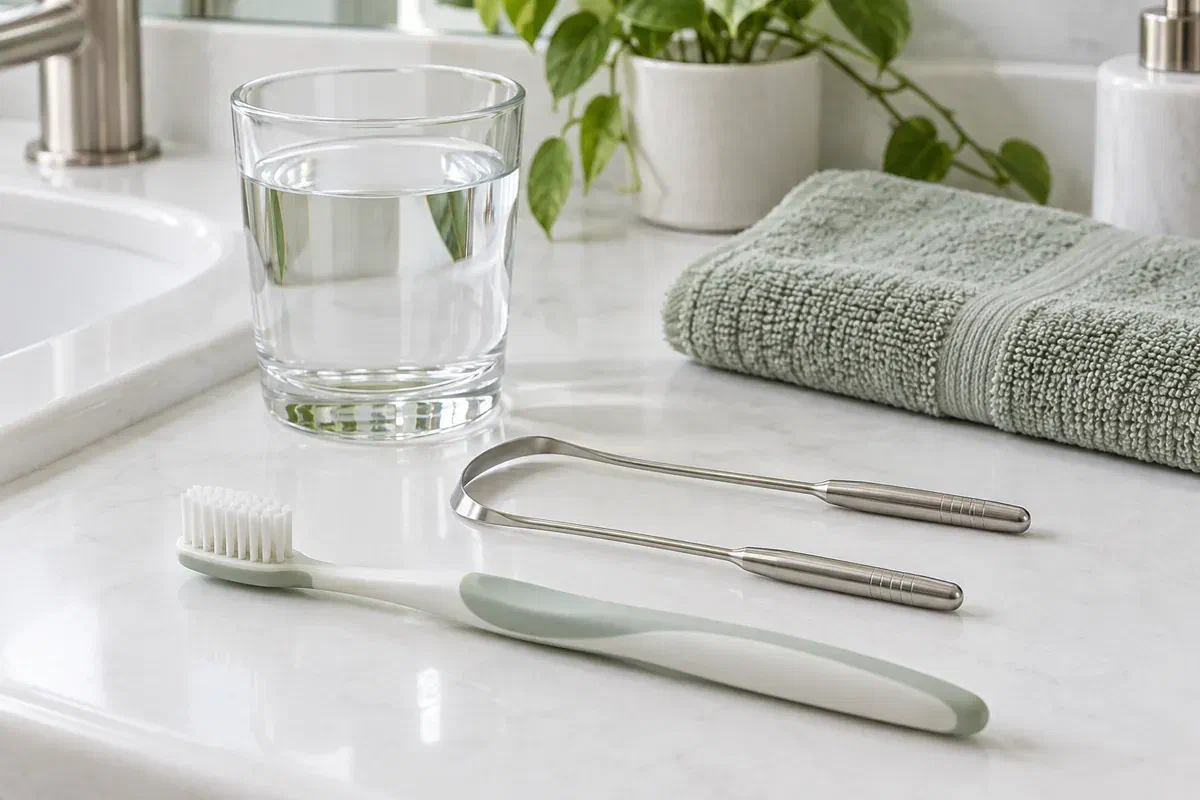
Toothbrush, tongue cleaner, and glass of water illustrating everyday oral care
What to mention

Taste and texture count as clues

Let us know whether things are worse on waking, after eating or at the end of the day. Other changes help guide where we look, but no single one tells us the cause for certain.

A bitter taste near certain teeth

Plaque, gum inflammation and spots where food collects can produce both an unpleasant taste and odour. Tell us whether the taste seems to come from one side or one tooth. We check the gums, teeth and existing restorations closely instead of suggesting a stronger mint.

Dryness or a sticky tongue

Less saliva can change taste as well as breath. Mention thirst, a tacky feeling, mouth breathing and any recent medicine change. Dryness can have several explanations, so suggestions should be based on your whole history.

An appliance that tastes stale

Dentures, retainers and guards need their own cleaning, and one that tastes or smells unpleasant, or fits poorly, should be assessed. Bring it and describe your routine. We look at the tissues underneath as well as the appliance itself.

A bad taste with swelling, a painful tooth or discharge can point to an infection that needs prompt care. Please phone us instead of rinsing and waiting for a routine visit.

What an appointment offers

Facts to replace the checking

Repeated self-checking rarely brings reassurance, and new products seldom settle the doubt. An assessment gives you facts: whether there is a cleaning blind spot, inflamed gums, an appliance problem or dryness, and what each means. Advice linked to a specific finding is easier to trust and easier to review later.

It is also a chance to say how much the concern is affecting you. If you avoid conversations, keep checking or feel anxious about being close to people, please tell us. You will be treated with respect, including when the examination shows a healthy mouth or when another kind of support would help.

An honest oral examination

We check teeth, gums and soft tissues and tell you clearly what we find, including when we find nothing of concern. Findings come before treatment, so a breath worry does not lead to dental work you do not need.

A simple routine to rely on

Ask us to show you a manageable cleaning method using tools you already have. Having one reliable routine can feel steadier than reaching for a different product each time doubt returns.

A clear point to reassess

We agree when to review and what would prompt another type of assessment, whether medical or for support with ongoing worry. That gives the concern a defined path instead of a loop.

Your appointment

Talk, examine, explain, review

Bring a list of your medicines and the products you use. If the taste or odour follows a pattern, describe it. Ask when booking whether anything is needed beforehand.

  1. A private discussion

    Is it mostly a taste you notice, a smell, or something another person pointed out? We also want to know how long it has been going on and whether it ever lets up. Smoking, dryness, appliances and relevant health symptoms may be covered. Tell us what you have tried.

  2. The examination

    We examine the teeth, gums, tongue and soft tissues for plaque, inflammation, decay, food traps and appliance concerns. If a further test seems worthwhile, you will hear the reason for it before anything is done.

  3. Explaining the results

    We share our findings and any care needed for gum problems, a damaged tooth or another issue. Home care and possible dry-mouth support are tailored to you. Ask about fees and whether a recommendation relates to the breath concern or to a different finding.

  4. Checking in later

    At review we discuss what has changed and what still bothers you. If oral care does not account for the concern, or other symptoms are present, we may suggest seeing your physician. We stay honest about uncertainty instead of promising an outcome.

Steady habits

Less checking, more consistent care

Keep to the plan agreed at your visit. If something stings, dries your mouth or feels like too much, tell us and we will simplify it.

A gentle daily clean

Brush with fluoride toothpaste twice a day and clean between teeth daily. We may show you how to clean the tongue lightly. Hard scraping, frequent harsh rinsing or brushing until tissues bleed can irritate the mouth and change taste further.

Appliances on their own routine

Clean dentures, retainers or guards using the method suited to their material and wear them as advised. Ask about storage and cleaning products. Household cleaners are not suitable and may leave residue or damage.

Dryness and medicines

Tell us if dryness continues and discuss medicine questions with whoever prescribed them. Do not stop a medicine on your own. Water may help comfort, but ongoing dryness needs its cause and its effect on teeth looked into.

Patient information: NHS — caring for the mouth when breath is a concern · NIDCR — dry mouth

If treatment is needed

Care that responds to the cause

We aim at a contributor the examination identifies, where there is one. Ask how each recommendation connects to your findings and what happens next if the concern persists.

When plaque or gums are involved

Gum care and cleaning help

A personalised home routine and appropriate professional gum treatment may be advised. How much care you need depends on your gums. A routine cleaning and treatment for more advanced gum disease are often separate steps.

When a local problem is found

Attention to a specific tooth

Decay, a filling that catches food or an appliance issue may need targeted treatment. Discuss the diagnosis, options and expected benefit. Fixing one problem is not a guarantee that every source of taste or odour is gone.

When the cause is broader or unclear

Support beyond the mouth

Dry-mouth care, a product with a defined purpose, a medical opinion, or support for persistent worry may be appropriate. Cosmetic rinses briefly change breath without treating disease. We will explain what any product is for.

Patient information: American Dental Association — mouthrinse and its limitations

Acton questions

Honest answers to private questions

Put the concern into whatever words come naturally. There is no need to know whether it is your teeth, gums or something else before you arrive; that is what we work out together.

(905) 876-4488
Can a bad taste be related to bad breath?
Often, yes. The same things that cause odour, such as plaque, gum inflammation, a coated tongue or a food trap, can affect taste. A sudden new taste with pain or swelling needs prompt attention. Otherwise, mention both at your assessment.
How can I check my own breath reliably?
Self-checks are not very reliable, because people tend to get used to their own odour. Repeated checking can also increase worry. An examination, and an honest opinion from someone you trust, are more useful guides.
What if I keep worrying after being told my mouth is healthy?
Tell us. We can go over what was checked and whether a medical opinion would help. For some people, worry about breath becomes distressing in its own right, and talking with a physician about that support is reasonable.
Could a cavity cause a bad taste?
It can, particularly where decay or a broken filling traps food. Not every bad taste comes from a cavity, though. The examination checks for decay along with gums, tongue and other possible contributors.
Should I stop medicine that seems to dry my mouth?
Please do not stop or change a prescribed medicine without advice from the prescriber. Bring a current list to your visit. We can discuss oral comfort and decay prevention while your doctor decides whether any change is appropriate.
Can I book an evening appointment from Acton?
Weekday appointments run Monday to Thursday until 7pm, which may suit after work. Friday to Sunday visits are by appointment. Ask when booking for a time that works with your schedule.
Breath care for Acton

A calmer way to find out

Book a time at our Bronte Street practice to talk through a taste or breath concern and have your mouth examined. Bring your questions, medicine list and the products you use. We will explain what we find and agree a clear next step.

Please phone about significant pain, swelling or a sudden worrying change. Online requests are for non-urgent appointments.

Visit Milton Dental Clinic
Unit 1, 342 Bronte St. S, Milton, ON L9T 5B7
Get directions Clinic hours
Monday–Thursday
11am–7pm
Friday–Sunday
By appointment only

Areas we serve

  • Milton
  • Oakville
  • Mississauga
  • Georgetown
  • Halton Hills
  • Acton
  • Campbellville
  • Brampton
  • Burlington
  • Puslinch
  • Rockwood
  • Erin
  • Caledon
  • Etobicoke
  • Old Milton
  • Bronte Meadows
  • Timberlea
  • Dorset Park
  • Dempsey
  • Clarke
  • Beaty
  • Coates
  • Harrison
  • Scott
  • Willmott
  • Ford
  • Bowes
  • Cobden
  • Walker
  • Mountain View
  • Milton Heights
  • Hawthorne Village
  • Valley View
  • Fallingbrook
  • Nassagaweya
  • Trafalgar
  • Esquesing
  • Nelson
  • Brookville
  • Moffat
  • Glen Williams
  • Norval
  • Limehouse
  • Stewarttown
  • Ashgrove
  • Hornby
  • Silver Creek
  • Speyside
  • Scotch Block
  • North Oakville
  • River Oaks
  • Glen Abbey
  • West Oak Trails
  • Palermo
  • Bronte Creek
  • College Park
  • Joshua Creek
  • Uptown Core
  • Preserve
  • Iroquois Ridge
  • Lisgar
  • Meadowvale
  • Meadowvale Village
  • Churchill Meadows
  • Erin Mills
  • Central Erin Mills
  • Streetsville
  • East Credit
  • Creditview
  • Heartland
  • Sheridan
  • Mount Pleasant
  • Credit Valley
  • Huttonville
  • Churchville
  • Springbrook
  • Northwest Brampton
  • Bram West
  • Fletcher's Meadow
  • Fletcher's Creek South
  • Alton Village
  • Orchard
  • Millcroft
  • Headon Forest
  • Tansley
  • Brant Hills
  • Tyandaga
  • Kilbride
  • Lowville
  • Aberfoyle
  • Morriston
  • Arkell
  • Hillsburgh
  • Freelton
  • Carlisle
  • Waterdown
  • Flamborough
  • Mountsberg

How can we help?

Milton Dental Clinic

Have a question about your smile? Choose the option that works best for you.

For urgent dental concerns, please call.
Messages are reviewed during clinic hours.