

Illustrative private dental conversation about an oral health concern
General & Family Dentistry

Bad Breath Assessment and Treatment in Brampton

Maybe it is your teenager, maybe it is you. A breath concern in the family can be raised calmly with a dentist. Households from Brampton can book an oral assessment that looks for the source and agrees a plan everyone can follow.

Family breath concerns, Brampton

How do you raise it with a teenager?

Telling someone you love that their breath is a problem is awkward, and hearing it is worse. A dental visit can take the sting out of that conversation by turning it into a health check instead of a criticism. The same goes for adults who have been quietly worrying about their own breath. Nobody needs a toothache to book.

Breath odour can grow out of several things. Plaque along the gums, a furry tongue, braces or a retainer that trap food, low saliva, a decayed tooth or a denture that needs more attention are all possibilities. After-school snacks and garlic dinners cause passing smells; an odour that hangs around for weeks despite brushing is different. What we recommend depends on what the examination turns up.

For a young person, we keep the conversation relaxed and let them speak for themselves where they can, with a parent present as needed. For adults, it is a private chat about what has been noticed and what has been tried. Either way we explain the findings plainly, and if a medical opinion seems sensible, we will say so without jumping to assumptions.

Book an assessment for your family
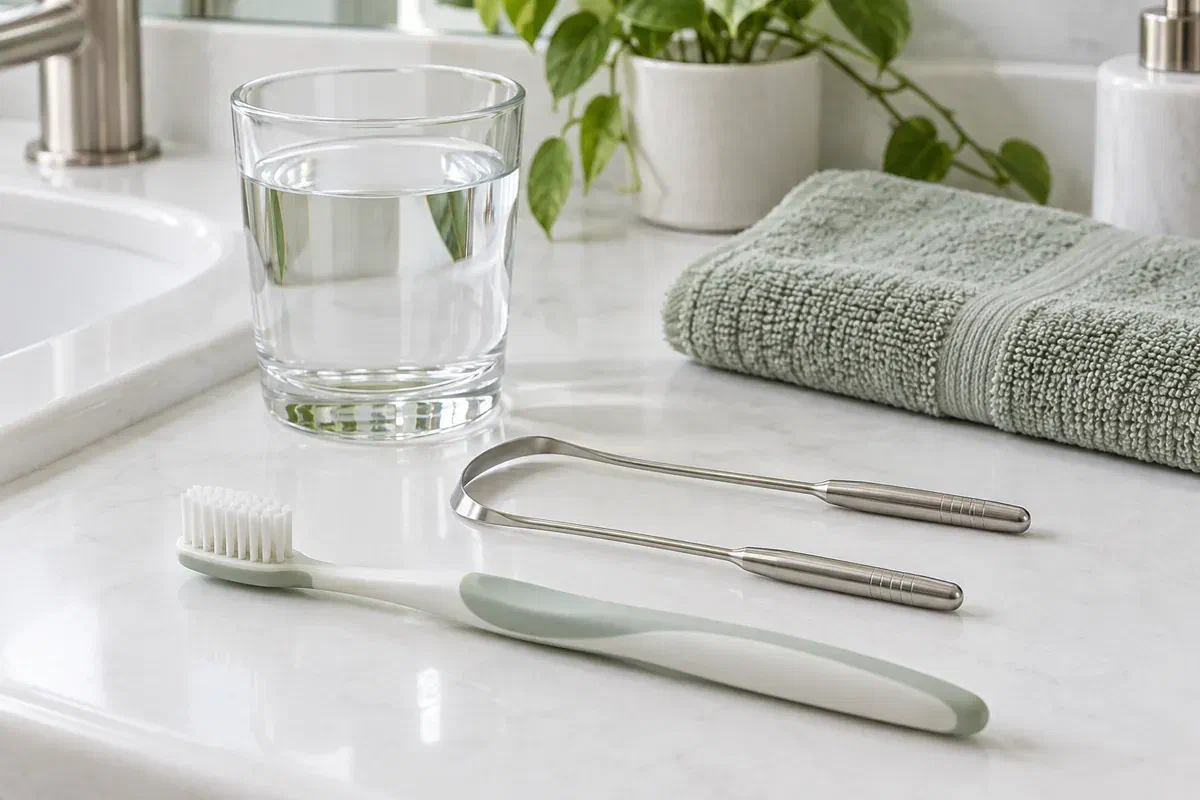
Toothbrush, tongue cleaner, and glass of water illustrating everyday oral care
Signs to bring up

Clues at home that help us at the chair

Has it been strongest at breakfast, after sports or throughout the evening? Other changes in the mouth give useful hints, though none of them pins down a cause on its own.

Bleeding while brushing

Gums that bleed, a build-up of plaque around braces, and teeth where food keeps lodging can all keep breath stale. Mention the spots that seem difficult to reach. We check the gums, teeth and any fillings or brackets instead of suggesting a minty toothpaste and leaving it there.

Thirsty, dry or mouth-breathing

A dry mouth can change breath. Let us know about a stuffy nose, sleeping with the mouth open, drinking little water, or a new medicine. Dryness has many possible explanations, so we look at the bigger picture before suggesting a product.

Retainers, mouthguards and dentures

Anything that comes in and out of the mouth needs regular cleaning, and one that smells, collects debris or fits badly deserves a look. Bring it along with a description of how it is cleaned. We examine the gums beneath it too.

A nasty taste combined with facial swelling, a painful tooth or pus could mean an infection. Phone us promptly rather than trying to cover it up until the next routine visit.

Why a check-up helps the whole household

Calmer conversations, clearer answers

Families often try mouthwash, gum and new toothbrushes before booking. An assessment gives everyone something firmer to go on, such as a spot the brush misses, inflamed gums, a retainer that needs better care or a mouth that is often dry. When the reason is clear, the habit is easier to keep and easier to check.

Breath worries can affect confidence, particularly for teenagers. If a child is self-conscious at school, or an adult is avoiding close contact, it is worth sharing. We respond with care, including when the mouth looks healthy or a different kind of appointment would be the wiser move.

A careful oral check

Teeth, gums and soft tissues are examined for issues that a stronger mint would never solve. We explain what we see before suggesting care, so a breath concern is not a shortcut to a big treatment plan.

Coaching that sticks

Ask us to show your child, or you, how to clean around braces, between teeth or across the tongue, using tools that are realistic at home. A little coaching usually beats a cupboard of products.

A follow-up everyone knows about

We set a time to see how things have gone and agree what would lead to another type of assessment. That keeps the family from cycling through products with no real review.

The visit, start to finish

Relaxed, private and step by step

Bring the names of any medicines, the toothpaste and rinses used at home, and any retainer or mouthguard. If you have spotted when the odour is worst, tell us. Ask when booking whether anything is needed beforehand.

  1. Hearing what has been noticed

    We ask how long the concern has been around, whether it is constant and what seems to trigger it. Colds, allergies, braces, dryness, vaping and appliance wear may come up. Let us know what has been tried and whether anything caused irritation.

  2. Gently checking the mouth

    We look at teeth, gums, tongue and soft tissues, watching for plaque, inflammation, cavities, trapped food and appliance issues. More tests are only suggested when they would answer a specific clinical question, not as a routine step.

  3. Agreeing what to tackle first

    We share the findings and any care that might be needed, for example for inflamed gums or a decayed tooth. Home care and dryness advice are adjusted to age and routine. Parents and adults are welcome to ask about fees, and whether a treatment is for the breath or for another finding.

  4. Looking back together

    At review we compare progress with the starting point. If dental care does not explain the odour, or other symptoms such as ongoing sinus trouble are present, we may suggest seeing your family doctor. We will be honest about uncertainty rather than promising results.

At home, every day

Routines kids and adults can manage

Stick to the plan we agree on. If something burns, makes the mouth drier or is too fiddly for small hands, tell us and we will suggest another option.

Two minutes, twice a day

Brush with fluoride toothpaste morning and night, and clean between teeth daily using floss, picks or brushes that suit the mouth. We may show gentle tongue cleaning. Pressing hard until gums bleed is not the answer; steady technique works better.

Wash the retainer or guard

Clean retainers, sports guards and dentures using the method recommended for their material, and keep them in a clean case. Ask us if you are unsure about soaking products. Harsh household cleaners can damage appliances and irritate the mouth.

Watch for dryness and health changes

Tell us if a dry mouth continues, and raise any medicine concerns with the prescribing doctor. Do not stop a prescription without advice. Water helps with comfort, but persistent dryness should have its cause and its effect on teeth assessed.

Patient information: NHS — caring for the mouth when breath is a concern · NIDCR — dry mouth

What treatment might involve

Care shaped by the cause

Wherever possible we target a contributor we can identify. Ask how each suggestion links to the examination, and what happens next if the odour continues.

When plaque or gum inflammation is found

Better cleaning and gum care

A personal cleaning routine and appropriate professional care for the gums may be advised. The amount of treatment depends on how the gums look. A regular cleaning and treatment for established periodontal disease can be different appointments.

When a local problem is found

Treating one tooth or device

A cavity, a rough filling that holds food, or an appliance problem may need specific care. Discuss the diagnosis, the options and what benefit to expect. Fixing one problem should not be presented as removing every possible source of odour.

When the cause seems wider

Extra support or a doctor’s view

Dry-mouth support, a product used for a clear purpose, or an appointment with your physician may help. Cosmetic rinses freshen the mouth briefly without treating disease. Ask whether a product is meant for comfort, prevention or a diagnosed problem.

Patient information: American Dental Association — mouthrinse and its limitations

Family questions

Things parents and adults ask

You or your child can describe the worry in your own words. There is no need to know where the odour is coming from before the visit; finding out is the purpose of the appointment.

(905) 876-4488
My teenager’s breath has changed since getting braces. Is that common?
Braces create extra places for plaque and food to gather, which can affect breath if cleaning is difficult. We can check the gums and teeth around the brackets and show a cleaning approach that fits. Your orthodontist may have advice too.
Can a cold or allergies cause bad breath in kids?
A blocked nose can lead to mouth breathing and a drier mouth, and some people notice odour during colds. This often settles as the illness passes. If it persists afterwards, an oral check is reasonable, and ongoing nasal problems are worth raising with a doctor.
Is bad breath in children a sign of cavities?
Sometimes. Decay, plaque build-up and food trapped between teeth can all contribute. It may also have nothing to do with cavities. A gentle examination is the best way to find out, so mention when you notice it.
Do we need to treat it at home with a strong rinse first?
There is no need. Strong rinses can irritate young mouths and only mask odour for a while. Young children generally should not use mouthwash unless a dentist suggests it. Keep brushing and cleaning between teeth, and book an assessment instead.
What if my child’s mouth looks healthy but the smell continues?
We will explain what was checked and whether your family doctor should take a look, for example for nose or throat issues. Keep a note of when it happens. A clear next step is more helpful than trying product after product.
Can siblings be seen on the same trip from Brampton?
Often, yes. Ask when booking whether appointments for more than one family member can be placed back to back. Weekday times run until 7pm, and Friday to Sunday visits are available by appointment.
Breath care for Brampton families

One visit can change the conversation

Bring your child, your teenager or yourself to our Bronte Street practice for a relaxed breath assessment. Pack any retainer or guard and note the products and medicines used at home. We will share what we find and agree a next step everyone understands.

Phone us for tooth pain, facial swelling or a sudden change that worries you. Online requests are for routine appointments.

Visit Milton Dental Clinic
Unit 1, 342 Bronte St. S, Milton, ON L9T 5B7
Get directions Clinic hours
Monday–Thursday
11am–7pm
Friday–Sunday
By appointment only

Areas we serve

  • Milton
  • Oakville
  • Mississauga
  • Georgetown
  • Halton Hills
  • Acton
  • Campbellville
  • Brampton
  • Burlington
  • Puslinch
  • Rockwood
  • Erin
  • Caledon
  • Etobicoke
  • Old Milton
  • Bronte Meadows
  • Timberlea
  • Dorset Park
  • Dempsey
  • Clarke
  • Beaty
  • Coates
  • Harrison
  • Scott
  • Willmott
  • Ford
  • Bowes
  • Cobden
  • Walker
  • Mountain View
  • Milton Heights
  • Hawthorne Village
  • Valley View
  • Fallingbrook
  • Nassagaweya
  • Trafalgar
  • Esquesing
  • Nelson
  • Brookville
  • Moffat
  • Glen Williams
  • Norval
  • Limehouse
  • Stewarttown
  • Ashgrove
  • Hornby
  • Silver Creek
  • Speyside
  • Scotch Block
  • North Oakville
  • River Oaks
  • Glen Abbey
  • West Oak Trails
  • Palermo
  • Bronte Creek
  • College Park
  • Joshua Creek
  • Uptown Core
  • Preserve
  • Iroquois Ridge
  • Lisgar
  • Meadowvale
  • Meadowvale Village
  • Churchill Meadows
  • Erin Mills
  • Central Erin Mills
  • Streetsville
  • East Credit
  • Creditview
  • Heartland
  • Sheridan
  • Mount Pleasant
  • Credit Valley
  • Huttonville
  • Churchville
  • Springbrook
  • Northwest Brampton
  • Bram West
  • Fletcher's Meadow
  • Fletcher's Creek South
  • Alton Village
  • Orchard
  • Millcroft
  • Headon Forest
  • Tansley
  • Brant Hills
  • Tyandaga
  • Kilbride
  • Lowville
  • Aberfoyle
  • Morriston
  • Arkell
  • Hillsburgh
  • Freelton
  • Carlisle
  • Waterdown
  • Flamborough
  • Mountsberg

How can we help?

Milton Dental Clinic

Have a question about your smile? Choose the option that works best for you.

For urgent dental concerns, please call.
Messages are reviewed during clinic hours.