

Illustrative private dental conversation about an oral health concern
General & Family Dentistry

Bad Breath Assessment and Treatment in Georgetown

Pink in the sink after brushing and a stale taste that keeps returning can be linked. From Georgetown, book an oral assessment that checks the gums closely, explains what is going on and plans care aimed at the actual cause.

Gums, breath and Georgetown

Start at the gum line

Spitting pink when you brush is easy to shrug off. So is a taste that returns an hour after cleaning. Put together, though, they can hint at plaque and gum inflammation, a common contributor to persistent odour. Either sign on its own is reason enough to book, and so is breath worry with no other symptoms at all.

Gums are not the whole story. The tongue, the amount of saliva, food packed around older fillings, and appliances like dentures or retainers can all add to the problem. Some contributors overlap, which is why a single product rarely fixes everything. Odour after a strong meal passes; odour that keeps coming back is the kind worth investigating, and treatment should follow the findings.

Your appointment starts with a confidential conversation about what you have noticed, for how long, and what you have tried. Then we examine the teeth, gums and soft tissues and explain what we see. If the history raises the possibility of a medical cause, we can discuss seeing your physician, while not assuming that every case begins in the stomach.

Arrange a gum and breath assessment
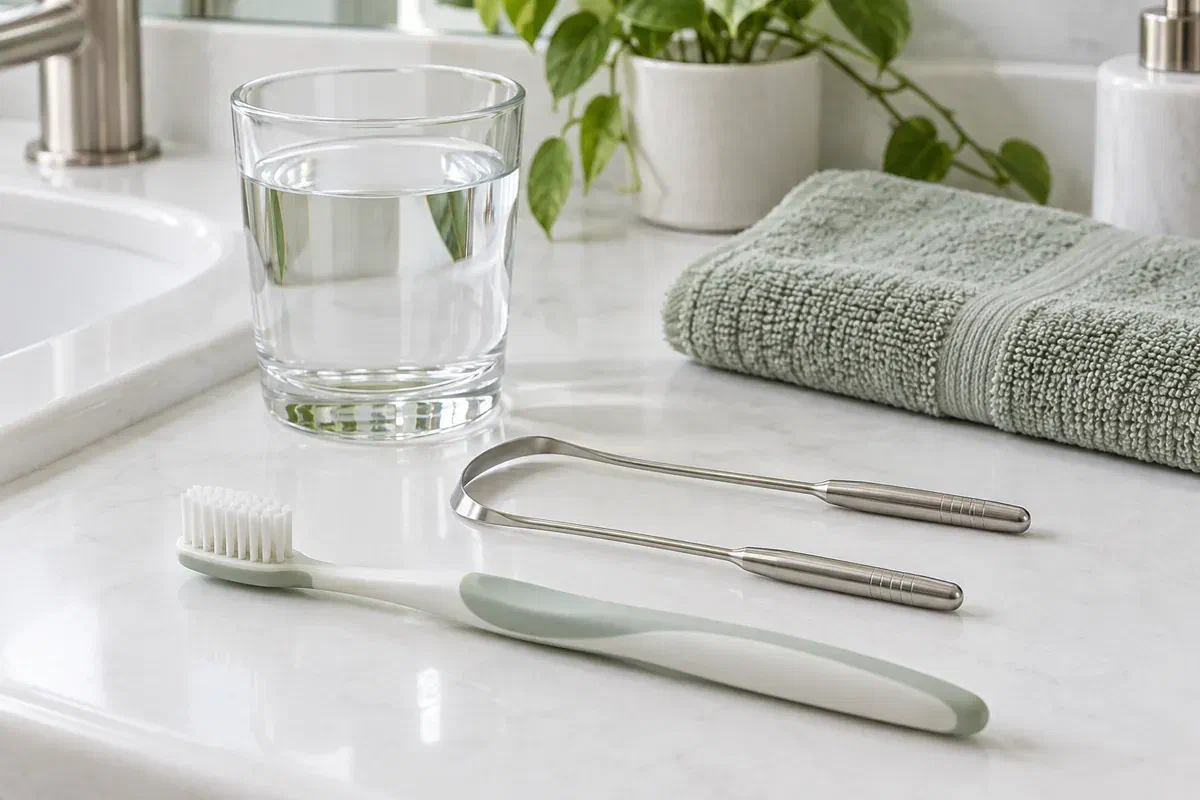
Toothbrush, tongue cleaner, and glass of water illustrating everyday oral care
Things that often show up together

Bleeding, packing, dryness, appliances

Tell us if the odour is worse when you wake, after you eat, or constant. Other changes in the mouth help us decide where to look first, although no single change is proof of the source.

Gums that bleed or feel puffy

Inflamed gums and plaque that is hard to remove can keep an odour going, and so can spaces where food repeatedly wedges. Show us where flossing hurts or bleeds. We measure and examine the gums, teeth and restorations instead of recommending a stronger toothpaste.

A mouth that is often dry

Reduced saliva can affect breath and gum comfort. Mention thirst, stickiness, mouth breathing and any change in medicines. Since dryness has various causes, any suggestion should reflect your full history rather than replace it.

Dentures or partials to check

A removable appliance needs a routine of its own, and one that holds debris or rubs the gums should be assessed. Bring yours along with a description of how you clean it. We check the tissues it rests on as well as the appliance.

Gums that are swollen, a painful tooth, discharge or a sudden bad taste may need prompt care. Call us rather than covering it with mouthwash until a routine appointment.

Benefits of a gum-aware assessment

Know whether your gums are involved

It is common to try a stronger rinse before considering the gums. An assessment ties advice to what we observe, perhaps inflammation along certain teeth, a cleaning blind spot, an appliance problem or dryness. With that link made, you can see why a step is recommended and how we will tell whether it is working.

Breath concerns can also affect confidence. If you have started keeping your distance from people or checking your breath often, tell us. We will listen with respect, including when the gums look healthy and the cause seems to lie elsewhere, or when another kind of assessment is the right move.

A clear picture of gum health

We check teeth, gums and soft tissues for issues no mint will resolve. You hear our findings before any treatment is suggested, so a breath concern does not become a reason for extensive dentistry by default.

Brushing and flossing coaching

If your technique is missing the gum line, ask us to show you with a brush and interdental aid you can use. Learning to clean one inflamed area properly often helps more than any new product.

A follow-up to see the change

We agree when to check the gums again and what would prompt a different kind of assessment. Persistent concerns deserve a clear next step rather than months of uncertainty.

From first chat to follow-up

What happens, in order

Bring your list of medicines and the products you clean with. If you notice the odour more at certain times, mention it. Ask at booking if any preparation is needed.

  1. Telling us what you have noticed

    We talk about when the concern started, whether it is steady and what seems to affect it. Bleeding, smoking, dryness, appliance use and relevant health symptoms may come up. Let us know which products you have used and if any stung.

  2. Examining gums, teeth and tongue

    We assess the gums, teeth, tongue and soft tissues for plaque, inflammation, decay, food traps and appliance concerns. Further investigations, such as X-rays, are recommended only when they would help answer a clinical question.

  3. Explaining what needs care

    We go through the findings and any care for gum inflammation, periodontal disease, a damaged tooth or another problem. Home advice and possible dry-mouth support are tailored. Ask about fees and whether a treatment is aimed at the breath concern or something else.

  4. Reviewing how the gums respond

    At follow-up we compare the gums and the odour with the first visit. If oral care does not explain the concern, or other health symptoms are present, we may suggest seeing your physician. We do not promise a result we cannot guarantee.

Daily gum care

Gentle cleaning, every single day

Follow the routine we work out together. If a product burns, dries the mouth or is hard to use, tell us and we will look for an alternative.

Reach the gum line

Brush twice a day with fluoride toothpaste, angling toward the gums, and clean between teeth daily with suitable tools. Light tongue cleaning may be suggested. Bleeding from inflamed gums often lessens as cleaning improves, but do not scrub harder to force it.

Clean appliances separately

Wash dentures or removable appliances using the method suited to their material, and follow the recommended wear schedule. Ask about storage and cleaning products. Avoid household cleaners, which may damage the appliance.

Mention dryness and medicine changes

Let us know if dry mouth continues and talk with your prescriber about any medicine concerns. Do not stop a prescription yourself. Water can help comfort, but persistent dryness needs its cause and its effect on teeth and gums looked at.

Patient information: NHS — caring for the mouth when breath is a concern · NIDCR — dry mouth

Depending on the findings

Where care might go from here

Treatment targets the contributor we can identify whenever possible. Ask how a recommendation relates to the examination and what will happen if the concern continues.

If plaque or gum disease contributes

Professional gum care and home support

You may be offered a tailored cleaning routine and appropriate professional gum care. What is needed depends on the depth and extent of gum problems. A routine cleaning differs from treatment for established periodontitis, which can involve several appointments.

If a tooth or appliance needs attention

Dealing with a local problem

Decay, a food-trapping restoration or an appliance that rubs may need specific care. Discuss the diagnosis, alternatives and likely benefit. Correcting one issue is not a promise that all sources of odour are gone.

If the cause is wider or unclear

Comfort care or further assessment

Dry-mouth care, a product with a particular role, or a medical opinion may be suitable. Cosmetic rinses only change breath temporarily and do not treat gum disease. We will tell you whether a product is aimed at comfort, prevention or a diagnosed condition.

Patient information: American Dental Association — mouthrinse and its limitations

Questions from Georgetown

Gums, odour and what to expect

Explain the worry in your own words. Even if you cannot tell whether the gums, teeth or something else are involved, the conversation and examination are where we begin.

(905) 876-4488
Can gum disease cause bad breath?
It can be a contributor. Plaque and inflamed gums, and the pockets that can form with periodontal disease, may hold bacteria linked with odour. Not every breath concern comes from the gums, so the examination looks at the whole mouth.
My gums bleed when I floss. Should I stop flossing?
Usually not. Bleeding often reflects inflammation, and gentle, regular cleaning between teeth tends to help. Persistent bleeding should be checked. Ask us to show you a technique and tool that suit your gums.
Is a regular cleaning enough to fix breath odour?
It depends on the findings. A routine cleaning may help if plaque and tartar are the main issue. Established gum disease may need more involved treatment, and other causes such as dryness or a food trap need their own care.
Will a stronger mouthwash help my gums and breath?
Not reliably on its own. Some rinses mask odour, and some have specific therapeutic uses for a limited time. Neither replaces professional assessment and daily cleaning. Ask which product, if any, fits your situation.
Could smoking be affecting my gums and breath?
Smoking is linked with both breath odour and gum disease, and it can make gum problems harder to spot because bleeding may be reduced. Tell us what you use. The information helps us interpret what we see without judgement.
How often will I need to come in from Georgetown for gum treatment?
That depends on what the assessment shows. We will explain the number and spacing of visits so you can plan around work and family. Weekday hours run Monday to Thursday until 7pm, with Friday to Sunday by appointment.
Breath assessments for Georgetown

Book the check your gums are asking for

Come to our Bronte Street practice for a private conversation and a careful look at your gums, teeth and tongue. Bring your questions, your medicine list and the products you use. We will explain the findings and agree a practical next step.

Phone us for significant pain, swelling or a sudden change that worries you. Online requests are for non-urgent visits.

Visit Milton Dental Clinic
Unit 1, 342 Bronte St. S, Milton, ON L9T 5B7
Get directions Clinic hours
Monday–Thursday
11am–7pm
Friday–Sunday
By appointment only

Areas we serve

  • Milton
  • Oakville
  • Mississauga
  • Georgetown
  • Halton Hills
  • Acton
  • Campbellville
  • Brampton
  • Burlington
  • Puslinch
  • Rockwood
  • Erin
  • Caledon
  • Etobicoke
  • Old Milton
  • Bronte Meadows
  • Timberlea
  • Dorset Park
  • Dempsey
  • Clarke
  • Beaty
  • Coates
  • Harrison
  • Scott
  • Willmott
  • Ford
  • Bowes
  • Cobden
  • Walker
  • Mountain View
  • Milton Heights
  • Hawthorne Village
  • Valley View
  • Fallingbrook
  • Nassagaweya
  • Trafalgar
  • Esquesing
  • Nelson
  • Brookville
  • Moffat
  • Glen Williams
  • Norval
  • Limehouse
  • Stewarttown
  • Ashgrove
  • Hornby
  • Silver Creek
  • Speyside
  • Scotch Block
  • North Oakville
  • River Oaks
  • Glen Abbey
  • West Oak Trails
  • Palermo
  • Bronte Creek
  • College Park
  • Joshua Creek
  • Uptown Core
  • Preserve
  • Iroquois Ridge
  • Lisgar
  • Meadowvale
  • Meadowvale Village
  • Churchill Meadows
  • Erin Mills
  • Central Erin Mills
  • Streetsville
  • East Credit
  • Creditview
  • Heartland
  • Sheridan
  • Mount Pleasant
  • Credit Valley
  • Huttonville
  • Churchville
  • Springbrook
  • Northwest Brampton
  • Bram West
  • Fletcher's Meadow
  • Fletcher's Creek South
  • Alton Village
  • Orchard
  • Millcroft
  • Headon Forest
  • Tansley
  • Brant Hills
  • Tyandaga
  • Kilbride
  • Lowville
  • Aberfoyle
  • Morriston
  • Arkell
  • Hillsburgh
  • Freelton
  • Carlisle
  • Waterdown
  • Flamborough
  • Mountsberg

How can we help?

Milton Dental Clinic

Have a question about your smile? Choose the option that works best for you.

For urgent dental concerns, please call.
Messages are reviewed during clinic hours.