

Illustrative private dental conversation about an oral health concern
General & Family Dentistry

Bad Breath Assessment and Treatment in Old Milton

Years of fillings, crowns or a partial denture can change how a mouth stays clean. If an unpleasant odour has settled in, an unhurried assessment near Old Milton can sort out which oral factors matter and what care makes sense.

Old Milton breath assessments

Older dental work, a new worry

A mouth carries its history. A bridge placed twenty years ago, a crown with a slightly open edge, a partial plate that clicks in each morning: each adds a place where debris can settle. When breath begins to bother you, or someone you live with, it is a perfectly reasonable thing to bring to a dentist, with or without any discomfort.

Halitosis seldom comes from a single place. Gum inflammation, a coated tongue, reduced saliva, food lodged around restorations and appliance hygiene can all contribute, alone or together. A whiff after garlic soup passes; an odour that returns no matter how carefully you brush is worth investigating. The right treatment depends on what turns up during the examination.

We begin by listening. You can tell us what has been noticed, roughly how long it has gone on and which products have been tried, in whatever order comes to mind. Then we examine the mouth for oral sources and explain them. Should something suggest a medical opinion would help, we raise it calmly, without assuming a digestive cause.

Arrange your breath assessment
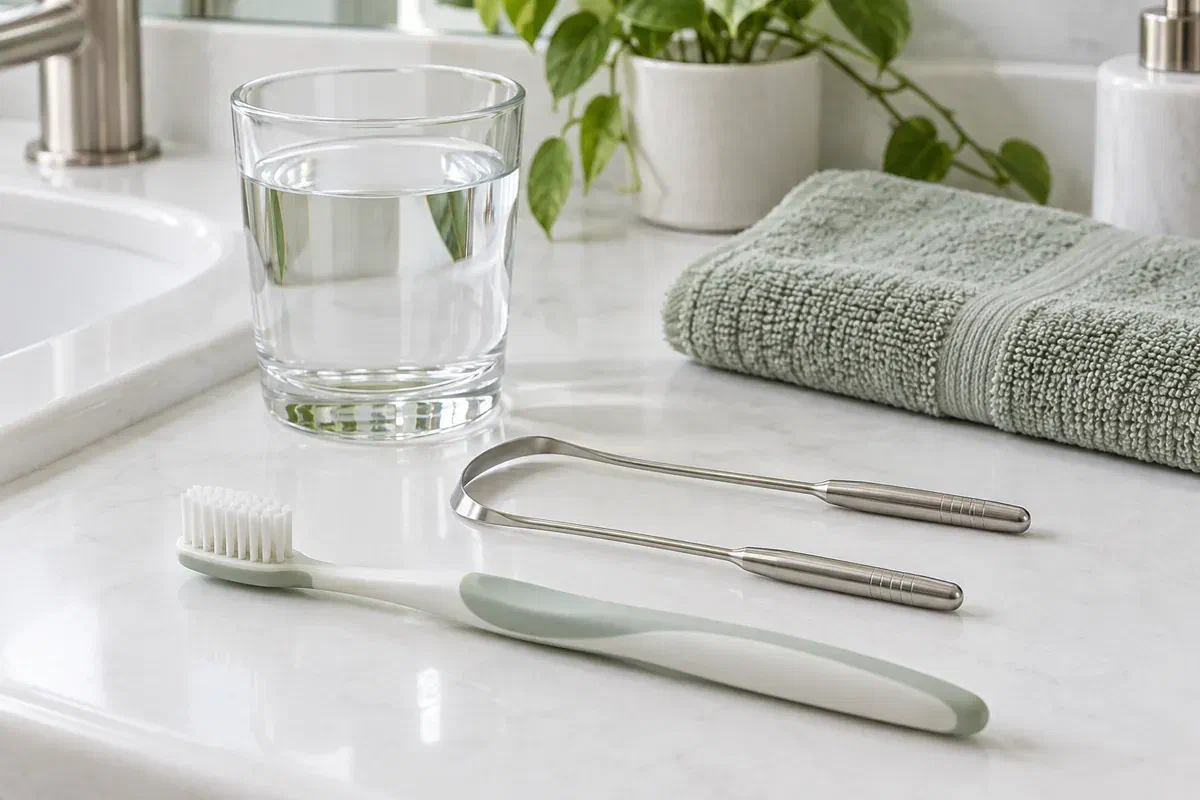
Toothbrush, tongue cleaner, and glass of water illustrating everyday oral care
Signs that go along with it

What else has changed in your mouth?

Timing is useful: is it worse on waking, after a meal, or steady from morning to night? Other changes give us clues, although none of them on its own settles where the odour starts.

Tender gums or trapped food

Plaque and gum inflammation, especially around older fillings, bridges and crowns, can keep an odour going. Show us where floss catches or where food packs in after meals. We examine the gum line, the teeth and each restoration rather than handing you a stronger paste.

Less saliva than before

A dry mouth can affect breath, comfort and the teeth themselves. Mention a sticky tongue, waking thirsty, breathing through the mouth, or any new prescription. Several things can cause dryness, so suggestions are matched to your history rather than offered as a quick swap.

A plate, partial or full denture

Appliances collect debris and need a routine of their own, and an older denture may no longer sit as snugly as it once did. Bring yours and describe how you clean and store it. We check the gums and tissues beneath as carefully as the appliance.

If a bad taste comes with swelling, sharp tooth pain or discharge, it may need prompt care. Please call rather than relying on fresheners until a routine visit comes up.

What you gain from a proper look

Advice tied to a real finding

It is common to work through rinses, lozenges and new toothpastes before saying anything to a dentist. What changes with an assessment is that each suggestion is connected to something specific, perhaps a ledge on an old filling, irritated gums, a loose-fitting partial or a dry mouth. You will know why a step is recommended and how we will judge whether it helped.

There is also room to describe the effect on everyday life. Some people stop leaning in to talk with grandchildren, or check their breath constantly. Tell us if that is happening. We take the concern seriously, even when the mouth looks healthy or when another type of assessment is the sensible next move.

Restorations and tissues reviewed

We look over teeth, gums, soft tissues and the margins of existing dental work for problems a rinse would never touch. You hear what we found before any treatment is offered, and a breath concern is not treated as a reason for extensive work.

Cleaning shown, not just described

Ask us to demonstrate how to clean under a bridge or around a crown with aids your hands can manage comfortably. One reliable technique for a tricky area tends to help more than a basket of unfamiliar products.

An agreed review point

We decide together when to check progress and what would make another kind of assessment worthwhile. That way a lingering problem has a clear path forward, rather than an open-ended loop of trying something new each month.

Step by step

Listening, examining, explaining, reviewing

Bring your medication list and the products you use, along with any denture or appliance. If the odour follows a pattern, describe it. When you book, check whether there is anything to do beforehand.

  1. Your account, in private

    Tell us roughly when you became aware of it, whether it lingers all day, and what, if anything, seems to make a difference. Health symptoms, tobacco use, dryness and appliance wear may be discussed. Tell us which products you have used and whether any of them made your mouth sore.

  2. A thorough examination

    Teeth, gums, tongue and soft tissues are checked for plaque, inflammation, decay, food traps and wear on existing restorations or appliances. Further tests are suggested only when they would help answer a specific question, never as a routine extra.

  3. What needs attention first

    We explain the findings and any care that may be needed for gum disease, a cracked or decayed tooth, or a failing restoration. Home care and dry-mouth support are adapted to you. You are welcome to ask about fees and whether a recommendation targets the odour or another issue.

  4. Checking in afterwards

    At follow-up we compare what has improved with what still troubles you. If dental care does not explain the concern, or there are wider health symptoms, we may suggest seeing your family doctor. We are candid about uncertainty and do not promise a result.

Looking after things at home

Gentle, steady habits

Follow the routine we work out together. If a product burns, dries your mouth or is difficult with your grip or eyesight, tell us so we can suggest something else.

Brush and clean between, daily

Use a fluoride toothpaste twice a day and clean between teeth and under bridges with aids that suit your hands. We may show you how to clean the tongue lightly. Pressing harder or scraping until things bleed does more harm than good.

A separate routine for the denture

Clean your denture or partial with a method suited to its material and take it out as advised. Ask us about overnight storage and soaking products if unsure. Bleach and household cleaners can damage it and irritate your mouth.

Mention dryness and new medicines

Let us know if your mouth stays dry, and discuss medicines with the prescriber rather than stopping them yourself. Frequent sips of water and saliva-supporting products may help comfort, but long-standing dryness needs its cause and its effect on teeth reviewed.

Patient information: NHS — caring for the mouth when breath is a concern · NIDCR — dry mouth

Possible paths of care

Matched to what we find

Treatment aims at a contributor we have actually identified, where that is possible. Ask how each recommendation relates to your examination and what we will do if the problem lingers.

Where plaque or gum disease plays a part

Hygiene support and gum treatment

A cleaning plan suited to your mouth and appropriate professional gum care may be advised. The extent depends on how healthy the tissues are. A routine cleaning is not the same thing as treatment for established periodontal disease, which may need separate visits.

Where a local problem is found

Attention to one tooth or appliance

Decay, a restoration that collects food, or a denture that needs adjustment may need specific work. Ask about the diagnosis, other options and what benefit to expect. Correcting one finding cannot be promised to remove every possible source of odour.

Where the picture is wider or unclear

Comfort care or a medical opinion

Dry-mouth support, a product chosen for a defined reason, or a referral to your physician may be appropriate. Cosmetic rinses mask odour briefly without treating disease. Ask whether something is for comfort, for prevention, or for a diagnosed condition.

Patient information: American Dental Association — mouthrinse and its limitations

Common questions

Nothing here is too awkward to ask

Describe the concern however feels natural to you. We can start with your history and an examination even if you cannot tell whether teeth, gums, an appliance or something else is responsible.

(905) 876-4488
Can an old crown or bridge be a source of bad breath?
It can. Over time, the edges of a restoration may wear or open slightly, and food can collect beneath a bridge if it is hard to clean. We check these areas closely and explain whether a cleaning change, repair or replacement is worth discussing.
Should I take my denture out at night to help my breath?
Many dentures are meant to come out overnight so the gums can rest and the appliance can be cleaned, but follow the advice given for yours. Bring it to the visit and we can review fit, cleanliness and a material-appropriate routine.
Do strong mouthwashes take care of a breath problem that keeps returning?
Not dependably. Some rinses only mask odour for a while, and some serve a specific clinical purpose. Neither replaces an examination or good daily cleaning. Ask whether a particular rinse suits your findings and for how long to use it.
Is it worth seeing a dentist before my family doctor?
For many people, yes, because oral sources such as the gums, tongue, dryness and appliances are common and can be checked at a dental visit. If we find no clear oral cause or notice wider symptoms, we will say so and suggest a medical opinion.
My prescription seems to dry my mouth out. What should I do?
Keep taking it as prescribed and talk to the doctor or pharmacist who manages it. Bring a current list to your dental visit. We can support oral comfort and protect the teeth while the prescriber decides whether any change is appropriate.
How easy is it to get to the clinic from Old Milton?
Our Bronte Street practice is close to Milton’s historic downtown, so a visit can fit around errands or other appointments. Weekday hours are Monday to Thursday, 11am to 7pm, and Friday to Sunday are by appointment.
Breath care for Old Milton

Talk it through with us

Book a visit at our Bronte Street practice to discuss a breath concern and have your teeth, gums and any appliances checked. Bring a list of your medicines and products, plus any questions. We will share what we find and settle on a practical next step.

Please call for significant pain, swelling or a sudden worrying change. Online booking requests are for non-urgent visits.

Visit Milton Dental Clinic
Unit 1, 342 Bronte St. S, Milton, ON L9T 5B7
Get directions Clinic hours
Monday–Thursday
11am–7pm
Friday–Sunday
By appointment only

Areas we serve

  • Milton
  • Oakville
  • Mississauga
  • Georgetown
  • Halton Hills
  • Acton
  • Campbellville
  • Brampton
  • Burlington
  • Puslinch
  • Rockwood
  • Erin
  • Caledon
  • Etobicoke
  • Old Milton
  • Bronte Meadows
  • Timberlea
  • Dorset Park
  • Dempsey
  • Clarke
  • Beaty
  • Coates
  • Harrison
  • Scott
  • Willmott
  • Ford
  • Bowes
  • Cobden
  • Walker
  • Mountain View
  • Milton Heights
  • Hawthorne Village
  • Valley View
  • Fallingbrook
  • Nassagaweya
  • Trafalgar
  • Esquesing
  • Nelson
  • Brookville
  • Moffat
  • Glen Williams
  • Norval
  • Limehouse
  • Stewarttown
  • Ashgrove
  • Hornby
  • Silver Creek
  • Speyside
  • Scotch Block
  • North Oakville
  • River Oaks
  • Glen Abbey
  • West Oak Trails
  • Palermo
  • Bronte Creek
  • College Park
  • Joshua Creek
  • Uptown Core
  • Preserve
  • Iroquois Ridge
  • Lisgar
  • Meadowvale
  • Meadowvale Village
  • Churchill Meadows
  • Erin Mills
  • Central Erin Mills
  • Streetsville
  • East Credit
  • Creditview
  • Heartland
  • Sheridan
  • Mount Pleasant
  • Credit Valley
  • Huttonville
  • Churchville
  • Springbrook
  • Northwest Brampton
  • Bram West
  • Fletcher's Meadow
  • Fletcher's Creek South
  • Alton Village
  • Orchard
  • Millcroft
  • Headon Forest
  • Tansley
  • Brant Hills
  • Tyandaga
  • Kilbride
  • Lowville
  • Aberfoyle
  • Morriston
  • Arkell
  • Hillsburgh
  • Freelton
  • Carlisle
  • Waterdown
  • Flamborough
  • Mountsberg

How can we help?

Milton Dental Clinic

Have a question about your smile? Choose the option that works best for you.

For urgent dental concerns, please call.
Messages are reviewed during clinic hours.