

Illustrative dental consultation with an older patient and her chosen support person
General & Family Dentistry

Caregiver-Assisted Dental Visits in Georgetown

Tremor, stiffness or weakness can turn brushing into a struggle. Plan a dental visit from Georgetown where your partner or helper learns alongside you, and you stay in charge of your care.

Grip, tremor and daily brushing

When the toothbrush won’t stay steady

Conditions like Parkinson’s, arthritis or the after-effects of a stroke can make a simple task frustrating. The brush slips, the back teeth get missed, and flossing gets quietly abandoned. In many Georgetown homes, a husband, wife or grown child starts stepping in. A dental visit with that person present can help both of you work out a routine that actually suits your hands.

Help might involve far more than brushing. Your companion may drive, keep track of medication changes, help with steps or a walker, or remind you of advice later. Tell us which pieces you share, along with anything about swallowing, posture, sitting time or health that affects treatment. We can then discuss what is possible here, or whether another provider would suit you better.

Your choices lead. A partner’s observations are welcome, particularly about changes you may not notice yourself, but they add to your voice rather than replace it. Advice should reflect your abilities and wishes, not a general idea of what someone with your condition can or cannot do.

Plan a visit with your helper
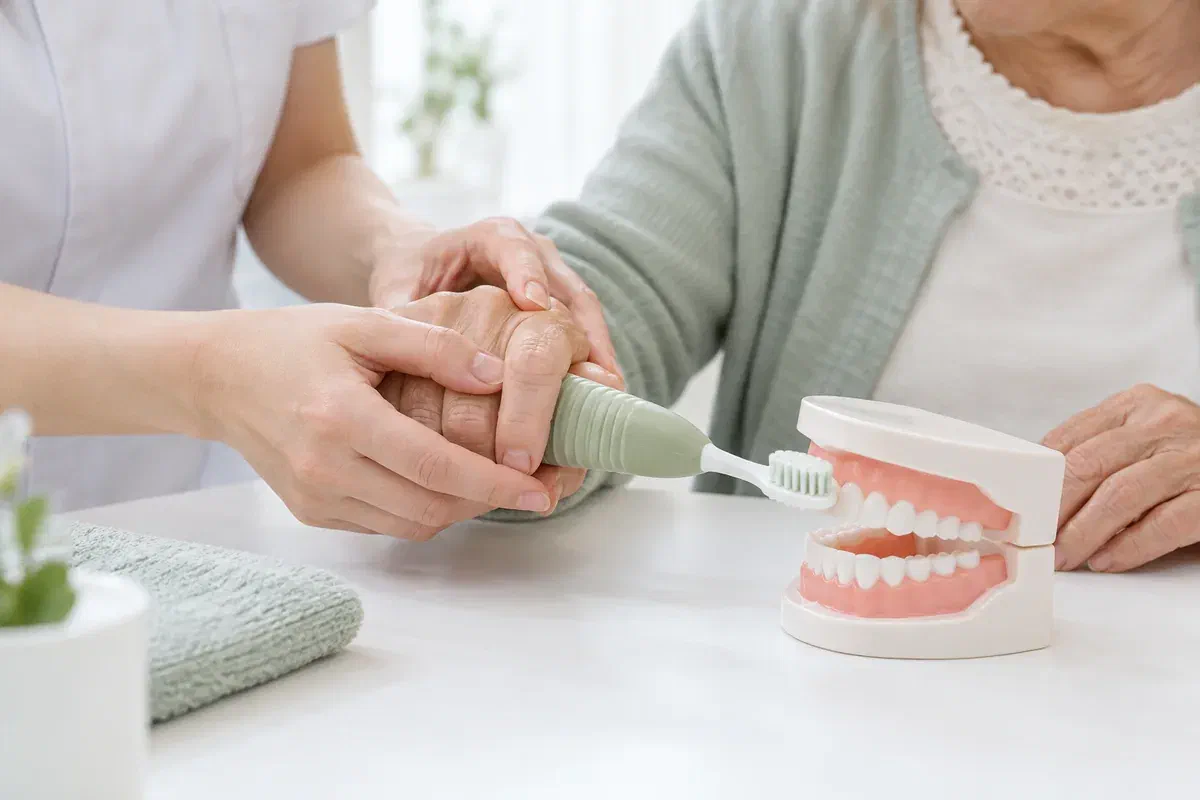
Illustrative practice with a larger toothbrush handle and a dental model
Tell us what is hard right now

Which part of the day does mouth care fall apart?

People with the same diagnosis can have very different days. Describe what has helped at past appointments and the moments that tend to be hardest, such as reclining or holding still.

Speech and communication

Some conditions soften the voice, slow speech or make expressions harder to read. Mention hearing or vision needs and whether extra time helps. Let us know how your companion usually supports you, so you still get the chance to speak for yourself.

Stiffness, tremor and seated comfort

Explain whether lying back is difficult, whether movement varies through the day, and how long you can sit comfortably. Ask us to confirm arrangements rather than assuming particular equipment or help with transfers. These details may change visit length or suggest a different setting.

What your helper notices

A partner might see food left around the gums, bleeding when brushing, a denture that rubs, or coughing during meals. Record what you both notice and when. These changes deserve a dental look rather than being dismissed as part of the condition.

Please phone about intense pain, swelling, difficulty eating or drinking, or any sudden change that seems worrying. Choosing a gentle introductory approach should never postpone urgent care.

Two sets of hands, one plan

Practical changes that keep you brushing

When the person helping at home is in the room, the conversation gets specific quickly. Which grip slips? Does the tremor settle at certain times? Is the partial denture coming out at night or staying in? Answers like these let the dental team suggest changes that fit your bathroom and your hands, instead of a routine designed for someone with full dexterity.

Decide early how your companion should take part. You might want them close by the whole time, or only for the practical demonstration at the end. Put that on the booking. As your needs change over months or years, the arrangement can change with them.

Patient information: NIDCR — oral health support and individualized care

Up-to-date health details

Bring a current medication list and any specialist advice related to dental care, swallowing or movement. Some medications can affect the mouth, so accuracy matters. Flag anything that should be confirmed with your neurologist, physician or pharmacist.

Tools adapted for tremor or weak grip

Ask about thicker handles, angled brushes, powered toothbrushes or floss holders. One person may stay independent with a modified grip; another benefits from a helper finishing the job. The recommendation should reflect what you can comfortably do.

Clear instructions for both of you

With your permission, agree who receives information and how it is passed on. Before leaving, confirm the next visit, warning signs and home care so you and your helper hear the same plan.

Getting ready

Book around your better hours.

If the visit relies on specific support, contact us before booking. We can discuss the purpose of the appointment, what to bring and any needs that require planning, including timing that suits you.

  1. Tell us your priorities

    Share the dental concern, what makes communication easier and the support your companion will give. Let us know who is coming. Mention movement, posture and medical needs so the appointment setting can be reviewed before you arrive.

  2. Keep decisions with you

    Options are explained to you directly and the dentist follows the appropriate consent process. A partner’s presence does not mean they automatically decide for you. Where a substitute decision-maker is ever needed, the right person and their documents have to be established.

  3. Allow for pauses

    Every step is described before it begins. Agree a signal to stop, talk about neck or back positioning, and let us know if stiffness or tremor is building. Some visits concentrate on assessment, with treatment booked for a separate day.

  4. Finish on the same page

    We cover findings, options, fees and follow-up with you and any authorized support person. Ask about home-care steps until they make sense. Decide who books next and how to reach us if a new problem appears.

Brushing day to day

Less struggle, more independence

Support might mean setting out the brush, guiding your hand, or doing the brushing. Ask for advice built around your own dexterity, posture and swallowing, not a routine borrowed from someone else.

Do what you can, share the rest

Your helper should explain what they are about to do and let you handle the parts you manage well. You might brush the front teeth while they finish the hard-to-reach areas. If care starts to hurt or upset you, stop and ask us why.

Set up for stability

Sitting down to brush, resting an elbow on the counter, or using a powered brush may help with tremor. Ask which aids suit your grip and coordination. A helper should never put fingers between your teeth or force your mouth open.

Track the changes

Write down bleeding, swelling, foods you avoid, denture issues or a shift in how comfortable care feels, with dates. Specific notes give the team more to go on than a general feeling that brushing has become harder.

Possible formats

Pick the setup that fits today’s needs.

Your next step depends on the dental concern and the help involved. Ask what our office can offer safely and comfortably, and when a referral to another provider would be wiser.

Practical help and recall

A visit alongside your partner

Your partner can fill in history or note advice while you make the decisions. Agree when they should step in, and say if you want some of the conversation to happen privately.

When stamina is limited

Shorter or staged appointments

If clinically appropriate, shorter visits or care split into stages may be discussed. Everyone should understand what each visit aims to do. Urgent problems still need prompt assessment, even if routine care is spread out.

When needs outgrow this office

Referral for added resources

Certain mobility, medical or treatment needs may be better met in a setting with different facilities. We can talk about referral and staying connected. A companion at your side does not change what each office is able to offer.

Questions about dexterity and support

Everyday answers for you and your helper

Patients, spouses and support workers often ask how to prepare. What you choose should reflect your own preferences and the reason you are coming in.

(905) 876-4488
Would an electric toothbrush help with a hand tremor?
It may help some people, since the brush head does more of the work. Others find the weight or vibration difficult. Ask the team to look at your grip and suggest options, and bring your current brush so the advice can build on it.
Is there a better time of day to book if my stiffness changes?
Think about when you usually feel most comfortable and mobile, then ask what appointment times are available. Our weekday hours run late morning to evening, with weekend times by appointment. Mention it when booking so pacing can be considered.
My medications seem to make my mouth dry. Should I mention that?
Yes. A dry mouth can affect comfort, dentures and the risk of decay. Bring a current medication list and describe what you notice. Do not change any medication on your own; questions about that belong with your prescriber.
Can my wife come in only for the brushing demonstration?
Yes, if that is what you prefer. Let us know when you book. You can speak with the dentist on your own and invite her in when it is time to go over home care. You can also change the plan on the day.
What happens if my tremor makes it hard to stay still during the exam?
Tell the team. We can pause, adjust positioning or slow down, and talk about the safest next step if continuing is not practical. That may mean a shorter assessment, another visit or a referral. Urgent symptoms still need a timely plan.
Is there anything to sort out before coming in from Georgetown?
Call ahead to confirm access and support arrangements, so nothing needs rearranging once you arrive. Bring your medication list and any specialist letters, and leave enough time that the trip itself does not leave you tired before the visit begins.
Coming from Georgetown

Let’s make brushing manageable again.

Ring our Bronte Street practice and tell us about the dental concern, the support you rely on and when in the day you feel best. Sharing communication or access needs early helps us prepare and explain what to bring.

Talk to us by phone about particular access or support needs. A web request is not confirmation of equipment, transfer help or an appointment time.

Visit Milton Dental Clinic
Unit 1, 342 Bronte St. S, Milton, ON L9T 5B7
Get directions Clinic hours
Monday–Thursday
11am–7pm
Friday–Sunday
By appointment only

Areas we serve

  • Milton
  • Oakville
  • Mississauga
  • Georgetown
  • Halton Hills
  • Acton
  • Campbellville
  • Brampton
  • Burlington
  • Puslinch
  • Rockwood
  • Erin
  • Caledon
  • Etobicoke
  • Old Milton
  • Bronte Meadows
  • Timberlea
  • Dorset Park
  • Dempsey
  • Clarke
  • Beaty
  • Coates
  • Harrison
  • Scott
  • Willmott
  • Ford
  • Bowes
  • Cobden
  • Walker
  • Mountain View
  • Milton Heights
  • Hawthorne Village
  • Valley View
  • Fallingbrook
  • Nassagaweya
  • Trafalgar
  • Esquesing
  • Nelson
  • Brookville
  • Moffat
  • Glen Williams
  • Norval
  • Limehouse
  • Stewarttown
  • Ashgrove
  • Hornby
  • Silver Creek
  • Speyside
  • Scotch Block
  • North Oakville
  • River Oaks
  • Glen Abbey
  • West Oak Trails
  • Palermo
  • Bronte Creek
  • College Park
  • Joshua Creek
  • Uptown Core
  • Preserve
  • Iroquois Ridge
  • Lisgar
  • Meadowvale
  • Meadowvale Village
  • Churchill Meadows
  • Erin Mills
  • Central Erin Mills
  • Streetsville
  • East Credit
  • Creditview
  • Heartland
  • Sheridan
  • Mount Pleasant
  • Credit Valley
  • Huttonville
  • Churchville
  • Springbrook
  • Northwest Brampton
  • Bram West
  • Fletcher's Meadow
  • Fletcher's Creek South
  • Alton Village
  • Orchard
  • Millcroft
  • Headon Forest
  • Tansley
  • Brant Hills
  • Tyandaga
  • Kilbride
  • Lowville
  • Aberfoyle
  • Morriston
  • Arkell
  • Hillsburgh
  • Freelton
  • Carlisle
  • Waterdown
  • Flamborough
  • Mountsberg

How can we help?

Milton Dental Clinic

Have a question about your smile? Choose the option that works best for you.

For urgent dental concerns, please call.
Messages are reviewed during clinic hours.