

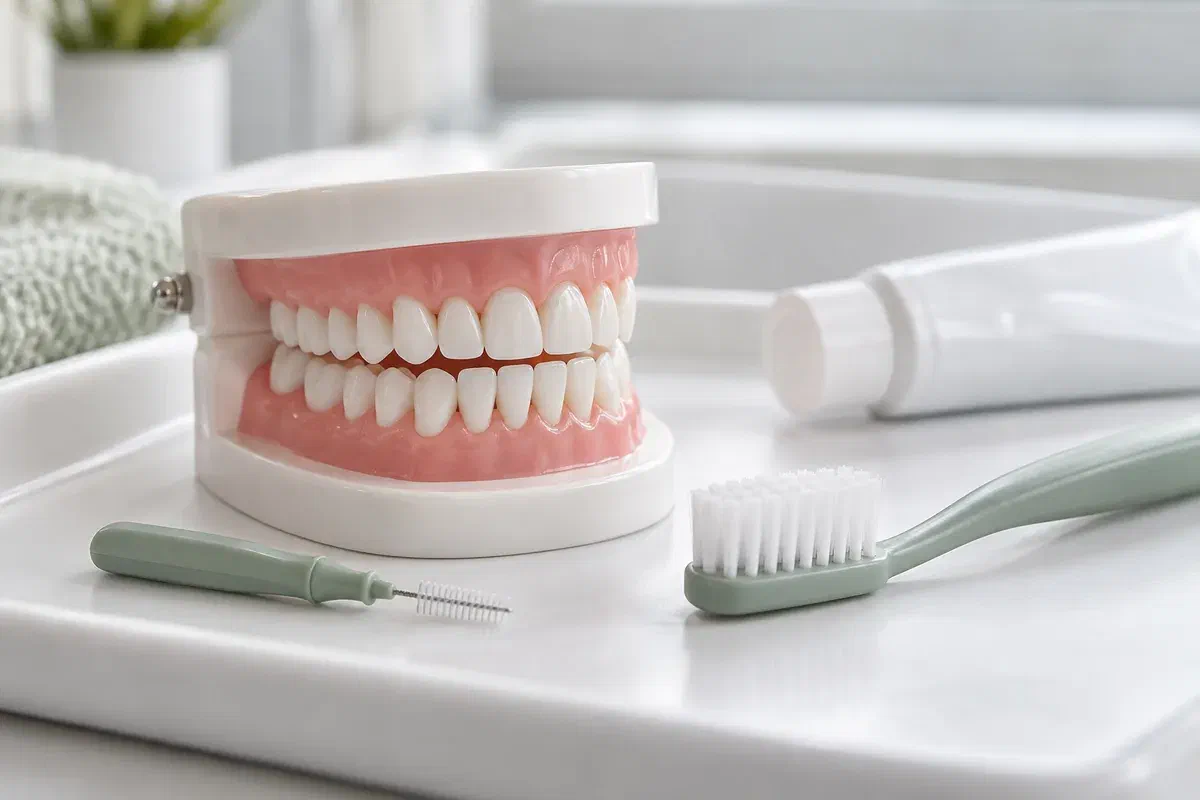
Illustrative dental discussion using a toothbrush and teaching model
General & Family Dentistry

Cavity Prevention in Acton

Floss that shreds, a gap that always traps food, brackets that make brushing slow: many cavities start where cleaning is hardest. From Acton, you can bring your tools and let us help you reach those spots, with fluoride and sealants where useful.

Acton · the spots brushes miss

Decay likes the places you can’t see

Run your tongue along the inside of your lower front teeth, then think about the tight contact between two back molars. Those are the areas a toothbrush handles least well, and they are where cavities often begin. Cavity prevention puts the emphasis on reaching them, using fluoride sensibly, keeping sugar to fewer moments in the day, and examining teeth regularly so trouble is caught while small.

The chemistry is straightforward. Plaque left in a gap feeds on sugar and produces acid right against the enamel, and with frequent exposure the surface loses minerals. Saliva and fluoride help repair the early losses if they are given time. A weakened spot is still different from a hole, and the examination determines whether prevention, monitoring or a filling is the right response. Better cleaning does not replace a repair a tooth already needs.

When you come in from Acton, pack the floss, picks or brushes you actually use, even the ones you have given up on. Show us where food catches, where floss tears, and where your gums bleed. We will look at technique and tool size together, suggest a realistic routine, and explain whether any professional preventive care would help.

Get help with hard-to-clean areas
Dental model, soft toothbrush, and interdental brush illustrating preventive care
Worth checking

Food traps, shredded floss and other clues

You can bring up prevention at any appointment. Changes in your teeth, gums, health or dental work, including new braces or a recent filling, may mean the way you clean needs to change.

New cavities between teeth

Decay found between teeth, especially more than once, points us toward the gaps your routine may be missing. We look at the pattern together, including recent findings and when sweet foods and drinks happen, so the cause becomes clearer without anyone feeling blamed.

Dryness in the mouth

With less saliva, plaque in tight spaces is rinsed away more slowly, so ongoing dryness matters. Mention any medicines or treatments that started around the same time. Keep taking prescriptions as directed; the dental and medical sides may need joint advice.

Crowding, braces and receding gums

Overlapping teeth, brackets and wires, exposed root surfaces, a bridge or stiff fingers can each make a standard routine fall short. Show us the problem area and the tools you use now. The right size of interdental brush or a threader may solve it.

Decay between teeth is often invisible and painless until it is larger. Keep your recommended examinations, and book sooner if floss keeps catching on one spot, a filling feels rough or broken, or a tooth aches. Products cannot rebuild lost structure.

What better cleaning achieves

Reach more, worry less

The point of prevention is to make new cavities less likely and, where clinically appropriate, to let early changes recover without drilling. It does not guarantee you will avoid every filling. What it does is identify the areas that matter most for you, explain how to reach them, and give us a way to see at later visits whether that has helped.

Dental work changes the landscape. A filling or crown repairs one problem, but it can also create new edges and contacts that need careful cleaning, and the surrounding teeth are still exposed. Ask how your current restorations should change your routine, and which signs would justify booking before your next planned examination.

Patient information: NIDCR — the tooth decay process

Target the trouble spots

We start with the specific areas linked to your findings, perhaps one tight contact, the back of the last molar, or around an orthodontic wire. Knowing why each area matters makes it easier to give it a few extra seconds every day.

The right tool, the right size

Interdental brushes come in many sizes, and floss, tape, picks and water flossers each suit different mouths. Bring what you have and we will help you choose. A higher price or a stronger mint flavour is not a sign of better cleaning.

Rechecks that track progress

At examinations we look again at the gaps and gumline and follow anything noted previously. Ask which teeth we are keeping an eye on and when they will be examined again. Your recall interval should come from your findings.

Our process

Show us your routine, then we’ll refine it

Start by explaining what you do now and where it breaks down. Time pressure, braces appointments, dexterity, where you buy supplies and the cost of recommended care are all worth mentioning.

  1. Assess teeth, gums and habits

    We examine your teeth and gums, noting areas that collect plaque, and ask about previous decay, health changes and dryness. X-rays can help show decay between teeth and may be recommended when clinically indicated. Report any current pain so it is assessed separately.

  2. Find where plaque is winning

    We may discuss sugar frequency, fluoride use and how effectively each area is being cleaned. Sometimes we can show you plaque that remains after brushing. The goal is to understand the situation, not to blame one snack or one rushed evening.

  3. Practise with you

    We agree on tools and technique, and discuss whether in-office fluoride or sealants are worthwhile. Try the tool in the chair so you know it fits. Ask which step comes first. Children’s and teenagers’ guidance depends on age and risk, so it is discussed separately.

  4. Recheck and adjust

    At later appointments we look again at the gaps and gumline and ask how the routine has gone. Braces coming off, new fillings or health changes can alter the plan. If a tool is uncomfortable, too costly or just not getting used, tell us and we will find another.

Daily cleaning

Every surface, every day

Home care is effective when it reaches the places at risk and happens consistently. If spitting is difficult, swallowing is a concern, or a health condition affects your hands, mention it so the routine can be adapted.

Brush, then reach between

For adults, brushing twice daily with a fluoride toothpaste and cleaning between teeth once a day remain the core habits. Use the tool that fits each gap. A rinse cannot remove plaque from contacts, and a brush alone often leaves them untouched.

Limit the grazing

Frequent sweet snacks and drinks leave sugar in exactly the spaces that are hardest to clean. Try keeping them to mealtimes and drinking plain water between meals where that suits you. The goal is a sustainable pattern that supports nutrition.

Use extras as instructed

If a higher-fluoride toothpaste or rinse is recommended, follow its directions and store it away from young children. Ask us before adding several products together. Extra fluoride is not suitable for everyone.

Patient information: Canadian Dental Association — oral health basics · NIDCR — oral hygiene

Measures that may help

Cleaning first, extras where they fit

Your examination and risk discussion guide which measures are worthwhile. Ask what each is expected to do, where its limits are, and how it supports your home routine.

Reaches what brushing misses

Home care sized to your mouth

Technique, well-fitting between-teeth tools, an appropriate fluoride toothpaste and sensible food choices are the base. Some people need adapted handles or help from another person. Talk about barriers so the plan fits you.

If risk is higher

Professional fluoride

An in-clinic fluoride treatment may be suggested according to age, risk and tooth condition, including around braces. We will explain the reason for it and when the need will be looked at again. It complements home care rather than standing in for it.

Chewing surfaces only

Sealants for deep grooves

Sealants can protect suitable pits and grooves on back teeth. Each tooth is assessed first and sealants are rechecked over time. They do not reach the contacts between teeth, which is where floss and interdental brushes still matter.

Patient information: Canadian Dental Association — appropriate fluoride use · NIDCR — sealants

Cleaning questions from Acton

Floss, picks and everything between

Ask about fluoride, diet, cleaning tools or recurring decay. The most helpful answers connect prevention principles to what we find in your mouth and to a routine you will keep.

(905) 876-4488
Is a water flosser as good as regular floss?
A water flosser can help some people, particularly with braces or bridges, but it may not remove sticky plaque from tight contacts as thoroughly as floss or interdental brushes. Bring it in and we can talk about whether it suits your mouth or should be used alongside another tool.
Why does my floss keep shredding in the same spot?
It can happen with very tight contacts, but repeated shredding in one place can also point to a rough filling edge, tartar or decay. Have the area checked at your next visit, or sooner if it is getting worse.
My gums bleed when I clean between my teeth. Should I stop?
Bleeding often reflects gum inflammation from plaque, and gentle daily cleaning usually helps it settle. If bleeding continues for more than a couple of weeks or is heavy, book an assessment. Avoid forcing a tool that is too large.
How do I clean properly around braces?
Brackets and wires trap plaque, so brushing around each bracket and using small interdental brushes or threaders helps. Your orthodontist or our team can show you technique. Extra fluoride may be suggested if risk is higher.
Can I drink juice with my clear aligners in?
Drinks other than plain water can be trapped against the teeth by aligners, prolonging contact with sugar or acid. Generally, remove aligners for anything but water and clean your teeth before putting them back. Follow your provider’s specific instructions.
Does an interdental brush replace floss?
For many gaps, an interdental brush of the right size can clean effectively, and some people find it easier to use. Very tight contacts may still need floss. We can help you decide which tool suits each area.
Booking from Acton

Bring your floss, and your frustrations

Visit our Bronte Street practice to review your teeth and the habits around them. Bring the cleaning tools you use, questions about recurring cavities or products, and any spot that is hard to reach. We will agree on priorities and suitable preventive care.

A toothache, a swollen jaw or a tooth that has snapped needs a phone call rather than the online form, which handles routine requests.

Visit Milton Dental Clinic
Unit 1, 342 Bronte St. S, Milton, ON L9T 5B7
Get directions Clinic hours
Monday–Thursday
11am–7pm
Friday–Sunday
By appointment only

Areas we serve

  • Milton
  • Oakville
  • Mississauga
  • Georgetown
  • Halton Hills
  • Acton
  • Campbellville
  • Brampton
  • Burlington
  • Puslinch
  • Rockwood
  • Erin
  • Caledon
  • Etobicoke
  • Old Milton
  • Bronte Meadows
  • Timberlea
  • Dorset Park
  • Dempsey
  • Clarke
  • Beaty
  • Coates
  • Harrison
  • Scott
  • Willmott
  • Ford
  • Bowes
  • Cobden
  • Walker
  • Mountain View
  • Milton Heights
  • Hawthorne Village
  • Valley View
  • Fallingbrook
  • Nassagaweya
  • Trafalgar
  • Esquesing
  • Nelson
  • Brookville
  • Moffat
  • Glen Williams
  • Norval
  • Limehouse
  • Stewarttown
  • Ashgrove
  • Hornby
  • Silver Creek
  • Speyside
  • Scotch Block
  • North Oakville
  • River Oaks
  • Glen Abbey
  • West Oak Trails
  • Palermo
  • Bronte Creek
  • College Park
  • Joshua Creek
  • Uptown Core
  • Preserve
  • Iroquois Ridge
  • Lisgar
  • Meadowvale
  • Meadowvale Village
  • Churchill Meadows
  • Erin Mills
  • Central Erin Mills
  • Streetsville
  • East Credit
  • Creditview
  • Heartland
  • Sheridan
  • Mount Pleasant
  • Credit Valley
  • Huttonville
  • Churchville
  • Springbrook
  • Northwest Brampton
  • Bram West
  • Fletcher's Meadow
  • Fletcher's Creek South
  • Alton Village
  • Orchard
  • Millcroft
  • Headon Forest
  • Tansley
  • Brant Hills
  • Tyandaga
  • Kilbride
  • Lowville
  • Aberfoyle
  • Morriston
  • Arkell
  • Hillsburgh
  • Freelton
  • Carlisle
  • Waterdown
  • Flamborough
  • Mountsberg

How can we help?

Milton Dental Clinic

Have a question about your smile? Choose the option that works best for you.

For urgent dental concerns, please call.
Messages are reviewed during clinic hours.