

Illustrative dental discussion using a toothbrush and teaching model
General & Family Dentistry

Cavity Prevention in Brampton

Grandparents, parents and children can share one bathroom and still need three different prevention plans. For Brampton households, we sort out who needs what, from toothpaste strength to sealants and cleaning help.

Brampton households

Three toothbrushes, three different plans

Picture the bathroom shelf in a busy multigenerational home: a child’s toothpaste, a grandparent’s prescription tube, a parent’s whitening paste and a tangle of floss. Each person faces a different mix of risks. A seven-year-old’s new molars, a parent’s crowded lower teeth and a grandparent’s exposed roots and medicines all call for their own approach to cleaning, fluoride, sugar habits and checkups.

Underneath those differences, the cause is shared. Bacteria in plaque feed on sugars and release acid, and repeated acid exposure strips minerals from the tooth surface faster than saliva and fluoride can restore them. A weakened early spot differs from a cavity that has opened into a hole. Examination shows which stage each person is at and whether to prevent, monitor or repair. Prevention is not a reason to postpone a filling someone already needs.

If you are booking for several people from Brampton, tell us who is coming and what concerns each of them. Mention dryness, a tooth one child avoids brushing, or a grandparent who now finds the floss hard to hold. We can then suggest changes that make sense for each person and explain why any professional preventive care is offered.

Plan prevention for each family member
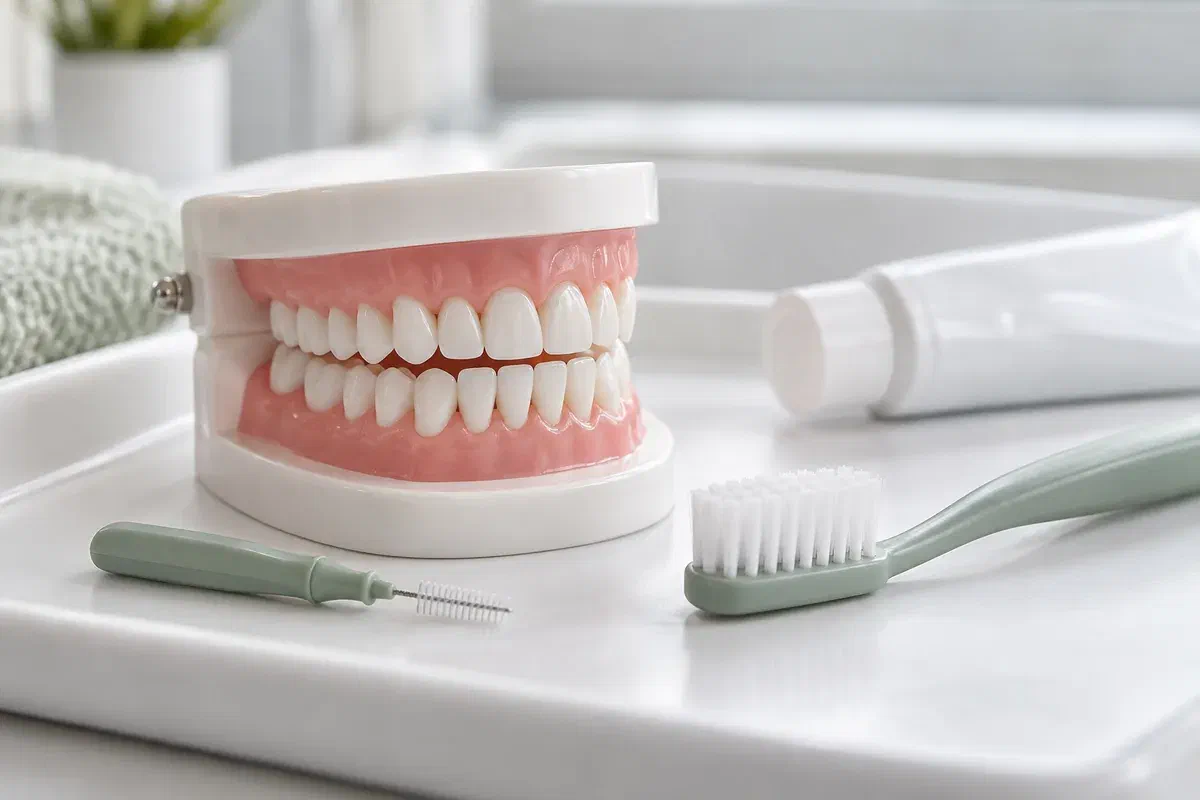
Dental model, soft toothbrush, and interdental brush illustrating preventive care
Changes that matter

Someone’s needs have shifted

Prevention can come up at any appointment, well before anyone has a toothache. A new medicine, a change in diet, braces for a teenager, or new dental work can all make a routine worth reviewing.

Repeated cavities in one person

When one family member keeps needing fillings, we look at the overall pattern without assigning blame. Recent decay, hard-to-clean surfaces and the timing of sweets and drinks all matter. The point is to understand what is contributing for that person specifically.

A grandparent’s mouth feels dry

Dryness is common with some medicines and health conditions, and less saliva means teeth lose part of their natural protection. Bring a list of medications to the visit. Prescriptions should not be altered without the doctor; we may need to coordinate with them.

Braces, crowding or stiff fingers

A teenager’s brackets, overlapping teeth, exposed roots or arthritis can each make ordinary cleaning fall short. Show us the problem spot and the tools being used. A different brush or aid often helps more than an extra product.

Decay is often painless at first. Keep everyone’s recommended examinations, and bring someone in early if they find a hole, lose part of a filling or start to feel discomfort. No rinse or paste can rebuild tooth structure that has been lost.

Why plan for each person

Right-sized advice for every age at home

Prevention aims to cut the chance of fresh decay and, in suitable cases, to let early changes settle without drilling. It is not a guarantee for anyone, child or adult. A clear plan for each family member gives a few priorities, the reasons for them, and something concrete to check at the next appointment.

Fillings and crowns repair specific damage. They leave the rest of the mouth in the same conditions as before, so the surrounding teeth still need protecting. Ask how each person’s existing dental work should change their routine, and which warning signs would justify phoning before the next scheduled visit.

Patient information: NIDCR — the tooth decay process

The most important step first

For each person we start with the change that best matches the findings. For a child it may be brushing the back molars properly; for an adult, a habit of sweet tea; for a grandparent, dryness. Understanding the reason makes it easier to stick with.

Sorting out the bathroom shelf

Bring the toothpastes and tools your household uses and we can tell you which suit whom. Toothpaste strength, brush size and between-teeth aids depend on age and ability. A costlier tube or a sharper flavour does not by itself mean better protection.

Checkups timed to each person

Examinations let us recheck teeth and follow up on anything we noted. Ask what is being watched for each family member and when. Intervals should reflect individual assessments, so not everyone in the house will be on the same schedule.

What we do together

A plan for each person, worked out step by step

Start by describing what each family member does now and where things go wrong. School and work schedules, who supervises children’s brushing, dexterity, product access and the cost of care are all worth mentioning.

  1. Examine and ask questions

    We check each person’s teeth and ask about earlier cavities, health changes, medicines, dryness and daily habits. X-rays may be suggested when clinically indicated. Any current pain or problem is noted and assessed separately from prevention.

  2. Look at individual risks

    We may discuss how often sugar reaches the teeth, how well plaque is removed, fluoride use and areas where plaque gathers. The aim is to understand each situation rather than reduce it to one food or one forgotten brushing session.

  3. Set practical actions

    We talk through daily cleaning, the right products for each age, and whether in-office prevention such as fluoride or sealants is worth considering. Ask which recommendation to start with. A child’s instructions depend on age and risk, so they should not be borrowed from an adult.

  4. Revisit at the next visit

    Later appointments check for new findings and how the routines are going. A new medicine, a health change or dental treatment can alter someone’s plan. Tell us if a suggestion is uncomfortable, unaffordable or hard to fit into family life so alternatives can be discussed.

At home

Different routines, one shared bathroom

Daily care helps most when it reaches the at-risk surfaces and happens consistently. Ask for advice suited to each person’s age, ability to spit out toothpaste, and any medical or swallowing concerns.

Brush twice, clean between once

Adults are generally advised to brush twice daily using fluoride toothpaste and to clean between their teeth each day. Children need age-appropriate amounts and supervision. A rinse cannot do the work of brushing, and a brush alone often misses the contact points.

Keep sweets to set times

Snacks and sweet drinks spread through the afternoon keep everyone’s teeth exposed to acid. Where it works for your household, keep treats with meals and offer plain water in between. This is about a sustainable family pattern, not removing every celebration food.

Label the special toothpaste

If someone is prescribed a stronger toothpaste or rinse, follow its instructions and keep it where young children cannot reach it. Do not share it with others in the house. Ask before combining products; more fluoride is not right for everybody.

Patient information: Canadian Dental Association — oral health basics · NIDCR — oral hygiene

Measures by age and need

Who might benefit from what

Recommendations follow from each person’s examination and risk discussion. Ask what a measure is meant to achieve, where it falls short, and how it fits with daily care at home.

Everyone’s starting point

Home care for each person

Technique, a suitable fluoride toothpaste and sensible food and drink habits come first. A young child or an older relative may need someone else to help with brushing. Discuss these needs openly so the plan works for the person relying on it.

For higher risk, at any age

In-office fluoride

A professional fluoride treatment may be suggested based on age, risk and the state of the teeth. Ask what it is intended to do and when it will be reconsidered. It sits on top of home care, not in place of it.

Often discussed for new molars

Sealants on back teeth

Sealants can protect suitable grooves on chewing surfaces that are difficult to clean. Each tooth needs assessment, and a sealant should be checked at later visits. It does not cover the sides or the spaces between teeth, so cleaning continues.

Patient information: Canadian Dental Association — appropriate fluoride use · NIDCR — sealants

Family questions from Brampton

Sorting out who needs what

We are glad to answer questions about fluoride, food and recurring decay for any member of your household. The best answers link prevention principles to each person’s findings and a realistic routine.

(905) 876-4488
Can the children use Grandma’s prescription toothpaste?
No. A prescribed toothpaste is chosen for one person’s needs and is generally not suitable for children. Keep it out of reach of young family members and ask us which toothpaste and amount is right for each child’s age.
At what age should my child start using floss?
Cleaning between teeth becomes important once teeth touch each other. A parent usually needs to help for some years. Ask at your child’s visit when to start and which tools are easiest for small hands.
Are sealants worth it for my child’s new molars?
Sealants may be recommended for suitable grooves on back teeth that are hard to clean. Whether they make sense depends on the tooth and your child’s risk. They are checked at later visits and do not replace brushing or fluoride toothpaste.
Why do I keep getting cavities when my spouse never does?
Risk differs between people because of saliva, tooth shape, existing fillings, cleaning technique and how often sugar is eaten. Comparing yourself to someone else is less useful than looking at your own pattern with the dentist.
Should several family members book on the same day?
Grouping appointments can be convenient for a household, and we can talk through what is possible when you call. Each person will still have their own examination and prevention plan.
Does a grandparent who wears a partial denture still need cavity prevention?
Yes. Natural teeth next to a partial denture can collect plaque and may be at higher risk of decay. Cleaning both the denture and the remaining teeth matters. Ask us how to clean around the clasps and whether extra protection is needed.
Booking from Brampton

Bring the whole household’s questions

Our Bronte Street practice can review each person’s teeth and the habits around them. Bring questions about recurring decay, which products suit whom, or a spot someone finds hard to clean. We can set priorities together and discuss preventive care for every age.

For pain, swelling or a broken tooth, please phone instead of booking online. Online requests are for non-urgent appointments.

Visit Milton Dental Clinic
Unit 1, 342 Bronte St. S, Milton, ON L9T 5B7
Get directions Clinic hours
Monday–Thursday
11am–7pm
Friday–Sunday
By appointment only

Areas we serve

  • Milton
  • Oakville
  • Mississauga
  • Georgetown
  • Halton Hills
  • Acton
  • Campbellville
  • Brampton
  • Burlington
  • Puslinch
  • Rockwood
  • Erin
  • Caledon
  • Etobicoke
  • Old Milton
  • Bronte Meadows
  • Timberlea
  • Dorset Park
  • Dempsey
  • Clarke
  • Beaty
  • Coates
  • Harrison
  • Scott
  • Willmott
  • Ford
  • Bowes
  • Cobden
  • Walker
  • Mountain View
  • Milton Heights
  • Hawthorne Village
  • Valley View
  • Fallingbrook
  • Nassagaweya
  • Trafalgar
  • Esquesing
  • Nelson
  • Brookville
  • Moffat
  • Glen Williams
  • Norval
  • Limehouse
  • Stewarttown
  • Ashgrove
  • Hornby
  • Silver Creek
  • Speyside
  • Scotch Block
  • North Oakville
  • River Oaks
  • Glen Abbey
  • West Oak Trails
  • Palermo
  • Bronte Creek
  • College Park
  • Joshua Creek
  • Uptown Core
  • Preserve
  • Iroquois Ridge
  • Lisgar
  • Meadowvale
  • Meadowvale Village
  • Churchill Meadows
  • Erin Mills
  • Central Erin Mills
  • Streetsville
  • East Credit
  • Creditview
  • Heartland
  • Sheridan
  • Mount Pleasant
  • Credit Valley
  • Huttonville
  • Churchville
  • Springbrook
  • Northwest Brampton
  • Bram West
  • Fletcher's Meadow
  • Fletcher's Creek South
  • Alton Village
  • Orchard
  • Millcroft
  • Headon Forest
  • Tansley
  • Brant Hills
  • Tyandaga
  • Kilbride
  • Lowville
  • Aberfoyle
  • Morriston
  • Arkell
  • Hillsburgh
  • Freelton
  • Carlisle
  • Waterdown
  • Flamborough
  • Mountsberg

How can we help?

Milton Dental Clinic

Have a question about your smile? Choose the option that works best for you.

For urgent dental concerns, please call.
Messages are reviewed during clinic hours.