

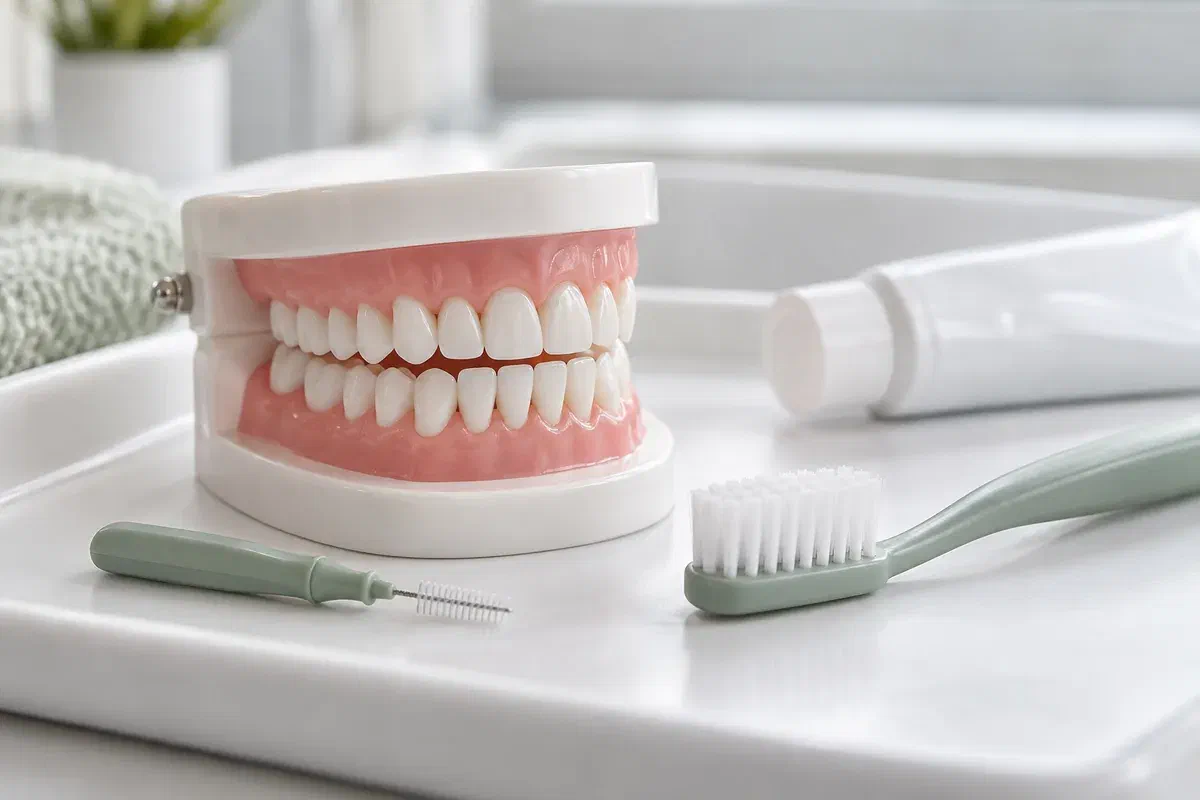
Illustrative dental discussion using a toothbrush and teaching model
General & Family Dentistry

Cavity Prevention in Caledon

Changing habits is one thing; knowing whether the change worked is another. From Bolton or elsewhere in Caledon, we help you track cavity prevention over time, so recall visits, fluoride and products follow your actual risk.

Tracking prevention from Caledon

Is your routine actually making a difference?

Six months after switching toothpaste and cutting back on afternoon pop, many people want to know one thing: has it helped? That question is the heart of good prevention. Cleaning, fluoride, sugar timing and examination are the tools, but their value shows only when findings are compared over time and the plan is tuned in response, sometimes stepping up, sometimes easing off.

Why does that comparison matter? Decay is an ongoing balance. Plaque bacteria turn sugar into acid that removes minerals from enamel, while saliva and fluoride work to restore them. Small changes in that balance can stabilize an early weakened area or let it progress to a hole. An examination tells us which is happening and whether prevention, continued monitoring or a filling is appropriate. Tracking progress is never a reason to postpone a needed repair.

Across a large town like Caledon, with households spread between villages and rural roads, it makes sense for each visit to answer clear questions. Ask what we compared, what has improved, and what still concerns us. Tell us about new medicines, dryness or an area that remains hard to clean, so the plan keeps pace with you.

Review your progress with us
Dental model, soft toothbrush, and interdental brush illustrating preventive care
Signs the plan needs updating

When progress stalls

You can review prevention at any appointment, not only when a tooth aches. New findings, health changes, a different diet or new dental work can all mean it is time to adjust.

New decay despite changes

If cavities still appear after you have made changes, we look again at the bigger picture. That may include cleaning in specific areas, how sugar fits into the day and anything new in your health. It is about refining the plan, not about blame.

Dryness that has appeared recently

Saliva plays a big part in protecting teeth, so a new dry feeling can change your risk. Tell us about any medicine or treatment that started around then. Keep taking prescriptions as directed; your doctor and dentist may need to coordinate.

A spot that never improves

Crowded teeth, retainers or appliances, exposed roots or limited hand movement can keep one area at risk whatever else changes. Show us that spot with your usual tools. A targeted adjustment may help more than another product.

Progress is not always felt; decay may develop painlessly. Keep recommended examinations, and come in earlier for a new hole, a lost or cracked filling, or symptoms. Products cannot rebuild structure that has broken down.

Why measure

Care that responds to evidence in your own mouth

Prevention seeks to reduce new decay and, where appropriate, to stabilize early changes without fillings. No plan guarantees zero cavities. But a plan that is reviewed, with clear priorities and something specific compared at each visit, lets you see whether the effort is paying off and change course if it is not.

Restored teeth are part of that tracking. A filling or crown fixes one area, while its edges, the rest of the tooth and the neighbouring teeth continue to face your mouth’s conditions. Ask how existing dental work is being monitored and what would be reason to call before your next planned visit.

Patient information: NIDCR — the tooth decay process

Priorities that can be measured

We concentrate on a few steps tied to your findings, such as one area of weak cleaning, a sweet-drink habit, or dryness. Because each has a purpose, we can check whether it helped at the next review.

Product choices you can revisit

Bring the products you use and ask whether they are still needed. A higher-strength toothpaste may be right for a period and then reconsidered. Price and strong flavours alone do not show how protective a product is.

Recall intervals based on risk

As findings change, so can the time between checkups. Ask which areas are being followed and what would shorten or lengthen your interval. That decision should rest on your assessment, not a routine applied to everyone.

The review cycle

Examine, plan, compare, adjust

Share what you have been doing and where it has slipped. Work and school timetables, travel across the region, dexterity, supply access and concerns about cost are all helpful context.

  1. Establish a starting point

    The dentist examines your teeth and dental work and asks about past decay, health, medicines, dryness and routine. X-rays may be taken when clinically indicated, giving a reference for later comparison. Any current symptom is assessed on its own.

  2. Clarify the risk picture

    We may consider sugar frequency, cleaning effectiveness, fluoride exposure and plaque-retaining areas. The aim is an honest summary of where risk comes from, not blame for one food or one missed brushing.

  3. Set steps with a purpose

    We agree on home care, products and whether in-clinic fluoride or sealants are indicated, noting what each is meant to achieve. Ask which matters most. Children’s plans depend on their age and risk and are reviewed separately.

  4. Compare and fine-tune

    At the next visit we compare findings with the starting point and discuss how the routine went. Health, medicine or treatment changes can redirect the plan. If something is uncomfortable, costly or hard to maintain, tell us and we will adjust.

Keeping momentum

Consistency is what gets measured

Daily care shows its value when it reaches the right surfaces and is done reliably. If age, difficulty spitting, swallowing concerns or a medical condition shape your routine, let us know so the advice can reflect it.

The core two habits

The usual adult advice is a fluoride toothpaste at bedtime and once more during the day, plus a daily clean between the teeth. Use tools you can manage well. A rinse is not a replacement for brushing, and a brush on its own often leaves the contacts untouched.

Sugar on a schedule

The number of sugar exposures matters as much as the amount. Where it suits you, keep sweet foods and drinks to mealtimes and drink plain water between them. The aim is a pattern that supports overall nutrition and can be sustained.

Prescribed extras, reviewed

If you were given a stronger toothpaste or rinse, follow its directions and keep it away from young children. Ask at each review whether you still need it, and check before adding other fluoride products.

Patient information: Canadian Dental Association — oral health basics · NIDCR — oral hygiene

Measures we track

Each option, with a reason to review it

Examination findings and our risk discussion decide which measures are worthwhile. Ask about the expected benefit, the limitations, and how professional care fits with what you do at home.

Reviewed at every visit

Your home routine

Technique, a fluoride toothpaste that suits you and practical choices about food and drink are the foundation. A chunkier handle or a relative’s help is part of the answer for some households. If something keeps getting in the way, say so and we will change the routine.

Increased or eased as risk changes

Professional fluoride

We may recommend fluoride applied at the clinic when your age, your risk or the look of your enamel points to it. We will explain why, and whether it continues will depend on what later visits show. It supplements daily care rather than replacing it.

Checked for wear over time

Sealants where suitable

A thin sealant coating can shield deep chewing-surface grooves where bristles struggle. Suitability is decided tooth by tooth, and sealants are inspected at later examinations. They protect only the grooves they cover, so everyday cleaning continues.

Patient information: Canadian Dental Association — appropriate fluoride use · NIDCR — sealants

Progress questions from Caledon

Measuring what matters

We are happy to answer questions about fluoride, diet and recurring decay. The most useful replies draw on how your own results have shifted between visits.

(905) 876-4488
What do ‘low risk’ and ‘high risk’ for cavities actually mean?
They summarize how likely new decay seems based on your recent cavities, cleaning, diet, saliva, fluoride use and health. Risk is not fixed; it can change with your habits and circumstances. Ask what places you in your current category.
Can my cavity risk go down over time?
Yes, it can. If findings stay stable and contributing factors improve, the dentist may adjust products or the recall interval. Changes in health or medicines can also raise risk, so it is reviewed at each visit.
How often do I need X-rays to check for cavities?
The interval depends on your individual risk and findings. Some people need them more often, others less. The dentist will explain why X-rays are recommended at a particular visit.
Will I need prescription toothpaste forever?
Not necessarily. A higher-strength toothpaste may be recommended for a period while risk is high, then reconsidered. Ask at your reviews whether it is still needed and how to use it in the meantime.
What would make you shorten the time between my checkups?
New decay, early changes that seem to be progressing, dryness, or a change in health or ability to clean might lead the dentist to suggest closer monitoring. The reason should be explained to you.
Living in rural Caledon, how should I plan my prevention visits?
Booking reviews in advance, grouping household appointments where possible, and calling before driving in if a new problem arises can all help. Our Bronte Street practice can talk through options when you call.
Caledon · book your review

See where your prevention stands

At our Bronte Street practice we review your teeth, compare findings and look at the habits behind them. Bring questions about recurring cavities, products or an area that is still hard to clean, and we will decide together what comes next.

Toothache, swelling or a tooth that has broken should be a phone call. Booking online is meant for appointments that are not urgent.

Visit Milton Dental Clinic
Unit 1, 342 Bronte St. S, Milton, ON L9T 5B7
Get directions Clinic hours
Monday–Thursday
11am–7pm
Friday–Sunday
By appointment only

Areas we serve

  • Milton
  • Oakville
  • Mississauga
  • Georgetown
  • Halton Hills
  • Acton
  • Campbellville
  • Brampton
  • Burlington
  • Puslinch
  • Rockwood
  • Erin
  • Caledon
  • Etobicoke
  • Old Milton
  • Bronte Meadows
  • Timberlea
  • Dorset Park
  • Dempsey
  • Clarke
  • Beaty
  • Coates
  • Harrison
  • Scott
  • Willmott
  • Ford
  • Bowes
  • Cobden
  • Walker
  • Mountain View
  • Milton Heights
  • Hawthorne Village
  • Valley View
  • Fallingbrook
  • Nassagaweya
  • Trafalgar
  • Esquesing
  • Nelson
  • Brookville
  • Moffat
  • Glen Williams
  • Norval
  • Limehouse
  • Stewarttown
  • Ashgrove
  • Hornby
  • Silver Creek
  • Speyside
  • Scotch Block
  • North Oakville
  • River Oaks
  • Glen Abbey
  • West Oak Trails
  • Palermo
  • Bronte Creek
  • College Park
  • Joshua Creek
  • Uptown Core
  • Preserve
  • Iroquois Ridge
  • Lisgar
  • Meadowvale
  • Meadowvale Village
  • Churchill Meadows
  • Erin Mills
  • Central Erin Mills
  • Streetsville
  • East Credit
  • Creditview
  • Heartland
  • Sheridan
  • Mount Pleasant
  • Credit Valley
  • Huttonville
  • Churchville
  • Springbrook
  • Northwest Brampton
  • Bram West
  • Fletcher's Meadow
  • Fletcher's Creek South
  • Alton Village
  • Orchard
  • Millcroft
  • Headon Forest
  • Tansley
  • Brant Hills
  • Tyandaga
  • Kilbride
  • Lowville
  • Aberfoyle
  • Morriston
  • Arkell
  • Hillsburgh
  • Freelton
  • Carlisle
  • Waterdown
  • Flamborough
  • Mountsberg

How can we help?

Milton Dental Clinic

Have a question about your smile? Choose the option that works best for you.

For urgent dental concerns, please call.
Messages are reviewed during clinic hours.