

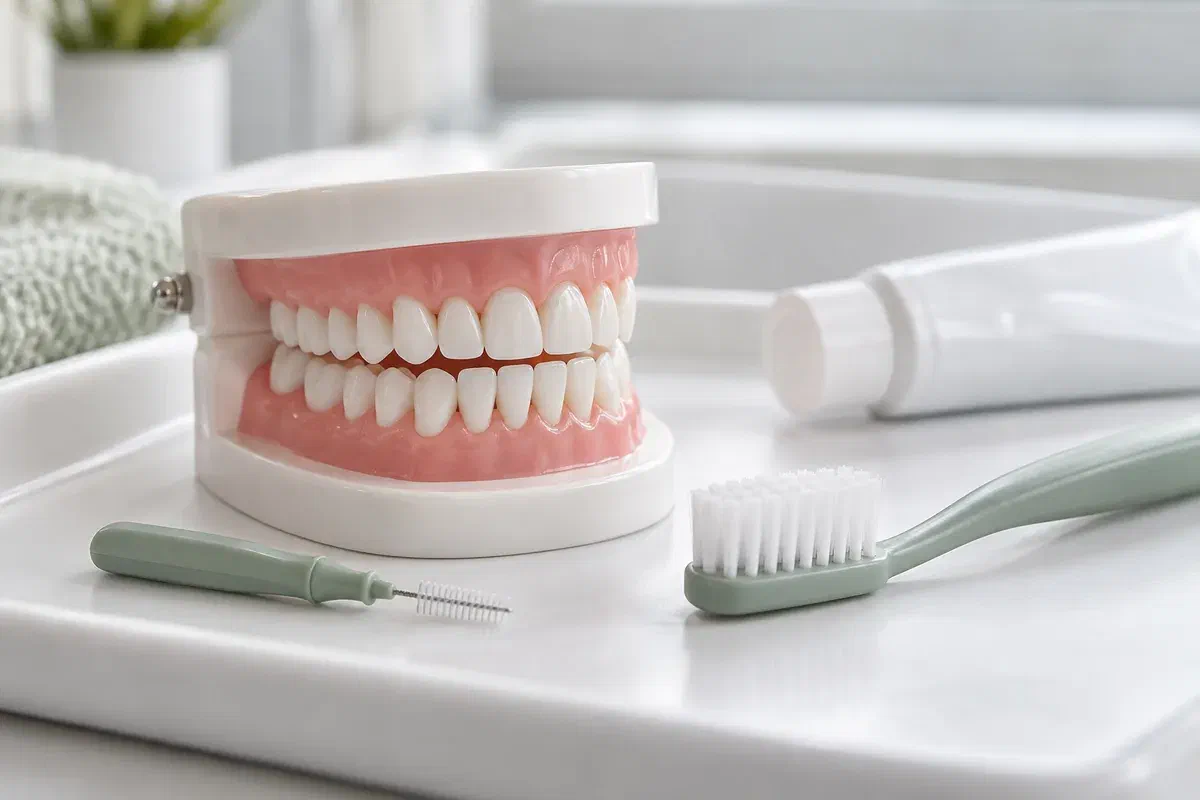
Illustrative dental discussion using a toothbrush and teaching model
General & Family Dentistry

Cavity Prevention in Campbellville

Whitening, charcoal, natural, sensitive, extra-strength: the toothpaste shelf rarely tells you what prevents decay. For households in Campbellville, we cut through the labels and build a cavity prevention routine that fits rural life.

Prevention for Campbellville

Standing in the toothpaste aisle, wondering what works

Most packaging promises something, and very little of it explains how cavities are actually prevented. The essentials are less glamorous: a fluoride toothpaste used well, cleaning between teeth, fewer sugar exposures through the day, and examinations that catch early changes. The best product for you depends on your teeth, your risk and what you can comfortably use, not on the boldest claim on the box.

To see why, it helps to know how decay works. Plaque bacteria ferment sugar into acid; that acid draws minerals from the enamel each time it forms. Fluoride and saliva help the surface take minerals back between those episodes. An early softened patch is a different matter from a hole, and the examination decides whether it calls for prevention, a watchful eye or a filling. No toothpaste should be used as a reason to postpone a needed repair.

In a rural corner of Milton like Campbellville, a trip into town is often one errand among several, so it makes sense to plan ahead. Bring the products you have at home, including any you were unsure about, and tell us what changed since your last checkup. We can then sort the useful from the unnecessary and explain any professional preventive care we recommend.

Bring your products and ask us
Dental model, soft toothbrush, and interdental brush illustrating preventive care
Times to rethink the routine

Your teeth have changed. Has your routine?

Prevention can be raised at any visit, toothache or not. New medicines, different eating habits, a health change or fresh dental work can all mean the products and methods you use need updating.

Decay keeps finding you

More than one new cavity in a short time is a cue to look at the overall pattern together. Recent findings, areas that are tricky to clean and when you tend to have sweet foods or drinks are all relevant. The aim is to uncover contributors, not to scold.

Dryness has crept in

Saliva is a natural defence, so a mouth that often feels dry deserves attention. Let us know about any medicines or treatment that coincided with it. Please keep taking what has been prescribed; we may need to coordinate advice with your doctor.

Tools that do not reach

Crowded teeth, a partial denture, exposed roots or hands that tire easily can make your current brush or floss ineffective. Bring the tools you use and point out the difficult area. Changing the approach often helps more than buying yet another product.

Early decay seldom hurts. Keep the examinations recommended for you, and book sooner if you notice a hole, a filling that has cracked or come loose, or any symptom. A toothpaste cannot replace tooth structure that has been lost.

Why simplify

Fewer products, clearer purpose

A prevention plan is designed to lower the chance of fresh decay and, where appropriate, to help early surface changes without a filling. It cannot promise a lifetime free of cavities. A focused plan, with each step explained and checked at later visits, is more useful than a cupboard full of products bought on hope.

Restorations do not end the need for prevention. A filling or crown repairs one area, while the rest of the tooth and its neighbours still face the same diet, saliva and cleaning. Ask how your current dental work should shape your routine, and what would be worth phoning about before the next scheduled visit.

Patient information: NIDCR — the tooth decay process

The steps that matter for you

We begin with whatever your findings point to, whether that is one area you keep missing, a sweet drink sipped through chores, or dryness. When the reason is clear, it is easier to decide how a step fits your day.

Honest product guidance

Bring your toothpaste, brushes and floss, and ask for a demonstration. The right choice depends on your needs and abilities. Packaging that promises whitening or natural ingredients does not tell you how well a product prevents decay, and a higher price is not proof either.

Checkups that follow through

Each examination is a chance to recheck the teeth and revisit areas we noted before. Ask which teeth are on watch and when they will be looked at next. Your recall timing should come from your own assessment.

Working it out together

Plan once, travel less

Start by telling us what you do now and where it gets difficult. Farm or work schedules, time spent on the road, dexterity, which shops you rely on for supplies, and the cost of care are all fair topics.

  1. Examination and conversation

    The dentist checks your teeth and existing dental work and asks about earlier cavities, health changes, dryness and your routine. X-rays may be recommended for a clinical reason. If something hurts today, tell us so it can be handled as a separate concern.

  2. Pinpoint what drives risk

    We may discuss sugar frequency, how effectively plaque is cleared, your fluoride exposure and areas that hold plaque. We want to understand the real picture rather than blame one food or one night without brushing.

  3. Choose products and steps

    We go through your products and agree on which to keep, which to skip, and whether in-office fluoride or sealants would add anything. Ask which change matters most. Children have their own age-based guidance, so the adults’ toothpaste may not suit them.

  4. Revisit at the next checkup

    At later appointments we compare findings and ask how things have gone. Changes in health, medicine or dental treatment can alter the plan. If a product is uncomfortable, too expensive or hard to find, let us know so we can look at alternatives.

The routine at home

Simple steps, repeated well

Home care protects teeth when it reaches the at-risk surfaces and happens every day. If age, difficulty spitting, swallowing problems or a medical condition affect how you brush, let us know so we can adjust the advice.

Fluoride paste, twice a day

Adults do best with a fluoride paste at both ends of the day and one daily pass between the teeth. After brushing, spitting out the excess rather than rinsing heavily helps keep fluoride on the teeth. A mouthwash does not replace brushing.

Keep sweet sips to mealtimes

Sweetened coffee, pop or snacks spread through a long working day keep teeth under repeated acid attack. Where it suits you, group them with meals and drink plain water in between. This is about a pattern you can sustain, not cutting out every treat.

Prescribed products, as directed

If we suggest a high-fluoride toothpaste or rinse, use it according to its instructions and store it away from young children and visiting grandchildren. Check with us before combining products. Extra fluoride is not the right choice for everyone.

Patient information: Canadian Dental Association — oral health basics · NIDCR — oral hygiene

What we might suggest

Three measures, three jobs

The examination and our risk conversation decide which measures are worthwhile. Ask what each is meant to achieve, what it cannot do, and how it fits with your home routine.

The everyday starting point

A home routine that fits

How you brush, which fluoride paste you pick, and what you snack on during the day make up the groundwork. A wider handle or a family member’s help suits some people. Talk openly about what gets in the way so the plan suits the person following it.

Extra protection for higher risk

Fluoride in the clinic

A professionally applied fluoride may be offered depending on age, risk and the condition of your teeth. You are welcome to ask what it will add and how we will decide whether to repeat it. It supports home care and does not replace it.

For specific chewing surfaces

Sealants for suitable grooves

Sealants can protect appropriate pits and grooves that are hard to keep clean. Not every tooth is a good candidate, and a placed sealant gets inspected at each checkup. Smooth sides and contacts stay exposed, so the toothbrush keeps its job.

Patient information: Canadian Dental Association — appropriate fluoride use · NIDCR — sealants

Campbellville product questions

Which toothpaste? And other good questions

Questions about fluoride, diet and recurring cavities are welcome. The most useful answers link general prevention guidance with your examination and a routine you can realistically keep.

(905) 876-4488
Does a fluoride-free natural toothpaste prevent cavities as well?
Fluoride is the ingredient with the strongest evidence for helping prevent decay, so a toothpaste without it may offer less protection. If you have reasons to prefer a particular product, bring it in and we can talk through your risk and options.
Will a whitening toothpaste protect against decay?
Whitening toothpastes are designed to remove surface stains. If one contains fluoride, it can contribute to prevention, but the whitening claim itself does not mean extra protection. Some are more abrasive, so ask us if you have sensitive teeth or exposed roots.
Should I rinse with water after brushing?
Spitting out the excess toothpaste without rinsing heavily helps leave fluoride on the teeth. If you have been advised otherwise for a medical or swallowing reason, follow that advice. Ask us what is suitable for you.
Is charcoal toothpaste a good option for prevention?
Charcoal toothpastes are often marketed for whitening, and many do not contain fluoride. Some may be abrasive. We generally suggest discussing your options with the dentist before switching away from a fluoride toothpaste.
Can I book my family’s checkups together to save trips?
Grouping appointments can make sense for households that travel in from rural areas. Call our Bronte Street practice to talk about what is possible. Each person will still have their own examination and prevention plan.
If I avoid sugar entirely, can I skip flossing?
No. Other carbohydrates can still feed plaque bacteria, and plaque between teeth can also affect the gums. Cleaning between teeth remains part of a good routine, alongside a balanced diet and fluoride toothpaste.
From Campbellville

One visit to sort out what you really need

At our Bronte Street practice we can review your teeth and the habits that support them. Bring your products, questions about recurring cavities, and any area that is hard to clean. We will agree on priorities and suitable preventive care.

Phone us for pain, swelling or a broken tooth so we can advise before you travel. The online form is for non-urgent requests.

Visit Milton Dental Clinic
Unit 1, 342 Bronte St. S, Milton, ON L9T 5B7
Get directions Clinic hours
Monday–Thursday
11am–7pm
Friday–Sunday
By appointment only

Areas we serve

  • Milton
  • Oakville
  • Mississauga
  • Georgetown
  • Halton Hills
  • Acton
  • Campbellville
  • Brampton
  • Burlington
  • Puslinch
  • Rockwood
  • Erin
  • Caledon
  • Etobicoke
  • Old Milton
  • Bronte Meadows
  • Timberlea
  • Dorset Park
  • Dempsey
  • Clarke
  • Beaty
  • Coates
  • Harrison
  • Scott
  • Willmott
  • Ford
  • Bowes
  • Cobden
  • Walker
  • Mountain View
  • Milton Heights
  • Hawthorne Village
  • Valley View
  • Fallingbrook
  • Nassagaweya
  • Trafalgar
  • Esquesing
  • Nelson
  • Brookville
  • Moffat
  • Glen Williams
  • Norval
  • Limehouse
  • Stewarttown
  • Ashgrove
  • Hornby
  • Silver Creek
  • Speyside
  • Scotch Block
  • North Oakville
  • River Oaks
  • Glen Abbey
  • West Oak Trails
  • Palermo
  • Bronte Creek
  • College Park
  • Joshua Creek
  • Uptown Core
  • Preserve
  • Iroquois Ridge
  • Lisgar
  • Meadowvale
  • Meadowvale Village
  • Churchill Meadows
  • Erin Mills
  • Central Erin Mills
  • Streetsville
  • East Credit
  • Creditview
  • Heartland
  • Sheridan
  • Mount Pleasant
  • Credit Valley
  • Huttonville
  • Churchville
  • Springbrook
  • Northwest Brampton
  • Bram West
  • Fletcher's Meadow
  • Fletcher's Creek South
  • Alton Village
  • Orchard
  • Millcroft
  • Headon Forest
  • Tansley
  • Brant Hills
  • Tyandaga
  • Kilbride
  • Lowville
  • Aberfoyle
  • Morriston
  • Arkell
  • Hillsburgh
  • Freelton
  • Carlisle
  • Waterdown
  • Flamborough
  • Mountsberg

How can we help?

Milton Dental Clinic

Have a question about your smile? Choose the option that works best for you.

For urgent dental concerns, please call.
Messages are reviewed during clinic hours.