

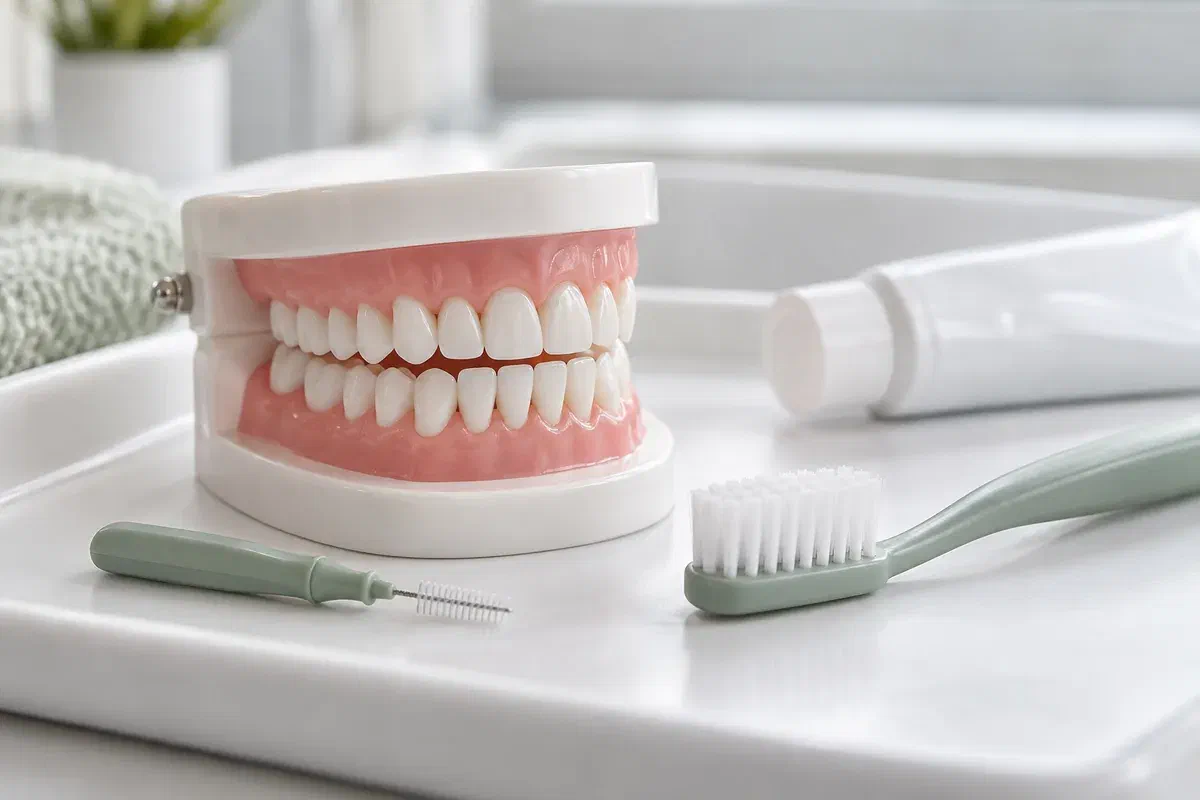
Illustrative dental discussion using a toothbrush and teaching model
General & Family Dentistry

Cavity Prevention in Etobicoke

When the trip is longer, each appointment has to do more. For people travelling from Etobicoke, we plan cavity prevention so one well-prepared visit covers your exam, your routine, your products and any preventive care.

Planning from Etobicoke

Fewer trips, better prepared

Coming from the west end of Toronto, you probably want a dental visit to settle as much as possible in one sitting. Cavity prevention suits that kind of planning. The appointment can combine an examination with a close look at your cleaning, your fluoride use, your eating and drinking pattern, and any spots where decay keeps returning, so you leave with a clear routine rather than a vague reminder to floss.

A little background helps you get the most from the visit. Plaque bacteria convert sugar into acid, and repeated acid exposure removes minerals from enamel. Saliva and fluoride help reverse that between meals, up to a point. An early weakened area is not the same as a cavity that has become a hole; the examination tells us which you have and whether it needs prevention, monitoring or a filling. Prevention should never delay a repair a tooth requires.

Before you come in, jot down what has changed since your last checkup elsewhere or with us. New medicines, a dry mouth, a filling that feels rough, an area your brush never seems to reach: all of it is useful. Bring your toothbrush and floss too. With that, we can suggest specific adjustments and explain the purpose of any professional care.

Plan a well-organised prevention visit
Dental model, soft toothbrush, and interdental brush illustrating preventive care
What to raise next time

Bring these up before they grow

You do not need a toothache to discuss prevention. Changes in health, medicines, diet or dental work can make your current routine less effective, and they are worth putting on your list for the visit.

Fillings that keep multiplying

A series of new cavities is a reason to review the broader pattern, not a reason to feel blamed. We can talk through recent decay, surfaces that resist cleaning and when sweet foods or drinks happen in your week, so the real contributors are clear.

A mouth that stays dry

Saliva helps protect teeth, so dryness that does not go away deserves a mention. Note any medicines or treatment that began around the same time. Keep taking prescriptions as directed; we may need to work with your physician on advice.

Places your routine skips

Crowding, aligners or retainers, roots exposed by gum recession, or limited hand movement can all leave areas under-cleaned. Pack your usual brush and floss so we can see the problem. A changed technique or a different aid is often more useful than another product.

Decay can progress quietly. Keep the examinations recommended for you. If you notice a hole, a cracked filling or symptoms, arrange an assessment promptly, and remember that prevention products cannot replace lost tooth structure.

What you take home

A routine you can follow without us nearby

The goal of prevention is to lower the likelihood of new cavities and, where clinically appropriate, to help early changes without a filling. No one can promise you will never need treatment. A good plan gives you a few clear priorities, explains each, and sets out what we will look at during your next review.

After a filling or crown, prevention is still needed. The restoration repairs one area, but the rest of the tooth and its neighbours remain in the same environment. Ask how your existing work should shape your routine, and what signs would mean phoning us, or seeking care closer to home if something urgent comes up, before your next planned visit.

Patient information: NIDCR — the tooth decay process

A short written plan

We focus on the actions most relevant to your findings, perhaps one tight contact, a habit of sipping sweetened drinks, or dryness. Ask us to note them down so you can refer back between visits and understand why each one matters.

A demonstration while you are here

Since visits may be spaced out, use the appointment to practise. Bring your brush, floss or interdental aids and ask us to show you. Expensive or strongly flavoured products are not automatically better at preventing decay.

Monitoring with a clear timeline

Examinations let us recheck the teeth and follow areas noted before. Find out which spots are on our list and roughly when they come up for review. That interval should reflect your assessment, not a fixed schedule assumed to suit everyone.

How the appointment is organised

Cover the essentials in one visit

Describe your current routine and where it tends to slip. Commuting, work hours, family logistics, dexterity, product access and concerns about the cost of care are all reasonable to bring up.

  1. Exam and history together

    The dentist checks each tooth, then asks about earlier cavities, any shift in your health, dryness and how you clean. If there is a clinical reason for X-rays, they can often be taken during the same visit. Mention any current symptom so it is assessed in its own right.

  2. Sort out the risk factors

    We look at how often sugar reaches your teeth, how effectively plaque is removed, your fluoride use and areas that retain plaque. The aim is to understand your circumstances rather than single out one snack or one evening without brushing.

  3. Leave with a plan

    We agree on your daily cleaning, which products to buy, and whether in-clinic prevention such as fluoride is warranted, ideally applied the same day when appropriate. Ask which step comes first. Children’s advice depends on their age and risk and should not be copied from yours.

  4. Adjust at the next review

    At your next appointment we look for new findings and talk about how the routine has worked. Changes in medication, health or dental treatment can reshape the plan. If something is uncomfortable, costly or difficult to keep up, say so and we will look at alternatives.

Between visits

What to keep doing on your own

Daily care is most effective when it reaches the right surfaces and becomes automatic. Your age, whether spitting is easy for you, and any difficulty swallowing all shape the right instructions, so mention them.

The daily basics

Two brushings a day using fluoride paste, and one daily clean between the teeth, carry most of the load for adults. Choose tools and a method you can manage. Mouthwash does not substitute for brushing, and the brush alone tends to miss the contacts between teeth.

Timing of sweets and drinks

Frequent sugary snacks or sips keep acid around your teeth for much of the day. You might keep them to mealtimes and choose plain water between meals, if that suits your health. The goal is a manageable pattern that supports your nutrition, not giving up the occasional treat.

Using recommended products correctly

If we suggest a stronger toothpaste, a rinse or another preventive product, follow its individual directions and keep it away from young children. Layering several fluoride products without advice is not a good idea, and a higher dose is not what every mouth needs.

Patient information: Canadian Dental Association — oral health basics · NIDCR — oral hygiene

Measures we may suggest

Pick the right tool for the job

The examination and risk discussion determine which measures make sense for you. Ask about the expected benefit, any limitations, and how professional care relates to your home routine.

The foundation

A home routine built around you

Before anything else comes the way you brush, the paste you choose and when you eat and drink. Adapted handles or a family member’s help can make a difference for some. Mention whatever gets in the way so the plan suits real life.

When added protection makes sense

Clinic-applied fluoride

Fluoride applied by the team may be worthwhile when your age or risk calls for it, and it can often be done during the same visit. We will tell you what it is for and whether to repeat it next time. It supports daily care but does not replace it.

For specific chewing surfaces

Sealants for suitable grooves

On the right tooth, a sealant guards narrow chewing grooves that bristles cannot get into. We decide case by case, and a placed sealant is inspected at future visits. It leaves smooth surfaces and contact points uncovered, so daily cleaning still matters.

Patient information: Canadian Dental Association — appropriate fluoride use · NIDCR — sealants

Planning questions from Etobicoke

Before you make the trip

Questions about fluoride, diet and repeat decay are welcome. Answers are most useful when they speak to your own exam results and to habits that will survive a busy month.

(905) 876-4488
Can my checkup, cleaning and fluoride treatment happen on the same day?
Often, yes, depending on what the examination shows and the time available. Mention when you book that you are travelling a distance and would like to combine care where possible. Some treatment may still need a separate visit.
What should I bring to a prevention appointment?
A list of medicines, any questions, and the toothbrush, floss or interdental aids you use at home. If you have records or X-rays from another dentist, ask about having them sent. This helps make one visit more productive.
Is an electric toothbrush better for preventing cavities?
Both manual and powered brushes can clean well when used properly. Some people, especially those with limited hand movement, find a powered brush easier. The best brush is the one you can use thoroughly twice a day.
Can toothpaste fix a cavity that already has a hole?
No. Early mineral loss can sometimes be helped by prevention, but a hole means tooth structure has been lost and needs clinical assessment. Products marketed for enamel repair cannot rebuild the shape of a broken-down tooth.
Do I still need prevention if I have not had a cavity in years?
Yes. Risk can change with health, medications, gum recession or new dental work. A routine that has worked so far is worth keeping, and reviewing it at examinations helps catch changes early.
If my teeth seem fine, can I space out my visits?
The right interval depends on your assessment, not just how your teeth feel. Some people can safely go longer between checkups, while others need closer monitoring. Ask the dentist what interval suits your findings.
Visiting from Etobicoke

Make the drive worth it

One well-organised appointment at our Bronte Street practice can take in your teeth, your routine and the products on your shelf. Arrive with questions about repeated cavities or a stubborn cleaning spot, and leave knowing what to focus on and which preventive care, if any, is worth adding.

Pain, swelling or a broken tooth needs a phone call so we can advise you before you set out. Use the online form for routine bookings.

Visit Milton Dental Clinic
Unit 1, 342 Bronte St. S, Milton, ON L9T 5B7
Get directions Clinic hours
Monday–Thursday
11am–7pm
Friday–Sunday
By appointment only

Areas we serve

  • Milton
  • Oakville
  • Mississauga
  • Georgetown
  • Halton Hills
  • Acton
  • Campbellville
  • Brampton
  • Burlington
  • Puslinch
  • Rockwood
  • Erin
  • Caledon
  • Etobicoke
  • Old Milton
  • Bronte Meadows
  • Timberlea
  • Dorset Park
  • Dempsey
  • Clarke
  • Beaty
  • Coates
  • Harrison
  • Scott
  • Willmott
  • Ford
  • Bowes
  • Cobden
  • Walker
  • Mountain View
  • Milton Heights
  • Hawthorne Village
  • Valley View
  • Fallingbrook
  • Nassagaweya
  • Trafalgar
  • Esquesing
  • Nelson
  • Brookville
  • Moffat
  • Glen Williams
  • Norval
  • Limehouse
  • Stewarttown
  • Ashgrove
  • Hornby
  • Silver Creek
  • Speyside
  • Scotch Block
  • North Oakville
  • River Oaks
  • Glen Abbey
  • West Oak Trails
  • Palermo
  • Bronte Creek
  • College Park
  • Joshua Creek
  • Uptown Core
  • Preserve
  • Iroquois Ridge
  • Lisgar
  • Meadowvale
  • Meadowvale Village
  • Churchill Meadows
  • Erin Mills
  • Central Erin Mills
  • Streetsville
  • East Credit
  • Creditview
  • Heartland
  • Sheridan
  • Mount Pleasant
  • Credit Valley
  • Huttonville
  • Churchville
  • Springbrook
  • Northwest Brampton
  • Bram West
  • Fletcher's Meadow
  • Fletcher's Creek South
  • Alton Village
  • Orchard
  • Millcroft
  • Headon Forest
  • Tansley
  • Brant Hills
  • Tyandaga
  • Kilbride
  • Lowville
  • Aberfoyle
  • Morriston
  • Arkell
  • Hillsburgh
  • Freelton
  • Carlisle
  • Waterdown
  • Flamborough
  • Mountsberg

How can we help?

Milton Dental Clinic

Have a question about your smile? Choose the option that works best for you.

For urgent dental concerns, please call.
Messages are reviewed during clinic hours.