

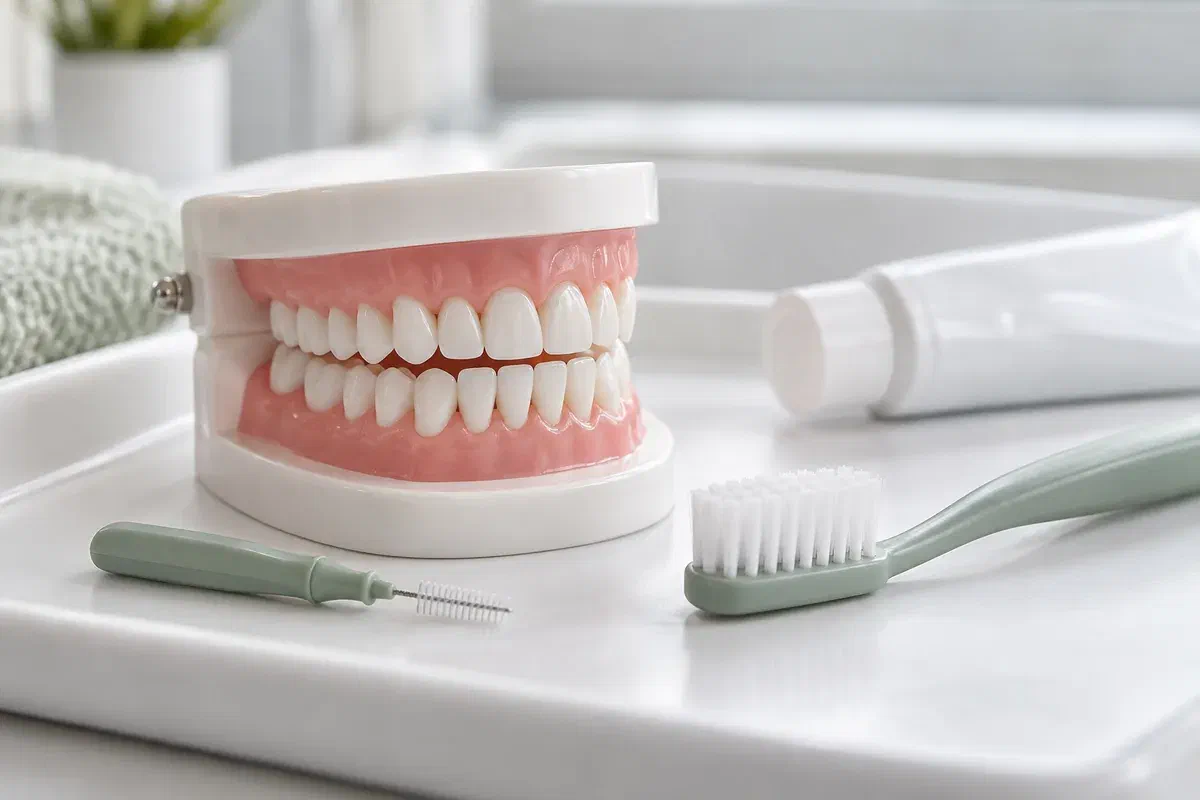
Illustrative dental discussion using a toothbrush and teaching model
General & Family Dentistry

Cavity Prevention in Old Milton

Teeth that have carried fillings and crowns for decades still need looking after. For Old Milton households, our cavity prevention care covers the edges of older dental work, exposed roots and the habits that protect what remains.

Old Milton · protecting long-serving teeth

What does prevention look like after years of dental work?

Many people assume cavities belong to childhood. In practice, a mouth with several fillings, a crown or two, and gums that have drawn back over time can be more vulnerable, not less. The margins where old dental work meets natural tooth, and root surfaces that were once covered by gum, are places where plaque settles and decay can start quietly.

The process is the same at any age. Plaque bacteria turn sugars into acid, and when those acid attacks are frequent enough, minerals leave the tooth faster than saliva and fluoride can put them back. An early change in the surface is not yet a hole. Examination tells us which stage we are looking at and whether the right move is prevention, monitoring or a repair. Prevention should never be a reason to delay a filling that is needed.

Around Milton’s historic downtown, we meet people who have lived on the same street for decades as well as newcomers settling into older homes. Whatever your history, tell us what has changed lately: a new prescription, a drier mouth, a bridge that is hard to clean under, or arthritis that makes flossing awkward. We will suggest realistic adjustments and explain the reason for any professional care.

Ask about protecting older dental work
Dental model, soft toothbrush, and interdental brush illustrating preventive care
Moments to reassess

Is your routine keeping up with your mouth?

Prevention is worth discussing well before anything aches. Changes in your health, your medicines, or the dental work in your mouth can each shift what home care needs to do.

Decay keeps returning near fillings

New decay at the edge of an existing filling or crown is a cue to look at the overall pattern, not a failure on your part. We can go over recent findings, the spots that are hardest to clean, and when sweet foods or drinks fit into your day, so the real contributors come into view.

A new medicine, a drier mouth

Many medicines can leave the mouth dry, and less saliva means less natural protection for teeth. Let us know what you take and when the dryness began. Never stop or change a prescription without your doctor; we may need to coordinate advice with your physician.

Roots, bridges and tight spaces

Exposed root surfaces, the area beneath a bridge, crowded lower teeth, or reduced grip strength can defeat an ordinary toothbrush. Show us where you struggle and bring your current tools. An adapted brush or a different cleaning aid may solve more than one more product would.

Decay on roots and around old fillings can progress without pain. Keep your recommended examinations, and come in sooner for a new hole, a broken or loose filling, or any symptoms. No toothpaste can rebuild lost tooth structure.

Why it is worth the effort

Keeping the teeth you have in good order

The aim is to lower the odds of fresh decay and, where it is clinically appropriate, to manage early surface changes without drilling. There is no guarantee of a cavity-free future at any age. A useful plan names a few priorities, explains each one, and gives us something to measure at your next review.

A crown or filling repairs one damaged area, but it does not change the environment the rest of your mouth lives in. Neighbouring teeth, the remaining natural tooth around a restoration, and any exposed roots all face the same conditions. Ask how your current dental work should shape your daily routine and what would justify a visit before the next scheduled check.

Patient information: NIDCR — the tooth decay process

Focus where it counts

We start with the steps that best match what we found. That may be cleaning along the gumline of one tooth, rethinking a sweetened tea habit, or addressing dryness. When you understand the purpose of each suggestion, it is easier to decide how to fit it in.

Tools that suit your hands

Ask for a demonstration, and bring the brush or floss that frustrates you. Larger handles, power brushes and interdental brushes may suit some people better than others. A costly or strongly flavoured product is not automatically the more protective choice.

Spotting problems while they are small

Regular examinations allow us to recheck older dental work and follow anything we noted previously. Ask which teeth are being watched and when they will be reviewed. Your recall timing should reflect your own findings, not a single schedule applied to everyone.

Our approach

Four steps, from findings to follow-up

Begin by describing your current routine and where it gets difficult. It is helpful to mention your schedule, how easily you can handle small tools, where you buy products, and any concerns about the cost of care.

  1. Examine and listen

    We check your teeth and existing dental work and ask about previous decay, recent health changes, dryness and daily habits. X-rays may be recommended if there is a clinical need. Raise any current pain or sensitivity so it can be assessed as its own issue.

  2. Pinpoint the risks

    We may discuss how often sugar reaches your teeth, how well plaque is being cleared, your fluoride use, and places where plaque gathers around restorations or roots. The point is to understand your circumstances, not to blame one biscuit or one missed evening.

  3. Choose practical changes

    We talk about home care, suitable products, and whether professional preventive treatment is indicated. Ask which step matters most and how to use any prescribed product. If grandchildren visit often, remember that their guidance depends on age and should not simply mirror yours.

  4. Revisit and refine

    At follow-up visits we look for new findings and ask how the routine has gone. New medications, a change in health, or new dental work may alter the plan. Tell us if something is uncomfortable, unaffordable or hard to keep up so we can consider other options.

Daily care between visits

Steady habits, aimed at the right places

Home care works best when it reaches the surfaces most at risk and becomes a regular part of your day. Ask for advice that considers your age, whether you can spit out toothpaste easily, and any medical or swallowing issues.

Brush, then clean the gaps

For adults, brushing twice a day with fluoride toothpaste and cleaning between teeth daily are the foundation. Pick tools and a technique you can manage comfortably. A rinse does not do the work of brushing, and a toothbrush alone often misses the spaces between teeth and under bridges.

Mind how often, not only how much

Sipping sweetened coffee or tea, or snacking on sweets through the day, keeps acid around teeth for longer. You might group sweet items with meals and drink plain water in between where that is appropriate for you. This is about a sustainable pattern that supports good nutrition, not giving up every treat.

Extra products, used as directed

If we suggest a higher-fluoride toothpaste, a rinse or another preventive product, follow its specific instructions and keep it away from young children. Check before combining products. More fluoride is not the right answer for every person.

Patient information: Canadian Dental Association — oral health basics · NIDCR — oral hygiene

Measures that may be offered

What each option is for

Your exam and our risk discussion determine which measures are worthwhile. Ask what each is expected to achieve, where its limits lie, and how it connects to what you do at home.

The base everything rests on

A home routine fitted to you

Technique, a suitable fluoride toothpaste and practical choices about food and drink come first. Some people do better with adapted tools or a family member’s help. Be candid about obstacles so the plan works for the person following it.

When more protection is called for

Fluoride applied in the clinic

A professional fluoride application may be advised depending on age, risk and the state of your teeth, including exposed roots. Ask why it is being suggested and how often it will be reassessed. It supports home care; it is not a replacement.

For certain grooved surfaces

Sealants, where suitable

Sealants can cover appropriate pits and grooves that are hard to keep clean. Suitability depends on the individual tooth, and a sealant needs checking at later visits. It does not cover every surface and does not replace daily cleaning.

Patient information: Canadian Dental Association — appropriate fluoride use · NIDCR — sealants

Common questions in Old Milton

Have a question? Bring it to your visit.

We welcome questions about fluoride, diet and recurring decay. The most helpful answers connect general prevention guidance with your own findings and a routine you can sustain.

(905) 876-4488
Why would decay start around a filling I have had for years?
The edges where a filling meets the tooth can collect plaque, and the remaining natural tooth is still exposed to acid. Older restorations can also wear or develop small gaps. An examination can show whether the area needs monitoring, prevention or repair.
My gums have receded. Are the exposed roots more likely to decay?
Root surfaces are not covered by enamel, so they can be more vulnerable to decay once exposed. That does not mean decay is certain. Ask how to clean along the gumline gently and whether additional fluoride care is appropriate for your situation.
Is cavity prevention still worthwhile in my seventies?
Yes. Teeth can develop decay at any age, around restorations and on exposed roots in particular. Changes in health, medications, saliva or hand movement may alter what works. Reviewing the routine as those changes happen helps keep it useful.
Could my blood pressure pills be the reason my mouth feels dry?
Dry mouth is a known side effect of many types of medication, but the cause in your case needs to be considered with your doctor or pharmacist. Do not stop taking a prescription on your own. Tell us about the dryness so we can discuss ways to protect your teeth in the meantime.
Can I share my high-fluoride toothpaste with my spouse?
A prescribed toothpaste is chosen for one person’s age, risk and needs. Your spouse’s requirements may be different, so ask before sharing it, and keep it away from children. Stronger does not automatically mean better for everyone.
What should I clean under my bridge with?
Options include floss threaders, special floss with a stiff end, and small interdental brushes, depending on the space beneath the bridge. Bring your current tools to your appointment and we can show you which approach reaches the area effectively.
Visit us from Old Milton

Let’s look after the work you have invested in

Our Bronte Street practice is close to Old Milton, and we are happy to review your teeth, your existing dental work and the habits that support them. Bring questions about recurring decay, products or a difficult area to clean, and we will set priorities together.

Please call if you have pain, swelling or a broken tooth. Online booking requests are for non-urgent visits.

Visit Milton Dental Clinic
Unit 1, 342 Bronte St. S, Milton, ON L9T 5B7
Get directions Clinic hours
Monday–Thursday
11am–7pm
Friday–Sunday
By appointment only

Areas we serve

  • Milton
  • Oakville
  • Mississauga
  • Georgetown
  • Halton Hills
  • Acton
  • Campbellville
  • Brampton
  • Burlington
  • Puslinch
  • Rockwood
  • Erin
  • Caledon
  • Etobicoke
  • Old Milton
  • Bronte Meadows
  • Timberlea
  • Dorset Park
  • Dempsey
  • Clarke
  • Beaty
  • Coates
  • Harrison
  • Scott
  • Willmott
  • Ford
  • Bowes
  • Cobden
  • Walker
  • Mountain View
  • Milton Heights
  • Hawthorne Village
  • Valley View
  • Fallingbrook
  • Nassagaweya
  • Trafalgar
  • Esquesing
  • Nelson
  • Brookville
  • Moffat
  • Glen Williams
  • Norval
  • Limehouse
  • Stewarttown
  • Ashgrove
  • Hornby
  • Silver Creek
  • Speyside
  • Scotch Block
  • North Oakville
  • River Oaks
  • Glen Abbey
  • West Oak Trails
  • Palermo
  • Bronte Creek
  • College Park
  • Joshua Creek
  • Uptown Core
  • Preserve
  • Iroquois Ridge
  • Lisgar
  • Meadowvale
  • Meadowvale Village
  • Churchill Meadows
  • Erin Mills
  • Central Erin Mills
  • Streetsville
  • East Credit
  • Creditview
  • Heartland
  • Sheridan
  • Mount Pleasant
  • Credit Valley
  • Huttonville
  • Churchville
  • Springbrook
  • Northwest Brampton
  • Bram West
  • Fletcher's Meadow
  • Fletcher's Creek South
  • Alton Village
  • Orchard
  • Millcroft
  • Headon Forest
  • Tansley
  • Brant Hills
  • Tyandaga
  • Kilbride
  • Lowville
  • Aberfoyle
  • Morriston
  • Arkell
  • Hillsburgh
  • Freelton
  • Carlisle
  • Waterdown
  • Flamborough
  • Mountsberg

How can we help?

Milton Dental Clinic

Have a question about your smile? Choose the option that works best for you.

For urgent dental concerns, please call.
Messages are reviewed during clinic hours.