

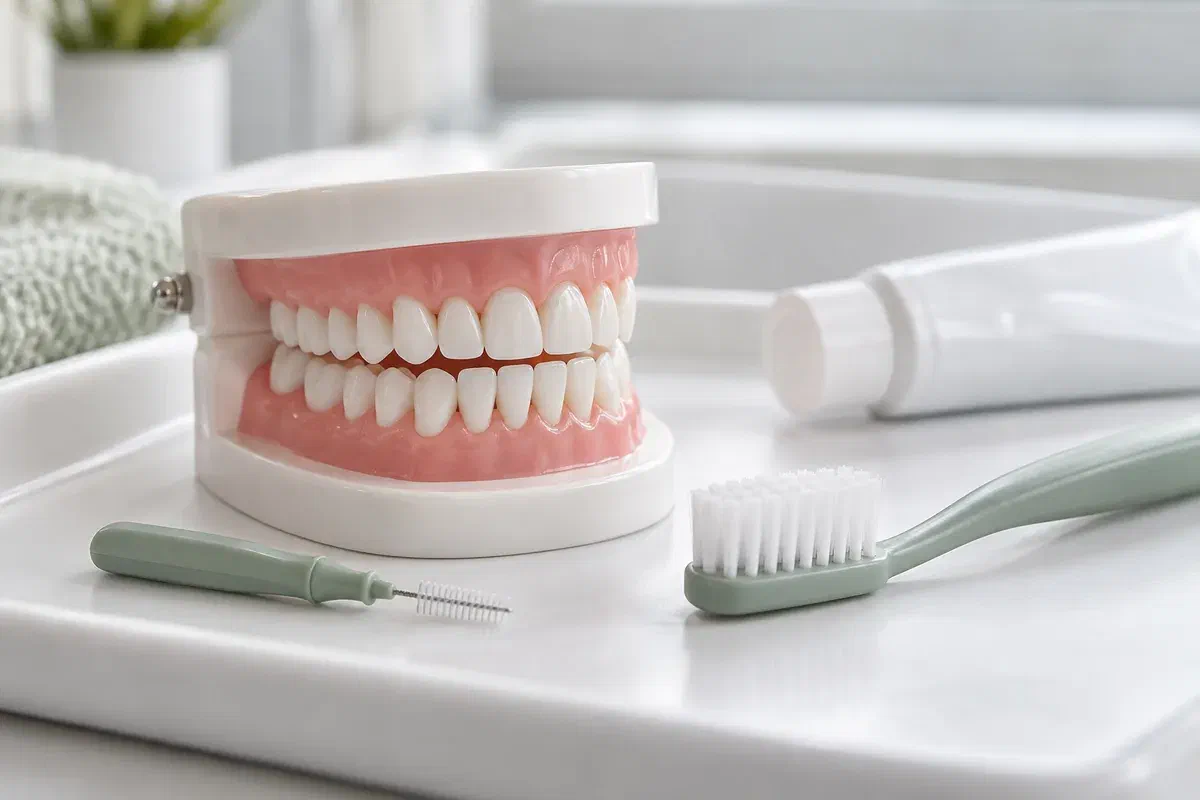
Illustrative dental discussion using a toothbrush and teaching model
General & Family Dentistry

Cavity Prevention in Puslinch

Told a spot on your tooth is one to watch? Early mineral loss can sometimes be managed without a filling. If you are coming from Puslinch, we explain what is being monitored, what you can do at home, and when repair becomes necessary.

Puslinch · early changes, careful choices

“Let’s keep an eye on that one”

Hearing that a tooth is being watched can feel uncertain. Should it not just be fixed? Not necessarily. An early area of mineral loss, sometimes seen as a dull white patch or a subtle shadow on an X-ray, may hold steady or improve when the conditions around it change. That is where cavity prevention comes in: cleaning that reaches the spot, appropriate fluoride, fewer sugar exposures and regular review.

Here is the reasoning. Each time plaque bacteria meet sugar, they make acid that pulls minerals out of enamel. Between those moments, saliva and fluoride help return some of what was lost. Early on, the surface is weakened but intact; later, it can break down into a hole. Only an examination can tell which stage a tooth has reached and whether it is suitable for prevention, monitoring or a filling. Watching a spot is never a reason to delay repairing one that needs it.

For a Puslinch household, a monitored tooth can raise practical questions: how long between checks, and what would mean coming in sooner? Ask us to show you the area if possible and explain what we will compare next time. Tell us about dryness, a hard-to-reach tooth or anything new in your health, and we can suggest what to change and why.

Ask what your monitored tooth needs
Dental model, soft toothbrush, and interdental brush illustrating preventive care
Signs to mention

Changes that deserve a closer look

Prevention is worth discussing before anything hurts. A new medicine, a change in diet, new dental work or a health issue can tip the balance for teeth already showing early changes.

Spots that keep multiplying

When early changes or new cavities keep appearing, it is time to look at the wider pattern. We will weigh what recent exams showed, which surfaces resist your brush, and how sugar is spread through your day. The aim is to identify what is contributing, without blame.

A mouth that is often dry

Saliva plays a key part in helping early spots recover, so ongoing dryness matters. Tell us about any medicines or treatments that began around the same time. Do not stop a prescription without your doctor’s advice; we may need to coordinate with them.

A watched tooth that is hard to reach

If the monitored area sits behind crowded teeth, under a wire, on an exposed root or somewhere your hands cannot easily reach, show us. A different brush, angle or aid may help that particular surface more than an added product.

Early lesions usually cause no pain, and neither do some deeper ones. Keep your recommended examinations, and come in sooner for a hole you can feel, a broken filling or symptoms. Products cannot restore a surface that has already broken down.

Why monitor at all

Sometimes the best first step is not a filling

Prevention aims to lower the chance of new decay and, where clinically appropriate, to give early changes the chance to stabilize without drilling. It is not a guarantee that a watched spot will never need treatment. A clear plan names the tooth, explains what you can do for it, and sets out what will be compared at the next review.

Teeth that already have fillings or crowns still benefit. A restoration deals with one area of damage, while the rest of that tooth and those around it remain in the same mouth with the same habits. Ask how your existing dental work fits into the plan, and what changes would justify booking before your next check.

Patient information: NIDCR — the tooth decay process

A clear reason for each step

We focus on actions tied to your findings, such as reaching one particular surface, moving a sweet drink to mealtimes, or addressing dryness. Understanding how each step helps the watched area makes it easier to commit to.

Tools and technique for that surface

Bring your current brush and floss and ask us to show you how to reach the monitored spot. The right aid depends on your mouth and hands. Paying more, or choosing a stronger flavour, does not in itself improve protection.

Comparisons over time

At each examination we look at the monitored area again and compare it with earlier findings or images. Ask which teeth are on the list and when they will be reviewed. Timing should reflect how active the changes appear.

How we approach early decay

Assess, act, compare, decide

Start by telling us your current routine and where it falls down. Long days on the farm or at work, the distance you travel, how nimble your hands are, where you buy supplies and what treatment would cost can all come into it.

  1. Identify the stage

    The dentist examines your teeth and asks about past decay, health, medicines, dryness and cleaning habits. X-rays may be recommended if clinically indicated, particularly between teeth. Any current symptom is noted and assessed on its own.

  2. Understand what is feeding it

    We may look at how often sugar reaches the area, how well plaque is cleared there, fluoride exposure and nearby features that hold plaque. The aim is to understand your situation rather than reduce it to one snack or a missed night.

  3. Change the conditions

    We agree on cleaning, products and whether professional fluoride would support the area. You will know which change to start with and exactly how any prescribed paste should be used. If children in the family have early spots too, their advice depends on age and is discussed separately.

  4. Compare and decide

    At the next visit we look at whether the area is stable, improving or progressing. If it has broken down, treatment will be discussed. Let us know if a recommendation is uncomfortable, unaffordable or hard to follow so alternatives can be considered.

Helping a watched tooth at home

Give the enamel time to recover

Daily care helps most when it reaches the affected surface and happens consistently. Your age, whether you can spit easily, and any swallowing or medical concerns all shape the advice, so mention them.

Clean the spot deliberately

Adults are usually advised to brush twice daily using a fluoride toothpaste and clean between teeth each day. Give the watched surface particular attention with the tool we showed you. A rinse cannot replace brushing, and brushing alone often misses contacts.

Longer breaks from sugar

Fewer sugar exposures mean longer recovery periods for enamel. Where it suits your health, keep sweet foods and drinks to mealtimes and choose plain water between them. The goal is a sustainable pattern that supports nutrition, not a ban on treats.

Extra fluoride only as advised

If we recommend a higher-strength toothpaste or rinse for an early lesion, use it exactly as instructed and keep it out of children’s reach. Ask before adding several products. More fluoride is not always appropriate.

Patient information: Canadian Dental Association — oral health basics · NIDCR — oral hygiene

Possible measures

Support for teeth with early changes

Which measures we recommend depends on the examination and risk discussion. Ask what each is expected to do for the watched area, its limits, and how it connects with your routine.

First line for early lesions

Targeted home care

Technique aimed at the affected surface, an appropriate fluoride toothpaste and fewer sugar exposures form the foundation. Some people need adapted tools or someone to help. Talk about barriers so the plan works for you.

Extra help for weakened enamel

Professional fluoride application

An in-clinic fluoride treatment may be suggested depending on age, risk and the early changes we see. We will explain what it is meant to do and when we will reassess. It adds to home care and does not replace it.

For selected chewing surfaces

Sealants for suitable grooves

In some cases a sealant may be considered for a suitable groove. The tooth must be assessed carefully, and the sealant is reviewed over time. It protects only the grooves it covers, so other surfaces still rely on daily cleaning.

Patient information: Canadian Dental Association — appropriate fluoride use · NIDCR — sealants

Early-decay questions

Why watch a spot instead of filling it?

We welcome questions about fluoride, diet and monitored teeth. The best answers connect general prevention principles with your specific findings and a routine you can keep up.

(905) 876-4488
What does a white spot on my tooth mean?
A dull white patch can be an early sign of mineral loss, but white marks can have other causes too. The dentist can examine it and explain what it is likely to be and whether prevention, monitoring or treatment makes sense.
Why not just fill an early spot to be safe?
A filling removes some tooth structure and will itself need maintenance over time. If an early change is still intact and may be managed with prevention, monitoring can be a reasonable choice. If it progresses or forms a hole, treatment will be discussed.
How will you know if a monitored spot is getting worse?
We compare the area at each examination, and sometimes with X-rays taken when clinically indicated. Changes in size, texture or appearance help guide the decision. Ask us what we are looking for so you understand the plan.
What can I do at home to help an early lesion?
Careful cleaning of that surface, using fluoride toothpaste as directed, and reducing how often you have sugary foods and drinks can all help. Your dentist may also suggest a professional fluoride treatment or a stronger toothpaste.
Since we live out in Puslinch, can monitoring visits line up with routine checkups?
Often, yes. A monitored spot is usually reviewed at a scheduled examination. If you notice a change, sensitivity or a rough edge before then, call our Bronte Street practice rather than waiting.
Do older adults get early decay that can be watched too?
Yes. Early changes can appear at any age, including on exposed root surfaces. Whether a spot can be monitored depends on its location and activity. Health, medicine and saliva changes may affect the plan.
Coming from Puslinch

A clear plan for the teeth we’re watching

At our Bronte Street practice, we will look over your teeth, any monitored areas and the routine you rely on. Come with questions about early spots, recurring cavities, products or hard-to-clean areas. We will agree on priorities and suitable preventive care.

If a tooth starts to hurt, swells or breaks, please call us. The online form is for appointment requests that can wait.

Visit Milton Dental Clinic
Unit 1, 342 Bronte St. S, Milton, ON L9T 5B7
Get directions Clinic hours
Monday–Thursday
11am–7pm
Friday–Sunday
By appointment only

Areas we serve

  • Milton
  • Oakville
  • Mississauga
  • Georgetown
  • Halton Hills
  • Acton
  • Campbellville
  • Brampton
  • Burlington
  • Puslinch
  • Rockwood
  • Erin
  • Caledon
  • Etobicoke
  • Old Milton
  • Bronte Meadows
  • Timberlea
  • Dorset Park
  • Dempsey
  • Clarke
  • Beaty
  • Coates
  • Harrison
  • Scott
  • Willmott
  • Ford
  • Bowes
  • Cobden
  • Walker
  • Mountain View
  • Milton Heights
  • Hawthorne Village
  • Valley View
  • Fallingbrook
  • Nassagaweya
  • Trafalgar
  • Esquesing
  • Nelson
  • Brookville
  • Moffat
  • Glen Williams
  • Norval
  • Limehouse
  • Stewarttown
  • Ashgrove
  • Hornby
  • Silver Creek
  • Speyside
  • Scotch Block
  • North Oakville
  • River Oaks
  • Glen Abbey
  • West Oak Trails
  • Palermo
  • Bronte Creek
  • College Park
  • Joshua Creek
  • Uptown Core
  • Preserve
  • Iroquois Ridge
  • Lisgar
  • Meadowvale
  • Meadowvale Village
  • Churchill Meadows
  • Erin Mills
  • Central Erin Mills
  • Streetsville
  • East Credit
  • Creditview
  • Heartland
  • Sheridan
  • Mount Pleasant
  • Credit Valley
  • Huttonville
  • Churchville
  • Springbrook
  • Northwest Brampton
  • Bram West
  • Fletcher's Meadow
  • Fletcher's Creek South
  • Alton Village
  • Orchard
  • Millcroft
  • Headon Forest
  • Tansley
  • Brant Hills
  • Tyandaga
  • Kilbride
  • Lowville
  • Aberfoyle
  • Morriston
  • Arkell
  • Hillsburgh
  • Freelton
  • Carlisle
  • Waterdown
  • Flamborough
  • Mountsberg

How can we help?

Milton Dental Clinic

Have a question about your smile? Choose the option that works best for you.

For urgent dental concerns, please call.
Messages are reviewed during clinic hours.