

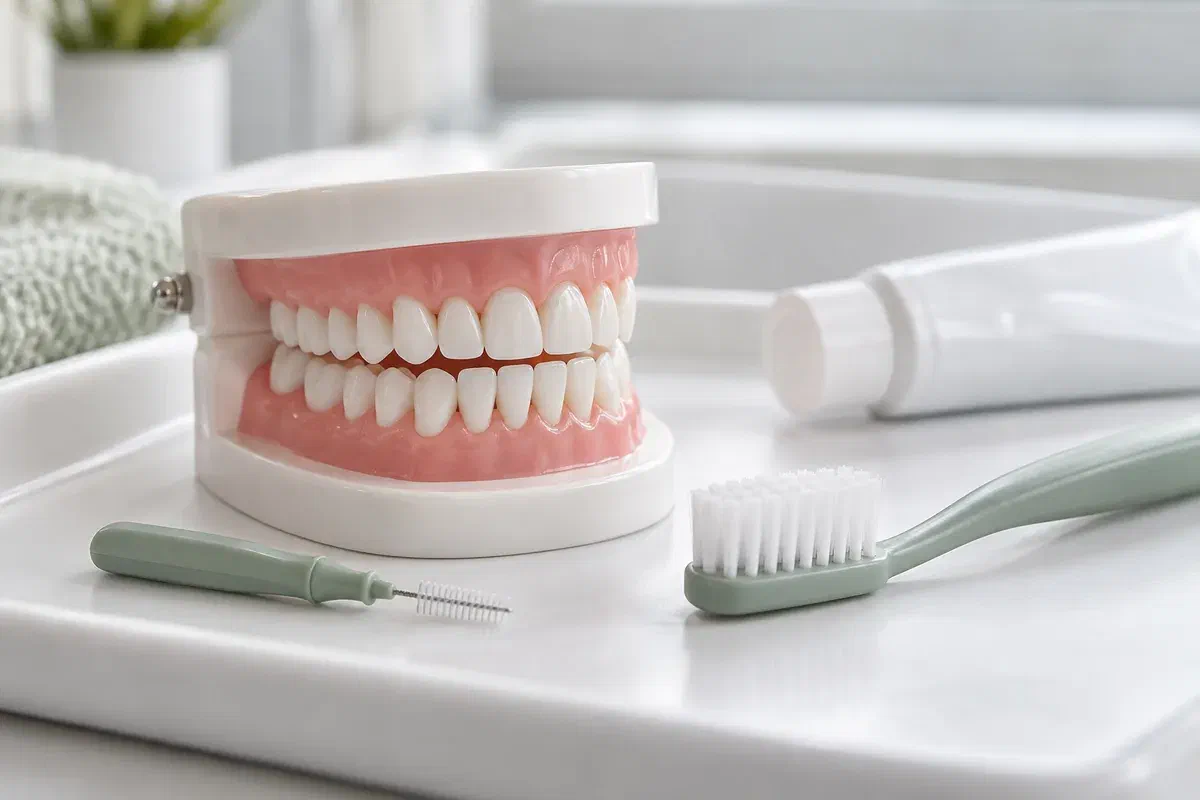
Illustrative dental discussion using a toothbrush and teaching model
General & Family Dentistry

Cavity Prevention in Rockwood

Arthritis, a tremor or memory changes can turn brushing into a struggle, and sometimes a family member steps in. For people travelling from Rockwood, we adapt cavity prevention so it works for the person and for whoever helps.

Rockwood · care that adapts

When brushing needs a second pair of hands

Holding a thin toothbrush handle is easy until it isn’t. Stiff joints, weakness after an illness, a tremor or forgetfulness can make a routine that once took two minutes feel impossible, and plaque builds where it is missed. Cavity prevention in these situations still depends on cleaning, fluoride, sugar timing and examination, but the methods often need to change, and sometimes the person brushing is a spouse, an adult child or a care worker.

Decay follows the same steps for everyone. Bacteria in plaque digest sugars and give off acid; repeated attacks leach minerals from enamel and from exposed roots, which are softer. Saliva and fluoride help repair early losses, though medicines that dry the mouth can weaken that defence. An early weakened area is not yet a hole. The examination decides whether prevention, monitoring or treatment fits, and prevention should never delay a repair.

If you are bringing a parent in from Rockwood, come into the room with them if they agree, and bring the brush and any aids used at home. Describe how cleaning actually happens, what is resisted, and what has changed. That lets us tailor the advice to both of you, and we will say plainly what any in-clinic treatment is for.

Ask about adapted prevention
Dental model, soft toothbrush, and interdental brush illustrating preventive care
Changes caregivers notice

Small signs worth reporting

There is no need to wait for a toothache. A new diagnosis, new medicines, a hospital stay, a move to assisted living or a change in hand strength can all mean the routine needs adjusting.

Decay where it never used to be

New cavities, particularly along the gumline or on roots, suggest the routine is no longer reaching everywhere. We look at the overall pattern, including recent findings and sweet snacks or drinks, so the contributors are understood without anyone being blamed.

A mouth that feels parched

Many medicines can reduce saliva, which normally protects teeth. Bring a current medication list. Prescriptions should not be stopped or changed without the doctor or pharmacist; we may need to coordinate advice with them.

Hands that no longer cooperate

Swollen knuckles, shaky hands, weakness on one side or limited reach can leave much of the mouth uncleaned. Show us how brushing is done now. A thicker handle, a powered brush or a different position for the helper may make a real difference.

Someone who cannot easily describe discomfort may not complain of a toothache. Keep recommended examinations, and arrange a visit sooner if you notice a hole, a broken filling, swelling, or changes in eating or behaviour. Products cannot rebuild a broken-down tooth.

Why adapt the plan

Comfort, chewing and fewer surprises

Prevention aims to reduce new decay and, where appropriate, help early changes without drilling. It cannot guarantee a mouth free of cavities, especially when health is changing. A realistic plan picks a few priorities that the person, or their helper, can actually manage, and gives us something to compare at the next visit.

Fillings, crowns and partial dentures all need looking after. Each repair fixes one area, while the natural tooth around it, exposed roots and neighbouring teeth remain at risk. Ask how existing dental work changes the routine, and what signs would be worth a phone call before the next planned appointment.

Patient information: NIDCR — the tooth decay process

What is achievable, first

We start with the step most likely to help given the findings, perhaps cleaning the gumline of the lower teeth, swapping a sweet drink, or managing dryness. When everyone understands the reason, it is easier to keep going.

Tools for tired or stiff hands

Bring the current brush and aids and ask us to demonstrate. Wide-handled or powered brushes, floss holders and interdental brushes suit some people better than others. A costly product or stronger flavour is not automatically more effective.

Reviews matched to changing health

Examinations let us recheck the teeth and follow anything noted before. Ask which areas we are monitoring and when we will look again. The interval should reflect the person’s own risk, which may change as health changes.

How we work with families

Planning with the person and the helper

Describe the routine as it really is, including what gets skipped. Care schedules, who helps, mobility, swallowing, where supplies come from and what treatment might cost are all useful for us to know.

  1. Examine with care

    We check the teeth, gums and any dental work, and ask about health conditions, medicines, dryness and daily cleaning. X-rays may be suggested if clinically indicated and manageable. Any pain or problem is assessed separately from the prevention plan.

  2. Understand the barriers

    We may discuss how often sweet foods or drinks are given, how well plaque is removed, fluoride use and the areas a helper finds difficult. The aim is to understand the situation, not to judge the person or the caregiver.

  3. Agree on a manageable routine

    We work out a cleaning method, suitable products and whether in-office fluoride would help. A helper can practise with guidance in the chair. Ask what to prioritize on difficult days when a full routine is not possible.

  4. Adjust as needs change

    Each return visit is a chance to see what has shifted in the mouth and hear how the helper is coping. A new diagnosis, medicine or living arrangement can change the plan. If a recommendation is uncomfortable, unaffordable or not working, tell us so we can find another way.

Day-to-day support

A routine the helper can keep up

Home care works when it reaches the surfaces most at risk and happens reliably. If spitting is difficult or swallowing is unsafe, ask for specific instructions on toothpaste amount and position before changing anything.

Brush, gently and thoroughly

Twice-daily brushing with fluoride toothpaste, plus cleaning between teeth daily where possible, remains the goal. Standing behind or beside a seated person can give a helper a better view. A rinse does not replace brushing.

Sweet drinks and snacks at set times

Frequent sweetened tea, juice or soft snacks keep teeth exposed to acid. Where appropriate for health and nutrition, offer them with meals and give plain water between. Nutrition comes first, so ask us if diet changes are difficult.

Special products, handled safely

If a stronger toothpaste or rinse is recommended, use the amount instructed and store it out of reach of children and anyone who might swallow it by mistake. Mixing several fluoride products without guidance is best avoided, since a larger dose does not suit every mouth.

Patient information: Canadian Dental Association — oral health basics · NIDCR — oral hygiene

Measures to consider

Practical support, not more products

The examination and risk discussion guide what we suggest. Ask what each measure is expected to do, its limitations, and how it fits with the care given at home.

The foundation, with help if needed

Adapted home care

Technique, an appropriate fluoride toothpaste and sensible food and drink choices come first. Many people benefit from adapted tools or another person’s help. Naming the obstacles early means the plan can suit both the patient and the caregiver.

Often discussed for root surfaces

Professional fluoride

A fluoride treatment in the clinic may be advised according to age, risk and tooth condition, including exposed roots. We will explain the reason, and whether it is repeated will depend on later findings. It supports home care rather than replacing it.

For selected grooves

Sealants, if suitable

Sealants can protect suitable pits and grooves, though they are discussed less often for older adults. Each tooth is assessed and any sealant is checked over time. It does not cover all surfaces, so daily cleaning remains essential.

Patient information: Canadian Dental Association — appropriate fluoride use · NIDCR — sealants

Caregiver questions from Rockwood

Helping someone else keep their teeth

We welcome questions about fluoride, diet and recurring decay, from patients and from the people who help them. The most useful answers fit general principles to the person’s findings and a routine that can be sustained.

(905) 876-4488
What is the easiest way to brush another adult’s teeth?
Many helpers find it easier to stand behind or beside a seated person, support the head gently, and use a small soft brush. Go slowly and explain each step. We can demonstrate positions at the visit.
Would a powered toothbrush help with arthritis?
Some people with arthritis find a powered brush or a manual brush with a thicker handle easier to hold and use. The best choice depends on grip, comfort and preference. Bring your current brush so we can compare options.
What if my parent refuses to let me brush their teeth?
Resistance is common, especially with memory changes. Trying a different time of day, a calm explanation, or letting the person hold the brush with you may help. Tell us what is happening, and involve their medical team if behaviour has changed.
How much toothpaste should someone use if they cannot spit?
This depends on the person’s swallowing ability and health. Ask the dentist and, where relevant, the medical team for specific guidance before changing toothpaste type or amount.
Do roots really decay faster than enamel?
Root surfaces are not covered by enamel and can be more vulnerable once exposed by gum recession. That makes cleaning along the gumline and appropriate fluoride particularly important for many older adults.
Is it worth bringing a family member to appointments?
With the patient’s agreement, a helper who attends can learn the routine firsthand and share what happens at home. For families travelling from Rockwood, planning that together can make each visit more productive.
Visiting from Rockwood

Bring the toothbrush, and the person who helps

Our Bronte Street team will look at the teeth, the routine and the practical obstacles together. Bring the tools used at home, a medication list and questions about recurring cavities. We will agree on priorities and preventive care that suits.

Call us about pain, swelling or a broken tooth rather than booking online. The online form is for routine appointment requests.

Visit Milton Dental Clinic
Unit 1, 342 Bronte St. S, Milton, ON L9T 5B7
Get directions Clinic hours
Monday–Thursday
11am–7pm
Friday–Sunday
By appointment only

Areas we serve

  • Milton
  • Oakville
  • Mississauga
  • Georgetown
  • Halton Hills
  • Acton
  • Campbellville
  • Brampton
  • Burlington
  • Puslinch
  • Rockwood
  • Erin
  • Caledon
  • Etobicoke
  • Old Milton
  • Bronte Meadows
  • Timberlea
  • Dorset Park
  • Dempsey
  • Clarke
  • Beaty
  • Coates
  • Harrison
  • Scott
  • Willmott
  • Ford
  • Bowes
  • Cobden
  • Walker
  • Mountain View
  • Milton Heights
  • Hawthorne Village
  • Valley View
  • Fallingbrook
  • Nassagaweya
  • Trafalgar
  • Esquesing
  • Nelson
  • Brookville
  • Moffat
  • Glen Williams
  • Norval
  • Limehouse
  • Stewarttown
  • Ashgrove
  • Hornby
  • Silver Creek
  • Speyside
  • Scotch Block
  • North Oakville
  • River Oaks
  • Glen Abbey
  • West Oak Trails
  • Palermo
  • Bronte Creek
  • College Park
  • Joshua Creek
  • Uptown Core
  • Preserve
  • Iroquois Ridge
  • Lisgar
  • Meadowvale
  • Meadowvale Village
  • Churchill Meadows
  • Erin Mills
  • Central Erin Mills
  • Streetsville
  • East Credit
  • Creditview
  • Heartland
  • Sheridan
  • Mount Pleasant
  • Credit Valley
  • Huttonville
  • Churchville
  • Springbrook
  • Northwest Brampton
  • Bram West
  • Fletcher's Meadow
  • Fletcher's Creek South
  • Alton Village
  • Orchard
  • Millcroft
  • Headon Forest
  • Tansley
  • Brant Hills
  • Tyandaga
  • Kilbride
  • Lowville
  • Aberfoyle
  • Morriston
  • Arkell
  • Hillsburgh
  • Freelton
  • Carlisle
  • Waterdown
  • Flamborough
  • Mountsberg

How can we help?

Milton Dental Clinic

Have a question about your smile? Choose the option that works best for you.

For urgent dental concerns, please call.
Messages are reviewed during clinic hours.