

Illustrative consultation about everyday habits and individual cavity risk
General & Family Dentistry

Cavity Risk Assessment in Caledon

Being told you are “high risk” for cavities can sound alarming and vague at the same time. For people coming from Caledon, a cavity risk assessment explains what sits behind that label, what you can influence and how the result can change.

Making sense of a high-risk result

A label is only useful if you know what’s behind it

Hearing the words high risk at a dental visit can leave you with more questions than answers. High compared to whom? Because of what? Is it permanent? Those are exactly the right questions, and a proper cavity risk assessment should answer them in plain language rather than leaving you with a word on a chart.

The category comes from weighing several things together. Recent or repeated decay, early lesions seen on examination, reduced saliva, frequent sugar, low fluoride exposure and areas that are difficult to clean can all push risk up. Good habits, fluoride and healthy saliva push it down. Your history and today's findings set the scene for both.

A high result isn't a verdict on your character or a guarantee of more fillings. It is a signal that prevention deserves a closer plan. Ask us which factors put you in that category, which ones you can change, and how we will know if things are improving.

Get your risk result explained
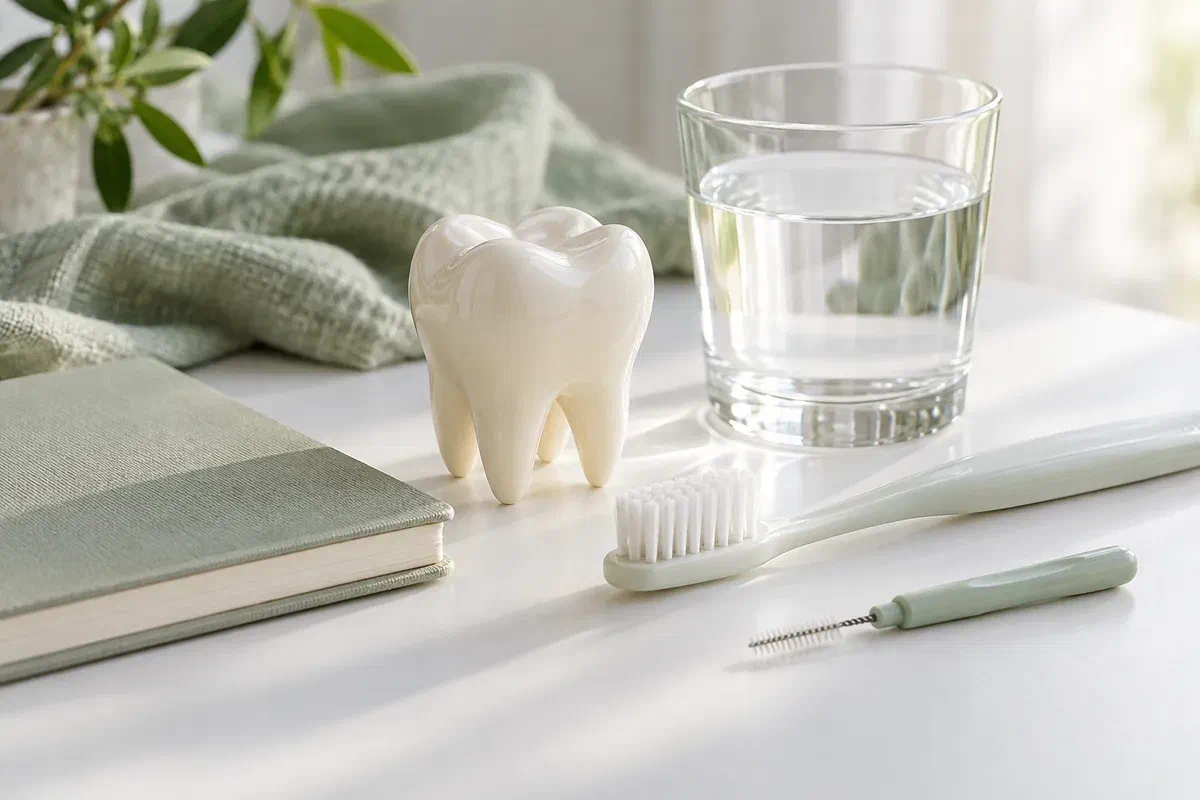
Dental model, cleaning aids, water, and a notebook illustrating prevention planning
Common starting points

How people end up asking about risk

In Caledon, many of the people who ask for a closer look have just had news they didn't expect. These are some common situations.

Several cavities at one visit

Finding more than one new cavity at once often prompts a risk review. If you know when and why earlier fillings were placed, bring that information. Whether problems are recent or spread across many years affects what they mean.

A diagnosis or prescription

Diabetes, treatment for cancer, some mental health medicines and many others can affect saliva or healing. Bring a current medication list and mention any dryness. Where something should be raised with your doctor or pharmacist, we'll let you know.

A routine that's hard to maintain

Long commutes, farm or trade work, young children, a disability or orthodontic treatment can make care harder. Explain the specific barrier. Advice is more realistic once the obstacle is understood.

A risk category is about future decay. A tooth that already hurts, has a visible hole or has lost a filling needs its own assessment, so please mention it.

What the explanation gives you

From a label to a plan you understand

A clear breakdown of your risk turns a worrying word into something you can act on. It helps decide which preventive measures make sense, how closely to monitor and how often to review. No assessment is perfectly certain, so ask which factor carries the most weight and how the result would change if it improved.

By the end, you should be able to name the factors behind your result, the changes being suggested and what the next review will look at. When those factors change, the category should be reconsidered rather than carried forward automatically.

Patient information: American Dental Association — caries risk assessment and management

Active disease or past history?

Many fillings can reflect old problems rather than current ones. The dentist weighs present findings and recent change most heavily. Ask whether each area is being monitored, needs preventive treatment or needs repair, and what the evidence shows.

Factors you can change

Some influences, such as sugar frequency or between-teeth cleaning, are within your control; others, like a necessary medicine, are not. Focus first on the change that offers the most benefit and is realistic for you.

Reviews that track the category

Agree what will be reassessed next time and why the interval was chosen. A review can check new lesions, earlier areas and whether the factors behind your category are improving.

How we reach a result

Four parts, explained as we go

Come as you are. A list of medicines and anything you recall about past dental work is plenty, and earlier records can be requested with your permission.

  1. Collect the background

    We cover previous decay and treatment, symptoms, medical conditions, medicines, dryness, diet and how you clean your teeth. Knowing why a past filling was placed helps. Previous records can clarify uncertain details.

  2. Assess the mouth today

    Teeth, existing restorations, gums and plaque-prone areas are examined for early and established decay. If a surface can't be judged by sight, X-rays may be advised where they would answer a specific question. That is decided individually.

  3. Explain the category

    We show you which findings place you in a particular category and which habits or factors are on your side. You can ask how reliable the result is. A high result calls for a plan, not resignation to more decay.

  4. Build the plan and review point

    The plan covers three things: what changes at home, whether chairside prevention such as varnish is worthwhile, and how any current lesions will be treated. Costs and product directions are explained before anything starts. The review date is set according to your findings and can change as the picture changes.

Changing the result

Work on the factors behind the label

Improvement comes from what happens between visits. If something you were told is unclear, conflicts with medical advice or simply isn't manageable, please say so.

Follow the cleaning plan

Brush with fluoride toothpaste, or the prescription paste if one was recommended, and clean between teeth using the agreed method. If dexterity or access is a problem, ask about tools or help rather than giving up on an area.

Reduce how often sugar arrives

Where relevant, aim for fewer sweet snacks and drinks across the day. Moving them to mealtimes is often more achievable than cutting them out entirely. Any change should support healthy eating and medical guidance.

Tell us what changes

Mention new medicines, ongoing dryness, medical treatment or difficulty keeping up. Never stop a prescribed medicine on your own. Your category is reassessed when circumstances shift, not fixed after one appointment.

Patient information: NIDCR — oral hygiene and additional preventive care · Canadian Dental Association — appropriate fluoride use

What follows a result

The category guides care, findings decide it

Your plan may include both prevention and treatment. Ask which suggestions target future decay and which address a specific tooth.

When current protection is enough

Keep and check

If your risk is moderate or low and the routine is working, continue with appropriate reviews. Lower risk still deserves attention; learn which changes should prompt an earlier visit.

When a high-risk factor needs addressing

Add stronger prevention

Professional fluoride varnish, prescription toothpaste, sealants on suitable teeth or dry-mouth support may be recommended. Each should come with a reason and instructions, and you can ask what would happen without it.

When lesions are present

Treat current decay

Decay already present is assessed for activity and extent. Early lesions may be managed with prevention; others need restoration. A risk category informs treatment planning but doesn't determine each tooth by itself.

Questions about risk categories

What high, moderate and low really mean

Ask us to explain your result in everyday terms. You should know the main factors, the plan and what will be reviewed next.

(905) 876-4488
What does it actually mean to be called high risk for cavities?
It means that, based on your history, current findings and circumstances, new decay or progression is more likely than average. It is not a prediction for any particular tooth, and it can change as those factors change.
How long does it take to move from high to lower risk?
There’s no set timeline. It depends on which factors are involved and how they change. The dentist will review findings at each visit and update the category when the evidence supports it.
Does diabetes affect cavity risk?
It can, particularly if it affects saliva or gum health. Good diabetes management supports oral health. Let the dentist know about your condition and medicines so they can be considered in your plan.
Is cavity risk inherited?
Some features, such as tooth shape or enamel quality, may run in families, but daily habits, diet, saliva and fluoride usually have a larger influence. A family history doesn’t mean decay is unavoidable.
Why does my partner have a different category from me?
Even in the same household, history, saliva, teeth and health can differ. Each person’s category reflects their own findings. Don’t share prescription products or copy someone else’s schedule without checking.
Can I ask for a written summary of my risk factors?
Yes. A short written note of the main factors and agreed steps can make the plan easier to follow at home. Ask at the end of your appointment, especially if you’re planning a longer gap before the next visit from Caledon.
Coming in from Caledon

Ask what your result really means

Book at our Bronte Street practice to talk through a high-risk result, a recent cluster of cavities or a change in your health. Bring your medication list and the products you use. We'll explain the factors behind your category and agree what to work on first.

A bad toothache, facial swelling or a fractured tooth should be handled by phone. Our online form works best for routine, unhurried bookings.

Visit Milton Dental Clinic
Unit 1, 342 Bronte St. S, Milton, ON L9T 5B7
Get directions Clinic hours
Monday–Thursday
11am–7pm
Friday–Sunday
By appointment only

Areas we serve

  • Milton
  • Oakville
  • Mississauga
  • Georgetown
  • Halton Hills
  • Acton
  • Campbellville
  • Brampton
  • Burlington
  • Puslinch
  • Rockwood
  • Erin
  • Caledon
  • Etobicoke
  • Old Milton
  • Bronte Meadows
  • Timberlea
  • Dorset Park
  • Dempsey
  • Clarke
  • Beaty
  • Coates
  • Harrison
  • Scott
  • Willmott
  • Ford
  • Bowes
  • Cobden
  • Walker
  • Mountain View
  • Milton Heights
  • Hawthorne Village
  • Valley View
  • Fallingbrook
  • Nassagaweya
  • Trafalgar
  • Esquesing
  • Nelson
  • Brookville
  • Moffat
  • Glen Williams
  • Norval
  • Limehouse
  • Stewarttown
  • Ashgrove
  • Hornby
  • Silver Creek
  • Speyside
  • Scotch Block
  • North Oakville
  • River Oaks
  • Glen Abbey
  • West Oak Trails
  • Palermo
  • Bronte Creek
  • College Park
  • Joshua Creek
  • Uptown Core
  • Preserve
  • Iroquois Ridge
  • Lisgar
  • Meadowvale
  • Meadowvale Village
  • Churchill Meadows
  • Erin Mills
  • Central Erin Mills
  • Streetsville
  • East Credit
  • Creditview
  • Heartland
  • Sheridan
  • Mount Pleasant
  • Credit Valley
  • Huttonville
  • Churchville
  • Springbrook
  • Northwest Brampton
  • Bram West
  • Fletcher's Meadow
  • Fletcher's Creek South
  • Alton Village
  • Orchard
  • Millcroft
  • Headon Forest
  • Tansley
  • Brant Hills
  • Tyandaga
  • Kilbride
  • Lowville
  • Aberfoyle
  • Morriston
  • Arkell
  • Hillsburgh
  • Freelton
  • Carlisle
  • Waterdown
  • Flamborough
  • Mountsberg

How can we help?

Milton Dental Clinic

Have a question about your smile? Choose the option that works best for you.

For urgent dental concerns, please call.
Messages are reviewed during clinic hours.