

Illustrative consultation about everyday habits and individual cavity risk
General & Family Dentistry

Cavity Risk Assessment in Etobicoke

When the trip in takes planning, every appointment should earn its place. For people coming from Etobicoke, a cavity risk assessment sets review timing and prevention around your findings, so visits are purposeful and well spaced.

Coming in from Etobicoke

How often do you really need to come back?

That question sits underneath a lot of preventive dentistry, and the honest answer is that it depends. Someone with stable teeth and few new problems may need a different rhythm from someone who has had several cavities this year. A cavity risk assessment is how that answer gets worked out, by looking at your history, today's examination and the everyday conditions in your mouth.

For anyone with a longer trip, the result has a practical side. Knowing which factors matter most lets us organise care so that one visit can cover the examination, the risk conversation and any preventive step that makes sense, rather than spreading them over several separate trips. It also clarifies what you can manage at home in between.

This is not a guess about which tooth will fail next, nor a mark for effort. It is a structured way to agree priorities. Tell us how often you can realistically come in, what has changed with your health or routine, and which advice has been hard to keep, and we will plan with those limits in mind.

Plan a well-organised risk review
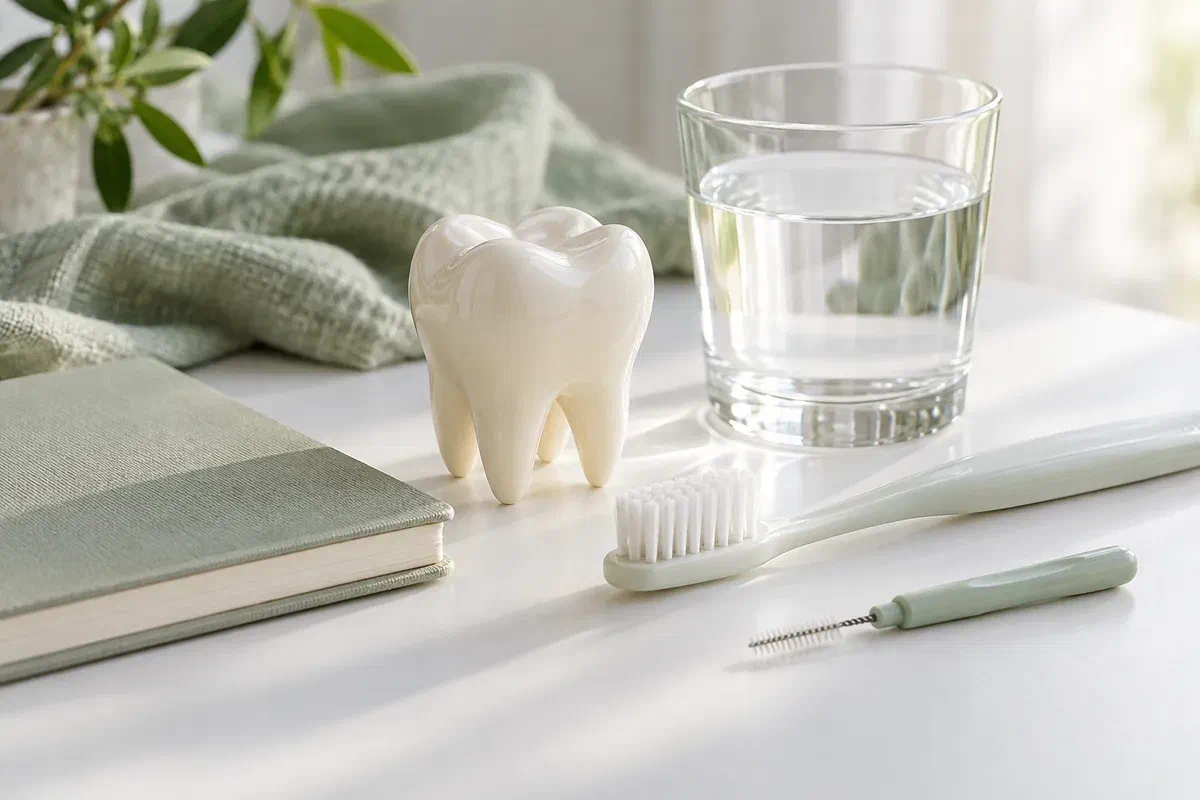
Dental model, cleaning aids, water, and a notebook illustrating prevention planning
Good times to ask

Three situations that justify a closer look

A change in your teeth or circumstances can quietly alter how much attention they need. These are common prompts for booking an assessment.

One cavity, then another

Decay appearing in quick succession suggests a shift worth understanding. It helps to know whether older fillings were for cavities, chips or wear, and roughly when they were done. Recent timing is often more telling than the overall tally.

Health or medicine changes

Some prescriptions, medical treatment and conditions reduce the saliva that normally protects enamel. Write down your current medicines and when any dryness started. Questions that belong with your physician or pharmacist can be noted for you.

Care that is hard to fit in

A long commute, caring for relatives, reduced dexterity or a new orthodontic appliance can make thorough cleaning difficult. Describe the real obstacle. Recommendations land better when they account for it.

Assessing risk and treating a sore tooth are separate jobs. If something already hurts, has a visible hole or a filling has come out, say so when booking so it can be examined at the same visit.

The payoff

Purposeful visits, clearer priorities

Putting the evidence side by side helps decide not just what prevention to use but how often to check on it. Review intervals can be set to match findings rather than habit. There is still uncertainty in any assessment, so ask which factor drives the timing and what change would let it stretch.

What you take away should be concrete: the habits already helping, any additional protection worth trying and how the next visit will measure progress. If your health or routine changes before then, the plan can be adjusted by phone or at your next appointment.

Patient information: American Dental Association — caries risk assessment and management

Old repairs kept in perspective

A long dental history doesn't automatically mean active disease now. The dentist weighs what is visible today and what has changed recently. Ask which spots are simply being watched, which need protecting and which need a repair.

A plan that travels well

Fewer, well-chosen changes are easier to keep up than a crowded list, especially between less frequent visits. Ask which step offers the most benefit. Your budget, preferences and routines are relevant.

Appointments with a clear job

Know what the next visit is for and why it is timed as it is. A useful follow-up checks new and earlier areas and how the routine has gone, so the trip is worthwhile.

On the day

One visit, four parts

No paperwork marathon is needed. Bring what you remember about past treatment and, if you can, contact details for your previous dentist so records can be requested ahead of time.

  1. Background first

    We start with past treatment, symptoms, medicines, dryness, diet patterns and how you clean. Any detail about why a filling was done is useful. Records forwarded beforehand can save time and fill in gaps.

  2. A careful examination

    Teeth, fillings, gum margins and plaque-retaining areas are checked for signs of active decay. Where surfaces between teeth can't be assessed by sight, X-rays may be suggested if they answer a real clinical question. That decision is made for you specifically.

  3. What it all means

    The dentist explains which findings point toward higher risk and which habits are working in your favour. Feel free to ask about the limits of the assessment. A higher result tells us to plan; it does not mean more decay is a certainty.

  4. Agreeing the plan and interval

    Home care, any in-office prevention and treatment of existing decay are discussed, along with costs and product instructions. We set a review interval that suits your findings and, where reasonable, the trip involved.

Between appointments

Keep progress going on your own

With visits spaced to suit you, the home routine carries more of the load. If something you were told is unclear, conflicts with another clinician's instructions or isn't realistic, call and ask.

Stick to the agreed cleaning

Brush with fluoride toothpaste and clean between teeth using the method you were shown. If a particular area is hard to reach, ask about a different aid. Focus on technique for that area rather than simply brushing for longer.

Space out sweet exposures

If relevant to your plan, keep sugary snacks and drinks to fewer occasions in the day. A drink sipped across a long drive is one habit worth thinking about. Changes should still fit healthy eating and any medical diet.

Phone with updates

New medicines, ongoing dryness, a hospital stay or difficulty keeping up are all worth a call. Continue prescribed medicines unless your prescriber advises otherwise. Your plan can be adjusted without waiting for the next visit.

Patient information: NIDCR — oral hygiene and additional preventive care · Canadian Dental Association — appropriate fluoride use

After the assessment

Different findings lead to different care

Some recommendations protect against future decay; others deal with a tooth that already needs work. We'll make clear which is which.

When risk is lower and stable

Continue with longer gaps

If your teeth are doing well, your current routine can continue with reviews timed accordingly. Lower risk is not zero, so learn which changes should prompt a call between visits.

When specific factors need attention

Add extra protection

In-office fluoride, sealants for suitable grooves, a prescription toothpaste or dry-mouth care may be offered depending on your findings. Where possible, a protective step can be done at the same visit as your exam. Each is explained before it is added.

When a cavity has been found

Treat current decay

Existing decay is assessed for depth and activity. Some early lesions can be managed without drilling; others need a filling. Treatment visits can often be grouped thoughtfully to reduce extra trips.

Questions we hear from Etobicoke

Timing, travel and what the result means

If any part of the explanation is unclear, ask us to put it in everyday terms. Knowing the main factors helps you manage well between visits.

(905) 876-4488
Can the risk assessment be done during my regular exam and cleaning?
Often, yes. It relies on your history and the examination, which usually happen at the same appointment. Mention when booking that you’d like to discuss cavity risk so enough time is allowed.
If my risk is low, can I come in less often?
Possibly. Review intervals are based on your findings and history rather than a fixed rule for everyone. The dentist will suggest a timing and explain what changes would justify coming in sooner.
What should I do if a tooth starts hurting between visits?
Call the clinic for advice. Depending on symptoms, you may be seen soon, or it may be more sensible to seek prompt care nearer home. Facial swelling with difficulty breathing or swallowing needs emergency care right away.
Can records from my previous dentist be sent before my visit?
Yes, with your permission. Past X-rays and treatment notes can help the dentist understand your history and may reduce the need to repeat imaging. Ask us how to arrange this when you book.
Will I need a separate trip for fluoride varnish or sealants?
Not always. Where it is appropriate and time allows, some preventive steps can be done at the same visit. Ask when you book or during your appointment.
Does a high-risk result mean I'll always need frequent visits?
Not necessarily. Risk is reassessed as findings and circumstances change. If decay activity settles and habits improve, intervals may be adjusted at a later review.
From Etobicoke to Bronte Street

Make one well-planned visit count

Book at our Bronte Street practice and let us know you're travelling a fair way, so we can organise the appointment efficiently. Bring a medication list and the products you use. We'll talk through your findings and set a plan and review timing that suits you.

For a throbbing tooth, swelling or a fractured tooth, please call rather than booking online. Online requests are for non-urgent visits.

Visit Milton Dental Clinic
Unit 1, 342 Bronte St. S, Milton, ON L9T 5B7
Get directions Clinic hours
Monday–Thursday
11am–7pm
Friday–Sunday
By appointment only

Areas we serve

  • Milton
  • Oakville
  • Mississauga
  • Georgetown
  • Halton Hills
  • Acton
  • Campbellville
  • Brampton
  • Burlington
  • Puslinch
  • Rockwood
  • Erin
  • Caledon
  • Etobicoke
  • Old Milton
  • Bronte Meadows
  • Timberlea
  • Dorset Park
  • Dempsey
  • Clarke
  • Beaty
  • Coates
  • Harrison
  • Scott
  • Willmott
  • Ford
  • Bowes
  • Cobden
  • Walker
  • Mountain View
  • Milton Heights
  • Hawthorne Village
  • Valley View
  • Fallingbrook
  • Nassagaweya
  • Trafalgar
  • Esquesing
  • Nelson
  • Brookville
  • Moffat
  • Glen Williams
  • Norval
  • Limehouse
  • Stewarttown
  • Ashgrove
  • Hornby
  • Silver Creek
  • Speyside
  • Scotch Block
  • North Oakville
  • River Oaks
  • Glen Abbey
  • West Oak Trails
  • Palermo
  • Bronte Creek
  • College Park
  • Joshua Creek
  • Uptown Core
  • Preserve
  • Iroquois Ridge
  • Lisgar
  • Meadowvale
  • Meadowvale Village
  • Churchill Meadows
  • Erin Mills
  • Central Erin Mills
  • Streetsville
  • East Credit
  • Creditview
  • Heartland
  • Sheridan
  • Mount Pleasant
  • Credit Valley
  • Huttonville
  • Churchville
  • Springbrook
  • Northwest Brampton
  • Bram West
  • Fletcher's Meadow
  • Fletcher's Creek South
  • Alton Village
  • Orchard
  • Millcroft
  • Headon Forest
  • Tansley
  • Brant Hills
  • Tyandaga
  • Kilbride
  • Lowville
  • Aberfoyle
  • Morriston
  • Arkell
  • Hillsburgh
  • Freelton
  • Carlisle
  • Waterdown
  • Flamborough
  • Mountsberg

How can we help?

Milton Dental Clinic

Have a question about your smile? Choose the option that works best for you.

For urgent dental concerns, please call.
Messages are reviewed during clinic hours.