

Illustrative consultation about everyday habits and individual cavity risk
General & Family Dentistry

Cavity Risk Assessment in Halton Hills

Helping a parent brush, or noticing your own grip isn’t what it was, changes what prevention needs to look like. A cavity risk assessment for Halton Hills households takes reach, dexterity and caregiving into account from the start.

Caregivers and changing hands

A toothbrush in someone else’s hand

Plenty of adults in Halton Hills now help an older relative with daily care, and teeth are often the part nobody was taught how to manage. It is awkward to brush another person's teeth well. It can be just as frustrating when arthritis, a tremor or a stroke makes your own brushing less thorough than it used to be.

A cavity risk assessment considers how likely new decay is, and why. History of fillings, what the dentist finds on the day, saliva, sugar frequency and fluoride all play a part. So does the simple practical question of who is cleaning the teeth and how easily they can do it. Strengths matter too: a reliable helper or a good product already in use counts in your favour.

Nobody is being graded here, either the patient or the person helping. The goal is a plan both of you can follow. Come together if that's easier, explain what a normal day looks like and where cleaning breaks down, and we can agree the few steps that will make the most difference.

Plan care with a family helper
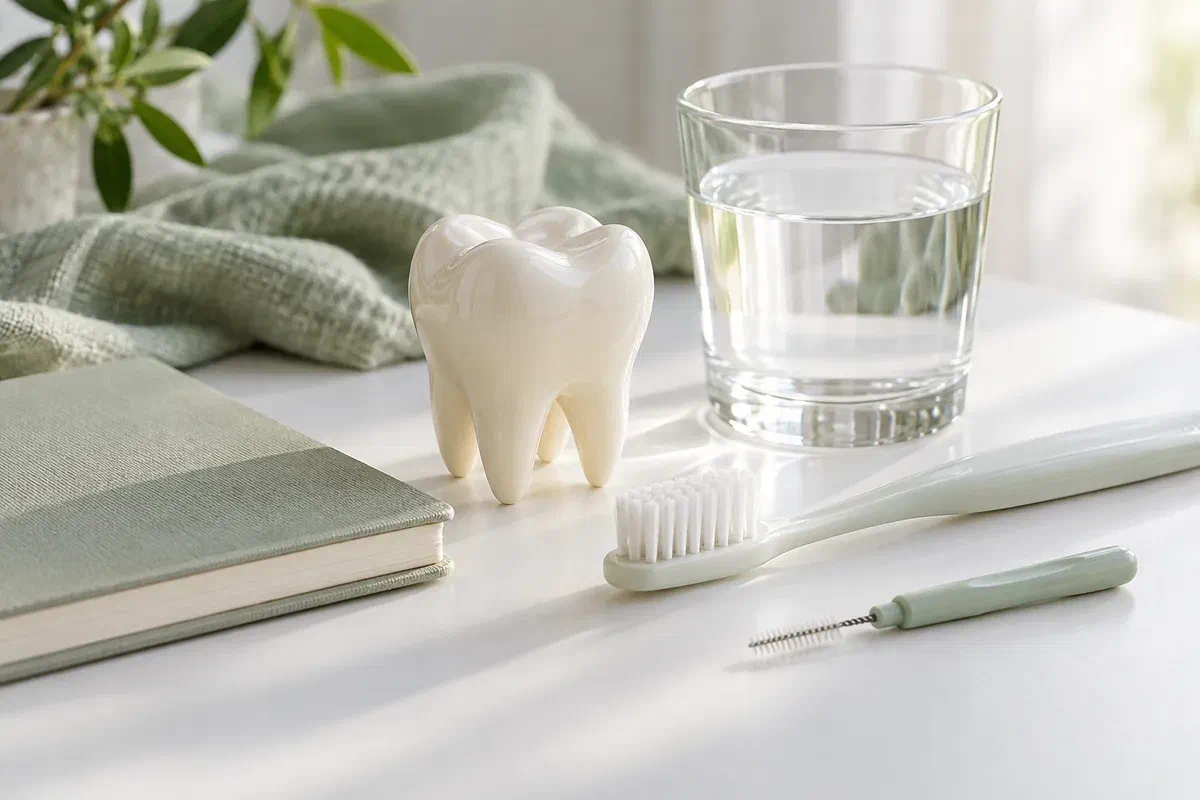
Dental model, cleaning aids, water, and a notebook illustrating prevention planning
What tends to bring people in

When daily cleaning gets harder

Risk often rises gradually as health or independence changes. For households in Halton Hills, these are situations where a closer review is especially worthwhile.

New decay near the gumline

Cavities appearing along the gumline or on exposed roots can follow a drop in cleaning or a drier mouth. If you know when previous fillings were done and why, bring that information. Recent changes usually explain more than the number of old repairs.

More medicines, less saliva

Older adults often take several medicines, and many reduce saliva. A complete, current list, including non-prescription products, is very helpful. Some findings may be worth raising with the family doctor or pharmacist, and we can help you note them.

Hands, memory or energy that have changed

Stiff fingers, memory changes, low energy or reliance on a caregiver can all affect what happens at the sink. Tell us specifically what is difficult. Practical adaptations are easier to suggest once the obstacle is clear.

Planning prevention is separate from checking a tooth that already seems sore. If you notice someone avoiding chewing on one side, a broken filling or a visible hole, mention it so that tooth is examined directly.

Why it is worthwhile

A plan that two people can share

When cleaning depends on a caregiver, vague advice quickly falls apart. Laying out the factors makes it possible to choose prevention that matches real circumstances: extra fluoride, simpler tools, monitoring and sensible review timing. Uncertainty remains, so it is fair to ask what single factor is driving the recommendations.

You should leave with something both patient and helper can follow: what is working already, where support would help and what will be checked next time. As health or living arrangements change, the plan can change too.

Patient information: American Dental Association — caries risk assessment and management

Telling past from present

A mouth with many crowns and fillings may or may not have active decay now. The dentist distinguishes old work from current findings. For each spot raised, ask whether it is being watched, protected or repaired.

Simple over elaborate

A larger-handled or powered brush and one high-fluoride product may help more than a complex routine. Ask which change gives the best return for the effort, and say what is affordable and acceptable to the person receiving care.

Reviews that check the routine

Agree what will be looked at again and why. Follow-up can check new and earlier areas and, just as importantly, whether the routine is working for both patient and helper.

How the visit runs

We start with the routine, not the chair

There's no need for detailed notes. A rough description of the daily routine, a medication list and, if available, past dental records are enough to begin.

  1. Hear the whole picture

    We ask about past dental work, current symptoms, medicines, dryness, eating patterns and who does the cleaning. A caregiver is welcome to contribute with the patient's agreement. Past records help where memory is uncertain.

  2. Look at teeth, roots and appliances

    The dentist checks enamel, fillings, exposed root surfaces, dentures or bridges and plaque-prone areas. X-rays may be suggested when a surface can't be judged visually and the image would change care. Each decision is individual.

  3. Explain the balance in plain words

    We explain what may be raising risk and what is protecting the teeth. Caregivers and patients can ask what the assessment can show and where its limits are. A higher result means more planning, not inevitable decay.

  4. Agree tasks and a return date

    Before you leave, everyone knows who does what at home, whether a professional fluoride application or similar step is worthwhile, and what will happen with any tooth already affected. Fees and product directions are spelled out. Review timing follows the findings and can be adjusted if health changes.

Day-to-day support

Small adaptations, steady protection

Instructions should work in the bathroom you actually have. If something is unclear, clashes with medical advice or doesn't suit the person you care for, let us know.

Adapt the tools and position

Use fluoride toothpaste and the between-teeth aid you were shown. Standing behind a seated person, or using a powered brush with a thicker handle, can make things easier. Ask us to demonstrate if a particular area keeps being missed.

Watch frequent sweet comforts

Where relevant, notice how often sweet drinks, candies or cough drops are used through the day, especially for someone with a dry mouth. Fewer occasions can help. Any change should respect nutrition needs and medical instructions.

Keep the team updated

Let us know about new medicines, worsening dryness, hospital stays or changes in who provides care. Prescribed medicine should not be stopped without the prescriber's advice. The plan is revisited as circumstances change.

Patient information: NIDCR — oral hygiene and additional preventive care · Canadian Dental Association — appropriate fluoride use

Possible directions

Care that fits the person and the helper

Some steps aim to reduce future risk and others treat a specific tooth. We will say clearly which is which and what each involves for the caregiver.

When things are stable

Keep the current routine going

If the teeth are doing well with the present arrangement, it can continue with appropriate reviews. Lower risk still deserves attention, and changes in health are a good reason to check in sooner.

When dryness or dexterity is a factor

Strengthen protection

Fluoride varnish, a prescription-strength toothpaste, sealants where suitable or dry-mouth products may be considered. Each comes with a reason and practical directions the helper can follow. Extras should be explained, not assumed.

When a lesion needs care

Manage decay already present

Existing decay is assessed for activity and size. Some early root lesions can be managed with prevention; others need a restoration. Treatment choices may also consider comfort, stamina and how easily the person can attend.

Caregiver questions

Helping someone else keep their teeth healthy

Ask us to explain any part of the result in everyday terms. Both patient and helper should know the main factors and the next review point.

(905) 876-4488
Can I come into the appointment with my parent?
Yes, with their agreement. A caregiver can share details about the daily routine and hear the advice first-hand. Let us know when booking if you’ll be attending together, and bring any notes you keep about their routine or medicines.
What's the easiest way to brush someone else's teeth?
Many caregivers find it easier to stand behind or beside a seated person, using a small-headed or powered brush with fluoride toothpaste. We can show you techniques during the visit and suggest aids for difficult areas.
Are cough drops and throat lozenges a concern?
Many contain sugar and are used frequently, which can add up for someone already at higher risk. Sugar-free versions may be an option. Check with the pharmacist that any alternative suits the person’s health needs.
Does someone with dentures still need a cavity risk review?
If any natural teeth remain, yes. Partial dentures can trap plaque against those teeth. Full dentures don’t decay, but the mouth and denture fit still need regular checks.
Is root decay different from ordinary cavities?
Root decay forms on root surfaces exposed by gum recession, which lack enamel. It is more common in older adults and may need specific preventive attention, such as higher-fluoride products where appropriate.
Can the risk improve if cleaning gets easier?
It may. Better access, a more manageable routine or relief from dryness can change findings over time. The plan is reassessed rather than treated as fixed.
Visits from across Halton Hills

Bring the routine and the helper

Set up a visit at our Bronte Street practice to talk about decay, dryness or the challenge of cleaning someone else's teeth. Bring the medication list and the toothbrush and products in use. We'll explain what matters most and agree steps that work for both of you.

If the person you look after has intense pain, a swollen face or a tooth that has snapped, phone us rather than using the web form, which handles routine requests.

Visit Milton Dental Clinic
Unit 1, 342 Bronte St. S, Milton, ON L9T 5B7
Get directions Clinic hours
Monday–Thursday
11am–7pm
Friday–Sunday
By appointment only

Areas we serve

  • Milton
  • Oakville
  • Mississauga
  • Georgetown
  • Halton Hills
  • Acton
  • Campbellville
  • Brampton
  • Burlington
  • Puslinch
  • Rockwood
  • Erin
  • Caledon
  • Etobicoke
  • Old Milton
  • Bronte Meadows
  • Timberlea
  • Dorset Park
  • Dempsey
  • Clarke
  • Beaty
  • Coates
  • Harrison
  • Scott
  • Willmott
  • Ford
  • Bowes
  • Cobden
  • Walker
  • Mountain View
  • Milton Heights
  • Hawthorne Village
  • Valley View
  • Fallingbrook
  • Nassagaweya
  • Trafalgar
  • Esquesing
  • Nelson
  • Brookville
  • Moffat
  • Glen Williams
  • Norval
  • Limehouse
  • Stewarttown
  • Ashgrove
  • Hornby
  • Silver Creek
  • Speyside
  • Scotch Block
  • North Oakville
  • River Oaks
  • Glen Abbey
  • West Oak Trails
  • Palermo
  • Bronte Creek
  • College Park
  • Joshua Creek
  • Uptown Core
  • Preserve
  • Iroquois Ridge
  • Lisgar
  • Meadowvale
  • Meadowvale Village
  • Churchill Meadows
  • Erin Mills
  • Central Erin Mills
  • Streetsville
  • East Credit
  • Creditview
  • Heartland
  • Sheridan
  • Mount Pleasant
  • Credit Valley
  • Huttonville
  • Churchville
  • Springbrook
  • Northwest Brampton
  • Bram West
  • Fletcher's Meadow
  • Fletcher's Creek South
  • Alton Village
  • Orchard
  • Millcroft
  • Headon Forest
  • Tansley
  • Brant Hills
  • Tyandaga
  • Kilbride
  • Lowville
  • Aberfoyle
  • Morriston
  • Arkell
  • Hillsburgh
  • Freelton
  • Carlisle
  • Waterdown
  • Flamborough
  • Mountsberg

How can we help?

Milton Dental Clinic

Have a question about your smile? Choose the option that works best for you.

For urgent dental concerns, please call.
Messages are reviewed during clinic hours.