

Illustrative consultation about everyday habits and individual cavity risk
General & Family Dentistry

Cavity Risk Assessment in Milton

A new cavity after years without one usually raises a fair question: why now? A cavity risk assessment in Milton looks at what has shifted in your mouth and your days, what is still protecting you, and where effort will count most.

Cavity risk, close to home in Milton

Why a cavity can appear after a long quiet stretch

Hearing that you need a filling when the last one was a decade ago can feel unfair, especially if your brushing has not changed. A cavity risk assessment steps back from that single tooth. It asks how likely new decay is from here, and what in your history, your current examination and your daily environment is pushing that likelihood up or down.

Often the cause is a quiet change somewhere else. A new medicine that leaves the mouth drier, a job with longer hours and more snacking, a toddler at home who keeps your own routine on hold, or gums that have pulled back and exposed softer root surfaces. None of these is a failure of effort. They simply alter the balance between what attacks enamel and what defends it.

The assessment does not predict which tooth will be next, and it is not a grade. It is a conversation built on findings. Tell us what has changed lately and which advice you have found hard to keep up, and we can sort the factors that matter most from the ones that matter less for you right now.

Ask why your risk may have changed
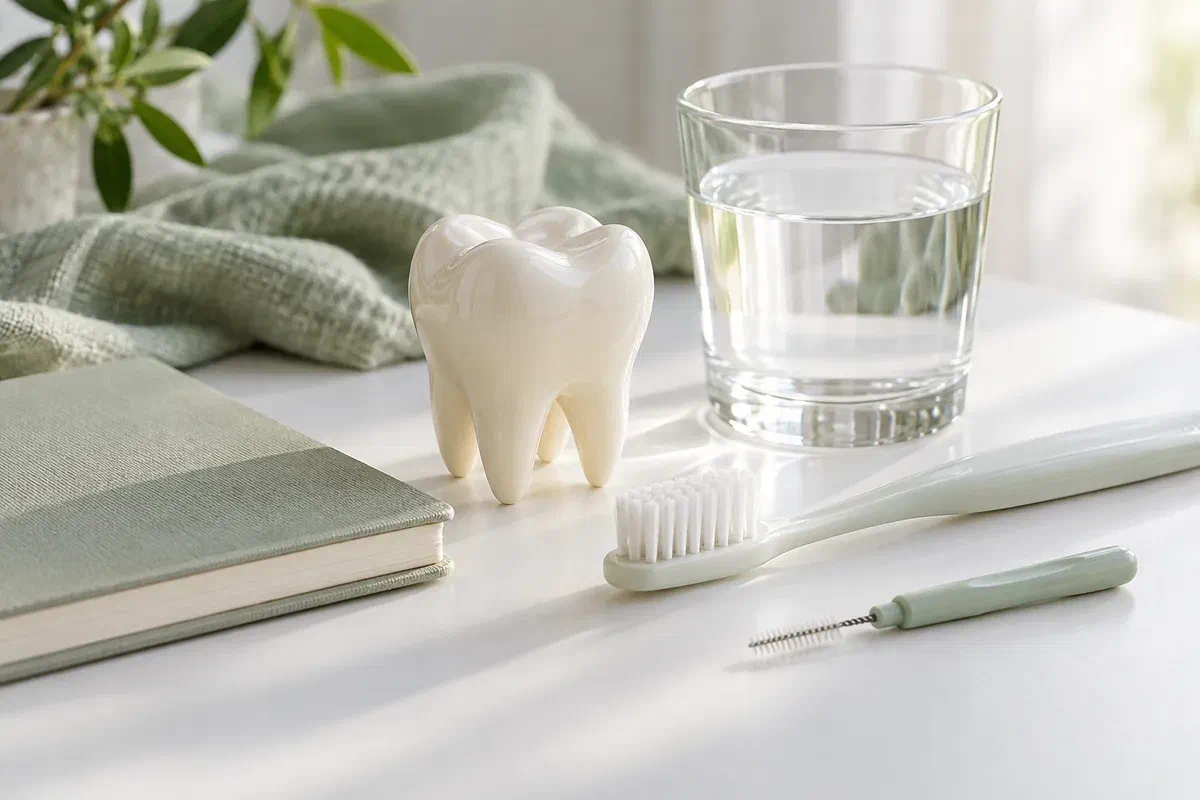
Dental model, cleaning aids, water, and a notebook illustrating prevention planning
Moments that call for a review

Something shifted, even if your toothbrush did not

Risk tends to move with life rather than with intentions. These are common reasons people in Milton ask for a closer look at what is happening to their teeth.

A filling after years of none

One new cavity is worth understanding before it becomes a pattern. Share roughly when your earlier fillings were done and, if you know, whether they repaired decay, a chip or wear. Counting restorations tells only part of the story; the timing and reason add the rest.

Medicines, treatment or a dry feeling

Saliva rinses and buffers the teeth, so anything that reduces it can matter. Bring a current list of medicines and mention when any dryness began. If a question belongs with your physician or pharmacist, we can help you frame it rather than guess.

Days that leave little room for care

Early shifts, a new baby, caring for a parent, braces or stiff hands can all make a routine harder to keep. Be specific about the obstacle. A plan that fits the life you actually have is more useful than one that assumes spare time and easy reach.

This review looks ahead; it does not stand in for checking a tooth that already hurts. A new ache, a hole you can see or feel, or a filling that has broken should be examined on its own terms as well.

Why it is worth the time

Prevention that comes with reasons attached

Without an assessment, preventive advice can sound generic: brush more, snack less, come back in six months. With one, each suggestion is tied to something seen or reported. That makes it easier to decide what to start with, and to notice whether it is working. It will not remove all uncertainty, and an honest explanation should say so.

A good result reads less like a label and more like a short list. What is already helping you, where extra protection could make sense, and how the next visit will judge progress. Ask which single factor carries the most weight, and whether the plan would look different if that factor improved.

Patient information: American Dental Association — caries risk assessment and management

Separate old repairs from new activity

A mouth with many fillings is not automatically an active one. The team weighs present findings and recent changes alongside history. Ask whether a particular spot is being watched, needs preventive treatment or needs a repair, and what makes the difference.

Start with the change that counts

One well-chosen adjustment you can keep up often beats a shelf of new products. Discuss which step is likely to matter most for you and how to fit it in. Budget, taste and habits are fair things to raise.

Give the next visit a job

Agree what will be looked at again and why the timing suits your findings. A useful review checks new spots, earlier areas and how the routine is going in practice, instead of repeating the same reminders word for word.

What happens at the appointment

Your story first, then the examination

Nobody expects a food log or perfect recall of past dental work. Come with what you remember, and let us know if earlier dental or medical records might fill in gaps.

  1. Talk through recent history

    We ask about past treatment, any symptoms, medicines, dryness and what a typical day of eating and cleaning looks like. If you know why a filling was placed, mention it. Records from a previous dentist can help when the details are fuzzy.

  2. Examine teeth and restorations

    We look at enamel, existing fillings, edges where plaque collects and any signs of active decay. Where some surfaces cannot be judged by eye, imaging may be recommended for a clinical reason. Whether you need images is decided case by case, not by a category.

  3. Weigh what harms and what helps

    We explain which findings may be raising your risk and which habits or measures are working in your favour. Ask what the assessment can show and where its limits are. A higher result calls for a plan; it does not mean more decay is certain.

  4. Settle on a plan and a check-in

    We discuss home care, any professional prevention and how existing problem areas will be handled. Ask about costs and how to use any product suggested. The review date should match your findings and leave room to adjust if things change.

After the visit

Turning findings into a routine you can keep

An assessment only helps if something changes afterwards. Speak up if a suggestion feels vague, clashes with advice from another clinician or simply does not fit your week.

Clean the way you agreed

Use a fluoride toothpaste and the between-teeth method you discussed. If reaching certain areas is the real problem, ask about a different aid or some help. Point to the spot that stays hard to clean rather than assuming more minutes will fix it.

Notice how often sugar visits

Where it applies, think about how frequently sweet snacks or drinks touch your teeth, not just how much. Swapping an all-afternoon sipping habit can be a realistic first step. Any change should still suit good nutrition and medical diet advice.

Keep us posted on changes

Let the team know about new prescriptions, ongoing dryness, medical treatment or trouble keeping up. Never stop a prescribed medicine without your prescriber. Your risk is looked at again when circumstances move; one visit does not set it permanently.

Patient information: NIDCR — oral hygiene and additional preventive care · Canadian Dental Association — appropriate fluoride use

Possible next steps

The plan follows what we find

Prevention and treatment can sit side by side. Ask which suggestions are about lowering future risk and which are about a particular tooth that needs care now.

When your protection is working

Carry on and keep watch

A routine that is doing its job can continue with sensible reviews. Lower risk is not zero risk, and new findings still count. Ask what kind of change should bring you in sooner and how uncertain areas will be followed.

When certain factors stand out

Add protection where it is needed

Professional fluoride, sealants where suitable, a prescribed toothpaste or help with dry mouth may be offered depending on need. Each has a reason and directions. Extra measures should be explained one by one, not handed over as a bundle.

When a lesion is present

Treat decay that is already there

An existing cavity needs its own look at how active and how deep it is. Some early areas can be managed without drilling; others need a repair. Your overall risk shapes the plan but does not decide every tooth on its own.

Common questions

What people ask before and after a risk review

Plain answers help you act on the result. Ask us to put any finding into everyday words, and to explain what we will look at next time.

(905) 876-4488
Why would I get a cavity now when I have not had one in years?
Several things can tip the balance without any change in brushing: reduced saliva, more frequent snacking or sipping, gum recession that exposes root surfaces, or a period when routine slipped. The assessment looks for which of these, if any, applies to you.
Is the assessment a separate appointment or part of a check-up?
It is often folded into an examination visit, since it relies on your history and what the dentist sees. When you book, mention that you would like to talk about cavity risk so enough time is set aside for questions.
Can my risk category go down over time?
It can, if the factors behind it and the clinical findings improve. Steadier home care, fewer repeated sugar exposures or better management of dryness may all shift the plan. An earlier result is a starting point, not a permanent verdict.
Do receding gums change my cavity risk?
They can. Root surfaces are not covered by enamel, so they may be more vulnerable once exposed. If your gums have receded, the dentist may pay closer attention to those areas and suggest ways to protect them.
Will I be asked to buy special products?
Not automatically. Some people benefit from a prescription toothpaste, a particular cleaning aid or dry-mouth support, and others do not. If a product is suggested, ask what it is for and whether a simpler option would do the same job.
Does my child need a different kind of risk assessment?
Children are assessed with their age, diet, fluoride exposure and how much help they need with brushing in mind. Their plan may differ from yours even in the same home. Bring your child along and we can talk through their needs separately.
Book in Milton

Find out what is driving your risk

Come to our Bronte Street practice to talk through a recent cavity, a change in your health or questions about prevention. Bring your medicines list and the products you use now. We will go over the factors that matter and agree a plan you can manage.

For bad pain, swelling or a broken tooth, please phone us. Online requests are for non-urgent appointments.

Visit Milton Dental Clinic
Unit 1, 342 Bronte St. S, Milton, ON L9T 5B7
Get directions Clinic hours
Monday–Thursday
11am–7pm
Friday–Sunday
By appointment only

Areas we serve

  • Milton
  • Oakville
  • Mississauga
  • Georgetown
  • Halton Hills
  • Acton
  • Campbellville
  • Brampton
  • Burlington
  • Puslinch
  • Rockwood
  • Erin
  • Caledon
  • Etobicoke
  • Old Milton
  • Bronte Meadows
  • Timberlea
  • Dorset Park
  • Dempsey
  • Clarke
  • Beaty
  • Coates
  • Harrison
  • Scott
  • Willmott
  • Ford
  • Bowes
  • Cobden
  • Walker
  • Mountain View
  • Milton Heights
  • Hawthorne Village
  • Valley View
  • Fallingbrook
  • Nassagaweya
  • Trafalgar
  • Esquesing
  • Nelson
  • Brookville
  • Moffat
  • Glen Williams
  • Norval
  • Limehouse
  • Stewarttown
  • Ashgrove
  • Hornby
  • Silver Creek
  • Speyside
  • Scotch Block
  • North Oakville
  • River Oaks
  • Glen Abbey
  • West Oak Trails
  • Palermo
  • Bronte Creek
  • College Park
  • Joshua Creek
  • Uptown Core
  • Preserve
  • Iroquois Ridge
  • Lisgar
  • Meadowvale
  • Meadowvale Village
  • Churchill Meadows
  • Erin Mills
  • Central Erin Mills
  • Streetsville
  • East Credit
  • Creditview
  • Heartland
  • Sheridan
  • Mount Pleasant
  • Credit Valley
  • Huttonville
  • Churchville
  • Springbrook
  • Northwest Brampton
  • Bram West
  • Fletcher's Meadow
  • Fletcher's Creek South
  • Alton Village
  • Orchard
  • Millcroft
  • Headon Forest
  • Tansley
  • Brant Hills
  • Tyandaga
  • Kilbride
  • Lowville
  • Aberfoyle
  • Morriston
  • Arkell
  • Hillsburgh
  • Freelton
  • Carlisle
  • Waterdown
  • Flamborough
  • Mountsberg

How can we help?

Milton Dental Clinic

Have a question about your smile? Choose the option that works best for you.

For urgent dental concerns, please call.
Messages are reviewed during clinic hours.