

Illustrative consultation about everyday habits and individual cavity risk
General & Family Dentistry

Cavity Risk Assessment in Old Milton

A mouth full of fillings from decades past says something, but not everything. In Old Milton, a cavity risk assessment helps tell old history apart from what is active today, so prevention is aimed at the present rather than the past.

Reading your dental history in Old Milton

Old fillings, current questions

Many adults carry fillings placed when they were children or teenagers, at a time when prevention looked very different. Those restorations are part of your record, yet they do not by themselves show how your teeth are doing now. An assessment of cavity risk weighs that history together with today's examination and the conditions your teeth live in day to day.

Picture two neighbours with the same number of silver fillings. One has had nothing new in twenty years; the other has needed three repairs since last spring. Their charts may look alike at a glance, but their situations are not. Saliva flow, how often food and drink arrive, fluoride, and how easy it is to clean around older work all help explain the gap.

The aim is a fair picture, not a verdict on your past or a forecast for a particular tooth. Let us know what you remember about earlier dental work and what feels different lately. From there we can explain which findings carry weight and which protective habits are already doing their job.

Talk about your filling history
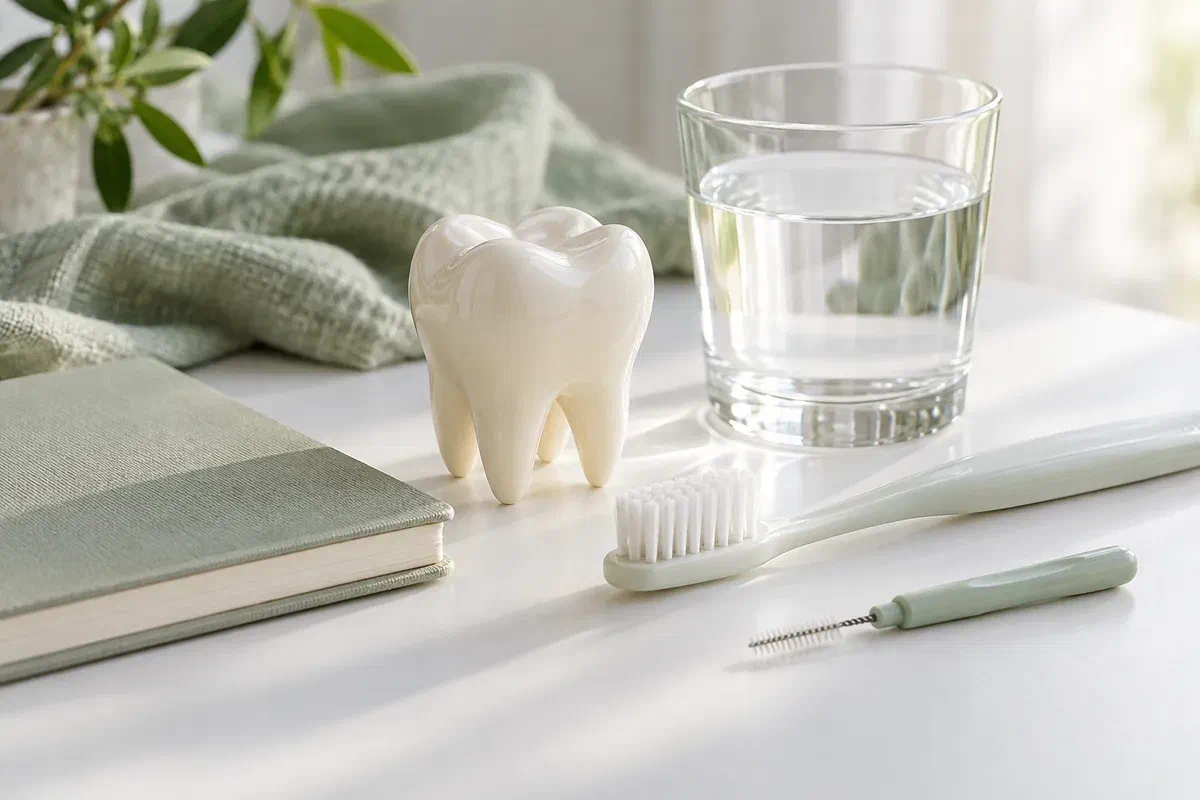
Dental model, cleaning aids, water, and a notebook illustrating prevention planning
Old Milton smiles, new circumstances

When a reliable routine meets a changing mouth

A routine that served you well for years can meet new conditions: different medicines, gum changes, or older restorations with edges that trap more plaque. These are good reasons to ask for a fresh review.

Decay around or beside older work

Fresh decay at the margin of an old filling, or on a neighbouring surface, is worth looking into more widely. If you know why earlier restorations were placed, whether for decay, wear or a knock, share it. The tally of fillings matters less than when and why.

A drier mouth than you used to have

Saliva helps wash and neutralise the teeth, and several common medicines can reduce it. Mention when you first noticed dryness and bring a list of what you take now. Some findings may be worth raising with your doctor or pharmacist as well.

Cleaning that has become awkward

Arthritis, a bridge or partial denture, crowded older teeth or a busy role caring for a spouse can all get in the way. Describe what actually makes cleaning difficult. Suggestions work better once the real barrier is known.

Looking at future risk is not the same as dealing with a tooth that already bothers you. If you notice new sensitivity, a gap or rough edge, or a filling coming loose, mention it so it can be checked directly.

What you gain

Advice you can trace back to a finding

Laying out the factors in one place gives preventive decisions a footing. It can guide choices about extra protection, what to watch and how often to come back, though it cannot settle every unknown. A helpful question to ask is which single finding is steering the advice the most.

Once the factors are clear, the discussion becomes practical. You should come away knowing what is already working, where more support might help and how improvement will be judged. As your health or circumstances shift, the assessment can be revisited instead of being treated as final.

Patient information: American Dental Association — caries risk assessment and management

History is context, not a sentence

Your past is useful background, but present findings carry the most weight for current planning. For any area of concern, ask whether it is being watched, needs a preventive step or needs repair, and what tips it one way or the other.

A short list rather than a long one

Two or three focused changes are easier to keep than a dozen. Ask which one would make the most difference and how it can fit your routine. Cost, preference and what you already own are worth mentioning.

Reviews that check something specific

Before you leave, know what the next visit will examine again and why that interval was chosen. A review can track new spots, earlier areas and how the home routine is holding up.

Step by step

History, examination, explanation, plan

There is no need to reconstruct every filling from memory. Share what you can, and tell us if past dental records or a medical summary might be available to help.

  1. Go over what has happened before

    We talk about previous fillings, crowns or extractions, any current symptoms, medicines, dryness and your usual eating and cleaning pattern. If you recall why a tooth was restored, say so. Earlier records can clarify anything uncertain.

  2. Look closely at teeth and old restorations

    The dentist checks enamel, filling margins, root surfaces and places where plaque tends to build up. When a surface cannot be judged well by sight, imaging may be advised for a specific reason. Images are recommended individually, never just because of a risk level.

  3. Explain the balance

    We describe which findings may be raising risk and which habits or measures are protecting you. Ask what the assessment is able to tell you and where it falls short. Higher risk is a prompt to plan, not a promise that decay will follow.

  4. Agree what comes next

    We discuss home care, possible professional prevention and how any existing problem spots will be handled. Ask about fees and how to use any product mentioned. The return interval should reflect your findings and can change if your situation does.

Living with the plan

Small, steady changes around older dental work

Recommendations only matter once they become habit. If one sounds too general, contradicts another clinician's instruction, or feels unworkable, let us know so it can be adjusted.

Clean around the edges

Brush with fluoride toothpaste and use the between-teeth aid you were shown, paying attention to the borders of older fillings and bridges. If grip or reach is the issue, ask about a thicker handle, a different tool or a helper.

Think about frequency

Where relevant, consider how often sweet foods or drinks reach your teeth through the day. Sweetened tea sipped slowly over a morning is one example worth reviewing. Any adjustment should respect your overall diet and medical guidance.

Report what changes

New medicines, lasting dryness, hospital treatment or difficulty keeping up with cleaning are worth mentioning. Do not stop a prescribed medicine yourself. Your risk is reconsidered as things change rather than fixed after one visit.

Patient information: NIDCR — oral hygiene and additional preventive care · Canadian Dental Association — appropriate fluoride use

Where the plan may go

Matched to what we see in your mouth

Some steps aim to lower future risk; others deal with a tooth that already needs care. Ask us to label which is which.

When your defences are holding

Keep going and recheck

If your routine is working, it can carry on with appropriate reviews. A low result still leaves some risk, and new findings count. Ask what should bring you back early and how uncertain spots will be followed.

When certain factors need support

Strengthen specific areas

Professional fluoride, sealants where they suit, a prescription home product or dry-mouth care may be considered. Each comes with a purpose and directions. Extra measures should be explained to you individually, not offered as a set.

When a cavity is already present

Address active decay

Existing decay needs its own assessment of depth and activity. Certain early areas may be managed without a filling; others need repair. Overall risk informs the plan but does not decide the treatment of each tooth alone.

Your questions

Straight answers about risk and older teeth

If any part of your result is unclear, ask us to explain it simply. Knowing the main factors and the next review point makes the plan easier to follow.

(905) 876-4488
I have a lot of fillings from childhood. Does that put me at high risk today?
Not by itself. Restorations placed long ago reflect conditions at that time. The dentist looks at whether there is evidence of current decay, the state of those fillings and your present circumstances before drawing conclusions.
Are older silver fillings a reason for concern on their own?
An intact older filling that is not causing problems is usually monitored rather than replaced just because of age. Edges that are breaking down or decay underneath are different. Ask what the dentist sees around each one and why any change is suggested.
Can roots get cavities?
Yes. When gums recede, root surfaces are exposed, and they lack the enamel that covers the crown of the tooth. Root decay is more common in older adults for this reason, and it may influence the prevention steps suggested.
Does wearing a partial denture affect cavity risk?
It can, because clasps and edges may hold plaque against natural teeth. Removing and cleaning the denture as directed and cleaning the teeth it touches are both important. Bring the denture to your visit so its fit and contact points can be seen.
Do I need X-rays every time because of my history?
No fixed rule applies. The dentist considers symptoms, findings, your risk, previous images and what new images could show. Ask why an X-ray is being suggested and whether earlier images already answer the question.
Is a risk assessment useful if I have been with the same dentist for years?
It can be. Familiar routines sometimes hide gradual changes in health, medicines or cleaning ability. A fresh look gives you a chance to ask what has shifted and whether your current plan still fits.
Visit from Old Milton

Let’s sort the past from the present

Our Bronte Street practice is a short way from Milton's historic downtown. Book a visit to talk about older dental work, a recent cavity or changes in your health, and bring your medication list and the products you use. We'll explain what matters most and agree practical next steps.

Call us directly about severe pain, swelling or a broken tooth. Use online booking for non-urgent requests only.

Visit Milton Dental Clinic
Unit 1, 342 Bronte St. S, Milton, ON L9T 5B7
Get directions Clinic hours
Monday–Thursday
11am–7pm
Friday–Sunday
By appointment only

Areas we serve

  • Milton
  • Oakville
  • Mississauga
  • Georgetown
  • Halton Hills
  • Acton
  • Campbellville
  • Brampton
  • Burlington
  • Puslinch
  • Rockwood
  • Erin
  • Caledon
  • Etobicoke
  • Old Milton
  • Bronte Meadows
  • Timberlea
  • Dorset Park
  • Dempsey
  • Clarke
  • Beaty
  • Coates
  • Harrison
  • Scott
  • Willmott
  • Ford
  • Bowes
  • Cobden
  • Walker
  • Mountain View
  • Milton Heights
  • Hawthorne Village
  • Valley View
  • Fallingbrook
  • Nassagaweya
  • Trafalgar
  • Esquesing
  • Nelson
  • Brookville
  • Moffat
  • Glen Williams
  • Norval
  • Limehouse
  • Stewarttown
  • Ashgrove
  • Hornby
  • Silver Creek
  • Speyside
  • Scotch Block
  • North Oakville
  • River Oaks
  • Glen Abbey
  • West Oak Trails
  • Palermo
  • Bronte Creek
  • College Park
  • Joshua Creek
  • Uptown Core
  • Preserve
  • Iroquois Ridge
  • Lisgar
  • Meadowvale
  • Meadowvale Village
  • Churchill Meadows
  • Erin Mills
  • Central Erin Mills
  • Streetsville
  • East Credit
  • Creditview
  • Heartland
  • Sheridan
  • Mount Pleasant
  • Credit Valley
  • Huttonville
  • Churchville
  • Springbrook
  • Northwest Brampton
  • Bram West
  • Fletcher's Meadow
  • Fletcher's Creek South
  • Alton Village
  • Orchard
  • Millcroft
  • Headon Forest
  • Tansley
  • Brant Hills
  • Tyandaga
  • Kilbride
  • Lowville
  • Aberfoyle
  • Morriston
  • Arkell
  • Hillsburgh
  • Freelton
  • Carlisle
  • Waterdown
  • Flamborough
  • Mountsberg

How can we help?

Milton Dental Clinic

Have a question about your smile? Choose the option that works best for you.

For urgent dental concerns, please call.
Messages are reviewed during clinic hours.