Bone and nerves near a planned procedure
An implant or some surgery can depend on how much bone there is and where key structures run. Ask what remains unclear, how the answer would steer the plan, and which alternatives stay available.


A stiff neck, a hearing aid, nerves about tight spaces or a possible pregnancy can all matter on scan day. From Acton, learn what to share before a CBCT 3D dental scan, why imaging may be advised, and how the results are used.
Most people picture the machine when they think about a 3D dental scan. The more useful thing to picture is the conversation beforehand. Cone-beam computed tomography, or CBCT, is an X-ray exam that collects three-dimensional information about the teeth, jaw and surrounding structures, and it only works well when you can stay still and the team knows your needs.
Before any of that, there should be a reason. CBCT is considered for selected questions, perhaps the bone around a planned implant or a dental problem an exam and flat X-rays have not explained. It is not the light scanner used for digital impressions. Expect an explanation of why the scan is proposed, what else could be done, what it may not show and how much radiation is involved.
Contact Milton Dental Clinic to talk about a scan recommendation and any practical worries. Bring your referral and a note of earlier X-rays. Ask where the scan would be done, who will read it and how its report reaches your dentist. Sending an online enquiry does not confirm imaging, on-site scanning or that it suits you.
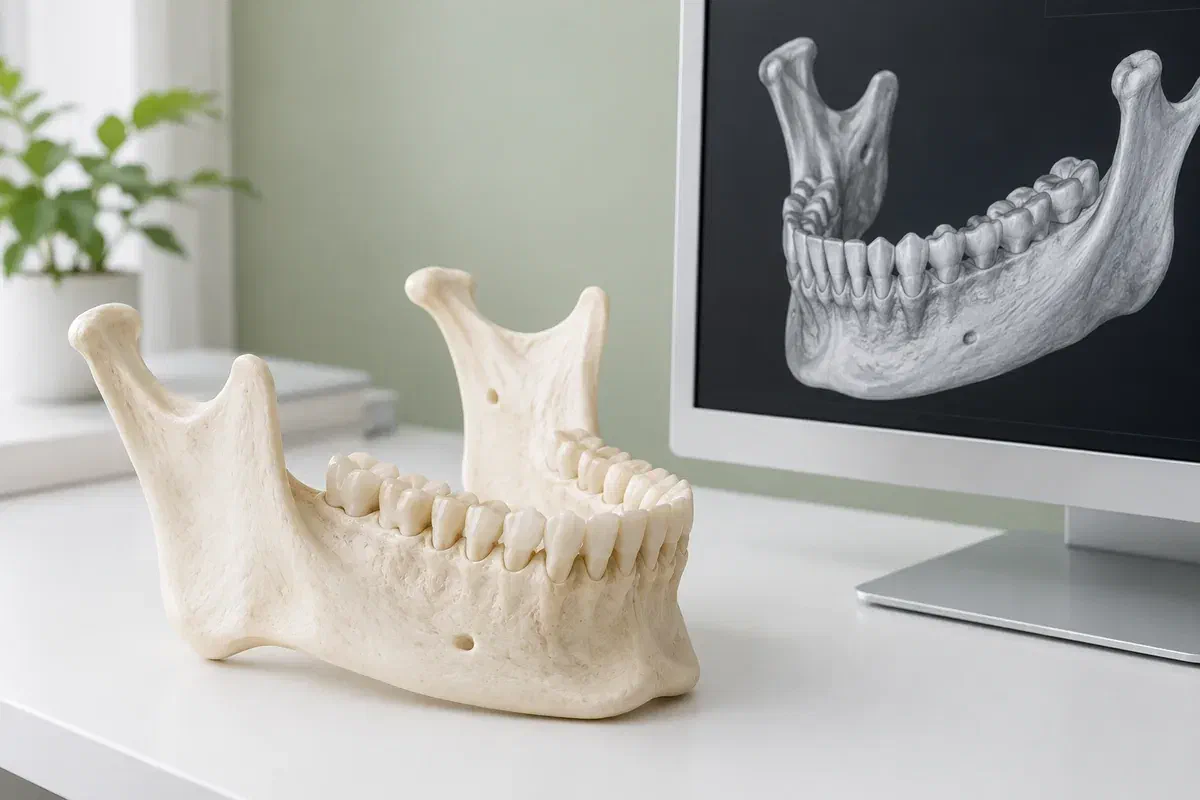
A few kinds of question account for most CBCT discussions. None of them means a scan is automatic, but each is worth understanding before you prepare for one.
An implant or some surgery can depend on how much bone there is and where key structures run. Ask what remains unclear, how the answer would steer the plan, and which alternatives stay available.
Certain root canal cases or other dental concerns stay open after routine images. A scan may add detail. It does not replace the exam or what you describe, and it may still leave some uncertainty.
An adult tooth that never erupted, or an unusual area spotted earlier, may need its exact place mapped. Ask why the planned scan size fits. More coverage is not automatically better for a narrow question.
It is always fair to ask whether images you already have, or a lower-dose conventional X-ray, would be enough before a scan is booked.
Viewed in slices and from many angles, a CBCT can help a qualified clinician understand an area better than a single flat picture. For a well-chosen question, that may support diagnosis, planning or a later review. Whether it is worthwhile depends on that question and on the exposure.
Every CBCT uses ionizing radiation, usually more than ordinary dental X-rays. The machine, its settings and the region captured all change the dose. A careful exam covers only what is needed while still producing images good enough to read. That is a sensible goal, not a guarantee of zero risk, and doses are not identical from one person to the next.
Patient information: FDA — dental cone-beam computed tomography
Ask what will happen differently once the result is in. The answer should point to a real decision in your care, such as how to approach a procedure, instead of to features of the equipment.
Your history, the exam and older records all inform how the images are interpreted. Ask who is responsible for that reading and how other findings will be reported.
If the scan is done by an imaging provider, ask how files and findings will be forwarded, with your consent, so the treating office has them in time.
The scan might be a separate booking from your dental visit, possibly elsewhere. Confirm the provider, the place, the fee and how reporting works before you head out from Acton.
The responsible clinician reviews the reason for imaging and whether earlier pictures are enough. Share dates and locations of any previous scans. Ask what new information the scan should supply.
Follow the provider’s instructions. Let them know about pregnancy or the chance of it, a tremor, neck or back stiffness, anxiety in confined spaces, or a need for help standing or sitting. Hearing aids, glasses, dentures and jewellery near the head may need to come off.
Staff position you, often with a chin rest or bite guide, and ask you to stay motionless while the arm travels around your head. Details vary by machine. Speak up about discomfort before it begins.
Someone qualified must interpret the scan. Ask when findings will be ready and who will talk them through with you. Depending on the results, more assessment or a change of plan may be suggested.
A scan only gathers information. It becomes useful when it is read and followed up, which needs extra care if imaging took place away from the practice handling your treatment.
Find out if you should book a results visit or expect a call. When a procedure is waiting on the findings, check they have actually been received before treating the plan as ready.
Write down the date, provider and area covered. If more imaging is ever suggested, mention this exam first. It may not answer a later question, but a look at it can prevent a needless repeat.
A booked or finished scan should never delay care for worsening pain, fresh swelling or another new problem. Tell the treating team if things change so they can decide whether you need to be seen sooner.
Bring your referral and a list of anything that could affect positioning or comfort. That makes it easier to sort out what the dentist needs to know and what the imaging provider should hear.
Patient information: RCDSO — dental CT scanner requirements
Reach our Bronte Street practice with your questions, any referral and anything that could affect your comfort during a scan. We can explain how imaging might fit into your dental assessment. Please confirm the imaging provider and appointment time before you go.
Online requests are enquiries, not booked imaging appointments. Phone us if pain or swelling needs prompt attention.
