

Illustrative dental planning conversation with a patient preparing for joint surgery
General & Family Dentistry

Dental Care Before Joint-Replacement Surgery in Mississauga

An extraction is on one calendar and a hip or knee replacement on another. From Mississauga, book a dental assessment that looks at both dates, the healing involved and what your surgical team needs to hear.

Two procedures, one recovery

Getting the order right

Sometimes the dental question is not whether something is wrong but when to fix it. You may already know a tooth needs to come out, or that a gum problem needs treatment, and the joint surgery date has just been confirmed. Doing the dental work first, waiting until afterwards, or adjusting the schedule are all possibilities. Which one suits you depends on the diagnosis, the healing involved and your medical picture.

There is no single interval that applies to everyone. An infected tooth usually needs its source treated rather than a course of antibiotics, and an extraction heals differently from a filling or cleaning. Your surgeon may have specific views on timing, and your medical history matters too. Sharing the details on both sides is what lets the plan make sense, instead of guessing from a rule found online.

For people coming from Mississauga, including Meadowvale and Churchill Meadows, the practical step is to call as soon as both procedures are on the horizon. Bring any instructions from the orthopaedic team and the date they have given you. We can review the diagnosis, explain the options and their healing, and pass relevant information to the surgical team. A dental visit cannot guarantee that surgery will be infection-free.

Plan dental treatment around joint surgery
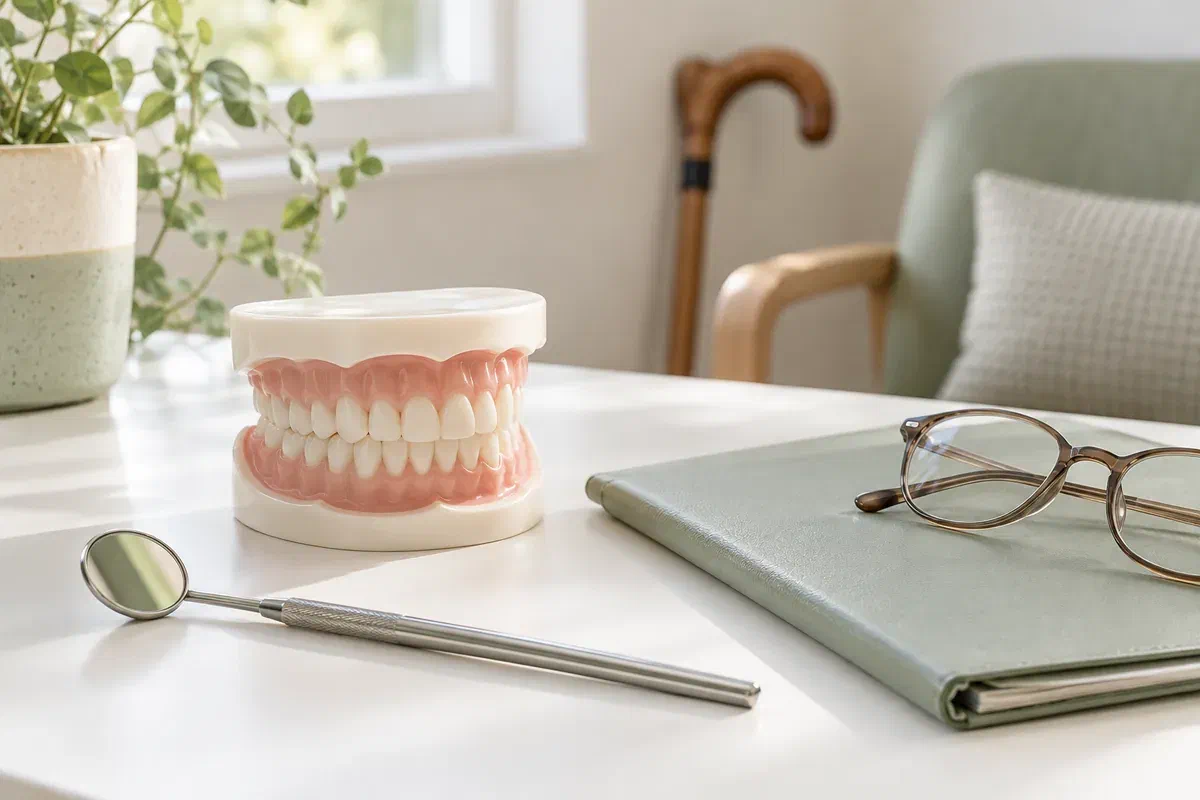
Dental teaching model and appointment folder illustrating coordinated pre-surgical care
Tell us early about

Anything that might collide with the surgery date

At booking, give us the operation date and describe the dental work already planned or any symptom. If either date changes, a quick call lets us rethink the order.

A tooth that is painful, swollen or broken

An active problem should be assessed promptly rather than carried into recovery. Tell us when it began and how severe it feels. Once the cause is known, treatment can be discussed, and the surgical team can decide whether it affects their timing.

Requests or forms from orthopaedics

Show us the actual document and the contact details of the office. Requests differ in what they ask, and many need an examination or records first. We will not sign anything before assessing your mouth, so leave room for that.

An extraction or gum procedure already booked

This is where the two calendars meet. Share both dates so healing and timing can be talked through with the right people. Please don’t cancel the operation or move needed dental care on your own.

A dental problem that starts close to surgery should be reported here and to your surgical team. Keeping quiet to hold onto the date can leave everyone with fewer options.

Why plan both together

Healing on a schedule that suits you

When dental and surgical plans are made side by side, an active problem can be found and treated, the choices explained, and your medical team given the information they asked for. You also get a sense of how routine care will work while you recover. It is good planning, not a promise; no examination can decide the outcome of a joint replacement.

The plan for one person’s extraction and knee surgery may look nothing like another’s. Recommendations should come from what is found and your health, and each one should have a clear purpose. It is fair to ask whether a step treats disease today or is about timing, paperwork or later maintenance.

Patient information: College of Dental Hygienists of Ontario — joint replacement advisory

A diagnosis that justifies the work

Ask which tooth or part of the gum is involved and why treatment is advised. A clear reason helps you separate what should be done before the operation from optional work for another time.

Healing time considered on both sides

An extraction, a root canal and a deep cleaning each need different recovery. When both clinicians know the dental plan and surgical date, the sequence can reflect your situation.

A plan for after the operation

Ask how you will keep the treated area and the rest of your mouth clean while moving is difficult, and when the next dental visit should be. Know who to call if something new appears.

How we plan it with you

From two dates to one plan

We start with the dental problem and the surgery ahead. Communication between offices takes time, so try to reach out well before the final days of preparation.

  1. Line up the dates and your health details

    We note the joint procedure, its date, your medicines, allergies and medical history. Mention earlier joint infections or complications your surgeon thinks are relevant. Bring the written instructions you have and the name of someone who can explain them.

  2. Confirm the dental diagnosis

    The dentist examines the tooth or gum area in question along with the rest of your mouth. X-rays may be recommended to answer a specific question. The purpose is to confirm what needs treatment, not to treat every small flaw as equally urgent.

  3. Weigh the options and the sequence

    We explain the diagnosis, treatment choices, estimated fees and follow-up for each. The dental and orthopaedic teams may need to agree on which comes first. Anything we put in writing describes the assessment, never a guarantee.

  4. Carry out and review

    If treatment goes ahead, follow the aftercare instructions and attend the review that checks healing. Confirm that the surgical team has what they need. Tell both offices quickly if a symptom or date changes.

Once the dental work is done

Let it heal, keep everyone posted

Your clinicians may give you specific aftercare advice. If two sets of instructions seem to conflict, ask for clarity before changing medicines or appointment dates.

Watch the treated area

An extraction site or treated tooth may need a review before it can be recorded as healed. Call if pain, swelling or bleeding increases, or the area is not settling. Finishing the procedure does not always mean every healing question is closed.

Keep your mouth clean around it

Follow the specific instructions for the treated area and continue brushing with fluoride toothpaste and cleaning between teeth. If mobility will be limited after surgery, ask now about aids or help. Daily care still matters while visits are arranged around recovery.

Don’t improvise with medicines

Avoid starting leftover antibiotics or stopping a blood thinner because of dental treatment. Any change in medicines, including preventive antibiotics, should be decided by the professionals responsible for your care.

Depending on what we find

Not every surgery date calls for the same dental plan.

Your options rest on current disease, the operation planned and your medical circumstances. Ask how the plan balances needed care with healing, coordination and the surgery date.

When the planned work can safely wait

Monitor and keep routine care

Sometimes the examination shows no active problem and elective work can follow recovery. Findings are recorded and routine care planned. That does not remove all future risk, but treatment should not be added just to complete a form.

When a tooth or gum problem needs care now

Treat before the operation

Infection, pain or another significant finding may need treatment and a follow-up check. Discuss the procedure that removes the source rather than relying on antibiotics alone. The surgical team should be told if it might affect preparation.

When timing or medical factors are uncertain

Coordinate between clinicians

Previous joint problems or a complex medical history may call for a direct conversation between dentist and surgeon. A prosthetic joint by itself is generally not a reason for routine antibiotic premedication. Exceptions need an individual decision and clear instructions.

Patient information: American Dental Association — antibiotics and prosthetic joint infection · ADA — shared decisions about dental care for joint-replacement patients

Mississauga questions

Scheduling dental work around a new joint

Ask about sequencing, healing or forms. A timeline that suited someone else’s operation may not suit your health or your dental treatment.

(905) 876-4488
Is it better to have a tooth pulled before or after my hip replacement?
It depends on why the tooth needs to come out. An infected or painful tooth is often treated beforehand, while elective removal may be able to wait. The dentist and surgical team should look at the diagnosis, healing and surgery date together.
How long does an extraction site take to heal?
It varies with the tooth, how the extraction went and your health. Initial healing happens over days to weeks, with further change after that. We can give you a realistic picture for your situation and share it with your surgical team if timing is a question.
My dentist wants to replace a crown soon. Should I wait until after surgery?
Ask why the crown needs replacing. If there is decay, a fracture or an infection, treatment beforehand may make sense. If the crown is simply old or a cosmetic upgrade, it can often wait until you have recovered.
Could my joint surgery be postponed because of a dental problem?
That decision belongs to your surgical team. Telling them about a dental issue early, and getting it assessed, gives everyone the best chance of keeping a workable schedule. Hiding a problem to avoid delay is not a good idea.
Will I need to come back after the extraction before my surgery?
Often a short review is helpful to check healing, particularly if the surgical team wants confirmation. We will tell you whether a follow-up is recommended and what to watch for at home.
Are dental cleanings safe in the weeks before a knee replacement?
Routine cleanings are commonly part of keeping your mouth healthy, and timing can be discussed if your surgery is close. Tell us the date, and ask your surgical team if they have a preference. We will plan around the advice you receive.
Pre-surgical dental planning for Mississauga

Settle the sequence before the big day.

Phone our Bronte Street practice once you know both dates. Tell us what dental work is planned, any symptoms and what the orthopaedic team has asked, and we will arrange an assessment and talk through the order of care.

If the operation is very close or you are in pain, please call instead of booking online. An online request does not confirm an urgent visit or completed paperwork.

Visit Milton Dental Clinic
Unit 1, 342 Bronte St. S, Milton, ON L9T 5B7
Get directions Clinic hours
Monday–Thursday
11am–7pm
Friday–Sunday
By appointment only

Areas we serve

  • Milton
  • Oakville
  • Mississauga
  • Georgetown
  • Halton Hills
  • Acton
  • Campbellville
  • Brampton
  • Burlington
  • Puslinch
  • Rockwood
  • Erin
  • Caledon
  • Etobicoke
  • Old Milton
  • Bronte Meadows
  • Timberlea
  • Dorset Park
  • Dempsey
  • Clarke
  • Beaty
  • Coates
  • Harrison
  • Scott
  • Willmott
  • Ford
  • Bowes
  • Cobden
  • Walker
  • Mountain View
  • Milton Heights
  • Hawthorne Village
  • Valley View
  • Fallingbrook
  • Nassagaweya
  • Trafalgar
  • Esquesing
  • Nelson
  • Brookville
  • Moffat
  • Glen Williams
  • Norval
  • Limehouse
  • Stewarttown
  • Ashgrove
  • Hornby
  • Silver Creek
  • Speyside
  • Scotch Block
  • North Oakville
  • River Oaks
  • Glen Abbey
  • West Oak Trails
  • Palermo
  • Bronte Creek
  • College Park
  • Joshua Creek
  • Uptown Core
  • Preserve
  • Iroquois Ridge
  • Lisgar
  • Meadowvale
  • Meadowvale Village
  • Churchill Meadows
  • Erin Mills
  • Central Erin Mills
  • Streetsville
  • East Credit
  • Creditview
  • Heartland
  • Sheridan
  • Mount Pleasant
  • Credit Valley
  • Huttonville
  • Churchville
  • Springbrook
  • Northwest Brampton
  • Bram West
  • Fletcher's Meadow
  • Fletcher's Creek South
  • Alton Village
  • Orchard
  • Millcroft
  • Headon Forest
  • Tansley
  • Brant Hills
  • Tyandaga
  • Kilbride
  • Lowville
  • Aberfoyle
  • Morriston
  • Arkell
  • Hillsburgh
  • Freelton
  • Carlisle
  • Waterdown
  • Flamborough
  • Mountsberg

How can we help?

Milton Dental Clinic

Have a question about your smile? Choose the option that works best for you.

For urgent dental concerns, please call.
Messages are reviewed during clinic hours.