

Illustrative dental planning conversation with a patient preparing for joint surgery
General & Family Dentistry

Dental Care Before Joint-Replacement Surgery in Rockwood

Gums that bleed, pockets you were told to watch, a tooth that feels a little loose: before a new hip or knee, those are worth a proper look. From Rockwood, book a gum and tooth assessment timed around your operation.

Gum health and your upcoming surgery

Start with the gums

Teeth get most of the attention, yet gum problems are common and often quiet. Pink in the sink after brushing, gums that look like they are pulling back, a hygienist who mentioned deeper pockets at your last cleaning: none of these is an emergency, but they are worth sorting out before a joint replacement. An assessment shows whether there is active gum disease that should be treated beforehand or simply monitored.

Gum treatment, like any dental care, has to fit the larger plan. We consider the type and date of surgery, your medicines, especially anything that affects bleeding, and the instructions from the orthopaedic team. A deep cleaning heals differently from a filling, and an extraction of a loose tooth needs its own timing conversation. Antibiotics are not a substitute for treating gum infection at its source.

Coming from Rockwood, it makes sense to book as soon as your surgery date is set, so any cleaning and its review can be completed in good time. Bring the hospital’s request. We will measure and examine, explain what the gums and teeth show, and share relevant findings with your surgical team, without suggesting that a dental visit can guarantee an infection-free operation.

Have your gums checked before joint surgery
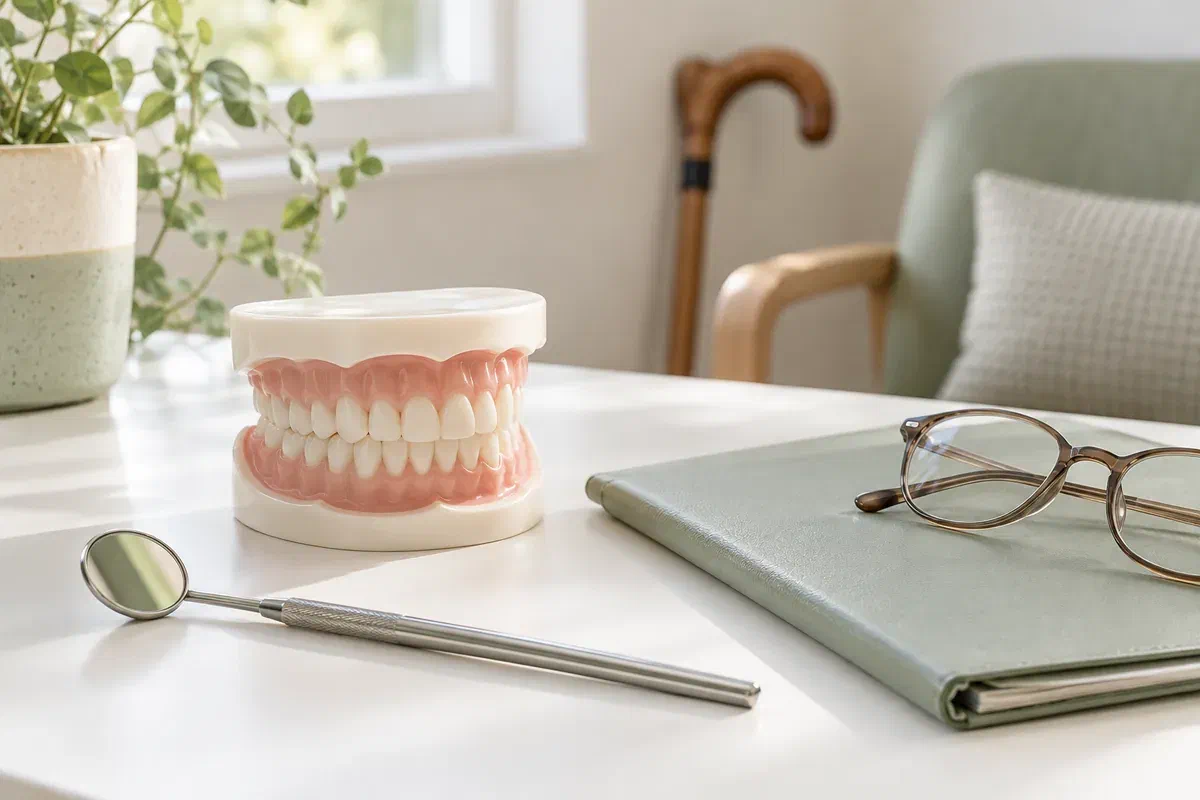
Dental teaching model and appointment folder illustrating coordinated pre-surgical care
Signs to mention

Gums, teeth and timing

When you book, tell us the surgery date and what you have noticed. A change in that date matters, because gum treatment and its review may need to be rescheduled.

Sore, swollen or loose teeth

Tender or swollen gums, a tooth that has started to move, or a broken tooth should be checked before surgery. Describe how long it has been happening. The dentist can diagnose the cause and discuss care, and the surgical team can judge any effect on their plans.

Hospital forms that mention infection

Some forms ask specifically about gum disease or infection. Bring the document and the office’s contact details so we know what to look for. A response depends on an examination, so allow time for that.

Gum treatment already booked

If you have a deep cleaning or gum procedure scheduled close to surgery, share both dates. Healing and a follow-up check may need to fit before the operation. Avoid moving either appointment on your own.

If your gums or a tooth suddenly flare up near surgery, phone us and inform the surgical team. Keeping quiet to protect the date can lead to harder decisions.

The payoff of a gum check

Calm gums going into surgery

A pre-surgical assessment can identify active gum disease or other oral problems, explain treatment options and provide what the medical team asked for. It also gives you a home-care plan for the weeks of recovery. These are sensible aims. A dental examination has no power to guarantee the outcome of joint surgery.

Gum findings vary widely, so plans do too. Mild inflammation may only need a cleaning and better home care, while active disease may need more. Ask whether each step deals with infection now or is part of ongoing maintenance that could continue after recovery.

Patient information: College of Dental Hygienists of Ontario — joint replacement advisory

A measured picture of your gums

Ask what the pocket readings and x-rays show, and which teeth are involved. Understanding the diagnosis helps you see what needs treatment before surgery and what can be monitored.

Cleaning timed to heal in time

Deep cleaning and other gum treatment need time to settle. With both teams aware of the plan and surgical date, the timing can be arranged around your circumstances.

Home care for gums during recovery

Ask how to keep gums healthy if you cannot stand at the sink for long, which aids would help, and when your next cleaning should be. Know whom to call if gums flare.

Your appointment

What a gum-focused visit includes

We start with what you have noticed and the operation ahead. Gum treatment and coordination take time, so please book well before the last week.

  1. Health and surgery details

    We note the joint procedure and date, medicines including blood thinners, allergies and relevant conditions. Mention any joint infection or complication from the past, and bring written instructions from the hospital.

  2. A careful look at gums and teeth

    The dentist or hygienist checks gum pockets, bleeding, mobility, teeth and restorations. X-rays may help assess bone around the teeth. The goal is accurate findings, not assuming every bit of inflammation needs major treatment.

  3. Treatment plan and coordination

    If treatment is needed, we explain the diagnosis, options, estimated fees and review schedule. The orthopaedic office may want a say in timing. Any report reflects the findings, without unsupported guarantees.

  4. Treatment, review and update

    If a cleaning or other care is done, follow the instructions and return for the review that checks healing. We confirm what has gone to the surgical team. Keep both offices informed of changes.

Before surgery day

Help the gums settle

Follow the advice your clinicians give. If two instructions seem to conflict, ask for clarification before changing medicines or appointments.

Return for the gum review

Gums often need a few weeks to respond to treatment, and a review shows how well they have settled. Call if bleeding, swelling or pain increases. Finishing treatment is not the same as finishing healing.

Clean gently and thoroughly

Brush along the gumline with a soft brush and fluoride toothpaste, and use floss or interdental brushes as shown. Some bleeding may lessen as gums improve. If you will be less mobile after surgery, set up aids now.

Keep medicines unchanged unless advised

Do not stop a blood thinner for a cleaning or start leftover antibiotics for sore gums. Any change, including preventive antibiotics, depends on your situation and should come from the clinicians responsible.

Possible gum and tooth plans

From a routine cleaning to coordinated treatment

How far treatment goes depends on what your gums show, the operation and your health. Ask your dentist how the plan weighs necessary care against healing time and the surgery date.

When gums are healthy or mildly inflamed

Cleaning and monitoring

A routine cleaning, home-care advice and a report may be all that is needed. A good result now does not rule out future problems, and healthy gums should not be put through extra procedures for the sake of paperwork.

When disease or infection is present

Active gum or tooth treatment

Active gum disease, an abscess or a failing tooth may need deep cleaning, extraction or other care, followed by a review. Treat the source rather than relying on antibiotics, and tell the surgical team if preparation may be affected.

When health factors need clarifying

Medical coordination

Previous joint complications or complex medical conditions may need the dental and surgical teams to confer. Routine antibiotic premedication is generally not recommended simply because someone has a prosthetic joint. Individual exceptions need clear instructions.

Patient information: American Dental Association — antibiotics and prosthetic joint infection · ADA — shared decisions about dental care for joint-replacement patients

Rockwood questions

Gums, cleanings and joint surgery

Ask about gum treatment, timing or medicines. What suited another person’s operation may not suit your gums or your health.

(905) 876-4488
Do I need a deep cleaning before a hip replacement?
Only if the examination shows gum disease that calls for it. Many people need just a routine cleaning. If deeper treatment is recommended, ask why, which areas are involved, and how long healing is likely to take before your surgery. We can share the plan with your surgical team so the timing makes sense on both sides.
My hygienist said I have some deep pockets. Should that be treated before surgery?
It is worth reassessing before your operation. Pockets can reflect active disease or older, stable changes. Fresh measurements, compared with earlier readings where we have them, will show which, and whether treatment beforehand is advised or regular maintenance is enough.
Can a loose tooth wait until after my joint replacement?
Sometimes, but it depends on why it is loose and whether there is infection. Gum disease, a cracked root or an infection can each cause looseness, and they call for different responses. The dentist can assess it and explain whether it needs attention before surgery or can be monitored.
Will a gum cleaning make my gums bleed more for a while?
Some tenderness or bleeding can happen for a short time after a cleaning, particularly if gums were inflamed. It usually settles as they heal. Tell us if bleeding is heavy or does not improve.
How long before surgery should gum treatment be finished?
There is no single answer. It depends on the treatment, how your gums respond and your surgeon’s view. Share both dates so the clinicians can plan a sensible gap.
Can I use a mouthwash to calm my gums before the operation?
Some mouthwashes can help as part of a routine, but they do not replace brushing, cleaning between teeth or treatment of active disease. Ask us which product, if any, suits your situation.
Gum and tooth checks for Rockwood

Healthy gums are worth the visit.

Call our Bronte Street practice with your operation date, any gum or tooth concerns, and the hospital’s request. We will book an assessment and explain any treatment, review and information your care needs.

If surgery is soon or a symptom is getting worse, please phone us. Online requests do not confirm urgent appointments or completion of hospital forms.

Visit Milton Dental Clinic
Unit 1, 342 Bronte St. S, Milton, ON L9T 5B7
Get directions Clinic hours
Monday–Thursday
11am–7pm
Friday–Sunday
By appointment only

Areas we serve

  • Milton
  • Oakville
  • Mississauga
  • Georgetown
  • Halton Hills
  • Acton
  • Campbellville
  • Brampton
  • Burlington
  • Puslinch
  • Rockwood
  • Erin
  • Caledon
  • Etobicoke
  • Old Milton
  • Bronte Meadows
  • Timberlea
  • Dorset Park
  • Dempsey
  • Clarke
  • Beaty
  • Coates
  • Harrison
  • Scott
  • Willmott
  • Ford
  • Bowes
  • Cobden
  • Walker
  • Mountain View
  • Milton Heights
  • Hawthorne Village
  • Valley View
  • Fallingbrook
  • Nassagaweya
  • Trafalgar
  • Esquesing
  • Nelson
  • Brookville
  • Moffat
  • Glen Williams
  • Norval
  • Limehouse
  • Stewarttown
  • Ashgrove
  • Hornby
  • Silver Creek
  • Speyside
  • Scotch Block
  • North Oakville
  • River Oaks
  • Glen Abbey
  • West Oak Trails
  • Palermo
  • Bronte Creek
  • College Park
  • Joshua Creek
  • Uptown Core
  • Preserve
  • Iroquois Ridge
  • Lisgar
  • Meadowvale
  • Meadowvale Village
  • Churchill Meadows
  • Erin Mills
  • Central Erin Mills
  • Streetsville
  • East Credit
  • Creditview
  • Heartland
  • Sheridan
  • Mount Pleasant
  • Credit Valley
  • Huttonville
  • Churchville
  • Springbrook
  • Northwest Brampton
  • Bram West
  • Fletcher's Meadow
  • Fletcher's Creek South
  • Alton Village
  • Orchard
  • Millcroft
  • Headon Forest
  • Tansley
  • Brant Hills
  • Tyandaga
  • Kilbride
  • Lowville
  • Aberfoyle
  • Morriston
  • Arkell
  • Hillsburgh
  • Freelton
  • Carlisle
  • Waterdown
  • Flamborough
  • Mountsberg

How can we help?

Milton Dental Clinic

Have a question about your smile? Choose the option that works best for you.

For urgent dental concerns, please call.
Messages are reviewed during clinic hours.