

Illustrative dental consultation about health history and appointment planning
General & Family Dentistry

Dental Care for Diabetic Patients in Brampton

Helping a parent or partner manage diabetes often includes their dental care too. Families from Brampton can bring the person they support, along with medicines and questions, for an assessment that respects their routine.

Caring for someone in Brampton

Coming along to help? You are part of the plan.

Many adults with diabetes rely on a family member to keep track of appointments, pill organizers and glucose logs. When that same person also needs dental care, the planning multiplies. Who drives, who remembers the medicine list, and who helps with brushing afterward are practical questions, and they shape how a visit goes.

Whoever attends, we want an up-to-date account of how diabetes is being managed and what has changed lately. With the patient's permission, a family member can help fill in the details. We avoid making assumptions from a diagnosis alone, because a check-up, gum care and a procedure that affects eating all raise different points.

Some households travel from Brampton with more than one person to see. Tell us when you book so we can talk about timing. Concerns can be raised before any treatment is agreed: bleeding gums, a sore denture, dryness or a past visit that was hard. Our goal is a plan everyone understands, with medical coordination where needed and home care that works for the person doing it.

Plan a visit for someone you support
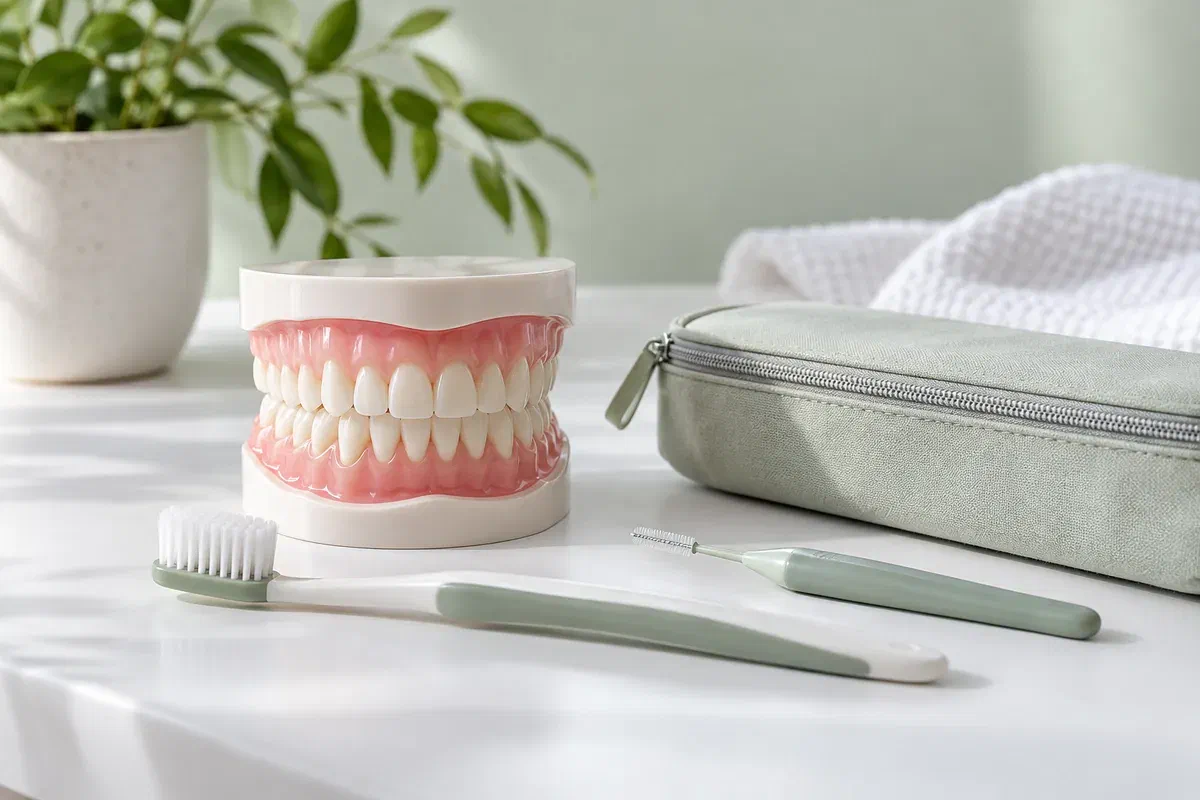
Dental model, toothbrush, interdental brush, and plain travel pouch
What to watch for at home

Signs a helper might spot first

A person who is not in pain may still need a check. If you help with daily care, mention changes you have noticed in eating, comfort, cleaning or healing, and whether they started around a change in health.

Blood on the brush or swollen gums

People with diabetes are more prone to gum disease, and it can be more severe when glucose is poorly controlled. Bleeding, swelling or a tooth that seems loose should be examined. The dentist will explain whether prevention, treatment or a specialist referral fits.

Dryness or a denture that rubs

A dry mouth, a sore spot or redness under a denture may be noticed while helping with cleaning. These have various possible causes. Note when the problem appears and what helps, and let the dentist work out the reason.

Changes in medicines or routine

A new prescription, a recent low, a hospital stay or new advice from the diabetes team are all worth passing on. Bring the current medicine list or pharmacy printout. Older dental records may not reflect recent changes.

A dental appointment should not mean skipping meals or doses. If treatment will need fasting or limit eating afterward, ask the dental and medical teams to agree on the plan before the day.

Why it helps everyone

Better information leads to easier visits.

Diabetes and gum disease can influence each other. Gum problems may make glucose harder to manage, and diabetes can affect the gums and the way they heal. Dental treatment is valuable for the mouth, but it is not a replacement for diabetes care and does not guarantee a change in glucose results.

Sharing the full picture also helps the day run smoothly for the patient and for you. When a procedure might affect eating or comfort, we discuss it in advance. Ask what to expect afterward and whether the doctor or diabetes team needs to help plan short-term changes.

Patient information: NIDCR — diabetes and oral health

A shared record of gum health

The dentist documents the condition of the gums and supporting tissues. Later visits can then show what has changed. Ask which areas need extra help and what will be reviewed next time, so you both know what to look for.

Cleaning help that is realistic

If arthritis, poor eyesight, fatigue or memory make cleaning difficult, tell us. We can show you, as the helper, how to brush or clean between teeth for someone else. A few simple steps tend to work better than a complicated routine.

Coordination with the medical team

Some treatments require information or advice from the doctor or diabetes team. The dentist will say when, who will request it and what you should bring. Do not assume an old instruction applies to a new procedure.

On the day

Who does what at each stage

Bring the medicine list, any recent diabetes information and a description of the usual daily routine. If there has been a low glucose episode during an appointment before, mention it so we can plan.

  1. Gather the health history

    We discuss the reason for the visit, diabetes management, other conditions and recent changes. Recent readings or trends may come up, and a family member can help answer with the patient's consent. No single reading decides every dental question.

  2. Examine the mouth

    We check gums, teeth, soft tissues and any dentures, and suggest X-rays only if an image would settle something the eye cannot. Point out areas that are hard to clean or symptoms you have seen come and go.

  3. Agree on treatment and medical input

    We explain what is recommended, why, and whether the doctor should be consulted first. Sedation, or treatment that affects eating, means the dental and diabetes plans must fit together. Medicine changes come only from the prescribing clinician.

  4. Plan recovery at home

    We go over aftercare, who to call if eating becomes difficult and when healing will be checked. Helpers are welcome to take notes. The diabetes plan should continue, and medical advice is needed if recovery makes that hard.

Daily care, shared

Make the routine easy to repeat

Home care should fit the person receiving it and the person helping. Let us know if something does not suit their abilities, symptoms or existing medical instructions.

Brush and clean between teeth

Use fluoride toothpaste and a between-teeth method that is easy to manage. A soft brush with a thicker handle can help. If bleeding continues or cleaning causes pain, ask for advice rather than giving up on that area.

Keep an eye on dryness and dentures

Dryness can be uncomfortable and raise dental risk. Ask about suitable products and share the full medicine list. Do not stop any prescription without the doctor, and clean dentures daily as advised.

Book and keep the follow-up

A review may check gum response, healing or prevention. The timing depends on findings. Call sooner if pain increases after treatment, swelling shows up or a denture leaves a sore.

Options after the exam

The findings decide the route.

Not everyone with diabetes needs the same treatment or visit schedule. Ask which findings support the recommendation and how progress will be measured.

When things are stable

Prevention and routine reviews

The plan may focus on cleaning, preventing cavities and a regular check. Mention day-to-day difficulties even if the exam looks fine. Prevention should be updated if the mouth or general health changes.

When the gums need attention

Gum treatment

Gum findings may need targeted care and reassessment, possibly with a periodontist. Ask what the treatment should improve and how you can help at home. It supports oral health and does not replace diabetes management.

When a tooth or denture is the problem

Repairs and denture work

A broken tooth or uncomfortable denture needs its own diagnosis. Health factors may matter for the procedure and healing. Ask how eating will be affected and what follow-up involves before choosing a plan.

Questions from caregivers

What families want to know

Raise questions about meals, medicines, comfort or recovery early. These answers are general; the clinicians providing care will confirm anything specific to a treatment.

(905) 876-4488
Can I come into the treatment room with my parent?
Often, yes, if the patient would like you there. You can help share health details and take notes about aftercare. Let us know when booking so we can plan for it.
What should a caregiver bring to a dental visit for someone with diabetes?
Bring the current medicine list, any recent diabetes information, the usual supplies for managing a low and details of their daily routine. Notes about symptoms you have seen at home are also helpful.
How can I help clean someone else's teeth properly?
Ask the team for a demonstration. Positioning, a soft brush and a between-teeth tool that suits the person all make a difference. We can suggest simple steps you can manage together.
My father's denture is causing sores. Is that urgent?
A sore should be checked soon, especially if it is not healing. Call promptly if there is swelling, increasing pain or difficulty eating. In the meantime, follow any denture care advice already given.
Does diabetes mean they need antibiotics before dental work?
There is no automatic rule. The dentist considers the diagnosis, treatment and medical situation. Antibiotics are prescribed for specific reasons, and leftover tablets should never be used without a prescription.
What if they cannot eat normally after a procedure?
Ask about expected eating limits beforehand and discuss them with the diabetes team. Do not change doses without their advice. Make sure you know whom to contact if eating is still difficult at home.
Booking from Brampton

Bring the questions, and the person you care for.

Contact our Bronte Street clinic about the dental concern and any diabetes needs to plan around. An assessment can be set up for a time that works for both of you, and we will go over what to pack. Details about the daily routine help us make each step clear for everyone.

When you book on someone's behalf, tell us about their diabetes and anything that has recently changed. For toothache, swelling or other urgent trouble, phone the clinic for advice.

Visit Milton Dental Clinic
Unit 1, 342 Bronte St. S, Milton, ON L9T 5B7
Get directions Clinic hours
Monday–Thursday
11am–7pm
Friday–Sunday
By appointment only

Areas we serve

  • Milton
  • Oakville
  • Mississauga
  • Georgetown
  • Halton Hills
  • Acton
  • Campbellville
  • Brampton
  • Burlington
  • Puslinch
  • Rockwood
  • Erin
  • Caledon
  • Etobicoke
  • Old Milton
  • Bronte Meadows
  • Timberlea
  • Dorset Park
  • Dempsey
  • Clarke
  • Beaty
  • Coates
  • Harrison
  • Scott
  • Willmott
  • Ford
  • Bowes
  • Cobden
  • Walker
  • Mountain View
  • Milton Heights
  • Hawthorne Village
  • Valley View
  • Fallingbrook
  • Nassagaweya
  • Trafalgar
  • Esquesing
  • Nelson
  • Brookville
  • Moffat
  • Glen Williams
  • Norval
  • Limehouse
  • Stewarttown
  • Ashgrove
  • Hornby
  • Silver Creek
  • Speyside
  • Scotch Block
  • North Oakville
  • River Oaks
  • Glen Abbey
  • West Oak Trails
  • Palermo
  • Bronte Creek
  • College Park
  • Joshua Creek
  • Uptown Core
  • Preserve
  • Iroquois Ridge
  • Lisgar
  • Meadowvale
  • Meadowvale Village
  • Churchill Meadows
  • Erin Mills
  • Central Erin Mills
  • Streetsville
  • East Credit
  • Creditview
  • Heartland
  • Sheridan
  • Mount Pleasant
  • Credit Valley
  • Huttonville
  • Churchville
  • Springbrook
  • Northwest Brampton
  • Bram West
  • Fletcher's Meadow
  • Fletcher's Creek South
  • Alton Village
  • Orchard
  • Millcroft
  • Headon Forest
  • Tansley
  • Brant Hills
  • Tyandaga
  • Kilbride
  • Lowville
  • Aberfoyle
  • Morriston
  • Arkell
  • Hillsburgh
  • Freelton
  • Carlisle
  • Waterdown
  • Flamborough
  • Mountsberg

How can we help?

Milton Dental Clinic

Have a question about your smile? Choose the option that works best for you.

For urgent dental concerns, please call.
Messages are reviewed during clinic hours.